

Wood Siding Repair Services in Toronto
Toronto homes face brutal freeze and thaw cycles every winter, and wood siding takes the hit first. Rotted boards, cracked paint, and warped panels are common signs that wood siding repair cannot wait. Home Painters Toronto has earned more than 1,200 positive reviews across HomeStars, Google, and Houzz for spot repairs, panel replacement, and full restoration across the GTA, always matching the original profile so the repair blends into the rest of your home. We serve homeowners in Etobicoke, Scarborough, North York, Mississauga, and every neighbourhood in between. This guide breaks down real costs, the technical risks of waiting, and what separates a lasting repair from a quick patch job.
Wood siding repair in Toronto involves replacing or restoring rotted, cracked, or warped boards using kiln dried lumber that matches the original profile, followed by primer and two coats of exterior paint. Most repairs cost between 2,000 and 8,000 dollars CAD plus HST, depending on the extent of damage, the wood species, and how easily the crew can access the wall.
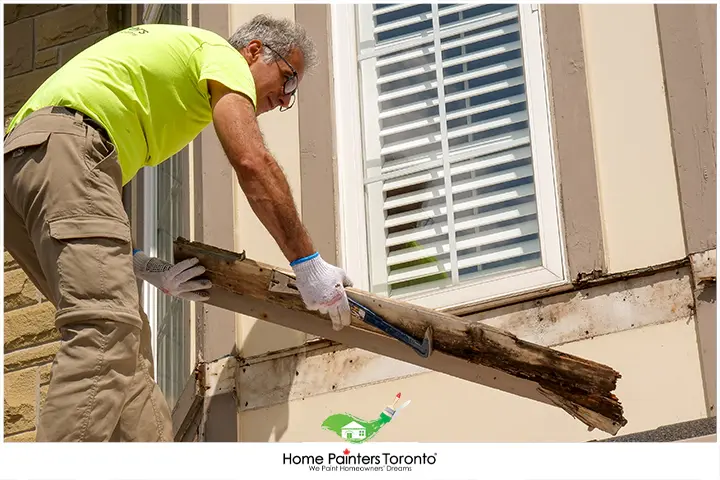
A proper wood siding repair always matches the reveal, the bevel angle, and the board width of the surrounding siding — the new piece ties into the existing flashing detail above each window or door so water runs off the face of the wall instead of pooling behind a mismatched lap line
How Much Does Wood Siding Repair Cost in Toronto?
Wood siding repair in Toronto typically costs between 2,000 and 10,000 dollars CAD plus HST for most homes. The total depends on how many boards need replacement, how much hidden water damage exists behind the siding, and how tall the wall is. Smaller jobs with one or two damaged boards stay near the bottom of the range. Full elevation repairs on an older home in neighbourhoods such as Leaside or The Beaches often land near the top because the crew has to match a wider run of weathered board.
| Repair Scope | Estimated Cost |
|---|---|
| Small spot repair (1 to 3 boards) | $2,000 – $4,000 |
| Medium repair (multiple sections) | $4,000 – $8,000 |
| Large repair (full wall or elevation) | $8,000 – $10,000 |
| Extensive restoration (whole exterior) | $12,000 – $30,000 |
These numbers cover material, labour, primer, and two coats of exterior paint. They do not include separate work such as soffit and fascia repair or a full exterior wood siding replacement, which we price on its own scope. For a wider breakdown of full house painting costs, see our guide to the cost of painting a house.
Pricing also shifts based on the siding style. Cedar lap boards, board and batten panels, and individual cedar shingles each take a different amount of time to source and install. A crew working on shingle siding often spends more time on layout because each piece overlaps the one below it, while lap board repairs move faster once the wall is opened up.
What Drives Linear Foot Pricing for Wood Siding Repair
Contractors price wood siding repair by linear foot once damage spreads past a few isolated boards. Cedar and cypress run higher than pine because the material costs more and matching grain takes added care. Crews also factor in the cost of removing old caulking, scraping failed paint, and back priming new boards before installation. A linear foot rate gives homeowners a fair price without forcing a full tear off when only one section of the wall needs attention.
Factors That Drive Up the Cost of Wood Siding Repair
Five factors decide the final cost of wood siding repair: wood species, the extent of rot, accessibility, paint matching, and the amount of carpentry needed behind the siding. Each one can shift a final quote by hundreds of dollars.
| Factor | Impact on Cost | Details |
|---|---|---|
| Wood species | Medium to High | Cedar and cypress cost more to match than pine or fir |
| Extent of rot | High | Hidden moisture damage often means cutting back further than expected |
| Accessibility | Medium | Second storey walls and steep roof lines add scaffolding costs |
| Paint matching | Low to Medium | Custom tinting takes extra time to blend with weathered colour |
| Structural carpentry | High | Damaged sheathing or framing behind the siding adds labour |
Hidden rot is the biggest wild card in any quote. A board that looks sound from the ground can hide soft, spongy wood once a crew pulls it back. That is why a proper inspection always includes a probe test with a screwdriver or a moisture meter before we write a final price. Related carpentry work, such as wood frame repair or wood trim replacement, often gets bundled into the same visit, which saves homeowners a second service call.
Accessibility plays a bigger role than most homeowners expect. A second storey gable or a wall above a sloped roof line needs scaffolding or a lift, and that equipment cost gets added to the labour line. Walls at ground level with clear access cost less per linear foot for the same amount of damage.
Paint matching takes more skill than most homeowners expect, especially on a wall that has weathered for ten or fifteen years. A crew has to tint the new coat slightly to account for fading on the surrounding boards, otherwise the repaired section stands out as an obvious patch instead of a seamless fix. This step is one reason a professional estimate takes a short site visit instead of a number quoted over the phone.
The Professional Wood Siding Repair Process Step by Step
A proper wood siding repair follows six steps in order: probe testing, removal, sheathing inspection, board installation, priming, and finish coating. Skipping any single step is the main reason cheap repairs fail within a year or two.
- Probe test every board near the damage with a screwdriver or moisture meter to map the true extent of rot
- Remove damaged boards down to solid wood, cutting back further if the probe test shows soft fibre beyond the visible crack
- Inspect the sheathing and weather resistant building wrap underneath, repairing any tears before new siding goes on
- Install kiln dried replacement boards milled to match the existing reveal and bevel angle
- Apply a low VOC exterior primer to every cut edge and the full face of each new board, including the back side
- Finish with two coats of exterior paint once the primer has fully cured, matching sheen and colour to the surrounding wall
This sequence keeps moisture out of the wall assembly at every stage instead of just covering the surface. Low VOC primers also meet current Ontario air quality guidelines, which matters for crews working close to occupied bedrooms or open windows during the repair.
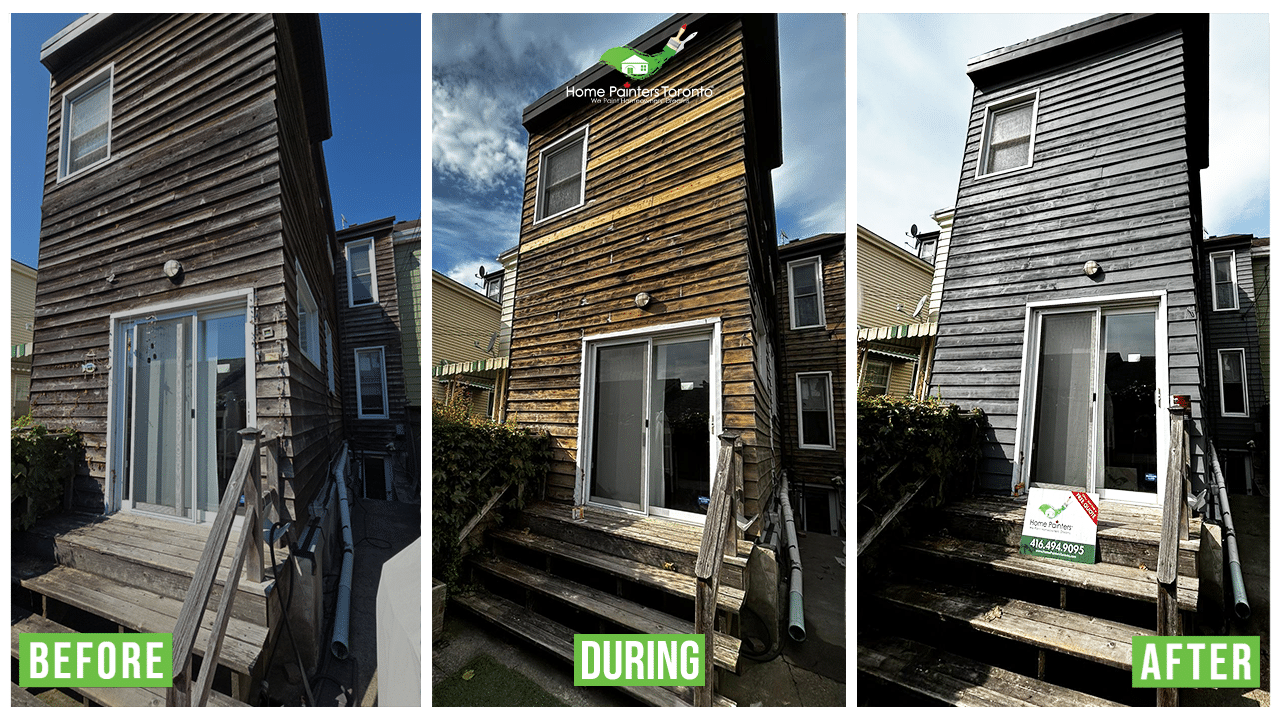
The six-step sequence keeps moisture out of the wall assembly at every stage — low VOC primers meet current Ontario air quality guidelines and back priming each new board prevents hidden moisture from pushing the new paint film off the surface from behind
Wood Siding Repair Speed and Reliability: Getting Fast Quotes in Toronto
Home Painters Toronto offers same day estimates for wood siding repair across the GTA, so homeowners get a clear scope and price before damage spreads further. Our crews work seven days a week, including evenings, to fit around busy schedules.
A fast quote matters because rot does not pause for a slow contractor. Every week of delay lets moisture travel further into the wall cavity, which can turn a small patch into a much larger job by spring. Homeowners can read real experiences from past projects on our client reviews page, or request a free quote and get a written estimate within a day or two.
Once a homeowner approves a quote, scheduling moves quickly. A crew lead visits the site, confirms board counts, photographs the damage, and orders matching lumber the same week. This turnaround keeps an open wall section covered with weather resistant building paper for the shortest time possible, which limits further exposure to rain and snow.
The Hidden Risks of Cheap Wood Siding Repair in the GTA Climate
Cheap wood siding repair that skips primer or uses unseasoned lumber fails within one to two winters because Toronto's freezing and thawing cycles force moisture into any unsealed seam. Water that gets trapped behind a board expands when it freezes, which splits the wood grain from the inside out.
The Forest Products Laboratory recommends keeping exterior wood below 19 percent moisture content before painting, since higher readings trap water under the finish and cause early blistering. A rushed repair crew rarely checks moisture content at all, which is one reason so many quick patch jobs peel within a single season.
Skipping a back primer coat on new boards is another common shortcut that causes early failure. Unprimed wood absorbs moisture from the back side even when the front face looks well sealed. Within two years, that hidden moisture pushes the new paint film off the surface in sheets, and the homeowner ends up paying for the same repair twice.
Beyond the cosmetic problem, untreated rot spreads into the sheathing and framing behind the siding. Once moisture reaches the wall cavity, it can also affect insulation performance and create an entry point for carpenter ants and other wood boring pests common across the GTA.
Pest entry is a real concern in the GTA, since carpenter ants and powderpost beetles seek out softened, moisture laden wood. Once a colony establishes itself behind the siding, the cost of treatment and repair both climb well past the original estimate, which is another reason a fast response matters more than a low price.
Why Spot Repairs Fail Without Matching the Original Board Profile
Spot repairs that use the wrong board profile create a visible seam and a moisture trap because water runs behind a mismatched lap line instead of off the face of the wall. A proper repair matches the reveal, the bevel angle, and the board width of the surrounding siding, then ties the new piece into the existing flashing detail above each window or door.
Many quick fixes use a generic board from a hardware store instead of milling a true match. The result looks close from the street, but the slightly different reveal lets water pool along the new seam every time it rains. Within a year, paint starts to lift right along that line, and the same section of wall needs attention again.
Why Caulk Alone Cannot Fix Rotted Wood Siding
Caulk seals a gap, but it cannot rebuild wood fibre that has already rotted away. Packing caulk into a soft, spongy board only traps moisture inside the cavity and speeds up decay. A proper repair removes all compromised wood, installs a matching replacement piece, applies an exterior grade primer that meets technical data sheet standards from major manufacturers, and finishes with two coats of exterior paint. Loose or failed caulking around nearby openings, including caulking around windows and doors, should be checked at the same time since it is often the original source of water entry.
Our Recent Wood Siding Repair Project in Etobicoke
28% Moisture in Worst Boards, 11 Cedar Boards Replaced at 4-Inch Reveal, Benjamin Moore Aura Exterior Low Lustre at 4 Mils WFT
At a recent wood siding repair project in the Long Branch area of Etobicoke, our crew found extensive rot along the lower courses of a 1950s bungalow. A moisture meter read 28 percent in the worst boards, well above the safe range for painting. We removed eleven boards down to solid wood, installed kiln dried cedar replacements cut to match the original 4 inch reveal, and back primed every new piece before installation.
The final coat was Benjamin Moore Aura Exterior in Low Lustre finish, applied at a wet film thickness near 4 mils per coat to meet the manufacturer specification. The homeowner received warranty backed results, and because Home Painters Toronto is WSIB compliant and fully insured, the whole crew worked on site without adding any liability risk to the property owner. The repaired section has gone through two full winters with no sign of peeling or movement along the new seams.
Etobicoke is not the only area where this kind of damage shows up. Crews see the same pattern of rot along the lower courses of wood siding in older sections of Scarborough, North York, and Mississauga, especially on homes built before vinyl and fibre cement siding became common. Older lap board walls often have decades of paint layers, and once those layers crack, the bare wood underneath has no protection left against rain and melting snow.
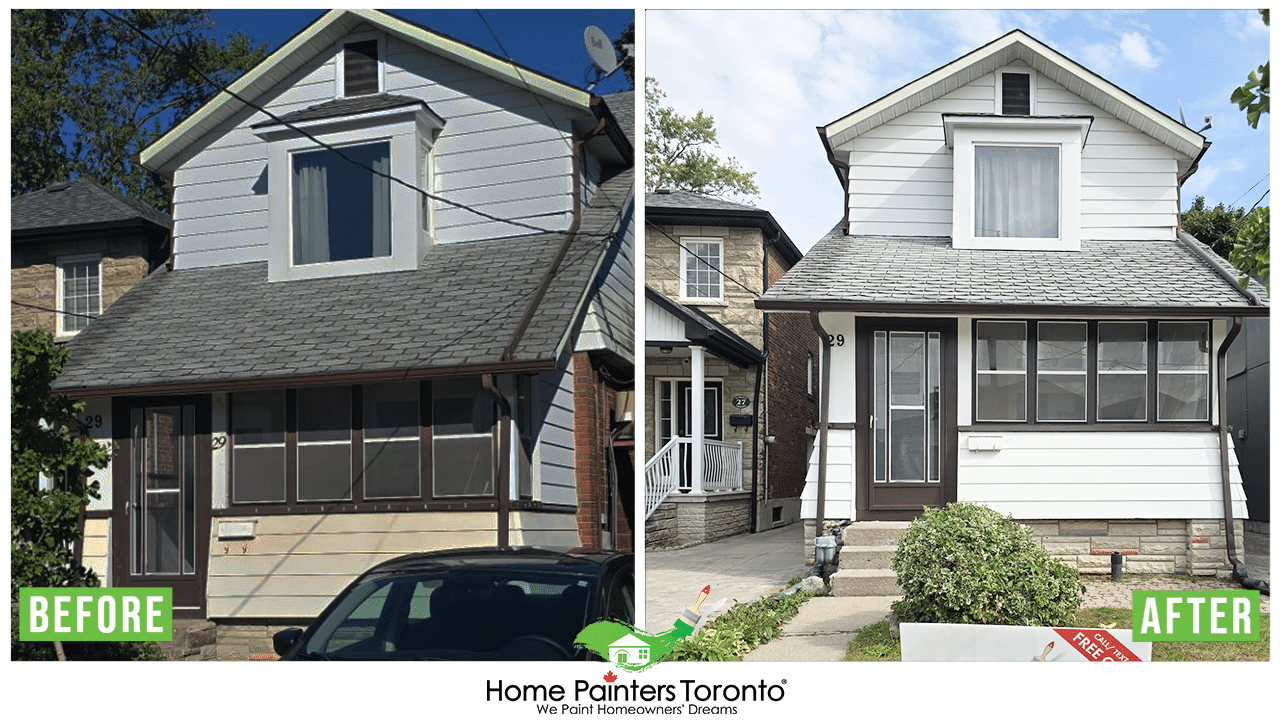
Long Branch, Etobicoke project: 28% moisture in worst boards, 11 kiln dried cedar boards at 4-inch reveal, back primed before installation, Benjamin Moore Aura Exterior Low Lustre at 4 mils WFT — no peeling or movement along the new seams after two full Toronto winters
Why Toronto Homeowners Trust Professional Wood Siding Repair Contractors
Toronto homeowners trust Home Painters Toronto because the company has worked across the GTA for more than 38 years as a family owned business. Every crew member passes a criminal background check, and the company carries 5 million dollars in general liability insurance on every job site.
All exterior work, including wood siding repair finished with paint, carries a 3 year warranty, and every project comes with a 100 percent satisfaction guarantee. That kind of backing matters when a contractor works on load bearing trim or siding tied into your home's moisture barrier. Home Painters Toronto has also earned the HomeStars Best of Award for 2026, Three Best Rated for 2025, and Best of Houzz for 2025. For more on the credentials behind every crew, visit our page on why homeowners choose Home Painters Toronto.
Signs Your Wood Siding Needs Repair Versus Full Replacement
Wood siding needs repair instead of full replacement when damage stays limited to isolated boards. Replacement becomes the better option once rot spreads across a large share of a wall section, since patching that much surface rarely holds up for long.
- Soft or spongy wood when pressed with a screwdriver
- Peeling paint that returns within one year of a new coat
- Visible gaps or warping along board edges
- A musty smell near interior walls that share the same wall cavity
- Boards that have separated from the wall sheathing
If two or more of these signs show up across several walls, a full exterior wood siding assessment makes more sense than another round of spot repairs. Homeowners with related siding types can also compare options like vinyl windows and siding painting or aluminum siding painting, and a wood deck repair visit is often scheduled at the same time since deck framing faces the same freeze and thaw stress as siding.
Cedar Versus Engineered Wood for Siding Repair
Cedar remains the standard choice for matching existing wood siding because it accepts paint and stain the same way the original boards did decades ago. Engineered wood and fibre cement boards resist rot better on their own, but they rarely match the profile or texture of an older cedar or pine wall section.
Mixing materials on a single wall can also create different expansion rates between old and new boards, which show up as small cracks along the seam after a few seasons of freezing and thawing. For a true repair, matching the original species keeps the wall behaving as one consistent surface instead of two materials fighting each other through the seasons.
Frequently Asked Questions
Press a screwdriver into the board. If it sinks in without resistance, the wood has rotted and needs full replacement instead of a surface patch. Boards that still feel solid and only show surface paint damage usually qualify for a standard repair.
Most wood siding repair projects in Toronto cost between 2,000 and 10,000 dollars CAD plus HST. Small spot repairs sit near the bottom of that range, while full wall replacements land closer to the top depending on access and wood species.
Wood siding repair is possible in winter, but cold temperatures slow paint curing and can affect adhesion. Many Toronto contractors schedule the carpentry portion through the colder months and save the final paint coats for warmer weather above 10 degrees Celsius.
A small spot repair with one or two boards usually takes one day to complete, including drying time for primer. Larger projects covering a full wall or several elevations can take three to five days, depending on weather and the amount of carpentry involved.
Yes. Home Painters Toronto backs every exterior paint finish with a 3 year warranty, and all work comes with a 100 percent satisfaction guarantee. Warranty terms cover peeling, blistering, and adhesion failure under normal conditions.
Kiln dried cedar is the most common choice for wood siding repair in Toronto because it resists rot naturally and holds paint well. Pine and fir cost less but need a stronger primer and more frequent recoating to match the lifespan cedar provides.

Get Your Wood Siding Repaired the Right Way
Wood siding repair protects your home from the inside out, and waiting only raises the final bill. Home Painters Toronto brings 38 years of family owned experience, full WSIB compliance, and a 3 year exterior warranty to every project across the GTA. Visit our FAQ page for more answers, or reach out today.
Contact Home Painters Toronto today for fast free quotes and warranty backed work on your wood siding repair project.
Get Fast, Free Quotes for Wood Siding Repair in Toronto
Contact Home Painters Toronto today for fast free quotes and warranty backed work on your wood siding repair project. Open seven days a week with same day estimates across the GTA.
Contact Us for a Free Quote