

Peeling Paint On Walls
Wall paint peeling is one of the most frustrating problems a Toronto homeowner can face, especially after a fresh coat. It makes your home look neglected, signals an underlying issue that will only worsen if ignored, and is almost always caused by something that was skipped during preparation. The good news is it is entirely fixable. This guide covers why walls peel, how to diagnose the specific cause in your home, the exact steps to repair it properly, what it costs, and when to call a professional.
The key things to know before you start:
- Painting over peeling paint always fails — all loose material must be removed first
- The cause of peeling must be identified and fixed, not just the symptom
- Primer selection is more important than paint brand in determining how long the repair lasts
- Toronto's freeze-thaw climate accelerates moisture-driven peeling more than in milder regions
- Most recurring peeling is caused by the same mistake being repeated, usually skipping primer or painting over a damp surface
What's the worst thing that can happen to one's interior painting? A lot of people would say peeling paint on walls because it makes your home feel instantly unattractive. This causes embarrassment and frustration for a homeowner because nobody wants their home to be in a messy state. Peeling paint on walls is a common occurrence, unfortunately.
The reasons for peeling paint are because the surface seeps moisture or because the paint of the surface is old and needs a repainting job. No matter the reason, you can repair and restore your walls and make them presentable.
With the right tools and preparation, your home will be looking as smooth as ever in no time. Also, remember if you do not want to deal with peeling paint on walls yourself, you can always call some trusted interior house painters to do the job!
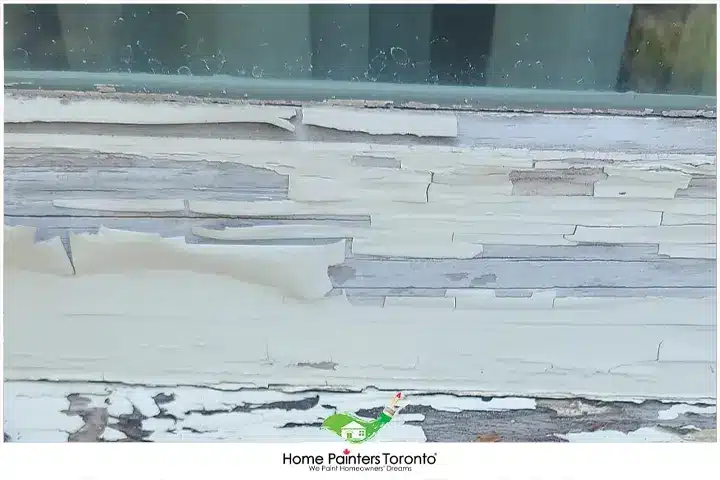
Peeling in large sheets near windows or exterior walls is almost always moisture-driven — the source must be identified and stopped before any repainting begins.
Understanding the Why Behind the Withering Walls
Wall paint peels in Toronto homes because of moisture, poor ventilation, weak surface prep, low-quality paint, old coatings, and temperature changes that break down adhesion over time.
Moisture Intrusion
The top contender in the cause of peeling paint. Moisture can seep through walls from both the exterior and interior, wreaking havoc and lifting the paint from its intended surface.
Poor Adhesion
Sometimes, the bond between paint and surface might not be as sturdy as needed, often due to improper surface preparation or painting over a glossy finish without adequate priming.
Age of the Paint
Like many things, paint has a lifespan, and over time it may lose its elasticity, leading to cracking, chipping, and eventually peeling.
Inferior Quality Paint
Not all paints are created equal, and using low-quality paint can result in premature peeling.
Why Wall Paint Peeling is Especially Common in Toronto Homes
Toronto's climate creates conditions that accelerate paint failure faster than in most Canadian cities. The city experiences over 100 freeze-thaw cycles per year, meaning exterior walls and surfaces near exterior walls expand and contract repeatedly throughout the winter and early spring. That constant movement stresses paint bonds, particularly on older or porous surfaces where adhesion was not strong to begin with.
Older Toronto homes in neighbourhoods like Riverdale, Leslieville, The Annex, Roncesvalles, and East York commonly have plaster walls rather than drywall. Plaster is highly alkaline and will actively break down paint adhesion without an alkali-resistant primer. Many of these homes also retain original window and door framing that is susceptible to condensation in winter, which drives moisture into adjacent wall surfaces from the inside. This is why wall paint peeling around windows and exterior walls is so frequently reported in older Toronto housing stock.
According to Canada Mortgage and Housing Corporation guidance on moisture control, below-grade and exterior-facing walls in older Canadian housing stock are among the highest-risk zones for moisture infiltration and paint failure. Understanding whether your peeling is driven by moisture from outside the wall or from inside the home is the most important diagnostic step before any repair.
Wall Paint Peeling - Cause and Diagnosis Quick Guide
For Toronto homes, the primary diagnostic principle is to identify whether peeling paint is caused by moisture, poor surface preparation, adhesion failure, or temperature-related movement before repainting.
Use this table to match what you are seeing on your walls to the most likely root cause and the correct first step to fix it. Treating the symptom without identifying the cause is the most common reason peeling paint returns within months.
| What You See | Most Likely Cause | Correct First Step |
|---|---|---|
| Paint peeling in large sheets or bubbles | Active moisture behind the wall or wet surface painted over | Identify and stop the moisture source before any repainting begins |
| Peeling only around windows or exterior walls in winter | Condensation from inside the home; insufficient vapour barrier | Improve ventilation and insulation; repair window seals before repainting |
| Paint peeling in bathrooms or kitchens | High humidity, inadequate ventilation, wrong paint product | Improve exhaust ventilation; strip, prime with mould-inhibiting primer, repaint with humidity-rated product |
| Paint peeling on older plaster walls | Alkali from plaster breaking down paint adhesion without AR primer | Strip to plaster surface; apply alkali-resistant primer before any topcoat |
| New paint pulling old paint off the wall | Old paint not adhering; incompatible paint systems | Tape test the existing coat; strip all non-adhering paint before repainting |
| Peeling at corners and edges only | Dirty or glossy surface; paint did not bond at edges | Sand, clean all surfaces; spot prime edges before full repaint |
| Chalky residue under peeling paint | Alkali migration from masonry or plaster substrates | Use alkali-resistant (AR) primer on all affected surfaces |
| Paint peeling after one or two winters | Moisture migration through exterior wall during freeze-thaw cycles | Assess exterior water management; use flexible, breathable interior paint system |
How to Fix Peeling Paint on Walls
The most potent weapon against peeling paint is prevention. Here is how you can preemptively protect your walls:
- Choose Quality Paint: Investing in high-quality paint pays off in the longevity of your walls' aesthetics and integrity.
- Prime Properly: A good primer can serve as the critical glue that helps paint adhere to your walls.
- Tackle Humidity and Leaks: Keep an eye on humidity levels and address any leaks promptly to keep moisture at bay.
- Surface Prep Is Key: Ensure the surface to be painted is clean, dry, and smooth. Any loose paint should be scraped off, and the surface should be sanded and wiped down.
Materials Needed For Peeling Paint On Walls
- Drop cloths
- Masking tape
- Paint scraper and wire brush
- Patching compound (for walls)
- Putty knife
- Grit sandpaper
- Tack cloth
- Stain block latex primer
- Paint tray and paint roller
- 2-inch flat paintbrush
- Interior latex paint
Choosing the Right Primer for Wall Paint Peeling Repairs
Primer selection is one of the most important parts of a lasting wall paint peeling repair. The wrong primer can allow stains to bleed through, moisture problems to return, or new paint to lose adhesion within months. That is why a professional painter does not choose primer based on guesswork. The surface, age of the home, room conditions, previous coating, and cause of the peeling all need to be assessed first.
In Toronto homes, different wall conditions require different primer systems. Fresh drywall patches need primer that seals compound evenly. Older plaster may need an alkali-resistant primer. Water stains, mould, bathrooms, glossy surfaces, and general drywall repairs all require different products to prevent the same failure from coming back.
A professional repair process matches the primer to the real cause of the peeling. This helps the new paint bond properly, creates a smoother finish, improves topcoat coverage, and reduces the risk of recurring peeling, staining, or uneven absorption.
Preparation For Fixing Peeling Paint On Walls
First, you will need drop cloths to cover and protect your floor from any paint spilling. Also, you will need masking tape around the doors, windows, and baseboards for protection. Pretty much, you will want to cover any and all areas that you think could potentially be damaged from this repair job. If you notice any loose paint, use a paint scraper and then a wire brush. With a patching compound (specifically for walls), repair any cracks or holes in the walls. You will need a putty knife to smooth the surface. In addition, use a thin layer of the patching compound to fill those cracks on the walls, and then let it dry completely.
Interior Primer and Paint
You will need to apply the primer to the wall first, to prevent moisture issues. With your paintbrush, paint around the perimeter, and then utilize your paint roller for the larger areas. Let the primer dry completely, and try to follow the drying time recommended for the product. Lastly, it is now time to use your interior latex paint. As you did with the interior primer, you will need to do the same steps for the latex paint. Let the paint dry, and if you need to repeat a second coat, you can definitely do so. You can also remove all the masking tape surrounding the area and the drop cloths.
Important Tip: Some painting companies have recommended homeowners keep their rooms below 50 percent humidity. This way, you will reduce peeling paint on walls.
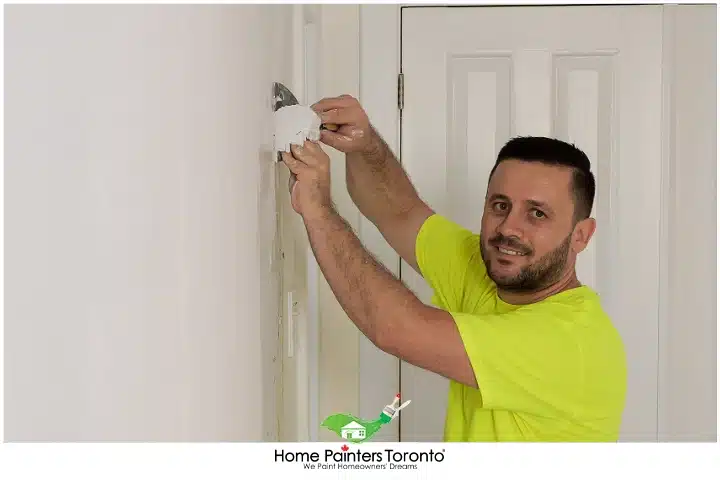
Every step in the repair sequence is mandatory — skipping scraping, primer, or drying time between coats is why most DIY peeling paint repairs fail and need to be redone within a season.
Wall Paint Peeling Repair - Step-by-Step at a Glance
Use this as your complete reference before starting any wall paint peeling repair in a Toronto home. Every step is required. Skipping any one of them is why most DIY repairs fail and need to be redone.
| Step | Action | Time Required | Pro Tip |
|---|---|---|---|
| 1 | Identify and fix the moisture source if active | 1 hour to several days | Do not proceed to painting until the source is resolved; painting over an active leak is temporary at best |
| 2 | Protect floors, trim, and fixtures with drop cloths and masking tape | 30 minutes | Use canvas drop cloths rather than plastic; canvas grips the floor and does not shift underfoot |
| 3 | Scrape all loose and peeling paint back to a fully sound surface | 1 to 4 hours depending on area | Use a wide scraper at a low angle; feather the edges so there is no hard ridge at the repair perimeter |
| 4 | Wire brush any remaining chalky or crumbling material | 30 minutes | Any material that brushes off easily will cause the repair to fail; remove it all |
| 5 | Clean the surface with a damp cloth; allow to dry completely | 30 minutes + 2 hour dry time | Surface must be bone dry before primer goes on; in Toronto winter, allow extra drying time in heated rooms |
| 6 | Fill cracks and holes with patching compound; sand smooth when dry | 1 hour + overnight dry | Do not rush drying time; undried compound under primer will cause blistering |
| 7 | Apply the correct primer for your surface type (see table above) | 1 to 2 hours | Cut in with a brush first; roll larger areas; allow full dry time per manufacturer instructions before topcoat |
| 8 | Apply first coat of interior latex paint | 1 to 2 hours | Two thin coats always outperform one thick coat; thick coats sag and dry unevenly |
| 9 | Allow to dry fully; apply second coat | 4-hour minimum between coats | Full cure takes 30 days; avoid scrubbing or hanging anything on the repair area during this period |
Do Not Be Scared If You See Peeling Paint on Walls
Peeling paint on walls or any space in your home should not alarm you. This is a common occurrence. As with anything in life, there is always a solution to your problems. In bathrooms, peeling paint occurs because of its high levels of humidity and moisture from showering. It is extremely important to use your bath vent or fan 10 to 15 minutes after you shower because this can prevent moisture from seeping into your bathroom. Let it run until you feel the moisture has eventually left. The same thing can happen outside of your bathroom. Peeling paint can occur in your living room too, based on moisture seeping in as well. And if you have old paint that was not of good quality, the most important message is to not let the peeling paint alarm you. Problems always arise. After noticing the problem, you can fix it whenever you can.
Quick Recap
To attack peeling paint on walls, you should first scrape all the excess peeling paint off. Secondly, you need to sand it a bit. Thirdly, apply a coat of primer to any cracks or holes you may have. You should then apply two more coats of paint, either semi-gloss paint or eggshell. They both provide a washable surface and are resistant to moisture.
With all those steps, you have removed peeling paint from your walls, and your surface is as smooth as ever. Make sure not to panic when you do see peeling paint. This is a common problem many homeowners face. Whether it is because of old paint damage or moisture building up, anything is fixable. The important part is to remain calm and do the necessary prep work to deliver a successful finish to your home.
How Much Does it Cost to Fix Peeling Paint on Walls in Toronto? - 2026 Guide
Cost is the most searched follow-up question after identifying wall paint peeling, and most guides skip it entirely. Here is an honest 2026 breakdown for Toronto homeowners.
DIY Cost Estimate for Wall Paint Peeling Repairs
- Paint scraper and wire brush: $15 to $35 CAD
- Patching compound (small tub): $15 to $25 CAD
- Sandpaper assortment (80 to 220 grit): $10 to $20 CAD
- Primer (1L to 4L depending on area): $25 to $65 CAD
- Interior latex topcoat (1L sample or 3.78L): $30 to $75 CAD
- Drop cloth, masking tape, roller, brushes (if not owned): $25 to $50 CAD
- Total DIY materials for a typical wall repair: $90 to $200 CAD
Professional Cost Estimate for Wall Paint Peeling Repair in Toronto
| Job Type | Typical Range (CAD) | Notes |
|---|---|---|
| Spot repair (single wall area under 10 sq ft) | $200 to $450 | Includes full prep, primer, two topcoats; moisture diagnosis included |
| Single room repaint with full peeling repair | $600 to $1,200 | All surfaces stripped, primed, and repainted; price varies by room size and surface condition |
| Full home interior repaint with peeling remediation | $3,500 to $9,000+ | Multiple rooms, plaster assessment, mould treatment if required |
| Bathroom repaint with mould treatment | $800 to $1,800 | Includes Zinsser mould primer, mould-resistant topcoat, ventilation assessment |
| Exterior wall peeling repair and repaint | $1,500 to $5,000+ | Depends on extent of damage, surface type, and access requirements |
For a precise quote based on your specific situation, see our interior painting services page or contact us for a free estimate. Also see our interior painting cost guide for broader pricing context.
Real Project - Wall Paint Peeling Repair and Interior Repaint in Toronto
East York Detached: Persistent Hallway and Stairwell Paint Peeling — Root Cause Identified and Resolved
One of the most instructive ways to understand what a proper peeling paint repair actually involves is to look at a completed project. Here is a summary of a job our team completed in Toronto.
The situation: A homeowner in an older detached home in East York contacted Home Painters Toronto after persistent paint peeling in the main hallway and stairwell. Two previous DIY attempts had both failed within one season. The homeowner had applied paint directly over the existing peeling coat both times, lightly sanding between applications but not stripping back to a sound surface or addressing the underlying cause.
What the job involved: Our team inspected the affected area and identified two contributing factors. The hallway shared an exterior wall with a poorly ventilated section of the house where condensation was occurring behind the drywall during winter. Additionally, the existing paint stack included at least four previous coats applied over decades, with the original layer showing signs of alkali-related adhesion failure consistent with the plaster substrate in this section of the home. All paint was stripped back to the plaster surface, the alkali-resistant primer Benjamin Moore Fresh Start was applied, and two coats of Benjamin Moore Regal Select in an eggshell finish were applied. The homeowner was also advised to install a whole-home HRV unit to address the underlying condensation issue.
The result: No recurrence after 18 months. For more completed projects like this one, visit our Toronto painting projects page.
Wall Paint Peeling by Location - What Toronto Homeowners Need to Know
Paint Peeling on Bathroom Walls
Bathroom walls are the most frequent location for peeling paint in Toronto homes. Steam from showers raises humidity levels rapidly, and if the exhaust fan is undersized or poorly positioned, that moisture condenses on cooler wall surfaces and works behind the paint film. The fix requires three things together: improving ventilation by running the exhaust fan during and 20 minutes after every shower, using a mould-inhibiting moisture-resistant primer, and finishing with a paint rated for high-humidity use. For a complete guide, see our blog on how to fix peeling paint on bathroom ceiling or wall.
Paint Peeling on Exterior Walls (Interior Side)
When paint peels on the interior side of an exterior wall, the cause is almost always moisture migrating through the wall from outside, or condensation forming on the cold wall surface in winter. Both issues are more pronounced in Toronto due to the severity of winter temperatures and the age of the housing stock. Before repainting, the source of moisture needs to be assessed, not just the paint surface. This may involve checking exterior caulking at windows and doors, assessing the condition of the vapour barrier, or improving insulation in the wall cavity.
Paint Peeling on Plaster Walls
Plaster walls are common in Toronto homes built before the 1960s and are one of the most demanding surfaces for paint adhesion. Plaster is highly alkaline, and any paint applied without an alkali-resistant primer will eventually fail as the alkali migrates through the paint film. If the plaster itself is failing (soft, hollow when tapped, or crumbling), repainting is a temporary fix at best. See our drywall installation and repair service for options when plaster requires replacement.
Paint Peeling on New Drywall
Paint peeling on new drywall almost always traces back to one step: the PVA drywall primer was skipped or applied too thinly. New drywall is highly porous and will absorb topcoat unevenly without a sealing primer, leaving areas that look good initially but begin to peel or flake within months. Always apply a full coat of PVA drywall primer to any freshly hung or patched drywall before any topcoat goes on.
Frequently Asked Questions About Wall Paint Peeling
Peeling in large sheets almost always indicates a moisture issue behind the paint film rather than a surface preparation failure. When water gets behind a coat of paint, it breaks the bond across a large area rather than just at the edges, causing the film to lift in sheets. The priority is identifying and stopping the moisture source before any repair is attempted. Repainting over the area without addressing the moisture source will produce the same result within months.
No. Painting directly over peeling wall paint will always fail. The new topcoat bonds to the unstable existing layer rather than the wall surface itself, and the whole stack including new paint and old will continue to lift. All loose, flaking, and peeling material must be stripped back to a sound surface before any primer or paint is applied. This is the single most important step in any peeling paint repair, and the one most often skipped in unsuccessful DIY attempts.
Peeling paint does not always mean mould is present, but it does indicate that moisture is involved. If you see black, green, or grey discolouration beneath or around the peeling paint, treat it as a potential mould issue. Do not sand or scrape mould-contaminated surfaces without proper respiratory protection. If the discolouration is extensive or covers more than a few square feet, consider having the area professionally assessed before beginning any repair work.
The best primer depends on the surface type and the cause of peeling. For plaster walls in older Toronto homes, use an alkali-resistant acrylic primer. For areas with water staining or mould, use Zinsser BIN Shellac Primer or Zinsser Mould Killing Primer. For standard drywall repairs, a 100% acrylic primer-sealer such as Benjamin Moore Fresh Start All-Purpose Primer is the most versatile option. The primer table in this guide covers all major surface types and situations.
If the root cause of peeling has been properly identified and fixed, a correctly primed and repainted wall should last 5 to 10 years before requiring attention. If peeling recurs within one or two seasons, the root cause was not addressed, most commonly an ongoing moisture source, wrong primer for the substrate, or painting over a surface that was not completely dry. Recurring peeling on the same wall section is a diagnostic signal that the repair approach needs to change, not just be repeated.
Peeling near windows is almost always caused by condensation. In Toronto winters, the temperature difference between the cold glass or frame and the warm interior air causes moisture to condense on the wall surface adjacent to the window. The repair requires stripping the peeling area, allowing it to dry completely, sealing the window frame with fresh exterior-grade caulking to reduce cold air infiltration, applying a moisture-resistant primer, and repainting with a quality interior latex paint. Reducing indoor humidity through better ventilation helps prevent recurrence.
Reputable painting contractors in Toronto, including Home Painters Toronto, offer a workmanship warranty that covers peeling caused by application failures such as inadequate surface preparation, wrong primer, or application in conditions outside the manufacturer's guidelines. Peeling caused by an active moisture source that was present before painting and not disclosed or discovered during the job is typically not covered. Always ask for a written warranty before work begins and confirm what it covers. See our why Home Painters Toronto page for details on our workmanship guarantee.
Call a professional when: the peeling covers a large area (more than a few square feet), when the same area has peeled after previous repairs, when you see signs of mould or structural issues in the wall, when the peeling is on an exterior wall and the moisture source is unclear, or when the wall substrate is original plaster that may be failing. Recurring peeling on the same wall is the clearest signal that a professional diagnosis is needed. Contact Home Painters Toronto at 416.494.9095 for a free consultation.
More Related Blogs About Peeling Paint On Walls
Need Help With Peeling Paint On Walls in Toronto?
Home Painters Toronto has been repairing and repainting Toronto homes since 1987. Call 416-494-9095 or email [email protected] for a FREE quote.