

House painting before selling is one of the most common jobs we do for Toronto homeowners getting ready to list. Fresh, neutral walls hide years of scuffs, nail holes and patchy touch-ups that show up badly in listing photos. The risk starts when paint covers a known problem, like a ceiling water ring or a crack that keeps reopening. In Ontario, covering a known defect can turn a two-day paint job into a legal dispute after closing. At Home Painters Toronto, with 1,200+ positive reviews and 20,000+ homes painted across the GTA since 1991, we repair the cause first, then paint, then document the work.
Paint before you sell, but repair first. Fix the source of any water stain, mould or recurring crack, let the area dry, then prime and paint. Ontario sellers must not actively hide known defects, and they must disclose known hidden defects that make a home dangerous or unfit to live in. Keep dated photos and invoices.
House Painting Before Selling: What's Smart and What's Risky
House painting before selling is smart when it refreshes sound surfaces, and risky when it covers a defect you already know about. The paint itself is never the legal problem. The problem is what sits underneath it and what you knew before the brush touched the wall. A seller who repaints scuffed walls is doing routine maintenance. A seller who rolls over an active leak stain is creating evidence of concealment.
The table below sorts common pre-listing situations into two groups. The first group is normal pre-sale painting. The second needs a repair, a paper trail and, in some cases, legal advice before any paint goes on.
| Situation | Normal Pre-Sale Painting? | Repair, Document and Get Advice First |
|---|---|---|
| Scuffed walls, nail holes, dated colours | Yes: patch, spot-prime, two coats | Not needed |
| Peeling exterior trim over sound wood | Yes: scrape, prime, paint | Probe first, since soft wood needs carpentry |
| Old water stain from a leak already fixed | Yes, once the area tests dry and is primed | Keep the repair invoice on file |
| Active or recurring water stain | No | Find and fix the leak first |
| Visible mould on drywall or trim | No | Fix the moisture source and remove the mould |
| Cracks that reopen after patching | No | Have the cause assessed by the right trade |
| Smoke or nicotine staining | Only after cleaning and sealing | Ask your agent how to describe it |
Exterior work follows the same logic. Peeling paint on a south-facing window sill is often just weathered coating over sound wood. Peeling paint that lifts in sheets around a soft, dark sill usually means water has been getting in for years. A probe and a moisture reading tell the two apart in minutes. Ask your painter to check before quoting a simple repaint.

Which Rooms and Surfaces to Paint Before You List
The rooms worth painting before you list are the ones buyers see first and touch most. That means the front entry, main living areas, kitchen walls, hallways, stair walls and interior trim. These spaces carry the most wear, and they fill most of the listing photos. Bedrooms with sound walls in a neutral colour can often stay as they are. Our page on preparing your home for sale covers staging timelines in more detail.
Spot touch-ups are where pre-sale jobs often go wrong. Fresh paint dabbed onto a wall that is five years old rarely matches, even with the same colour code. The new patch flashes under a camera flash or low afternoon light because its sheen differs from the aged film around it. Painting a full wall from corner to corner avoids that patchwork look. Buyers and inspectors often read patchwork as a sign that something was hidden.
Dark or saturated accent walls need extra work before a neutral colour will cover them. Expect a tinted primer and two finish coats, and expect that line item on your quote. For costs, timelines, and finish choices across a full repaint, our house painting guide walks through the whole process.
Pre-Sale House Painting Costs in Toronto
Pre-sale house painting in Toronto typically costs $400 to $900 + HST for a living or dining room, based on HPT's published price ranges. Trims, doors and baseboards run $700 to $1,200 + HST. Repairs such as drywall replacement or leak-related patching are quoted as separate line items. That split matters when you hand records to your agent or lawyer later.
| Pre-Sale Scope | Typical Range (CAD + HST) |
|---|---|
| Living or dining room | $400 – $900 |
| Bedroom | $400 – $800 |
| Bathroom | $250 – $500 |
| Trims, doors and baseboards | $700 – $1,200 |
| Ceilings | $1,000 – $1,300 |
| Small exterior repaint | $2,000 – $4,000 |
Every range above comes from HPT's current pricing schedule, and the final number depends on surface condition and access. Ask for an estimate that lists repairs separately from paint. Our guide to what belongs in a painting estimate shows what a properly itemized quote looks like.
Ontario's "Buyer Beware" Rule and Its Limits
Ontario follows a "buyer beware" rule for resale homes, but the rule has two firm limits. A seller cannot actively conceal a defect and must disclose known hidden defects that make the home dangerous or unfit to live in. Outside those limits, buyers are expected to inspect the home and draw their own conclusions. Inside them, silence or a fresh coat of paint does not protect the seller.
Ontario has no mandatory seller disclosure form. Some sellers complete a Seller Property Information Statement, often called an SPIS, but it is optional. If you prepare one for buyers, the Real Estate Council of Ontario sets clear rules. Your agent must tell every interested buyer that the statement exists and hand over a copy on request. Anything you write on that form becomes a statement buyers can rely on.
An "as is" clause in a listing does not cure active concealment. Courts treat deliberately hiding a defect differently from simply not mentioning it. This article is general information, not legal advice, so talk to an Ontario real estate lawyer before you decide what to disclose.
Patent vs. Latent Defects: How Paint Changes the Picture
A patent defect is one a buyer could spot during a reasonable inspection, and a latent defect is one that stays hidden. A brown water ring on a ceiling at the time of listing is usually patent, because anyone walking through can see it. Paint that ring over, and it becomes hidden. That shift is what makes painting over a known stain risky. The act of painting is what removed it from view.
Painting Over Stains, Cracks and Mould: Why It's Different
Painting over a stain, crack or mould patch is different from routine pre-sale painting because the coating hides evidence of a cause that may still be active. A stain is a symptom. Leaking flashing, a failed toilet seal or a blocked eavestrough is the cause. Paint treats neither, and the stain often returns within weeks of a new owner moving in.
| Problem | What It Often Signals | What Happens Before Paint |
|---|---|---|
| Brown ring on a ceiling | Roof, flashing, plumbing or ice dam leak | Find and fix the leak, confirm the area is dry, replace soft drywall |
| Mould on walls or ceilings | Ongoing moisture or poor ventilation | Fix the moisture source, then remove mould and damaged material |
| Cracks that keep reopening | Framing movement or foundation settlement | Have the cause assessed, then patch and paint |
| Bubbling paint on basement walls | Moisture moving through the foundation | Address grading, parging or waterproofing first |
| Yellow smoke or nicotine film | Residue soaked into the drywall paper | Clean, then seal with a shellac-based primer |
| Pet urine odour | Contamination in drywall or subfloor | Remove or seal the affected material |
Mould needs the most care. CMHC's guidance on cleaning up mould lists finding, stopping and fixing the moisture source as the first step, before any cleanup begins. CMHC also classifies mould covering more than three square metres as a large problem that calls for trained remediation contractors. A painting crew is not a mould remediation company, and a good one will say so.
Smoke and nicotine staining follow their own sequence of cleaning and sealing. Our guide to painting after fire and smoke damage explains why standard latex primer lets those stains bleed back through.
Repair First, Then Paint: How Professional Crews Handle Damaged Areas
Professional crews handle a damaged area in six steps: find the source, fix it, dry the area, remove damaged material, prime, and paint. Each step depends on the one before it. Skip the first three and the last three only hides the problem for a while.
- Find the source. The crew traces the stain to its likely cause and takes moisture readings beside it and on a dry reference area.
- Fix the cause. The right trade repairs the leak, whether that means a roofer, a plumber, or new exterior caulking around windows and doors.
- Dry and recheck. The area dries until its meter reading matches the dry reference spot.
- Remove damaged material. Soft or mouldy drywall is cut out and replaced through proper drywall repair, and rotted exterior wood goes to exterior carpentry and wood repair.
- Prime. A stain-blocking primer seals the repaired area so residue cannot bleed into the finish.
- Paint and document. Two finish coats go on, and the crew records photos and readings for the seller's file.
Hidden damage often appears once prep starts, especially in older Toronto homes. Our article on hidden repairs during home painting explains how scope changes are approved in writing. HPT does not inspect for or certify defects. We record what we found, what was fixed and what we painted.
Why Stain-Blocking Primer Is a Finishing Step, Not a Fix
Stain-blocking primer stops a stain from bleeding through new paint, but it does nothing to the water, mould or movement that caused the stain. Manufacturers such as Benjamin Moore list a clean, dry, sound surface as a condition of use on their primer data sheets. Priming over damp drywall breaks that condition. It also gives a seller false comfort, because the stain often returns in the same spot once moisture comes back. A returning ring after closing points straight to the paint job, and from there to the question of who knew what.
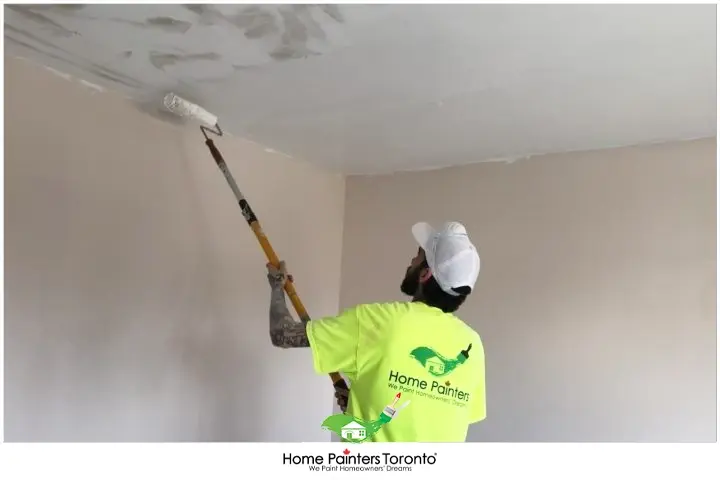
A full-ceiling repaint over a dried, repaired patch avoids the patchwork look that raises buyer questions
Keep a Paper Trail Before You Paint
A paper trail is a dated record of what was wrong, who fixed it and when. It is a seller's best evidence that paint was a finish and not a cover. Buyers and courts look at what a seller knew. Records show that you knew, acted and repaired. Keep them in one folder you can hand to your lawyer.
- Dated photos of the problem before any work starts
- Moisture readings, with the date and location of each one
- Invoices from every trade that describe the cause and the repair, not only "painting"
- Your painter's scope of work, listing repairs separately from paint
- Product names and colour codes for any touch-ups after listing
- Emails or texts with contractors that confirm the timeline
Older homes add one more record worth keeping. If your home may contain lead-based paint, read our guide to lead paint disclosure in Toronto before any sanding begins. Ask your painter for written warranty terms too, since how our painting warranty works depends on documented products and coats.
What Buyers and Home Inspectors Notice About Fresh Paint
Buyers and home inspectors notice fresh paint in odd places, because those spots often mark a past problem. Think of one patch of ceiling, a single basement wall or a new coat around one window. A fully repainted room reads as maintenance. A lone fresh square on an old ceiling reads as a question. Many inspectors carry moisture meters and check exactly those spots.
Sheen is the other giveaway. New paint beside aged paint shows a visible change in gloss under raking light, even in the same colour. Uneven texture over a patch also catches the eye. These tells are why a full-wall or full-ceiling repaint matters after any repair.
Talk to your real estate lawyer and agent before listing if you have repaired a leak, mould or cracking. They can advise whether and how to disclose it. Your painting contractor should be WSIB compliant and fully insured, and should give you written records of the repair. You can read what past clients say about our crews in our client reviews.
Painting Before Selling FAQs
Painting itself is not illegal, but painting over known water damage to hide it can expose a seller to a concealment claim after closing. The safer order is to fix the leak, repair the damage, then paint. Keep invoices that show the repair. Ask an Ontario real estate lawyer how to handle disclosure.
No, routine painting does not need to be disclosed on its own. What matters is whether the paint covers a known defect. Repainting scuffed walls is maintenance. Repainting over a repaired leak may still raise disclosure questions, so ask your lawyer.
A latent defect is a problem a buyer could not find through a reasonable inspection. Examples include leaks inside walls or mould behind finished surfaces. Ontario sellers must disclose known latent defects that make a home dangerous or unfit to live in. Painting over a visible stain can turn it into a hidden one.
No, an "as is" clause generally does not protect a seller who actively concealed a known defect. The clause shifts ordinary risk to the buyer. It does not excuse deliberately hiding a problem. Get legal advice before relying on one.
Paint before listing, and finish any repairs before the buyer's inspection. Painting between an accepted offer and the inspection can look like an attempt to hide something. If you must paint late, keep records of exactly what was done and why.
Fresh paint across whole rooms is not a red flag, but isolated fresh patches often are. Inspectors pay close attention to single painted spots on ceilings, basement walls and around windows. A full repaint with documented repairs answers those questions before buyers ask them.
House Painting Before Selling: Repair, Paint, Document
House painting before selling works best in three steps: repair the cause, paint full surfaces, and document everything. That order protects the finish, the sale and the seller. Brian Young has worked in the painting industry since 1987 and founded Home Painters Toronto in 1991. Our crews are WSIB compliant, fully insured and stand behind warranty-backed results on every pre-sale job.
This article is general information, not legal advice. Speak with an Ontario real estate lawyer about your disclosure obligations before you list.

Selling soon and not sure what needs fixing first? We offer fast, free quotes and warranty-backed work across Toronto and the GTA.
Get a Free Quote Now!