

Many Toronto parents assume that painting a house with kids or pets means packing up and moving out for a week or more. In most cases, it does not, because a well-planned crew can work around a busy household one zone at a time. Home Painters Toronto is a family-run residential painting company serving Toronto and the GTA since 1991, and it has earned 1,200+ positive reviews on HomeStars, Google, and Houzz. Toddlers, dogs, cats, and nap schedules all change how a crew sets up each morning and closes down safely each night, so planning matters more than most people expect. This guide explains when you can stay, when you should leave, and how to protect everyone at home from wet paint, ladders, and fumes.
Most families can stay home while a house is painted. The crew works one zone at a time, uses low-odour paint, and seals off an unpainted living area. Keep kids and pets away from wet surfaces and ladders, ventilate daily, and let new bedrooms air out before anyone sleeps there.
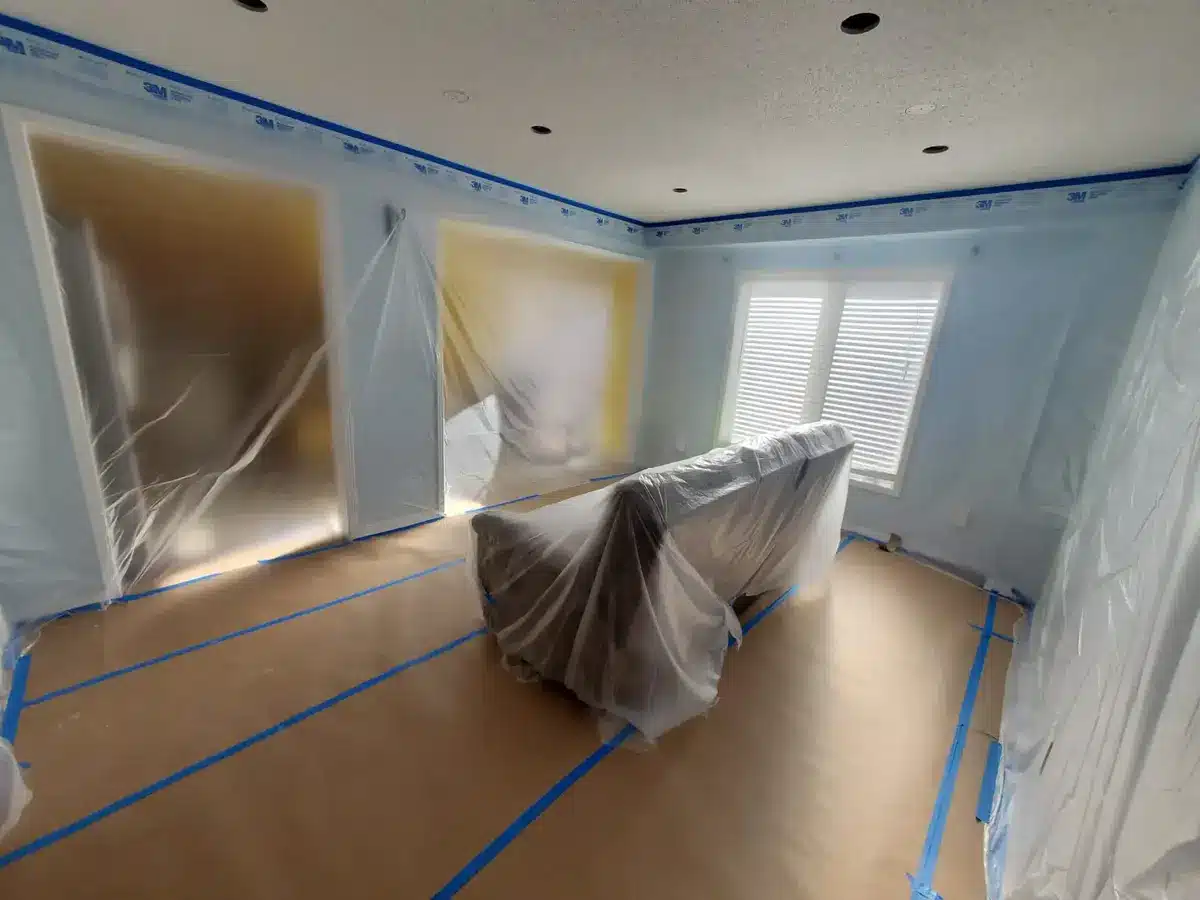
A well-planned crew can work around a busy household one zone at a time
Do You Need to Leave the House While It's Being Painted?
No, most families can stay home during an interior painting project if the crew paints one zone at a time. You keep one unpainted area fully livable. Water-based, low-odour paint smells far less than the solvent-based products many parents remember. The crew hangs plastic sheeting across doorways, so the work zone stays separate from the rest of the house. Staying also lets you handle naps, meals, and school runs without booking a hotel.
Some situations still justify leaving for a day or two. Households with young children, pregnant people, or asthma should plan more carefully. Health Canada names children, seniors, pregnant people, and people with asthma as most at risk from VOCs.
Stain-blocking primers and solvent-based enamels give off stronger odours than water-based paint. Spray application also adds fine mist to the air. Health Canada notes that homes built before 1990 may contain lead in their paint, so sanding or scraping calls for a lead test first. Ask your project manager which products, spray steps, and sealed zones apply to your job.
| Situation | Stay or Leave? | Reason |
|---|---|---|
| Interior repaint with zero-VOC or low-VOC acrylic | Stay | Odour stays low and you can seal off one zone at a time |
| Infant sleeps in a room being painted | Move the crib to an unpainted room | Sleeping rooms need the longest airing time |
| Stain-blocking primer or solvent-based trim enamel | Leave for the day | Stronger solvents raise odour levels in the work zone |
| Spray application on walls or ceilings | Leave for the day | Fine mist travels farther than roller or brush work |
| Sanding painted trim in a home built before 1990 | Test for lead first, then leave during the work | Lead dust is a bigger concern for children |
| Exterior painting | Stay, with kids and pets indoors | No indoor fumes, but ladders and drop cloths create trip hazards |
Cabinet spraying shows how the plan changes by service. Most of the spraying process for kitchen cabinets happens away from your home. Fumes and overspray never reach your kids' play space. The crew reinstalls the finished doors and drawers once the coating has dried.
Room-by-Room Scheduling to Minimize Disruption
The most reliable way to minimize disruption is to paint one zone at a time. Start with the rooms your family uses least and finish with the bedrooms. A zone can be a single room, a hallway, or a whole floor.
The crew seals a zone off, paints it, and lets it air out while the next zone begins. Your household always keeps one calm, unpainted area for meals, naps, and pets. Our house painting project timeline shows how long each stage usually takes.
| Zone | Order | HPT Range (CAD + HST) | Why This Order Works |
|---|---|---|---|
| Living and dining rooms | First | $400 – $900 per room | Low sleep risk, and the rooms air out for days before bedtime matters |
| Bathrooms | Second | $250 – $500 per room | Small rooms are easy to skip for a day and close off completely |
| Trims, doors, and baseboards | Last in each zone | $700 – $1,200 | Painting trim last keeps drips and fingerprints off finished work |
| Bedrooms | Last overall | $400 – $800 per room | Sleeping spaces need the longest airing time |
These are the interior ranges Home Painters Toronto publishes, and your final quote depends on room size, ceiling height, and prep work. Our guide to the cost of painting a house explains pricing in more detail. Ask your project manager which zones fit your budget and schedule first.
A typical day starts with the crew arriving at an agreed time and sealing the zone they will paint. They work through the day, then clean up and close every can before they leave. Before they go, they walk you through which areas are safe to use that evening. That daily handoff keeps your kids and pets out of wet paint without turning your home into a construction site.
Painting a House With Kids or Pets: The Zone-by-Zone Method
The zone-by-zone method splits the house into sections that each move through prep, painting, and airing. Your family returns to a section only after it has aired out. Our interior residential painting crews follow the same sequence on every family home.
- Walk the house with the project manager and mark each zone, kid-safe room, and pet room.
- Seal the first zone with plastic sheeting and taped doorways before any paint can is opened.
- Cover floors with drop cloths and tape the edges flat so nobody trips.
- Paint ceilings first, then walls, then trim, so drips land on surfaces that are not finished yet.
- Run a window fan that exhausts outdoors while the crew works and while the paint dries.
- Close every can and move tools out of the zone at the end of each day.
- Hold your family out of the zone until the surfaces are touch-dry and the odour has faded.
Why Bedrooms Should Be Painted Last
Bedrooms should be painted last because sleeping spaces need the longest airing time. Your family also needs a safe place to sleep while the job continues. By the time the crew reaches the bedrooms, the earlier zones have already aired out for days. That lets you move sleeping arrangements into finished, well-ventilated rooms instead of the freshest paint. It also gives the crew time to confirm that odours have faded before anyone lies down.
- At a recent interior repaint in Mimico, Etobicoke, a family with two toddlers and a beagle stayed home for a three-bedroom job. We painted the main floor first and finished the upstairs bedrooms last.
- The beagle stayed behind a gate in the finished family room. The toddlers napped downstairs until the upstairs had aired out.
- The walls received Sherwin-Williams Harmony Interior Acrylic Latex in Eggshell, applied at 4 mils wet, the film thickness behind Sherwin-Williams' stated coverage of 350 to 400 square feet per gallon. The house sat at about 21°C, and Sherwin-Williams lists a 4-hour recoat at 25°C and 50% relative humidity, so we waited five hours between coats.
You can see more family-friendly work in our recent painting projects.
Keeping Kids Safe Around a Painting Project
Kids stay safe around a painting project when they have a sealed living area and no access to wet paint, ladders, or tools. Most incidents happen in ordinary moments, such as a toddler running down a hallway or a curious child touching a fresh baseboard. A written plan before day one heads off most of them. Use the checklist below with your project manager.
- Tape plastic sheeting across every doorway to the work zone and add a baby gate at stairs or hallways the crew uses.
- Set aside a play space and a bathroom that the crew never enters.
- Ask the crew to store ladders out of sight and to close every paint can before breaks.
- Tape drop cloth edges flat, because loose cloth is a trip hazard for toddlers.
- Let children watch the work from a doorway instead of walking through the zone.
- Keep snacks, water bottles, and toys out of the work zone so nothing picks up dust or splatter.
- Explain the rules in simple words, such as "wet paint means hands off," and give older kids a small job like choosing a colour.
| Hazard | Where It Shows Up | Crew Precaution |
|---|---|---|
| Wet trim and baseboards | Toddler-height surfaces in every room | Paint trim last in each room and mark finished doorways with tape |
| Loose drop cloths | Hallways, stairs, and doorways | Tape edges flat and keep cloths off stair treads |
| Open cans and brushes | The active work zone | Seal lids at every break and store tools out of reach at day end |
| Ladders and cords | Stairwells and tall rooms | Set up only inside closed zones and coil cords away each evening |
| Sanding dust | Prep stages on walls and trim | Contain the zone with plastic and clean with a HEPA vacuum |
Wet Paint Contact Points at Toddler Height
Baseboards, door edges, and lower walls are the wet paint contact points at toddler height. A crew should paint them last in each room and keep children out until they are touch-dry. The Sherwin-Williams data sheet for Harmony lists 1 hour to touch and 4 hours to recoat at 25°C and 50% relative humidity.
Touch-dry does not mean cured. Small handprints can still mark a finish for days. Ask your crew for a written time when each zone is open again. We tape a note across finished doorways until we release the room.

A written plan before day one heads off most safety incidents
Keeping Pets Safe Around a Painting Project
Keep pets in a ventilated area away from the work zone until the surfaces are dry, and the odour is gone. Dogs and cats walk across drop cloths, brush against baseboards, and lick their paws. VCA Animal Hospitals notes that pets can swallow wet paint while grooming their paws and fur. It also warns that fumes can irritate eyes and airways in poorly ventilated spaces. Call your veterinarian right away if you suspect your pet has touched or swallowed paint.
- Set up a pet room with water, bedding, and a litter box, far from the work zone.
- Use baby gates in finished areas so pets can still roam without touching wet surfaces.
- Keep pet doors, food bowls, and toys out of the work zone.
- Tell the crew right away if paint touches a pet, so you can call your veterinarian.
- Book a dog walker or daycare for the noisiest or smelliest days.
Watch for coughing, drooling, vomiting, or unusual hiding after any exposure. Call your veterinarian if you notice any of these signs. Small animals and birds can react faster than dogs and cats, so check on them more often.
| Pet Type | Main Risk | Plan |
|---|---|---|
| Dogs | Paw contact with wet trim and curiosity about tools | Gate in a finished area, plus walks or daycare on heavy days |
| Cats | Climbing over drop cloths and grooming paint from paws | Closed room with litter box and food, away from the zone |
| Birds and small caged animals | Sensitivity to fumes, dust, and fine mist | Move to another home or a distant room, and ask your veterinarian first |
Pets and Spray Application
Spray application puts fine mist in the air, so pets should leave the house for the whole day. If that is not possible, use a sealed room far from the spray zone. Airless spraying is efficient on ceilings and large exterior surfaces.
Overspray can settle on fur, bedding, and food bowls when animals share the space. We recommend a dog walker, daycare, or a stay with family on spray days. Birds are especially sensitive to airborne fumes and dust, so ask your veterinarian for advice before the job starts.
Product Choices That Make Sense for Households With Kids or Pets
The best choice is a water-based, low-odour acrylic in a zero-VOC or low-VOC formulation. Pick a washable eggshell or satin sheen, since kids and pets leave marks. A sheen that wipes clean holds up to fingerprints and paw prints. Water-based products also dry faster than solvent-based enamels, which shortens the time a zone stays off limits.
| Product Type | Odour Level | Best Use in a Busy Household | Trade-Off |
|---|---|---|---|
| Zero-VOC water-based acrylic (Sherwin-Williams Harmony, for example) | Very low | Nurseries, bedrooms, and family rooms | Colourant can add VOCs after tinting |
| Low-VOC water-based acrylic | Low | Living areas, hallways, and ceilings | Slightly more odour on the first day |
| Solvent-based enamel | Strong | Small trim jobs while the household is away | Needs a leave-for-the-day plan |
| Stain-blocking or shellac-based primer | Strongest | Spot-treating water, smoke, or tannin stains | Use only in small areas, with fans on and the family elsewhere |
Tinting is where many parents get surprised. A zero-VOC base can pick up VOCs from the colourant. Ask the paint store for a zero-VOC tinting system for bedrooms and nurseries.
Primers and specialty sealers can carry more VOCs than the topcoat. Ask your crew for the data sheet on every product they plan to use. Our explainer on low-VOC paint shows how the labels work.
Finish and colour matter too, and our guide to the best paint for a child's room covers both. Ask for a scrubbable finish in high-touch zones such as hallways, stair walls, and playrooms. That guide recommends 48 to 72 hours of ventilation before a newborn sleeps in a freshly painted room. It advises this even with zero-VOC paint. Sleeping rooms deserve that extra margin.
Why a Closed Door Does Not Keep Paint Fumes Out of Your Kids' Rooms
A closed door does not keep fumes out because air moves through door gaps, return grilles, and shared ducts. Forced-air systems can carry odours from the work zone to bedrooms quickly. Air flows from higher pressure to lower pressure. A sealed room with an open return grille can pull fumes into the duct system.
The fix is to control airflow, not to seal a room and hope. The crew covers registers in the work zone and hangs plastic across doorways. A window fan then exhausts air outdoors. That creates negative pressure, which means air flows into the work zone through door gaps instead of out of it.
In winter, a heat recovery ventilator (HRV) or short bursts of window ventilation keep fresh air moving without freezing the house. Health Canada also advises increasing ventilation whenever paints are in use. Store opened cans and wet rags outside the living space, and have the crew remove them each evening.
| Common Belief | What Actually Happens | Better Approach |
|---|---|---|
| A closed door seals the room | Door gaps, ducts, and return grilles move air house-wide | Cover registers, hang plastic, and exhaust with a window fan |
| Zero-VOC means zero odour | Colourant, primers, and sealers can still smell for days | Ask for data sheets and stage stronger products away |
| Air the house out after the job | Fumes are strongest while the paint is wet | Ventilate during the work and for days afterwards |
| Air fresheners cover the smell | Air fresheners are themselves a source of VOCs, according to Health Canada | Use fresh air and time instead |
Condo and apartment units make this harder because shared ventilation and sealed windows limit airflow. Our condominium and apartment painting crews plan fan placement and timing around building rules. For lingering odours after the crew leaves, our tips for getting rid of paint smells cover the aftercare.
What to Tell Your Painting Crew Before They Start
Tell your crew about nap times, pet locations, and health concerns before the first drop cloth goes down. A short conversation on day one shapes the whole schedule. Cover the points below with your project manager.
- Nap and quiet times, so loud prep such as sanding happens around them.
- Rooms that stay off-limits to the crew, such as a nursery or a pet room.
- Pet names, temperaments, and escape habits, plus which doors must stay closed.
- Any asthma, allergy, or pregnancy concerns, so the crew can choose low-odour products and time each zone.
- Preferred arrival time, so the front door stays closed during naps.
- Which bathroom the crew may use and where breaks happen.
- Anyone who works from home and needs a quiet room during calls.
Ask for a short wrap-up each evening. The crew should tell you which zones are open, which stay closed, and when the next product goes on. That routine removes guesswork for parents and pet owners alike.
Parents are right to ask who is working in their home. Our crews are WSIB-compliant and fully insured, with $5M in general liability insurance, and every crew member has a criminal background check. Home Painters Toronto has painted 20,000+ homes across Toronto and the GTA, and interior work carries a lifetime warranty. That means warranty-backed work you can rely on long after the drop cloths leave. Founder & CEO Brian Young has worked in the painting industry since 1987 and founded the company in 1991.
We are open 7 days a week and offer same-day estimates, so you can book a walkthrough that fits your family's schedule. Ask about scheduling painting zone by zone so part of your home stays fully livable throughout. Families can read what other parents say in our client reviews.
Painting With Kids or Pets FAQs
Wait 48 to 72 hours before a newborn sleeps in a freshly painted room, even with zero-VOC paint. That timing comes from our child's room paint guide. Keep a fan or window open when the weather allows. Move the crib back only when the surfaces are dry and the odour is gone. If you have concerns about your baby's health, ask your pediatrician.
Pets should stay out until the paint is dry and the smell has faded. That takes longer than the touch-dry time on the can. Sherwin-Williams lists 1 hour to touch for Harmony at 25°C and 50% relative humidity, but fumes can linger past that point. Birds and other small animals need more time and distance. Ask your veterinarian for advice about your specific pet.
Ask your doctor first, because Health Canada names pregnant people among those most at risk from VOCs. Many expecting parents let the crew handle the job while they stay in a well-ventilated part of the home or with family. Choose zero-VOC paint, run fans during the work, and stay out of the room until the odour fades. A doctor can give advice for your specific situation.
Painting can irritate the airways of some people and animals, especially with strong-smelling products. Families with asthma or allergies should plan extra ventilation. Health Canada names people with asthma among those most at risk from VOCs. Low-odour products, staged work zones, and daily airing all reduce exposure. Talk to your doctor or veterinarian about your household's needs.
You usually do not need to board a pet for exterior work. Keep pets indoors and away from ladders, drop cloths, and open gates. Exterior projects create less indoor fume exposure, though scraping and pressure washing noise can stress animals. A daycare or dog walker helps on the loudest days. Our exterior painting crews will tell you the schedule in advance.
Use physical barriers first, such as taped plastic sheeting, baby gates, and closed doors between your toddler and the work zone. Give your toddler a separate play area that the crew never enters. Ask the crew to tape drop cloth edges flat and to release each room only after the wet-paint time has passed. A supervising adult should always be nearby.
Planning a Painting Project Around Your Family
Plan around your family with low-odour products, zone-by-zone painting, controlled airflow, and an early briefing for the crew. Painting a house with kids or pets is manageable when the plan protects sleeping rooms, sealed zones, and ventilation. Once the crew leaves, our post-painting care guide explains what to do next, and our painting FAQs answer other common questions.

Ready to plan a project around your household? Home Painters Toronto offers fast, free quotes and warranty-backed work across Toronto and the GTA. Tell us about your kids, your pets, and your schedule.
Get a Free Estimate