

What is the Best Paint to Use in a Child's Room?
Choosing the best paint for an interior room is never more important than when that room belongs to a child. Safety, washability, and durability are not optional extras, they are the baseline. In a city like Toronto where older homes may still carry decades of paint layers and VOC-heavy formulations, making the right product choice for your child's bedroom matters more than most guides acknowledge. This blog covers the key features to prioritize, the best products available in Canada in 2026, the right finish for a child's room, colour guidance by age, and what a professional job costs.
What to know before you choose any paint for a child's room:
- Zero-VOC or low-VOC is non-negotiable for a room a child sleeps in
- Washability is the most practical feature: crayon, scuff marks, and sticky hands are guaranteed
- Finish choice matters as much as product choice: the wrong sheen makes marks harder to clean
- Colour affects mood and sleep quality, not just aesthetics
- Toronto homes built before 1990 may have existing lead-based paint layers that must be assessed before repainting
A child's room is a wondrous space, a canvas for imagination and dreams. It serves as a sanctuary, a playground, and a nook for learning. Thus, painting a child's room requires something more than just a thoughtful colour scheme. It requires a safe, durable, and inviting paint that feeds their imagination. In this blog, we explore the best paints to use in a child's room while taking into consideration the safety and durability factors that are paramount for maintaining a vibrant and nurturing environment.
Every year, paint companies reveal to us the colour of the year and what interior designers are finding trendy. They single out a shade for us that will be a hit for the rest of the year. With the help of interior designers and interior painters, there are many bedroom colour schemes, including what is the best paint to use in a child's room. These include paints that are low-VOC formulations so that your child can breathe easier while making their room magical.
Unleashing a World of Safety: Paint Features to Prioritize
When painting a child's room, the best choice will cater not just to aesthetics but also to these crucial aspects:
- Low VOC and Odour: Kids are especially sensitive to airborne pollutants. Choose paint for a kid's room with low or zero VOC (Volatile Organic Compounds) content, as these compounds are linked to issues like headaches, allergies, and respiratory problems. Low-odour paints are also preferable to minimize the time required for post-painting airing.
- Durable and Washable: Children's rooms inevitably experience scuffs, crayon marks, and sticky fingerprints. Opt for the best paint for high-traffic walls that can handle regular scrubbing and resist wear and tear, ensuring the room remains crisp, clean, and vibrant.
- Eco-Friendly: Prioritize eco-friendly, water-based paints that have a smaller environmental footprint and fewer negative health implications.
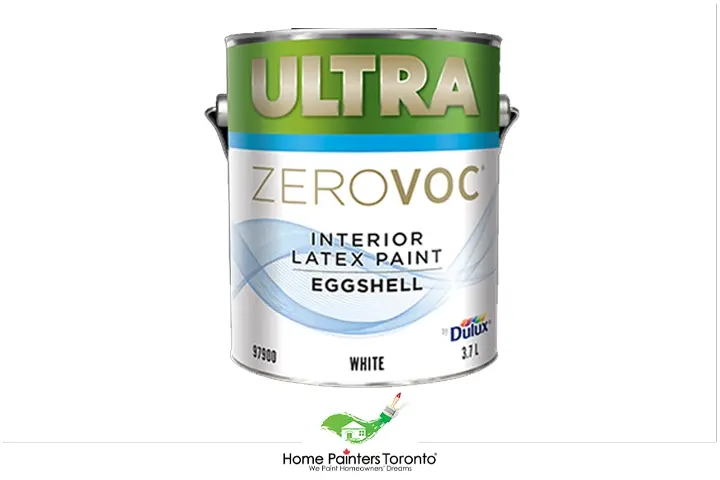
Zero-VOC paint, an eggshell finish on walls, and semi-gloss on trim — the combination that delivers safety, washability, and a finished look for any child's room in Toronto.
Understanding VOCs in Interior Paint - What Toronto Parents Need to Know
VOC stands for volatile organic compound. These are chemicals that evaporate at room temperature and are present in most conventional paints. In a child's bedroom where a child spends 10 or more hours a day, including sleeping hours, VOC exposure is a genuine health consideration. According to Health Canada guidance on indoor air quality, children are more susceptible to the effects of VOCs than adults due to their higher breathing rate relative to body weight and the amount of time they spend indoors.
In Canada, paint VOC levels are measured in grams per litre (g/L). Here is what the labels mean in practice:
| VOC Level | g/L Range | What It Means for a Child's Room |
|---|---|---|
| Zero-VOC | 0 to 5 g/L | The gold standard for a child's bedroom; safest option for rooms where children sleep |
| Low-VOC | 5 to 50 g/L | Acceptable; dramatically better than conventional paint; allow 24 to 48 hrs ventilation after painting |
| Conventional (mid-range) | 50 to 150 g/L | Not recommended for a child's bedroom; off-gassing continues for weeks after application |
| High-VOC | 150 g/L and above | Never use in a child's room; restricted under Ontario's environmental regulations for residential use |
Note that tinting a paint can add VOCs even when the base is zero-VOC. Always ask your paint retailer to use a zero-VOC tinting system when mixing colour for a child's room. Most Benjamin Moore and Sherwin-Williams stores in Toronto offer this as standard.
Best Paint for Child's Room
Let your imagination run wild by painting your child's room! Although it is tricky at first to stick to one colour scheme for their home, the possibilities are endless! It will take time, but with the right preparation, you will find the right paint to use for your child's room. The best paint for a child's room is the Dulux Easycare Washable and Tough Matt Emulsion Paint. It is in the name: washable and tough! Also, it is available in a variety of colours and dries within four hours.
Matt is the best paint finish for a child's room. This is because more often than not, it can be wiped clean of any pen marks, and it is durable. Also, it will not show up on bumps in the plasterwork like finishes with a sheen component. You can even use a glitter finish or a chalkboard finish, seeing as kids love glitter and writing. In terms of drying time, you would not want to use paint that takes 24 hours to dry because one of your kids could potentially rub against it. Not to mention it would ruin their clothes and the wall. To avoid this from happening, you should use the Rust-Oleum Magnetic Matt Chalkboard Paint because it has the fastest drying time, taking 30 minutes to 1 hour. Bear in mind that cheaper paints have poor coverage, so a low-cost option is not always the best thing.
What is the Best Paint to Use in a Child's Room?
If you want to secure a paint that is available in a wide range of colours, look no further than Farrow & Ball Matt Estate Emulsion Paint. It comes in 132 shades and counting! From pink to neutral colours and blues to yellows, whatever colour you desire, it is there. Another paint to consider is the Dulux Easycare Washable and Tough Matt Emulsion Paint (mentioned previously) because it is stain-resistant, liquid-resistant, and washable. In addition, it is available in many retailers and comes in a wide range of colours. Its drying time is approximately 4 hours. Lastly, you should consider Wickes Colour at Home Vinyl Matt Emulsion Paint. This is a good paint to use in a child's room because of its easy application and drying time of 2 to 4 hours. Not to mention, it has excellent opaque coverage and lots of colours to choose from.
Best Interior Room Paint for a Child's Room - Canadian Products Compared (2026)
Most product recommendations in guides like this are written for the UK or US market. Here is a comparison of products actually available through Canadian retailers in 2026, with pricing relevant to Toronto homeowners.
| Product | VOC Level | Finish Available | Washability | Approx. Price (CAD per 3.78L) | Best For |
|---|---|---|---|---|---|
| Benjamin Moore Aura Interior | Zero-VOC | Matte, Eggshell, Satin | Excellent; scrubbable | $90 to $105 | Best overall for a child's room; exceptional coverage and washability |
| Benjamin Moore Natura | Zero-VOC | Matte, Eggshell | Very Good | $80 to $95 | Allergy-sensitive children; asthma-friendly; GreenGuard Gold certified |
| Sherwin-Williams Emerald Interior | Near Zero-VOC | Matte, Eggshell, Satin | Excellent; highly scrubbable | $90 to $110 | High-traffic kids' rooms; durable finish that holds up to years of scrubbing |
| Sherwin-Williams Harmony | Zero-VOC | Flat, Eggshell, Semi-Gloss | Good | $75 to $90 | Odour-neutralizing formula; ideal when painting while child is still in the home |
| Dulux Easycare Washable and Tough | Low-VOC | Matt, Silk | Very Good | $55 to $70 | Budget-conscious parents needing washable finish; widely available at Canadian Tire |
| Benjamin Moore ben Interior | Low-VOC | Matte, Eggshell | Good | $55 to $70 | Entry-level Benjamin Moore option; good washability for the price |
| Rust-Oleum Chalkboard Paint | Low-VOC | Flat/Chalkboard | N/A (feature paint) | $30 to $45 per 887mL | Accent wall feature; fast-drying (30 to 60 min); great for creative play areas |
For the most up-to-date product availability and current pricing at Toronto-area paint retailers, see our interior painting services page or visit your nearest Benjamin Moore or Sherwin-Williams location.

A soft teal accent wall with warm white on the remaining walls — a popular school-age colour scheme that works with Toronto's varied natural light and allows a bolder update without repainting the whole room.
Colour Schemes for Bedroom
There are a variety of bedroom colour schemes that have been rolled out by major paint companies, such as Benjamin Moore and Sherwin-Williams. Benjamin Moore has revealed that Aegean Teal will be a popular bedroom colour scheme. It is the perfect combination of natural blue and green. In addition, these are both very calming colours to have in your bedroom. It will create a beautiful and harmonious vibe in your bedroom, making it an excellent choice to incorporate. However, you can implement this paint colour for home offices or even on kitchen cabinets.
Another great bedroom colour scheme is Passionate by HGTV by Sherwin-Williams. Who does not love a vibrant and bold colour for their bedroom? This colour is a rich and saturated red, while also being modern and traditional. Paint colours that represent comfort and confidence are exactly what homeowners are leaning towards.
A popular bedroom colour scheme will be light pink! Although mostly used for girl's bedrooms, this delicate shade is still popular with everyone else. Pink works very well with white, beige, or even gray features. Also, while fuchsia is more on the intense side, it still is a widely used accent for bedroom walls. Another light shade that everyone incorporates is blues! Navy blue, light, or even bluish greens will never get old for homeowners. Blues and greens have always been considered great colours for bedroom walls, as they have a calming and soothing effect. It is the perfect backdrop and will not make your walls look boring at all.
Best Colour Choices for a Child's Interior Room by Age
Colour is not just an aesthetic choice in a child's room. Research on colour psychology consistently shows that certain colours affect concentration, sleep quality, and mood in ways that change as children develop. Here is a practical guide for Toronto parents by age group.
| Age Group | Recommended Colour Direction | Colours to Avoid | Notes |
|---|---|---|---|
| Nursery (0 to 2 years) | Soft, muted tones: pale sage, warm white, dusty lavender, soft peach | Bright primary reds, high-contrast patterns | Infants are sensitive to visual stimulation; calm colours support sleep |
| Toddler (2 to 5 years) | Soft primary colours: sky blue, warm yellow, mint green, light coral | Very dark tones that make small rooms feel smaller | Bold enough to stimulate exploration; not so intense they disrupt rest |
| School age (6 to 12 years) | Medium tones: teal, warm grey, soft terracotta, navy accent walls | Neon or high-saturation walls throughout | One accent wall in a bolder colour works well; rest of room in a softer complement |
| Teenager (13 and up) | Let them choose; guide toward colours that work with natural light | Colours the teenager will hate in 2 years (trends fade fast) | Semi-gloss or eggshell sheen essential for durability; teens are hardest on walls |
For more colour inspiration specific to Toronto homes and interior styles, see our colour inspiration page and our blog on the best energizing colours for kids and teenagers rooms.
Gloss Level is Important!
Knowing which gloss level to choose for your painting project will always come in handy for your painting projects. Not only will gloss improve appearance, but it is also very serviceable. This means that increasing gloss improves the paint's durability, including stain, scrub, and moisture-resistance paints. Although gloss creates all these good features, there are some cons. The biggest con is that the higher the gloss level, the more defects and imperfections are highlighted. Another detail about gloss level is colour perception. The same colour that has a different gloss will look like a different colour. The colour that uses a higher gloss paint will most likely appear brighter and richer than the same colour in a lower gloss paint.
Best Paint Finish for a Child's Interior Room - Complete Comparison
The finish you choose has a bigger impact on durability and cleanability than most parents realise. Here is a complete breakdown of how each finish performs in a child's room environment.
| Finish | Sheen Level | Washability | Hides Imperfections? | Best Use in Child's Room | Avoid When |
|---|---|---|---|---|---|
| Flat / Matte | None | Low to moderate; not scrubbable | Yes | Ceiling; low-traffic feature walls in older kids' rooms | Toddler rooms where walls get regular crayon and food contact |
| Eggshell | Very low | Good; wipes clean easily | Yes, most | Main walls in most children's rooms; best balance of washability and appearance | High-gloss furniture nearby; clash of sheens looks mismatched |
| Satin | Low-medium | Very good; resists moisture | Moderate | Toddler rooms and high-contact walls; trims and window frames | Rooms with plaster imperfections; sheen will highlight every bump |
| Semi-Gloss | Medium | Excellent; fully scrubbable | Poor | Trim, baseboards, door frames, window casings in any child's room | Main walls unless room is large and well-lit; looks clinical in small spaces |
| High-Gloss | High | Outstanding | Very poor | Feature details only; furniture painting | Main walls in a child's room; harsh, bright, clinical appearance |
For most children's rooms in Toronto homes, eggshell on the walls with semi-gloss on trim and baseboards is the most practical combination. It gives enough washability for daily scrubbing while keeping the room looking finished and warm rather than clinical.
Painting a Child's Room in an Older Toronto Home - What Parents Need to Know
Toronto has a significant proportion of housing stock built before 1978, when lead was still used in residential paint in Canada. If your home was built before this date and has not been fully stripped and repainted since, there is a possibility that lead-based paint exists beneath current layers, particularly on trim, window frames, and doors.
Health Canada recommends that homeowners with pre-1978 homes have paint tested before sanding or scraping, as disturbing lead-based paint creates dust that is particularly harmful to children. Testing kits are available at most Canadian hardware stores. For more information on lead in older homes, see the Health Canada guidance on lead paint in the home. If lead is confirmed, do not sand or scrape yourself; contact a professional with experience in lead paint abatement before proceeding.
Beyond lead, older Toronto homes in neighbourhoods like The Annex, Roncesvalles, Cabbagetown, and Leslieville commonly have plaster walls that require alkali-resistant primer before any paint is applied. Painting directly over plaster without this primer will result in adhesion failure within a season, even with premium paint. This is a step many DIY projects skip and the reason why repaints in older homes often fail faster than expected.
How Much Does it Cost to Paint a Child's Interior Room in Toronto? - 2026 Guide
Cost is one of the most searched questions related to painting a child's room, and most guides avoid it entirely. Here is an honest 2026 breakdown for Toronto homeowners.
DIY Cost Estimate for Painting a Child's Room
- Zero-VOC primer (e.g. Benjamin Moore Fresh Start, 1L to 3.78L): $25 to $55 CAD
- Zero-VOC topcoat (e.g. Benjamin Moore Natura, 3.78L): $80 to $95 CAD
- Roller frame, covers, extension pole, tray: $25 to $45 CAD if not owned
- Brushes (2 in and 3 in angled): $15 to $25 CAD
- Masking tape and drop cloths: $15 to $25 CAD
- Total DIY materials for an average child's room (approx. 120 sq ft of wall): $120 to $200 CAD
Professional Cost Estimate for Painting a Child's Room in Toronto
| Job Type | Typical Range (CAD) | Notes |
|---|---|---|
| Single child's bedroom, standard repaint | $450 to $850 | Walls, ceiling, trim; zero-VOC products; 2 coats included |
| Child's room with accent wall (chalkboard or feature colour) | $550 to $950 | Additional prep and masking for the accent wall |
| Nursery repaint with full prep (plaster walls) | $600 to $1,100 | Plaster assessment, alkali-resistant primer; additional time for surface prep |
| Child's room plus hallway and trim | $900 to $1,800 | Common combination when refreshing upper floor of Toronto home |
| Lead paint test and assessment (pre-1978 homes) | $100 to $300 | Third-party testing recommended before sanding or scraping in older Toronto homes |
For a precise quote based on your specific room and home, contact Home Painters Toronto at 416.494.9095 or see our interior painting cost guide for broader pricing context.
Real Project - Nursery and Child's Room Repaint in Toronto
Leslieville Semi-Detached: Nursery and Child's Bedroom Repaint with Lead-Safe Practices
Here is a summary of a recent project our team completed in Toronto that illustrates what a professional child's room paint job actually involves.
The situation: A family in a semi-detached home in Leslieville was preparing a nursery and updating an older child's bedroom on the second floor. Both rooms had original plaster walls with multiple layers of older paint. The parents requested zero-VOC paint throughout and wanted to confirm there was no lead-based paint before work began, given the age of the home (built 1952).
What the job involved: Our team recommended a lead paint test before any scraping or sanding was done. The test confirmed lead in the trim paint on the window casings in one of the rooms. Our team wet-scraped the affected areas using lead-safe practices, contained the debris, and disposed of it appropriately. An alkali-resistant primer was applied to all plaster surfaces in both rooms. The nursery was painted in Benjamin Moore Natura in a custom mixed pale sage at a zero-VOC eggshell sheen. The older child's bedroom was painted in Benjamin Moore Aura in a client-selected warm teal. All trim was repainted in Benjamin Moore Advance in a semi-gloss zero-VOC formulation.
The result: Both rooms were ready for occupancy 48 hours after completion with no perceptible odour. For more completed projects, visit our Toronto painting projects page.
To Sum Up
Selecting the ideal paint for your child's room goes beyond mere colours and shades. It demands a careful balance between aesthetics, safety, and practicality. By opting for low-VOC, eco-friendly, and easily washable options, you ensure that the vibrant space you create for your child nurtures their creativity, supports their growth, and prioritizes their well-being. Do not hesitate to personalize the space with bold patterns, whimsical themes, and joyful hues that reflect your child's unique personality and desires. A considered paint choice will enable you to create a dreamlike haven where your child can thrive, explore, and build cherished memories.
Frequently Asked Questions About the Best Paint for a Child's Interior Room
For a nursery, choose a zero-VOC 100% acrylic latex paint in a zero-VOC tinted colour. In Canada, Benjamin Moore Natura and Sherwin-Williams Harmony are the two most widely recommended options for nurseries. Both carry GreenGuard Gold certification, which tests for over 360 chemical emissions. Allow a minimum of 48 to 72 hours of ventilation after painting before a newborn sleeps in the room, even with zero-VOC paint.
Eggshell is the best all-around finish for the main walls of a child's room. It is washable enough to handle daily contact, does not show imperfections the way satin or semi-gloss does, and creates a warm, finished appearance. Use semi-gloss on all trim, baseboards, and door casings for maximum durability and cleanability where hands and toys make the most contact.
Most chalkboard paints available in Canada, including Rust-Oleum Chalkboard Paint, are water-based and low-VOC, making them suitable for a child's room as an accent application. Apply to one wall or a designated section rather than the whole room. Allow full cure time (typically 3 days before chalk use) and ventilate the room during and after application. Do not apply over an entire room as a primary paint; use as a feature wall alongside a washable wall paint on the remaining surfaces.
With zero-VOC paint, most manufacturers recommend 24 hours before re-occupying a room for sleeping. With low-VOC paint, allow 48 to 72 hours with windows open when possible. With conventional (higher VOC) paint, which should not be used in a child's room, off-gassing can continue for days or weeks. When in doubt, extend the ventilation period rather than shortening it.
Not necessarily. The rest of your home may use a standard low-VOC interior paint that performs well for adults, but a child's room benefits from a zero-VOC certified product given how much time children spend in the space. The added cost of upgrading to zero-VOC for one or two rooms is modest, typically $15 to $25 per can more than a standard product, and the health benefit is meaningful, particularly for younger children and infants.
With a quality zero-VOC washable paint in an eggshell or satin finish, a child's room should not need full repainting for 5 to 8 years under normal conditions. Annual spot touch-ups on high-contact areas are normal and expected. When you do repaint, it is a natural opportunity to update the colour scheme to suit the child's age and evolving preferences. For more on repainting schedules across the whole home, see our interior painting services page.
Not without testing first. Homes built before 1978 in Toronto may have lead-based paint on trim, windows, and walls. You can paint over intact lead-based paint that is in good condition without major risk, but any sanding or scraping releases lead dust, which is highly toxic to children. Test before any surface preparation work begins. Testing kits are available at Canadian hardware stores for under $30. If lead is confirmed, contact a professional with lead-safe work practices. See Health Canada's guidance on lead paint for more information.
More Interesting Blogs Related to Painting a Child's Room
Ready to Paint Your Child's Room in Toronto?
Home Painters Toronto has been painting Toronto interiors for over 37 years. We use zero-VOC products and lead-safe practices in older homes. Call 416-494-9095 or email [email protected] for a FREE quote.