

Spring exterior painting is one of the smartest home improvement decisions a Toronto homeowner can make, and the window to act is shorter than most people realize. Once temperatures settle above 10 degrees Celsius consistently, the painting season is open. But by late June, humidity starts climbing, contractor schedules fill up, and the ideal conditions for exterior paint application begin to narrow.
If your home's exterior needs painting, this guide explains exactly why spring is the right time to move, what conditions to watch for, how to prepare your home after a Toronto winter, and what to expect from a spring exterior painting project in terms of prep, products, timing, and cost.
- Why spring is the best season for exterior painting in Toronto
- The exact temperature and humidity conditions that produce the best results
- What a Toronto winter does to exterior surfaces and why spring inspection matters
- A spring exterior painting prep checklist
- How to book a contractor before the season fills up
- What spring exterior painting costs in Toronto in 2026
- A real project case study
- FAQ answers to the most common homeowner questions
Ready to book your spring exterior painting project? Get a free quote for exterior painting in Toronto.
Mid-May through mid-June is Toronto's prime exterior painting window — stable temperatures, moderate humidity, and long days before summer heat and contractor schedules close out.
Why Spring Is the Right Time for Exterior Painting
Spring is the ideal season for exterior painting in Toronto because consistent temperatures above 10°C allow paint to cure properly, avoiding the failures caused by summer heat or winter freezes. The weather is mild in the spring. Exterior latex paint forms the most durable finish in this weather. It is more useful to do exterior painting when the temperature is above 10 degrees Celsius. This is the best temperature to paint the exterior of a house.
So, when not to paint outside? It is important to not be too hot. Hot temperatures tend to speed up the exterior paint drying process. When it's too hot, it keeps the paint from setting correctly. Sudden freezes could potentially crack pristine finishes. By painting during spring, the exterior paint job will last longer.
Spring in Toronto often provides better exterior painting conditions because daytime temperatures are more consistently above 10°C, humidity is moderate, and paint can cure more evenly before the extreme heat and UV exposure of summer.
Extreme weather in both hot and cold seasons can damage newly painted properties. Humid weather causes uneven coat textures, making the paint job look patchy, inconsistent, and poorly finished.
The Exact Temperature and Humidity Conditions That Produce the Best Exterior Paint Results
Knowing that spring is a good time to paint is one thing. Knowing exactly what conditions to wait for before starting is what separates a paint job that lasts ten years from one that starts failing within the second winter.
According to Benjamin Moore's temperature guide for exterior painting, the recommended temperature range for exterior painting is between approximately 4 degrees Celsius and 38 degrees Celsius, with the optimal around 25 degrees Celsius and humidity as low as possible. The practical guidance for Toronto homeowners translates as follows.
Temperature must stay above 10 degrees Celsius at the time of application and for a minimum of 48 hours after the final coat is applied. This is the curing window. Paint applied at acceptable daytime temperatures can still fail if overnight temperatures drop below the threshold before the film has fully cured. This is one of the most common mistakes in early-spring painting. The daytime high looks acceptable. The overnight low at 4 degrees Celsius compromises the cure.
Humidity should ideally be between 40 and 70 percent. Below 40 percent the paint can dry too quickly before it has levelled properly. Above 70 percent, paint dries slowly and unevenly, and in very high humidity the moisture in the air can interfere with how the paint film forms, resulting in surface staining, adhesion problems, and a finish that never reaches full hardness.
Never paint when rain is forecast within 24 to 48 hours. Even if the surface looks dry after rain, wood and masonry retain moisture well below the surface for days. Applying paint over a substrate with high moisture content traps that moisture beneath the film and causes bubbling and peeling within the first season.
The Toronto spring window that meets all of these conditions most consistently is mid-May through mid-June. Late March and April can work on warmer years but require careful attention to overnight temperatures. July and August technically fall within the temperature range but bring humidity spikes and direct-sun heat that create their own challenges.
| Month | Average High (Celsius) | Average Low (Celsius) | Humidity | Spring Painting Suitability |
|---|---|---|---|---|
| March | 4 to 8 | -4 to 0 | Variable | Too cold; frost risk high |
| April | 10 to 14 | 2 to 5 | Moderate | Marginal; check overnight lows carefully |
| May | 18 to 22 | 8 to 12 | Moderate | Excellent; prime spring window opens |
| June | 23 to 27 | 13 to 17 | Rising | Good early; watch humidity by late June |
| July | 27 to 30 | 18 to 20 | High | Hot; humidity spikes; paint dries too fast in sun |
| August | 26 to 29 | 17 to 19 | High | Same risks as July; book fall project instead |
You Have More Free Time in Spring
Spring is also when most Toronto homeowners reassess their home after a long winter. The snow is gone, the light is back, and the exterior condition of the house is visible again after months of being obscured by snow and darkness. That spring inspection moment, when homeowners walk around their property and actually look at the siding, trim, gutters, and porch, is when most exterior painting decisions get made.
Booking a contractor in spring, as soon as you have identified the need, gives you the best chance of securing your preferred start date. The exterior painting season in Toronto and Ontario is genuinely short, roughly five to six months from May through October, and the premium weeks in May and June book out faster than any other time of year. Contractors who have availability in July and August often have it because they are less sought after, or because earlier cancellations have opened spots. The contractors most homeowners want are booked weeks ahead by the start of May.
If you are planning a spring exterior painting project, the time to get your estimate is in late March or April, not the week you want painting to start. Our team at Home Painters Toronto begins taking spring bookings in February and March each year, and the best time slots in May are consistently claimed well before the season opens.
Your Home Needs Some TLC After a Long Hard Winter
Toronto winters are hard on exterior surfaces in ways that only become fully visible in spring. More than 100 freeze-thaw cycles pass through a typical Toronto winter, each one applying stress to paint films, caulk joints, wood fibres, and masonry. When the snow melts and the exterior is finally fully visible, a spring walk-around almost always reveals damage that was invisible or hidden in November.
Here is what to look for during your spring exterior inspection before booking a painting project:
- Paint cracking, peeling, or bubbling. This is the most obvious sign. Freeze-thaw cycling causes paint to crack at joints and on horizontal surfaces where water sits. Any peeling paint must be addressed in prep before new paint goes on.
- Caulk that has cracked or separated at window frames, door surrounds, trim joints, and where siding meets trim. Failed caulk is a water infiltration point. All failed caulk must be removed and replaced before painting.
- Soft wood at window sills, fascia boards, porch trim, and any other wood in contact with water runoff. Press a screwdriver into suspect areas. Soft wood needs repair or replacement before painting.
- Efflorescence on brick or masonry. White or grey salt deposits indicate moisture is moving through the masonry. This must be treated before any painting or staining is done.
- Mould or mildew on siding, particularly on north-facing and shaded surfaces. Mould must be killed and cleaned before painting. Painting over mould does not seal it in. It grows through the paint.
- Gutter and fascia condition. Missing gutter sections, fascia boards pulling away, or visible wood rot at the roofline indicate repair work that should be completed before painting.
Our team conducts this full assessment as part of every spring exterior painting estimate. For any wood damage found during the assessment, our exterior wood repair and carpentry service handles repairs before the painting crew begins.
Spring Exterior Painting Prep Checklist
Before any paint goes on, the following prep steps must be completed. This checklist applies whether you are doing the work yourself or overseeing a contractor.
- Power wash all painted surfaces and allow 48 to 72 hours of drying time before priming or painting
- Scrape all loose, peeling, or flaking paint back to sound substrate
- Sand all scraped areas smooth and feather edges where old paint meets bare surface
- Remove all failed caulk from joints and seams
- Repair soft or rotted wood
- Fill cracks and nail holes with exterior-grade wood filler
- Apply fresh paintable exterior caulk to all window joints, door surrounds, trim-to-siding seams, and corner board joints
- Apply primer to all bare wood, filled areas, and fresh caulk
- Inspect overnight temperature forecasts before any coat is applied
Skipping any step in this sequence undermines everything that follows. The most common reason a spring exterior paint job fails early is not the paint product. It is prep steps that were rushed or skipped entirely.

A spring walk-around almost always reveals winter damage that was invisible in November — catching it early costs a fraction of what deferred repairs will cost a year later.
Spring Is the Best Time to Assess Winter Damage
Spring is not just a good time to paint. It is the best time to find and address the damage that winter causes to exterior surfaces before it becomes significantly more expensive to fix.
A hairline crack in exterior trim paint that is found in April and repaired before the spring rains is a $20 tube of caulk. The same crack left unaddressed through another summer, fall, and winter often means soft wood by the following spring, a repair that may require carpentry work before painting can begin.
Toronto homeowners who have their exteriors assessed and painted in spring consistently report better long-term results than those who defer to fall. The reason is simple: damage that accumulated over winter is caught and addressed before it worsens through summer storms and another freeze-thaw cycle. Painting in spring also gives the paint film the maximum number of moderate weather months to cure fully before it faces its first Toronto winter.
Why Spring Is a Smart Time to Book an Exterior Painting Contractor
Beyond the weather conditions, spring offers a practical advantage that summer does not: more contractor availability and better scheduling flexibility.
By June and July, the best exterior painting contractors in Toronto are booked weeks or months ahead. Project start dates compress, homeowners face delays, and the pressure to start work sometimes leads to painting in conditions that are less than ideal. Booking in spring, before the season is fully open, means you secure a team and start date on your terms rather than working around what is left available.
There is also a pricing consideration. Some contractors offer early-season pricing or greater flexibility on project timing in April and May when their schedules are filling but not yet at capacity. Once July arrives and every crew is booked out, that flexibility disappears.
The short exterior painting season in Toronto, roughly May through October, means there are effectively only six months per year when exterior work can be done. Two of those months (September and October) have tightening temperature windows and more weather risk. The four months from May through August are the reliable window, and May through June is the premium period within that.
If you are considering a spring exterior painting project, contact Home Painters Toronto for a no-obligation estimate. Our team at Home Painters Toronto is taking spring bookings and can provide a free in-home estimate at a time that suits you. Call 416.494.9095 or get a quote through our exterior painting service page.
What Spring Exterior Painting Costs in Toronto in 2026
DIY Cost Estimate
If you are doing the prep and painting yourself for a spring exterior project, here are realistic material cost estimates for Toronto in 2026.
- Exterior wood primer (Sherwin-Williams or Benjamin Moore): $55 to $85 per 3.78L
- Premium 100% acrylic exterior topcoat (Duration, Aura Exterior): $70 to $110 per 3.78L
- Exterior caulk: $8 to $15 per tube (most homes require 4 to 8 tubes for a full exterior)
- Exterior wood filler, sandpaper, scraper: $30 to $50
- Paint roller covers, brushes, drop cloths, painter's tape, extension poles: $60 to $100
- Pressure washer rental (if needed): $60 to $90 per day
- Total DIY materials for a standard Toronto detached home exterior (siding, trim, doors): $600 to $1,200 CAD depending on scope and size
Professional Cost Estimate
Professional spring exterior painting in Toronto typically ranges from $2,500 to $8,500 CAD for a full residential exterior repaint, depending on:
- The size of the home and total square footage of paintable surfaces
- The number of surfaces being painted (siding only, or siding plus all trim, doors, garage door, fascia, soffits)
- The condition of the existing paint and how much prep work is required
- Whether any carpentry repairs are needed before painting begins
- Accessibility (single-storey vs. two-storey vs. homes with complex rooflines)
The prep work is where most of the professional value is concentrated. A professional team that spends two days in prep, power washing, scraping, caulking, filling, and priming, before a single coat of topcoat goes on, produces results that last seven to ten years. A job where prep is rushed to minimize billable hours will begin failing within two to three seasons regardless of what product was used.
Home Painters Toronto backs all exterior painting with a 3-year warranty. For a precise quote based on your specific home and its condition, request a free estimate. For a full breakdown of exterior painting costs in Toronto, see our exterior painting cost guide.
Real Project: Spring Exterior Painting in Toronto
Etobicoke Detached: Full Spring Exterior Repaint with Fascia Repair and Recaulk
The situation: The homeowner contacted Home Painters Toronto in April after their spring walk-around revealed significant paint peeling on the south and west elevations, several areas of failed caulk around the window frames, and a section of soft fascia board above the front porch. The home had last been painted seven years prior.
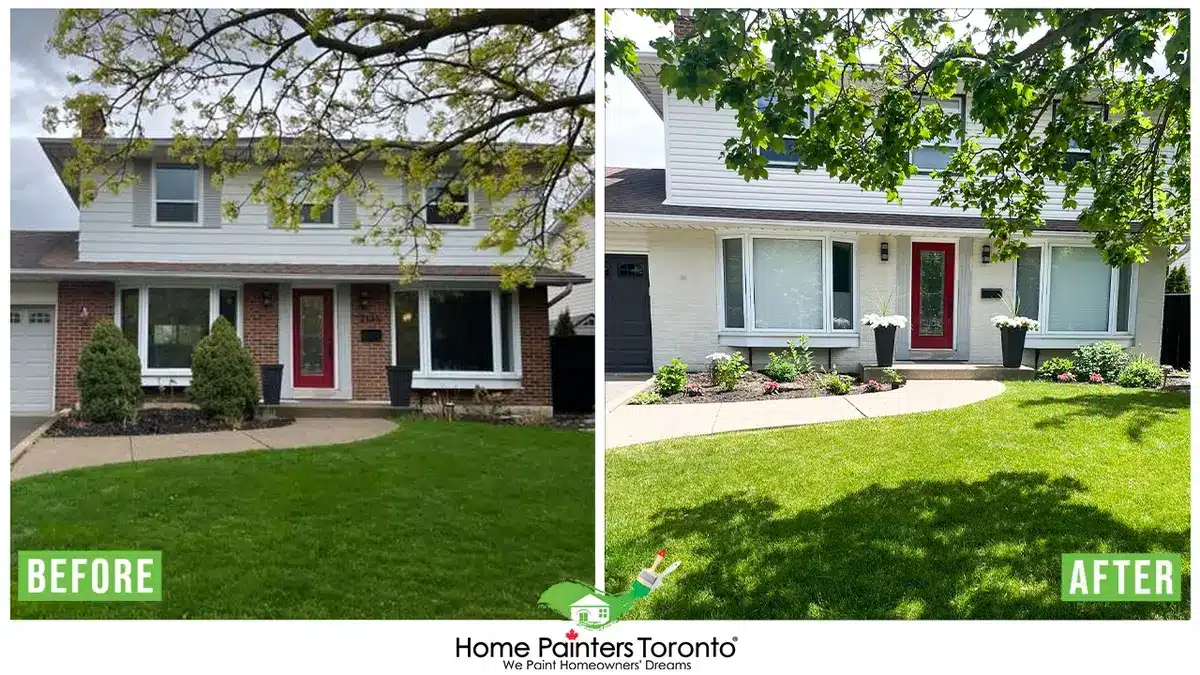
What the job involved: Our team completed a full exterior assessment at the estimate stage. The soft fascia section was repaired by our carpentry team before any painting began. Once repairs were complete, the full exterior was power washed and allowed to dry for 48 hours. All peeling paint was scraped and sanded, all window and door frame joints were recaulked with paintable exterior caulk, and all bare wood and repaired areas were primed with Sherwin-Williams Exterior Latex Primer. Two coats of Sherwin-Williams Duration Exterior in a warm off-white with contrasting charcoal trim were applied to all exterior surfaces in mid-May when temperatures were consistently above 15 degrees Celsius and overnight lows stayed above 10 degrees Celsius.
The result: A clean, fully refreshed exterior completed during the ideal spring painting window, with the full paint system cured and protected before the first summer storm. The homeowner noted that addressing the fascia repair and failed caulk during the same visit avoided what would have been a more expensive repair had those issues been left through another year of weather cycling.
For more completed projects like this one, visit our Toronto painting projects page.
Frequently Asked Questions About Spring Exterior Painting in Toronto
Mid-May through mid-June is the most reliable window for spring exterior painting in Toronto. By mid-May, daytime temperatures are consistently above 15 degrees Celsius, overnight lows have generally stayed above 10 degrees Celsius, and humidity has not yet reached the higher levels typical of late June through August. This window combines ideal temperature conditions, manageable humidity, and typically stable weather patterns. Late April can work in warmer years but requires close attention to overnight temperatures.
Most premium 100% acrylic exterior paints require a minimum application temperature of 10 degrees Celsius, and the surface and air temperature must remain above that threshold for at least 48 hours after the final coat is applied. Some advanced formulations like Sherwin-Williams Duration can be applied down to approximately 2 degrees Celsius, but for the best results and longest paint life, waiting for consistent temperatures above 10 degrees Celsius is recommended. Humidity should also be below 70 percent for optimal film formation.
Sometimes, but with caution. April temperatures in Toronto average 10 to 14 degrees Celsius during the day and 2 to 5 degrees Celsius at night. The overnight temperatures are the risk. Latex paint needs to stay above approximately 10 degrees Celsius through the curing period. A week of warm April days with overnight lows at 3 to 4 degrees Celsius can compromise the cure. If you want to paint in April, use a premium acrylic rated for lower temperatures, monitor the five-day forecast carefully, and confirm overnight lows will stay above 5 degrees Celsius for at least 48 hours after each coat.
Walk the full perimeter of your home and look for: paint that is peeling, cracking, or bubbling; caulk that has cracked or separated at window frames and trim joints; wood trim that is soft or spongy when pressed with a screwdriver; visible mould or mildew on north-facing surfaces; and any areas where the paint has faded unevenly or chalked. If you see two or more of these signs, the exterior needs attention before another Toronto winter. Our team provides free spring assessment estimates and can advise whether a full repaint, a spot repair, or a selective repaint is the right scope for your home's condition.
In most cases, yes. A fresh exterior paint job is one of the highest-ROI pre-sale improvements a Toronto homeowner can make, and spring timing maximizes the visual impact for the spring and summer buying season when the most buyers are active. See our preparing your home for sale guide for how exterior painting fits into a full pre-sale preparation scope.
Book as early as possible. Ideally, get your estimate in March or April and lock in a May or early June start date. The best exterior painting contractors in Toronto fill their spring schedules weeks or months in advance. Waiting until May to start looking for a contractor for May work means choosing from what is left available rather than what you actually want. Booking early also gives you time for any pre-painting carpentry repairs to be scoped and completed before the painting crew arrives.
A full professional exterior painting scope includes: surface inspection and assessment, power washing, scraping all loose paint, sanding prep areas, removing and replacing failed caulk, filling cracks and holes, priming all bare wood and repaired areas, applying two coats of premium exterior topcoat to all agreed surfaces, and final touch-up and cleanup. On some homes, carpentry repairs to damaged wood trim, fascia, or siding are required before painting begins. Home Painters Toronto handles both the carpentry and painting scope, so you deal with one team from start to finish. For a full overview of what is included in our exterior painting process, see our exterior residential painting service.
More Interesting Blogs Related to Why Spring Is a Great Time for Exterior Painting
Book Your Spring Exterior Painting Project Now
Home Painters Toronto is taking spring bookings and can provide a free in-home estimate at a time that suits you. Call 416.494.9095 or email [email protected] for a FREE quote.