

Knowing the best time to paint should be applied to the exterior of your house in Toronto is not just about picking a sunny week. It is about understanding the temperature range, humidity levels, and seasonal windows that allow exterior paint to cure properly, bond to the substrate, and survive the first Toronto winter without cracking or peeling.
Get the timing right and a quality exterior paint job will hold up for seven to ten years. Get it wrong, and paint applied outside the right conditions can fail within a single winter cycle, regardless of how premium the product was.
This guide covers every season, the exact conditions that produce reliable results, the common timing mistakes that cause early failure, and the practical scheduling advice Toronto homeowners need before booking a project or picking up a brush.
- The ideal temperature and humidity range for exterior painting in Toronto
- A month-by-month seasonal breakdown of the Toronto exterior painting window
- Why spring is considered the best season and what to watch out for
- How summer humidity affects paint curing and what to do about it
- Why fall is underrated and the specific risks of late-season painting
- When you absolutely cannot paint outside in Toronto
- Surface-specific timing guidance for brick, wood, and aluminum
- How to read the weather forecast before painting
- Booking a contractor at the right time to get the best results
- A real project case study
- FAQ answers to the most common homeowner questions
Ready to book your exterior painting project? Get a free estimate now.
Giving your home a beautiful new paint job is like getting a new outfit! Your home can benefit from this so much. You'll have everyone else in your neighbourhood wishing that they painted their house too! But when is the best time of year to paint the exterior of your house exactly? When painting outside a house, you must consider the temperature and whether you are repainting or painting over brick. Read on to discover tips that will help you know when not to paint outside!
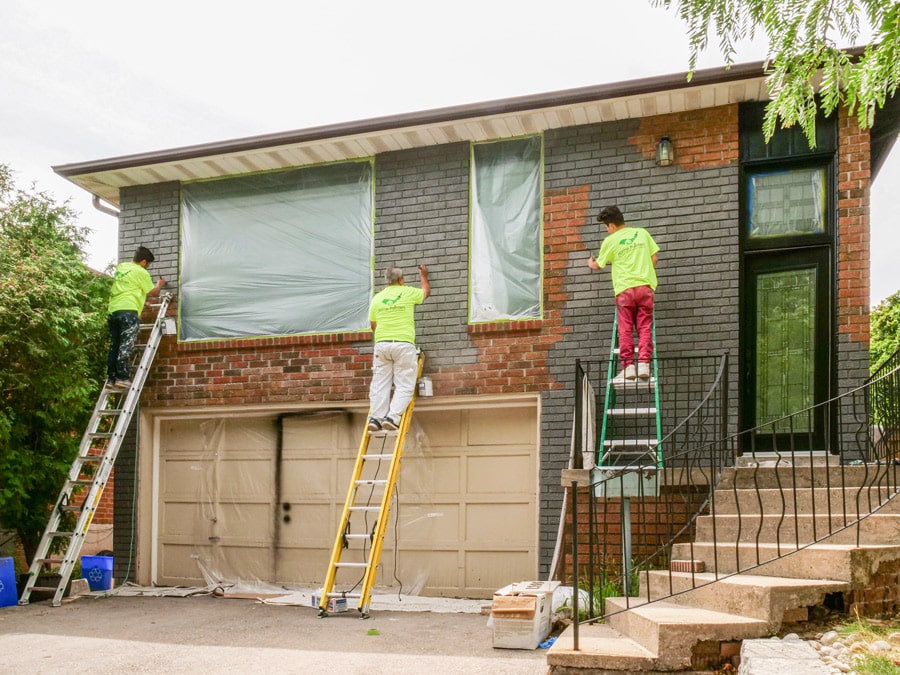
Timing your exterior paint job to the right season, temperature range, and humidity window is the decision that determines whether your finish holds for three years or ten.
When Is the Best Time to Paint the Exterior of My House in Toronto?
The best time to paint the exterior of a house in Toronto is usually late spring through early fall, when daytime temperatures stay above 10°C, humidity is manageable, and surfaces have enough dry time for paint to bond and cure properly. These conditions help reduce the risk of peeling, cracking, bubbling, and early coating failure.
In Toronto, the best time to paint or repaint the outside of a house is in the spring. This is because the weather isn't so hot that you'll get sunstroke. Also, the paint won't dry too quickly, resulting in an uneven application. The sun's rays aren't too intense in the spring, and you'll get your house painted just in time for the summer.
The Exact Temperature and Humidity Conditions for Exterior Painting
Understanding why spring works so well requires understanding the specific conditions exterior paint needs to cure properly.
According to Benjamin Moore's temperature guide for exterior painting, the recommended range for exterior painting is between approximately 4 degrees Celsius and 38 degrees Celsius, with the optimal around 25 degrees Celsius. Humidity should be as low as possible, with the practical target between 40 and 70 percent. Outside of these ranges, two distinct types of failure occur.
In too-cold conditions, below 10 degrees Celsius for standard latex paints, the paint cannot coalesce properly. The latex particles in the paint need a minimum temperature to melt together into a cohesive film. If the temperature drops below that threshold before the film has fully formed, the result is a fragile, chalky, poorly-adhered coating that will crack and peel within the first winter.
In too-hot or too-humid conditions, paint dries too fast on the surface before the underlying layers have cured properly. The result is lap marks where wet and dry sections of paint overlap, blistering from moisture trapped beneath a rapidly-skinning surface, and brush drag marks because the paint loses its open time before it can be levelled.
Toronto's spring window, specifically mid-May through mid-June, consistently hits the conditions that avoid both problems. Daytime temperatures in the 15 to 22 degree Celsius range, overnight lows staying above 10 degrees, and humidity not yet at the high-summer levels of July and August make this the most reliable exterior painting window in the Toronto calendar year.
Toronto Exterior Painting Season: Month-by-Month Guide
| Month | Avg. High (C) | Avg. Low (C) | Humidity | Exterior Painting Suitability |
|---|---|---|---|---|
| March | 4 to 8 | -4 to 0 | Variable | Not suitable; frost risk and temperatures too low |
| April | 10 to 14 | 2 to 5 | Moderate | Marginal; warm days possible but overnight lows risky |
| May | 18 to 22 | 8 to 12 | Moderate | Excellent; prime season opens mid-May |
| June | 23 to 27 | 13 to 17 | Rising | Good early June; humidity begins climbing late June |
| July | 27 to 30 | 18 to 20 | High | Acceptable temperature but humidity spikes; avoid hottest days |
| August | 26 to 29 | 17 to 19 | High | Same humidity risks as July; workable in early morning |
| September | 20 to 24 | 11 to 15 | Moderate | Excellent; often the best month of the year |
| October | 12 to 16 | 5 to 9 | Moderate | Workable early October; watch overnight lows after mid-month |
| November | 4 to 8 | -1 to 2 | Variable | Not suitable; temperatures too low and unpredictable |
Spring Is the Best Time to Paint the Exterior of Your House
Spring temperatures can support exterior painting in Toronto, but rain and trapped moisture can still ruin the finish. Paint needs a dry surface to bond properly, so siding, brick, and trim may need a few weeks to fully dry after winter snow, sleet, and freeze-thaw exposure. If you are unsure whether your exterior is ready, a professional painter can inspect the surface and confirm when conditions are safe for painting.
Why Waiting for the House to Dry After Winter Matters
This point deserves more emphasis than most homeowners expect. When snow and ice sit against siding, window frames, and brick through a Toronto winter, the exterior absorbs significant moisture. The surfaces may look and feel dry within days of snowmelt, but subsurface moisture in wood and masonry can persist for two to four weeks after the last significant snow.
Painting over a substrate with high moisture content traps that moisture behind the paint film. As temperatures fluctuate through spring, the trapped moisture moves, expands slightly when it freezes, and forces the paint film away from the substrate. The result is bubbling and peeling that can appear within the first few weeks after a spring paint job and accelerates dramatically through the following winter.
The practical guidance for spring painting in Toronto is straightforward. After the last significant snowmelt, allow a minimum of two to three weeks of dry weather before power washing and beginning prep. After power washing, allow a further 48 to 72 hours before priming. This sequence ensures the substrate is genuinely dry at depth, not just at the surface.
For a full guide to exterior prep steps including timing after washing, see our guide to preparing your home for exterior painting.
Summer Is Also a Good Time for Exterior Painting
The summer months (May through early September) are the busiest for most painting contractors. Due to the temperature and dryness, it certainly makes sense to do your exterior painting during the summer months. One thing you have to watch out for, though, is times of excessive humidity.
How Toronto Summer Humidity Affects Exterior Paint
Toronto's summers bring humidity that regularly pushes above 70 to 80 percent relative humidity on July and August afternoons. At these humidity levels, two things happen to exterior paint that most homeowners do not anticipate.
First, latex paint dries significantly slower. The moisture in the air competes with the moisture evaporating from the paint film during curing. In very high humidity, the surface can remain tacky for hours longer than the label dry-time suggests. During that extended tacky window, dust, insects, and airborne particles settle onto the wet film, resulting in a rough, contaminated finish.
Second, condensation can form on painted surfaces as overnight temperatures drop after a hot humid day. Paint that was applied during acceptable afternoon temperatures and appeared to be curing well can be compromised by overnight dew settling on the uncured film. This is one of the most common causes of surfactant leaching, the white or brown streaky deposits that appear on freshly-painted exterior surfaces after overnight dew.
The practical summer painting strategy for Toronto homes is to work during the morning hours. Surfaces painted from approximately 7 to 11 in the morning benefit from cooler temperatures, lower humidity than the afternoon peak, and enough remaining daylight to cure before dew forms. Avoid painting after 2 or 3 in the afternoon on hot July and August days.
According to Sherwin-Williams guidance on late-season and weather-sensitive exterior painting, a common mistake is painting when daytime temperatures are acceptable but overnight temperatures drop significantly. When this happens, dew forms on the uncured paint film, and moisture seeps in before the film has hardened. Even though the daytime conditions look right, the overnight conditions determine whether the cure completes properly.
Fall Is Another Good Time to Paint
Fall is another great time for exterior painting. The weather begins cooling down from mid-September onwards. Similar to the spring, the temperature drops are not drastic, so the temperature changes won't damage your paint.
Why Early Fall Is Often the Best Exterior Painting Window
Early September through mid-October in Toronto is arguably the most underrated window for exterior painting, and our team at Home Painters Toronto consistently delivers some of its best seasonal results during this period. Here is why.
By September, the high summer humidity has dissipated. Temperatures are stable in the 15 to 24 degree Celsius range. The sun angle has lowered enough that south-facing surfaces are no longer baking in peak-intensity afternoon heat, which eliminates the risk of paint drying too fast before it can level. Contractor schedules that were packed in May and June often have more flexibility in September, giving homeowners better booking options and sometimes better pricing.
The risks in fall are concentrated in the later weeks of the season. The key failure mode in fall painting is the overnight temperature. A paint job applied on a warm September afternoon at 20 degrees can be compromised if overnight lows drop below 5 to 8 degrees Celsius before the paint has fully cured. Latex paint needs to stay above approximately 10 degrees Celsius through the curing window, which for most premium exterior paints runs 24 to 48 hours after the final coat.
The practical fall painting deadline for Toronto is typically mid-October for standard exterior latex paints. Some premium formulations, including Sherwin-Williams Duration and Resilience, can be applied down to approximately 2 degrees Celsius, which can extend the season by a few weeks for projects that need to get done before winter. For most residential projects, targeting September completion is the right goal.
Painting Exterior Brick in Fall
Fall is specifically well-suited for painting exterior brick. Brick and mortar joints that have dried out through the summer are at their lowest moisture content in September and early October, making adhesion conditions optimal for masonry coatings. The lower humidity of fall also means masonry primers and elastomeric topcoats cure without the moisture interference common in high-summer July applications.
For homes in Riverdale, Cabbagetown, Leslieville, and other east-end Toronto neighbourhoods with red brick homes, early fall is the window our team recommends for brick painting projects. For a full breakdown of what brick painting involves, see our exterior brick painting service.
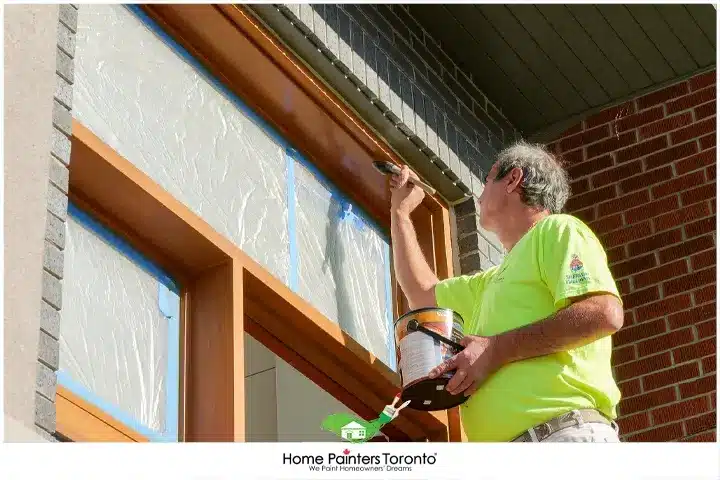
Early September is often the single best month to paint exterior surfaces in Toronto — stable temperatures, lower humidity than summer, and brick at its driest after a full season of sun.
What Months Can You Start Painting Outside?
Painting outside should be done while the temperature is between 60 and 90 degrees Fahrenheit. Avoid the warmest days of summer and the coldest days of winter because the temperatures are too high and low, respectively, for painting. Before doing any exterior repair on your property, ensure there won't be any gusty winds. These winds may blow dust and debris onto the wet paint surface, which could be problematic. You should also schedule your painting so that it doesn't coincide with any forecasted rain or snow. The paint may have adhesion issues due to the rain, and the paint could eventually peel off the house.
Converting those temperature ranges to Celsius for Toronto homeowners: the reliable exterior painting window runs from approximately 10 to 32 degrees Celsius air temperature, with surfaces that are not in direct hot afternoon sun. In Toronto conditions, this translates to May through October as the workable season, with the premium windows being mid-May through mid-June and September through mid-October.
Wind deserves more attention than most homeowners give it. Painting in winds above approximately 25 kilometres per hour creates three problems. First, it accelerates the surface dry-time of paint faster than the bulk film cures, producing a surface skin over an uncured layer that will crack when the underlying layer finally hardens. Second, it carries airborne dust and pollen onto wet paint, contaminating the finish. Third, spray application becomes impossible to control safely, with overspray reaching areas that should not be painted.
Check the Environment Canada forecast before every painting day. Wind, rain forecast, overnight low temperature, and relative humidity are the four variables that determine whether conditions are acceptable. On days where any of these falls outside the acceptable range, postponing is always the right decision. Recoating a surface that was painted in bad conditions costs more in time and materials than waiting another day for better weather.
Painting Over Brick
Painting over brick can be time-consuming and a hassle. Doing this job early in the spring (like we suggested) will keep you from overworking yourself. Painting over brick requires good pressure washing, bleach cleaning, and a latex primer before you even paint it.
Best Time of Year to Paint Exterior Brick in Toronto
Brick has specific timing requirements beyond those of wood siding or vinyl. The key consideration is moisture content. Brick is a porous material that absorbs and releases moisture continuously. Painting brick when its moisture content is elevated, whether because of recent rain, snowmelt, or high ambient humidity, traps moisture behind the paint film. That trapped moisture migrates as temperatures change, and in Toronto's freeze-thaw cycling, it forces the paint off the brick surface from behind.
The most reliable timing guidance for brick painting in Toronto is:
Spring brick painting: wait at least three to four weeks after the last significant snowmelt, and ensure the brick has had at least a week of dry weather after the initial power washing and bleach clean. Early spring rushing on brick painting is one of the primary causes of brick paint failure within the first year.
Summer brick painting: structurally acceptable from June through August, but the high humidity of late July and August can slow masonry primer and elastomeric paint curing to the point where the first coat has not fully set before the second coat is applied. This creates delamination between coats. Early morning application and monitoring humidity levels are essential in July and August.
Fall brick painting: September and early October are ideal for brick painting. Brick is at its driest after a Toronto summer, humidity has dropped from the July-August peak, and the masonry coatings have favourable curing conditions before the first winter freeze cycle arrives.
For the full preparation process for exterior brick painting including efflorescence treatment, mortar repair, and product selection, see our complete brick painting guide.
Picking the Right Colour for Your Home's Exterior
If you're having trouble picking out the paint colour for your exterior painting, let us help! There are many choices, yet picking your exterior painting colours always seems the hardest to make. Go gray if you want to spice things up a little but remain modern. Tucker Gray is a cool mid-tone gray with white and black trim. Revere Pewter is always a popular choice for homeowners too. It's supposed to be a light gray, but it comes across as way more of a taupe. And if you're thinking about what's trendy for exterior home painting colours in 2026, look no further than green! Classic greens are in fashion as well as ones like Raleigh Green. It's a bit more playful and muted take on forest green.
For a full guide to exterior colour selection by home type, neighbourhood context, and current Toronto trends, see our guide to picking exterior paint colours. For specifically grey exterior ideas with product recommendations from Benjamin Moore and Sherwin-Williams, see our grey exterior paint ideas guide.
When You Should NOT Paint Outside in Toronto
Knowing when not to paint exterior surfaces is as important as knowing the best time. Here are the conditions under which painting should always be postponed.
Temperature below 10 degrees Celsius. Standard latex exterior paint requires a minimum of 10 degrees Celsius to coalesce properly. Painting below this threshold produces a fragile, chalky film that will fail quickly. Some premium formulations can be applied down to 2 degrees Celsius, but standard products should not be used below 10.
Rain forecast within 24 to 48 hours. Rain falling on freshly applied exterior paint before the surface has cured can wash the paint away, cause it to blister, or compromise adhesion permanently. Check the forecast before every coat is applied.
Immediately after rain. Even after rain has stopped and the sun returns, exterior surfaces need time to dry thoroughly at depth, not just at the surface. For wood surfaces, allow at least 24 hours of dry weather. For brick and masonry, allow 48 hours. Do not rely on visual appearance; surfaces can look dry while retaining significant subsurface moisture.
High humidity above 70 to 80 percent. At extreme humidity, paint drying times extend significantly and moisture can interfere with film formation. Check Environment Canada's hourly relative humidity forecast for the specific Toronto weather station closest to your home before starting any exterior coat.
Direct intense sunlight on the surface. Do not apply paint to a surface that is in direct hot afternoon sun. Painting should follow the shade around the house. Paint the east elevation in the morning before direct sun hits it. Paint the west elevation in the afternoon, once the building has shaded it. Paint the south elevation in early morning or late afternoon only.
Gusty winds above 25 km/h. Wind accelerates surface dry time, contaminates the wet film with debris, and makes spray application unsafe.
How to Read the Weather Forecast Before Exterior Painting
Most exterior painting failures related to weather happen because the homeowner checked the current temperature and humidity but did not look ahead far enough in the forecast. Here is what to check before every coat of exterior paint is applied.
- Check the current temperature and confirm it is above 10 degrees Celsius.
- Check the humidity and confirm it is below 70 percent.
- Check the overnight low for the following two nights and confirm it will stay above 10 degrees Celsius (for standard latex paints) or above 2 degrees Celsius (for low-temperature formulations).
- Check the 48-hour precipitation forecast and confirm no rain is expected during the work window or for the 24 to 48 hours immediately following the final coat.
- Check the wind forecast and confirm gusts are not expected to exceed 25 km/h during application.
Environment Canada's hourly forecast at weather.gc.ca provides all of these data points for Toronto and surrounding GTA areas.
When to Book a Contractor for the Best Results
The best time to book an exterior painting contractor in Toronto is not the same as the best time to have the work done. If you want work completed in the prime May and June window, the booking conversation needs to happen in March and April. If you want a September project, booking in July and August gives you the best chance of securing your preferred start date and crew.
The exterior painting season in Toronto is genuinely short, roughly five to six months from May through October, with the premium weeks concentrated in May through June and September through early October. The best exterior painting contractors fill those premium windows weeks in advance. Waiting until the week you want painting to start means choosing from whatever availability remains, not from what you actually want.
Our team at Home Painters Toronto takes spring bookings beginning in February and March each year. For the fastest response on spring availability, call 416.494.9095 or get a free estimate online.
How Much Does Exterior Painting Cost and How Does Timing Affect the Price?
Typical Exterior Painting Costs in Toronto 2026
Professional exterior painting in Toronto ranges from $2,500 to $8,500 CAD for a full residential exterior repaint, depending on home size, number of surfaces being painted, surface condition, and whether carpentry repairs are needed before painting begins.
Timing can affect cost in two ways. First, premium season weeks in May and June carry peak contractor demand, and the most reputable teams have little price flexibility during peak season. Booking off-peak, specifically September or early October, occasionally provides more negotiating room and more flexible scheduling.
Second, some homeowners reduce their total project cost by doing their own prep work (power washing, scraping, and minor caulking repairs) before the contractor arrives, reducing billable labour hours. This is viable for homeowners comfortable with the prep sequence. For homes requiring carpentry repairs, the repair work must be completed before any painting begins. See our exterior painting cost guide for a full cost breakdown by home type, size, and surface scope.
Real Project: Timing an Exterior Paint Job Correctly in Toronto
North York Detached: Waiting for the Right Temperature Window to Protect a Pre-Sale Paint Job
Here is a summary of a recent project our team completed that illustrates how timing decisions affect the outcome of an exterior painting job.
The situation: The homeowner of a two-storey detached home in North York contacted Home Painters Toronto in early April wanting the exterior painted as soon as possible for a spring listing. The home had significant peeling paint on the east and south elevations and several soft spots at window sills that needed carpentry repair before painting could begin.
The timing decision: Our team inspected the home and recommended against starting before mid-May. April overnight temperatures were still dropping to 2 to 4 degrees Celsius regularly, which is below the minimum for standard latex paint application. The soft sill repairs required carpentry work that would expose bare wood needing immediate priming, making cold overnight temperatures particularly risky for adhesion.
What happened: Carpentry repairs to three window sills were completed in the last week of April. The full exterior was power washed and allowed to dry for 72 hours. Painting began during the third week of May, when overnight lows had consistently stayed above 10 degrees Celsius for a full week. Two coats of Sherwin-Williams Duration Exterior were applied to all surfaces over a five-day painting window.
The result: A fully cured, professionally finished exterior completed by the end of May, in time for a June listing. The homeowner's agent confirmed the home presented significantly better than comparable listings on the street that still had faded or peeling exteriors. Waiting three additional weeks for the right temperature conditions was the single decision that separated a paint job likely to cure properly and last through the first winter from one that might have shown blistering or peeling before the home even listed.
For more completed projects, visit our Toronto painting projects page.
Frequently Asked Questions About the Best Time to Paint Exterior of House
Mid-May through mid-June and the month of September are the two best windows for exterior painting in Toronto. Both periods offer temperatures consistently in the 15 to 24 degree Celsius range, manageable humidity, and stable overnight lows that allow paint to cure properly. September is often overlooked by homeowners but is considered the premium window by our professional team because humidity has dropped from the July-August peak, surfaces are fully dried from summer, and contractor availability tends to be better than in the spring peak.
Standard 100% acrylic latex exterior paints require a minimum application temperature of 10 degrees Celsius. The surface and air temperature must stay above 10 degrees Celsius for at least 24 to 48 hours after the final coat is applied. Some premium formulations, including Sherwin-Williams Duration and Resilience, can be applied down to approximately 2 degrees Celsius. However, for Toronto residential projects, waiting for temperatures consistently above 10 degrees is the most reliable approach for long-term paint performance.
Early October is generally workable, with some caveats. Daytime temperatures in early October typically run 12 to 16 degrees Celsius, which falls within the acceptable range for standard latex exterior paints. The risk is overnight lows. October overnight lows in Toronto can drop to 4 to 8 degrees Celsius, which is below the minimum curing threshold for standard latex paints. If you are painting in October, use a premium low-temperature formulation, confirm the overnight forecast will stay above 10 degrees Celsius for the 48 hours after each coat, and expect that your window for painting will shrink significantly as October progresses. Painting after mid-October in Toronto is not recommended for standard residential exterior projects.
Both are excellent for Toronto exteriors and both are preferable to mid-summer. Spring offers the advantage of preparing the home after winter damage is visible and painting before summer UV and storm exposure begins. Fall offers the advantage of lower humidity than spring, surfaces that have dried out after summer, and often better contractor availability. The practical answer for most Toronto homeowners is to paint whichever season they can book a reputable contractor and get the work done in the right temperature and humidity conditions. If both are available, early September is our team's top recommendation for the most reliable curing conditions.
Yes, but with more planning required than spring or fall. Summer painting is workable when temperatures are in the 15 to 28 degree Celsius range and relative humidity is below 70 percent. The specific risks in Toronto summers are hot afternoon direct sun causing paint to dry before it levels, and high humidity causing extended tacky time and potential dew overnight. The practical strategy is to follow the shade around the house as you work, paint morning to early afternoon, and check the hourly humidity forecast before starting each coat.
When exterior latex paint is applied below the minimum temperature threshold, the latex particles cannot coalesce properly into a unified film. The result is a chalky, brittle coating that lacks adhesion and will fail quickly. Peeling, cracking, and complete paint film failure within the first freeze-thaw cycle are common outcomes of painting in cold conditions. Additionally, if overnight temperatures drop below the minimum before the film has cured, even a paint applied in acceptable daytime temperatures can fail in the same way.
With proper prep, the right products, and application in ideal conditions, a quality exterior paint job on a Toronto home should last 7 to 10 years. Factors that shorten this cycle include painting in bad conditions, using inadequate prep, applying only one coat instead of two, or using a product not formulated for Toronto's freeze-thaw climate. Signs it is time to repaint include chalking (the paint rubs off as a powdery residue), peeling or cracking paint, visible fading or discolouration, and bare wood or substrate visible through the paint film.
More Interesting Blogs Related to The Best Time of Year to Paint the Exterior of Your House
Ready to Paint at the Right Time?
Home Painters Toronto takes spring bookings beginning in February and March each year. Call 416-494-9095 or email [email protected] for a FREE estimate.