

Toronto homeowners often ask us how to verify their painter used the right paint after a quote promised a premium product and two full coats. One thin coat and two proper coats can look the same on day one, so the proof has to come from records you can check. This article is part of our house painting guide and covers the checks that matter: the written quote, can labels, receipts, coat photos, wet film readings and coverage math. Home Painters Toronto has served Toronto and the GTA since 1991, painted 20,000+ homes and earned 1,200+ positive reviews on HomeStars, Google and Houzz. Our quotes spell out the paint, sheen, colours and coats, so homeowners can hold every job to the page.
To verify your painter used the right paint, get the brand, product line, sheen, colour code and coat count in the written quote. Then check sealed cans, tint labels and receipts on site. Ask for dated photos after each coat. Compare wet film readings and paint quantities with the manufacturer's technical data sheet.
How to Verify Your Painter Used the Right Paint, Step by Step
Six checks verify your painter used the right paint by comparing the written quote with the cans, receipts and walls. Each check takes a few minutes. Together, they cover the product, colour, coat count, and film build.
- Match the quote. Confirm it names the brand, product line, sheen, colour code, primer and number of finish coats before work starts.
- Inspect the cans. Look for the product name, the sheen and a store tint label with your colour on every can.
- Ask for receipts. A store receipt or order record should list the product line, sheen and number of cans.
- Request coat photos. Ask for dated photos after primer, after coat one and after coat two.
- Ask for film readings. A wet film gauge reading on each coat shows whether the paint went on at the right thickness.
- Run the coverage math. Area times coats, divided by the product's spread rate, should land close to the cans used.
None of these checks means watching the crew all day. A professional painter expects these questions and answers them quickly. If a contractor will not share labels, photos or receipts, note it and raise the concern in writing.

What Your Painting Quote Should Specify Before Work Starts
A painting quote should name the brand, product line, sheen, colour code, primer and number of finish coats in writing. Without those details, there is nothing to check the finished job against. A line that only says "premium paint" protects the contractor, not the homeowner.
| Quote Item | What Good Looks Like | Why It Matters |
|---|---|---|
| Brand | Benjamin Moore or Sherwin-Williams | One brand sells several grades at very different prices |
| Product line | Regal Select Interior, not just "Benjamin Moore" | The line sets volume solids, hide and washability |
| Sheen | Eggshell walls, semi-gloss trim | Sheen changes durability and how flaws show |
| Colour name and code | The colour name plus the maker's code | Similar names can hide very different undertones |
| Primer | Primer type and which surfaces get it | Bare patches and stains need their own coat |
| Finish coats | "Two finish coats on all walls" | One coat rarely gives full colour depth |
Product lines matter because one brand can sell a contractor-grade line and a premium line side by side. Our Benjamin Moore vs Sherwin-Williams comparison explains why the line counts more than the logo. For the full layout of a line-item quote, see what belongs in a painting estimate.
Coat count deserves its own line. Benjamin Moore's technical data sheet for Regal Select Interior says bare surfaces need two coats. It also recommends two coats on repaints for full colour development and film performance. Our post on how many coats of paint a house needs covers when a third coat makes sense.
What to Check on Site: Cans, Labels and Receipts
On site, check that cans match the quoted product and sheen, tint labels show your colour, and receipts cover the job. These checks take a minute at the start of the day. They also start a friendly conversation with the crew lead before any paint is opened.
- The factory label names the same product line and sheen as the quote.
- The store tint label shows the colour name or code you approved.
- Paint stores mix deep colours in deeper bases, so the base should suit your colour.
- New cans arrive sealed, and opened cans have a clear source, such as a matching batch from yesterday.
- The receipt or store order lists the product, sheen and number of cans.
Keep the tone observational. Most crews open cans early to box them, which means mixing several cans in one bucket for even colour. An open can is normal. A label that names a different product line is the thing worth asking about.
Reading the Paint Can Label: Colour Code, Base and Tint
The tint label matters most, because the paint store prints it when it mixes your colour. It usually shows the colour name and code, the base, the sheen and the mix date. The factory label shows the product line and finish.
Bases tell you how much colorant the store added. Benjamin Moore's data sheet lists four tint bases for Regal Select Interior, numbered 1X to 4X. A dark navy in a light base would look wrong to any paint store clerk. That mismatch is worth a photo and a question.
How Professionals Verify Coats: Photos, Timing and Film Thickness
Professionals verify coats with three records: dated photos, recoat times that fit the data sheet, and film thickness readings. Photos prove a coat happened. Timing shows it had a chance to set. Thickness shows it went on heavy enough to perform.
Benjamin Moore lists a recoat time of 1 to 2 hours at 25 °C and 50% relative humidity for Regal Select Interior. Its data sheet adds that high humidity and cool rooms stretch dry and recoat times. A second coat rolled minutes after the first is a warning sign in any season.
How to Tell How Many Coats Your Painter Applied
The surest way to tell how many coats your painter applied is a set of time-stamped photos, one per stage. Primer usually looks flat and patchy. Coat one looks close but uneven under a work light. Coat two looks uniform, even in raking light from a window.
Once the job is dry, the evidence gets harder to read. An independent painter can measure dry film thickness, but some methods leave a small mark on the wall. That is why the photo record matters most while the crew is still there.
What a Wet Film Gauge Reading Tells You
A wet film gauge is a notched card that reads fresh paint thickness in mils. One mil is one thousandth of an inch. Benjamin Moore lists a recommended wet film thickness of 3.6 to 4.0 mils for Regal Select Interior Flat. That coat dries to 1.6 to 1.8 mils.
The gap between wet and dry is water leaving the film. That product is 44% solids by volume, according to the same data sheet. About 44% of each wet mil stays on your wall as cured paint.
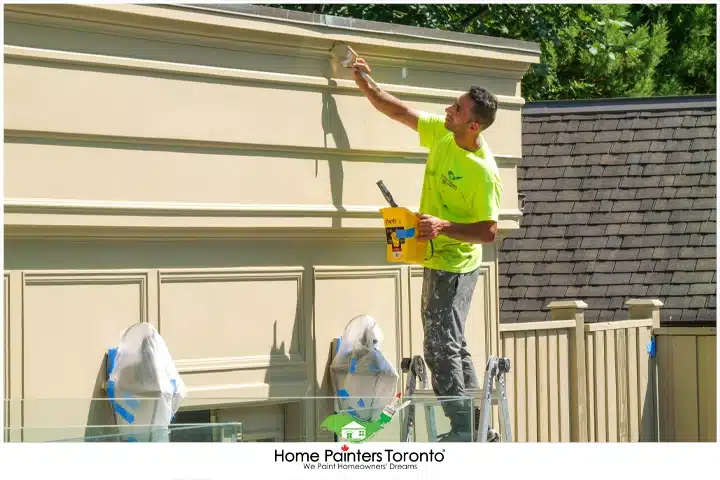
Does the Amount of Paint Add Up? Coverage Rates Explained
The amount of paint adds up when area times coats, divided by the spread rate, lands near the number of cans used. Benjamin Moore's data sheet rates Regal Select Interior at 400 to 450 sq ft per 3.79 L can. Rough plaster, fresh patches and bare drywall absorb more, so real use runs higher.
| Space | Paintable Area | Coats | Expected Paint (Estimate) |
|---|---|---|---|
| Bedroom walls, 12 x 14 ft, 8 ft ceiling | About 376 sq ft after one door and one window | 2 | About 1.7 to 1.9 cans |
| Living room walls, 16 x 20 ft, 9 ft ceiling | About 568 sq ft after openings | 2 | About 2.5 to 2.8 cans |
| Bedroom ceiling, 12 x 14 ft | 168 sq ft | 2 | About 0.75 to 0.85 cans |
These figures use Benjamin Moore's published spread rate for Regal Select Interior and assume sound, previously painted surfaces. Treat them as a sanity check, not an audit. Crews buy full cans and carry leftovers between rooms, so small gaps are normal.
A large shortfall deserves a polite question. One can where the math calls for three may point to a single coat, heavy thinning or a cheaper product. For budgeting, HPT prices a bedroom at $400 to $800 + HST. A living or dining room runs $400 to $900 + HST. Our interior painting calculator gives a quick ballpark for a whole floor.
Why a Wet Film Reading Alone Cannot Catch Watered-Down Paint
A wet film reading cannot catch watered-down paint alone, because thinned paint reads the same wet but dries thinner. The gauge measures the liquid layer, not the solids inside it. That is the blind spot most verification checklists miss.
Benjamin Moore allows up to 236 mL of water or its K518 Extender per 3.79 L of Regal Select Interior. Its data sheet also says never to add other paints or solvents. Using those published figures, the table shows how thinning changes the cured film from a 4.0 mil wet coat.
| Thinning Level | Volume Solids | Dry Film From a 4.0 Mil Wet Coat | Inside the 1.6 to 1.8 Mil Range? |
|---|---|---|---|
| None | 44% | About 1.76 mils | Yes |
| 236 mL per can (data sheet maximum) | About 41% | About 1.66 mils | Yes |
| 1 L per can (beyond the data sheet) | About 35% | About 1.39 mils | No |
Limited thinning inside the data sheet is normal practice. Crews sometimes condition paint for spraying or for hot, dry rooms that shorten open time. Our guide to spray vs roller application explains how the method changes film build.
Verification works best with two numbers together: film thickness and paint quantity. Thinned paint stretches further, so a low can count is the stronger signal. A perfect gauge reading paired with a short can count is worth a closer look.
What to Do If the Paint or Coats Don't Match the Quote
If the paint or coats don't match the quote, ask the crew lead, request records, write it down and get a second opinion. Most mismatches have an honest cause, such as a store substitution or a mix-up between rooms. A clear record lets both sides fix it fast.
- Ask on site. Show the crew lead the label or photo and ask what happened.
- Request records. Ask for receipts, tint labels and any coat photos the crew took.
- Write it down. Send a short email listing the issue, the quote line it affects and the fix you want.
- Use the walkthrough. Raise it at the punch list and final walkthrough so it lands on the fix list.
- Get a second opinion. An independent painter can assess the coats and film before the next repaint cycle.
Ontario law backs written specs. In Ontario, it is illegal for a business to claim a product is a grade or quality it is not. The same page explains that a contract affected by misrepresentation can be withdrawn from within 1 year.
Our post on how the Consumer Protection Act applies to a house painting contract covers written agreements and change orders. This section is general information, not legal advice. Speak with a lawyer before you withhold money or cancel a contract.
Paint and Coat Verification FAQs
You know your painter used two coats when dated photos, recoat times, and the can count all show two passes. Ask for this record before work starts. After the paint dries, coats are much harder to prove.
Yes, limited thinning is normal when the manufacturer allows it. Benjamin Moore permits up to 236 mL of water or K518 Extender per 3.79 L of Regal Select Interior. Thinning past the data sheet lowers the cured film thickness and is worth questioning.
A typical 12 x 14 ft bedroom needs about two 3.79 L cans for two coats on the walls. That estimate uses Benjamin Moore's spread rate of 400 to 450 sq ft per can for Regal Select Interior. Plaster, patches and big colour changes push that number up.
Yes, you can ask to see the paint cans, tint labels and receipts at any point. A professional painter treats that as a normal request. Ask early in the day, before cans are boxed and labels get covered in drips.
A wet film gauge is a notched card that measures fresh paint thickness in mils. The painter presses it into wet paint and reads the deepest tooth that touches. Benjamin Moore's data sheet lists 3.6 to 4.0 mils wet for Regal Select Interior Flat.
Raise a colour code mismatch before more paint goes on, because every coat makes the fix bigger. Photograph the tint label next to your quote and ask the crew lead to check with the store. A store mix error is usually corrected with a fresh batch.
Make Sure Your Painter Used the Right Paint: A Simple Checklist
To make sure your painter used the right paint, keep six records from the quote to the final coat. Store them with your home records. They also help with future touch-ups and warranty questions.
- Written quote with brand, product line, sheen, colour code, primer and coat count.
- Photos of factory and tint labels on day one.
- Receipts or a store order showing product and quantity.
- Time-stamped photos after primer, coat one and coat two.
- Wet film readings for each coat, checked against the data sheet.
- A can count that fits the coverage math.
As a family-run Toronto house painting company, we are WSIB compliant and fully insured with $5M general liability coverage. You can check a contractor's WSIB clearance certificate in minutes before you sign. Our painting warranty is lifetime on interior work and 3 years on exterior work.
Whether you are booking interior residential painting or a full exterior house repaint, the same records apply. Ask for them at the estimate, not after the crew leaves. A painter who writes it all down is a painter you can check.

Want the paint, sheen and coats in writing from day one? Get a fast, free quote and warranty-backed work across Toronto and the GTA, seven days a week.
Contact Home Painters Toronto