

Toronto homeowners sometimes notice a narrow, glossy band of vinyl siding that looks rippled, sagged, or waxy, usually on a wall facing a neighbour's house. This is vinyl siding melting from window reflection, a well-documented problem caused by sunlight bouncing off a modern low-E window and focusing onto the cladding much like a magnifying glass. The damage sits in a sharp-edged patch instead of spreading across the whole wall, and it often seems to appear out of nowhere in spring or fall. We've seen this on homes in North York, Etobicoke, and Scarborough after owners ruled out a defective panel, a bad install, and even a nearby barbecue, only to find the real source sitting across the yard. Understanding the cause matters, because repairing the siding without addressing the window means the new panels warp again in the same spot.
Vinyl siding melts from window reflection when a nearby low-E window, often a neighbour's, focuses sunlight onto the cladding hot enough to soften it. Vinyl distorts starting around 160–165°F, and reflected beams have been measured above 200°F on the siding surface. The fix starts at the window, then moves to replacing the damaged panels.
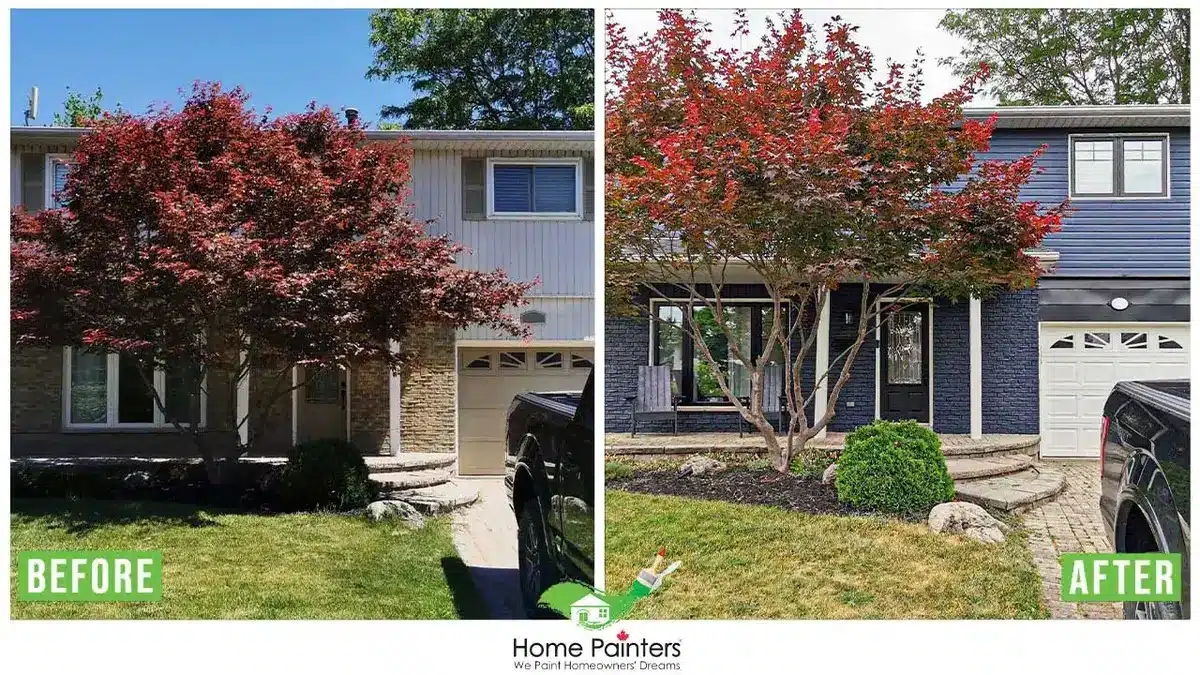
The damage sits in a sharp-edged patch instead of spreading across the whole wall
Why Vinyl Siding Melts from a Window Reflection
Vinyl siding melts from a window reflection when a concave low-E window pane focuses sunlight into a narrow, intense beam that heats the cladding well past its softening point. The window itself is not defective. A slight concavity between the two panes of a sealed double-glazed unit acts like a shallow mirror, and it bends reflected light into one hot spot instead of scattering it evenly across the wall. This effect has become more common as low-E glazing, which is coated to reflect more heat and light than older glass, has become standard on new windows and replacement units across the GTA.
Vinyl Siding Melting Point vs. Reflected Window Heat
Standard vinyl siding begins to soften once its surface reaches roughly 160°F to 165°F, based on melting-point data compiled by the vinyl siding industry's own product association. Reflected sunlight from a concave low-E pane has been measured well above 200°F on the siding surface it strikes, more than enough to distort a normal-grade panel. Builder research on double-paned low-E windows has traced the effect to the way a sealed unit can bow slightly under normal pressure changes, concentrating reflected light into a beam, much like a magnifying glass concentrates sunlight onto a single point. Darker siding colours absorb more of that heat and soften first, though pale colours are not immune once the surface temperature climbs high enough.
How to Tell Solar Distortion from Ordinary Warping
Solar distortion from a window reflection looks different from ordinary siding warping because the damage forms a sharp-edged band rather than spreading across the whole wall. Ordinary warping usually comes from installation error, a nearby barbecue or fire pit, or general age, and it tends to affect a wider stretch of panel evenly. A reflection-caused hot spot stays confined to roughly the width of the reflected beam and can shift position slightly as the sun's seasonal angle changes. Homeowners dealing with wall-wide warping instead of a narrow band should start with our warped siding repair assessment, since the cause and the fix are different.
| Sign | Solar Distortion (Window Reflection) | Ordinary Warping |
|---|---|---|
| Damage shape | Sharp-edged, confined band | Diffuse, spread across the panel or wall |
| Seasonal pattern | Shifts position with the sun's angle, worst in spring and autumn | Fairly constant year-round |
| Source | A facing window, often a neighbour's, within line of sight | Installation error, nearby heat source, or age |
| Surface texture | Glossy, rippled, or slightly sagged | Bowed, buckled, or loose from the wall |
A quick way to confirm the pattern is to photograph the damage on two or three clear afternoons and note the time of day. If the glare from a specific window lines up with the damaged section each time, the case for solar distortion is strong.
Why It Shows Up in Spring and Autumn
Solar distortion from a window reflection shows up most often in spring and autumn because the sun sits at a lower angle during those months, which lines the reflected beam up with a wall for longer stretches of the day. In summer, the sun tracks higher overhead and the same window reflects light up and over the siding instead of straight at it. A lower sun angle in March, April, September, and October holds the beam on one spot for hours at a time, which is long enough to push the surface temperature past the softening point. This is why damage that seems to appear overnight usually comes from weeks of repeated exposure, not a single afternoon. Distance and orientation matter too, since a window facing directly at a neighbouring wall from a shorter distance produces a tighter, hotter beam than one set at an angle.
Fix the Window First, Then the Wall
Fixing melted vinyl siding starts at the window causing the reflection, because replacing the panels without addressing the source means the new siding warps again in the same spot. The sequence below is the order we follow on every reflection-related repair in the GTA.
- Identify the source window. Stand at the damaged section on a sunny afternoon and look for a window catching direct sun in your direction. The glare is usually obvious once you know what you're looking for.
- Document the pattern with dated photos. Take photos across a few days at the same time, since the beam shifts slightly through the season, and this confirms the source before any work starts.
- Block or diffuse the reflection at the window. Exterior window film, an awning, a shade screen, or mature landscaping placed in front of the source window are the standard fixes, and none require replacing the window itself.
- Replace the damaged siding panels once the reflection is controlled. Repairing the wall before the window is addressed almost always means paying for the same repair twice.
What If It's the Neighbour's Window?
If a neighbour's window is causing the reflection, the most effective first step is a straightforward conversation backed by the dated photos showing the pattern. Home Painters Toronto is a painting and carpentry contractor, not a legal advisor, and this section is general information, not legal advice. Most cases resolve once both homeowners understand the cause, since window film or a shade screen on the reflecting window is usually a modest fix compared to repeat siding repairs on the other property. If a conversation does not resolve it, a municipal property standards office or a lawyer familiar with nuisance and property disputes can advise on next steps specific to the two properties involved.
Will Insurance or the Siding Warranty Cover It?
Most vinyl siding manufacturer warranties exclude damage from an external heat source, and reflected sunlight from a window is specifically named as one of those exclusions in several published warranty documents. Homeowners insurance treatment varies by policy and by insurer, and it often depends on whether the damage is treated as a sudden, identifiable event or as gradual environmental wear. Reviewing the exact wording in your policy and confirming whether insurance covers siding damage with your provider before assuming coverage either way is worth doing early, since it can change how quickly a repair moves forward.
Vinyl Siding Warranty Exclusions for Reflected Heat Damage
Several major vinyl siding manufacturers group barbecues, fire pits, and window reflection together under the same exclusion clause for heat-related distortion. That means a homeowner usually cannot file a manufacturer warranty claim for melted siding, even when the original panels performed exactly as intended. The practical result is that most reflection damage becomes a repair cost the homeowner and, where applicable, the source of the reflection need to sort out directly instead of through the manufacturer.
Repairing the Damaged Panels
Repairing panels damaged by window reflection means removing the distorted sections, matching new vinyl siding panel repair material to the existing wall, and confirming the reflection source has been addressed before new panels go up. Our process on the GTA's reflection-damage calls follows five steps.
- Assess the full extent of the damage, including nearby cracked or brittle panels near the hot spot that may need replacing along with the melted section.
- Source a colour and profile match against the current weathered wall, not the original factory sample, since the two rarely match after a decade of UV exposure.
- Remove the damaged run using the standard lap-lock unzip method, which lifts the panels without disturbing sound material above or below.
- Install the replacement panels with the correct expansion gap, since vinyl needs room to move with normal temperature swings.
- Confirm the window fix is in place before closing out the job, so the repair isn't repeating the original mistake.
Colour Matching Vinyl Panels on a Weathered Wall
Vinyl siding fades a small amount every year from UV exposure, so a brand-new panel snapped in next to a ten-year-old wall reads as a visible patch even in the technically correct colour code. We match against the weathered panels on site instead of the factory swatch, and where the fade gap is too wide for a clean match, refinishing or replacing a full elevation gives a more even result than patching one narrow section. Homeowners planning to replace windows on the reflecting side of the property around the same time can also ask about our vinyl window and siding painting services for a coordinated finish across both jobs.
- At a recent siding assessment in North York's Bridle Path neighbourhood, we found a narrow band of buckled vinyl panels on a wall facing a newer home's tinted low-E windows.
- An infrared thermometer read a surface temperature of 194°F on the affected panels during peak afternoon sun, above the 160°F to 165°F softening range documented for standard-grade vinyl.
- We replaced the damaged run with CertainTeed Cedar Impressions Double 4in Dutch Lap panels in Colonial White to match the existing twelve-year-old wall, and recommended a solar-control window film for the neighbouring window to stop the reflection from returning.
The work carried our standard warranty-backed guarantee, and every crew member on site was WSIB compliant and covered under our fully insured policy, which matters on any job that touches a shared property line. You can read more homeowner experiences with repairs like this one in our client reviews.
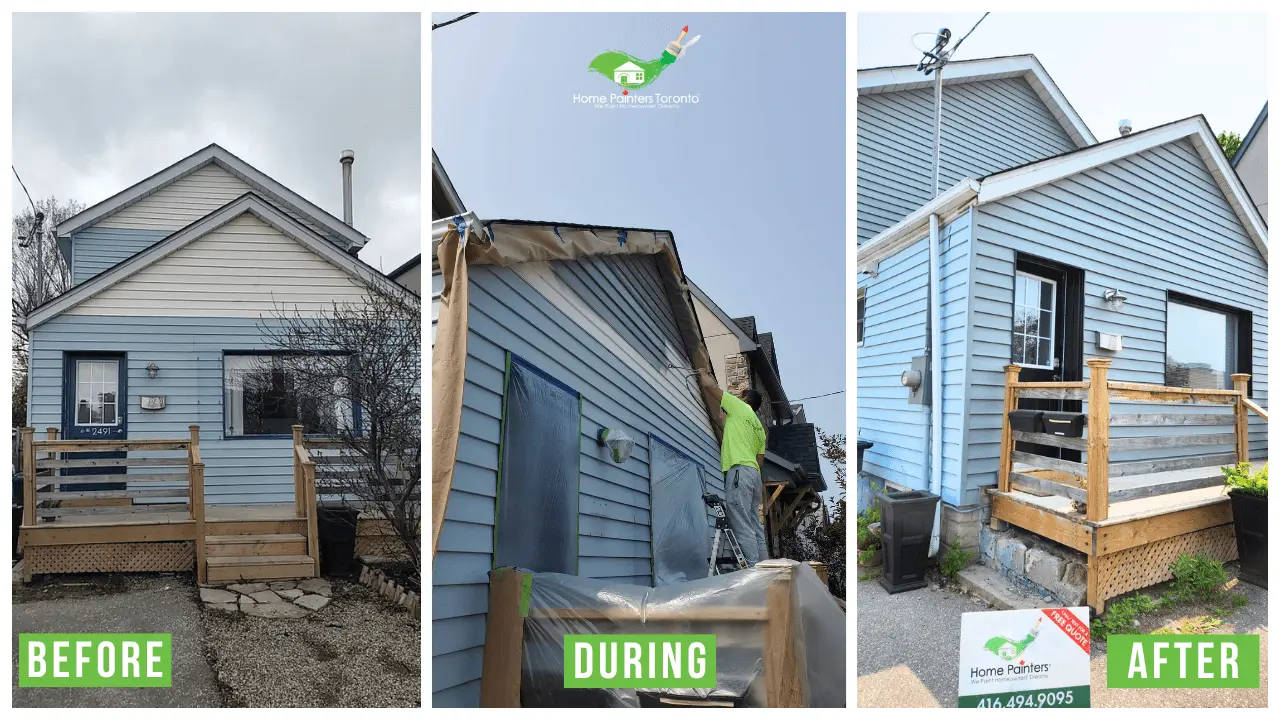
We replaced the damaged run to match the existing twelve-year-old wall and addressed the reflection source before closing the job
Cost to Repair Melted Vinyl Siding in Toronto
Repairing vinyl siding damaged by window reflection in Toronto typically costs between $2,000 and $8,000 CAD plus HST, depending on how many panels need replacing and whether trim or flashing around the affected area is also compromised. Larger jobs that involve a full wall or additional carpentry work can run higher.
| Repair Scope | Estimated Cost (CAD + HST) |
|---|---|
| A few damaged panels in one band | $2,000 – $4,000 |
| A full elevation re-clad, colour matched | $4,000 – $8,000 |
| Full wall replacement with trim and flashing work | $8,000 – $10,000 |
These figures follow our general exterior repair pricing tiers and cover materials and labour for the siding itself. Window film, exterior shading, or landscaping to address the reflection source is priced separately and depends on the solution chosen for that window.
Melted Vinyl Siding FAQ
No, heat-distorted vinyl does not return to its original shape once it cools and sets. The panel needs replacing, not reshaping, since the plastic has already lost its original rigidity at the point of the damage.
It will happen again if the reflection source is not addressed, since new panels sit in the exact same beam path as the old ones. Homeowners dealing with a second round of the same damage should read our page on recurring siding damage for a broader look at repeat failures and their common causes.
Vinyl is the most heat-sensitive common siding material, but reflected heat from a low-E window has also been reported to affect composite decking, vinyl window frames, and some painted trim close to the hot spot. Fibre cement, brick, and stucco tolerate the same exposure without distorting.
Stand at the damaged section on a clear afternoon and look for a window catching direct sun toward the wall. Dated photos taken across a few days at the same time confirm the pattern and usually settle the question within a week or two.
For a single affected wall, switching to fibre cement or another heat-tolerant material is worth considering if the reflection source truly cannot be controlled. For most homes, addressing the window with film or shading is the more direct fix and keeps matching vinyl on the rest of the house.

Get a Free Assessment of Your Damaged Vinyl Siding
Home Painters Toronto assesses reflection-damaged siding across Toronto and the GTA, from a single narrow band to a full elevation, as part of our broader siding repair services in Toronto. Send us dated photos of the damaged panels and the window you suspect is the source, and our estimator can usually confirm the cause before scheduling an on-site visit. Every repair comes with fast free quotes and warranty-backed work, carried out by a fully insured, WSIB-compliant crew.
Contact Home Painters Toronto to get a free assessment and estimate started.
Get a Free Estimate