

Painting Or Replacing Wood Soffits with Aluminum
Painting or replacing wood soffits with aluminum is a decision that Toronto homeowners on older homes face more often than any other exterior maintenance question, because soffits are the first place that water, pest, and freeze and thaw damage becomes visible on the roofline. Home Painters Toronto, the HomeStars Best of Award 2026 winner with over 1,200 positive reviews and 37 years serving the GTA, handles soffit assessment, repair, painting, and aluminum replacement across North York, Etobicoke, Scarborough, and Leaside every season. The decision between painting and replacing comes down to one question: is the wood structurally sound? Painting over rot is the single most expensive mistake Toronto homeowners make on soffit projects, and it guarantees the problem returns within one to two seasons.
Wood soffits play an important role in protecting the roofline and supporting ventilation around a home. Over time, constant moisture exposure, temperature changes, and Toronto's demanding weather conditions cause paint failure, wood rot, and structural deterioration. The decision point between repainting and replacement is reached on most Toronto homes eventually.
This guide explains the differences between painting and replacing wood soffits, the specific warning signs that determine which path is correct, product recommendations for both scenarios, and realistic cost ranges for Toronto homeowners in 2026. Our soffit and fascia replacement and repair service covers both the carpentry and painting scope in one project visit.
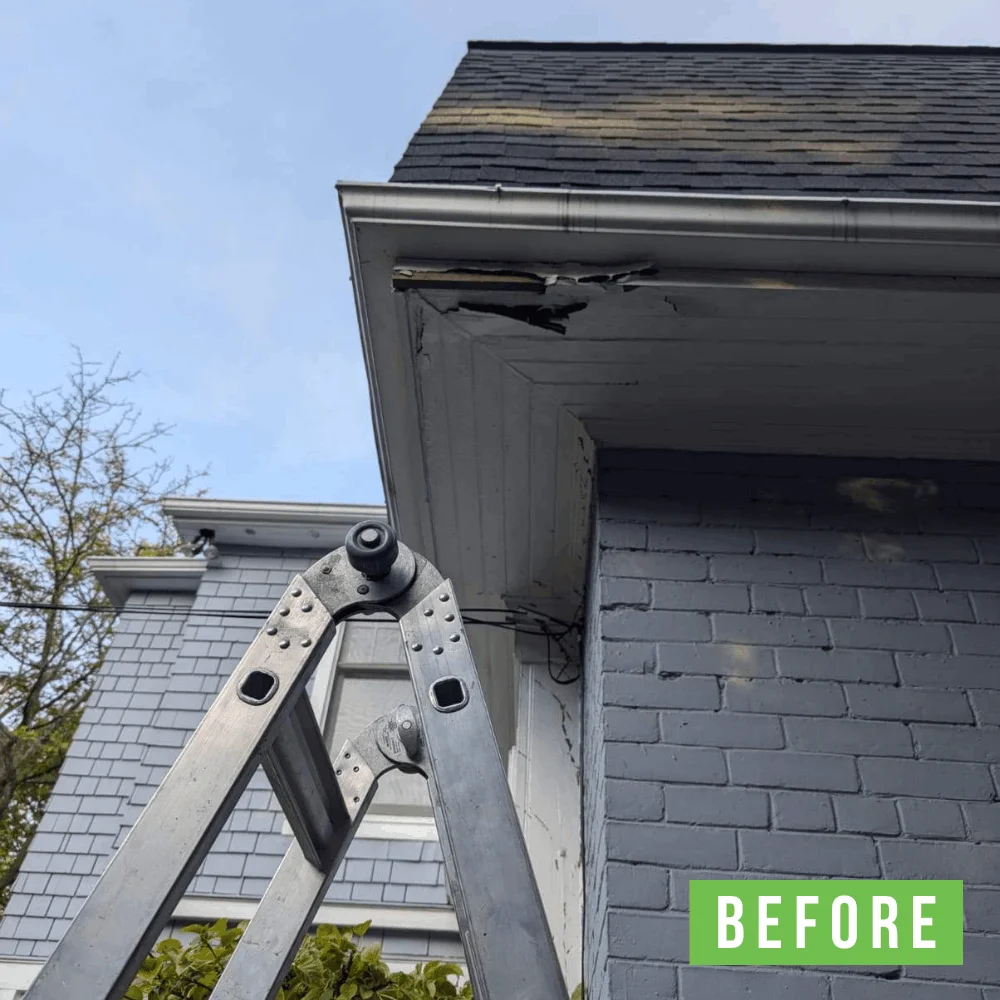
Peeling paint alone points toward preparation and repainting. Soft wood when pressed confirms rot and points toward replacement — pressing each soffit section is the single most important diagnostic step before any paint is purchased.
What Do Soffits Actually Do on a Toronto Home?
Soffits are the horizontal panels located underneath the roof overhang between the exterior wall and the roof edge. Their functions are structural, environmental, and aesthetic simultaneously. A properly maintained soffit system protects roof framing from moisture exposure, supports attic ventilation by allowing air movement between the eaves and the roof ridge, improves the visual finish of the roofline, and reduces pest intrusion by closing the gap between the rafters and the exterior wall.
Because soffits face downward and inward toward the wall junction, they are constantly exposed to rain splash, condensation from the attic above, and moisture from clogged gutters directly above them. That combination of moisture sources makes soffits one of the most maintenance intensive exterior surfaces on a Toronto home.
Why Wood Soffits Deteriorate Faster in Toronto
Toronto's climate creates a specific and aggressive deterioration environment for wood soffits. Over 100 freeze and thaw cycles per year, combined with hot humid summers and cold dry winters, drive moisture in and out of wood fibres repeatedly. According to Environment and Climate Change Canada precipitation data for Toronto, Toronto receives over 831 mm of precipitation annually, much of it concentrated in periods that directly stress roofline components. Each cycle of wetting and drying weakens wood paint bonds and opens micro cracks in the wood surface that allow deeper moisture penetration.
Common causes of wood soffit deterioration in Toronto include clogged gutters that overflow onto the soffit surface, poor roof drainage that directs water toward the eave, paint that has failed and left bare wood exposed, trapped moisture from inadequate attic ventilation, and the cumulative effect of freeze and thaw cycling on any existing cracks in the wood surface.
Signs Your Wood Soffits Need Attention: A Toronto Homeowner's Assessment Guide
Most soffit problems begin subtly before they become structurally significant. The earliest warning signs are cosmetic, but cosmetic signs on soffits are a reliable indicator of underlying moisture activity that will worsen without intervention.
| Warning Sign | What It Indicates | Urgency Level | Correct Response |
|---|---|---|---|
| Peeling or bubbling paint | Paint adhesion has failed; moisture is reaching the wood surface from above or behind | Medium: repaint within one season | Investigate moisture source first; repair, prime with oil based primer, repaint with premium exterior acrylic |
| Soft or spongy wood when pressed | Active rot; wood fibres are degraded by moisture and fungal activity | High: do not paint over; repair or replace | Replace affected sections before any painting begins |
| Discolouration (dark staining or grey streaking) | Water tracking; moisture migrating through or over the soffit | Medium to high: investigate drainage first | Fix the drainage source; assess wood integrity before deciding paint or replace |
| Cracking or splitting along the grain | Wood has dried and shrunk from repeated moisture cycling; cracks allow deeper water entry | Medium: address before next winter | Scrape, fill, prime, and repaint if structurally sound; replace if cracks are through the full thickness |
| Visible rot at corners or joints | Most advanced stage; structural integrity compromised | High: replace before painting | Replace affected sections; do not paint over rotted wood |
| Paint fails within one to two seasons of repainting | Moisture source has not been corrected; paint is being lifted from behind | High: full investigation needed | Identify and correct moisture source before any further repainting |
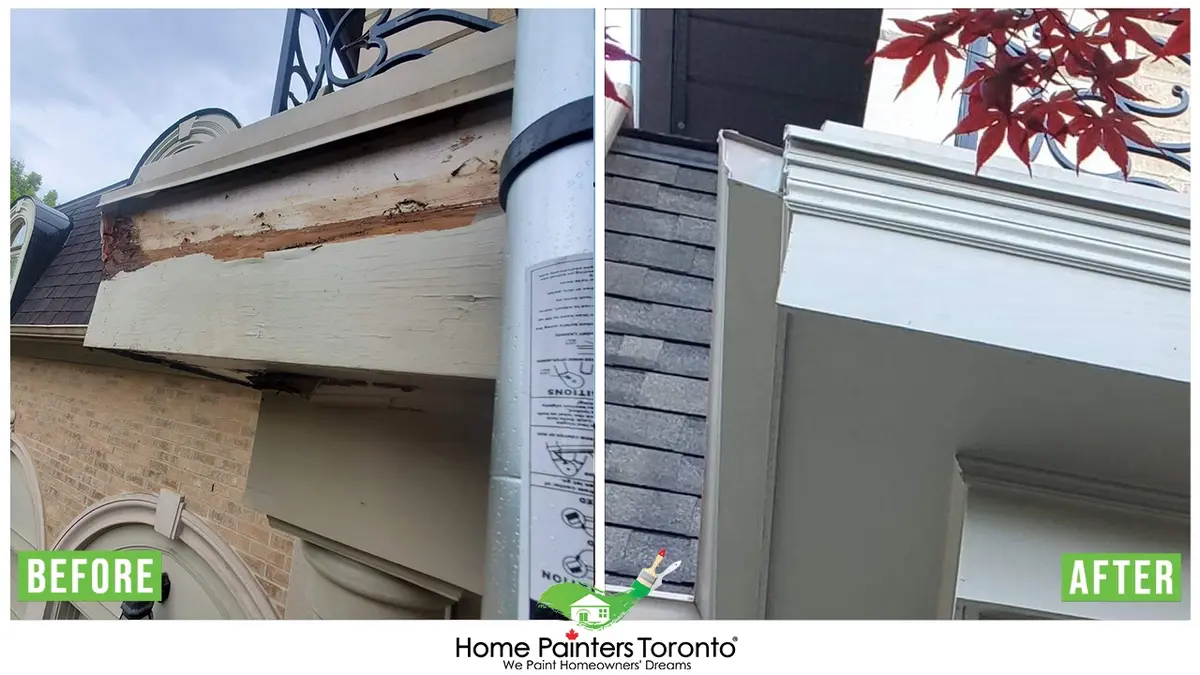
Scraping all failing paint to bare wood and priming with oil-based primer before the topcoat is the preparation step most often shortcut on soffit projects — and the one that determines whether the paint job lasts 5 years or 5 months.
When Painting Wood Soffits Is the Right Choice for Toronto Homes
Painting remains the correct approach when the wood is structurally sound, deterioration is limited to surface paint failure, and any moisture intrusion from clogged gutters, failed caulking, or drainage problems has been corrected before the painting scope begins. A paint job applied to sound wood with all moisture sources addressed can last 5 to 7 years with a premium 100% acrylic exterior product.
Proper preparation is the critical variable. Painting over partially deteriorated soffits without addressing the preparation correctly produces a finish that fails within one to two seasons. Professional soffit painting preparation involves scraping all failing paint to bare wood, sanding rough areas smooth, filling minor cracks and gaps with paintable exterior caulk, priming all bare wood sections with an oil based primer before the topcoat, and confirming all adjacent caulked joints are sound before the topcoat is applied.
Painting Wood Soffits: Product Selection for Toronto's Climate
Product selection on wood soffits is as consequential as the preparation. Standard interior latex paint applied to soffits fails within months. The correct product is a 100% acrylic exterior paint with UV resistance and flexibility to accommodate Toronto's seasonal wood movement. Benjamin Moore Aura Exterior and Sherwin Williams Emerald Exterior are both strong performers on wood soffit surfaces. The finish should be satin or semi gloss: flat paint on a horizontal or overhead surface shows streaking and does not shed water cleanly.
When Replacing Wood Soffits with Aluminum Makes More Sense in Toronto
Replacement is the correct decision when rot or deterioration has spread beyond isolated sections, when paint has failed repeatedly within normal intervals despite correct preparation, or when the homeowner wants to eliminate the ongoing maintenance requirement of wood soffit repainting entirely. Aluminum soffits require no painting, resist moisture deterioration, and are not vulnerable to the insect activity that affects wood.
Extensive Moisture Damage on Wood Soffits
Rot spread across multiple soffit sections indicates a systemic moisture problem that isolated section repairs will not fully address. When more than 25 to 30% of the soffit area shows soft or deteriorated wood, the cost benefit calculation shifts toward full replacement. Continuing to repair and repaint isolated sections on a heavily rotted soffit system produces diminishing returns at increasing cost.
Repeated Paint Failure Despite Correct Prep on Wood Soffits
When paint continues to fail within one to two seasons on wood soffits despite correct preparation and premium product application, an underlying moisture source is still active. The moisture is coming from inside the wall assembly, from inadequate attic ventilation, or from a roof flashing failure that is directing water into the soffit space. Painting without resolving that source will always fail. If the source cannot be corrected at a reasonable cost, aluminum replacement is the logical alternative because aluminum tolerates moisture exposure without the same deterioration consequence.
Ongoing Maintenance Concerns: The Case for Aluminum
Aluminum soffits eliminate the painting cycle entirely. Factory finished aluminum does not rot, does not require repainting on the 5 to 7 year cycle that wood demands, and is not vulnerable to insect damage. Our soffit and fascia replacement service handles the full scope from removal of existing wood soffits through installation and caulking of the new aluminum system. Ventilation design is confirmed during the replacement scope, which is an important step: installing aluminum over inadequately ventilated eaves creates attic moisture problems that cause interior damage.
Painting vs Replacing Wood Soffits: The Toronto Decision Framework
This table maps the specific soffit condition to the correct decision for Toronto homeowners. Following this framework avoids both overcorrecting (replacing sound wood) and undercorrecting (painting over rot).
| Soffit Condition | Correct Decision | Reason | Estimated Cost Implication |
|---|---|---|---|
| Sound wood, surface paint failure only | Paint | Wood is intact; preparation and premium topcoat solve the problem | Lower: painting scope only |
| Sound wood, isolated crack or gap | Repair, then paint | Structural integrity maintained; gap filled and caulked before priming and painting | Lower: painting scope with minor repair |
| Soft wood in one or two isolated sections | Replace affected sections, then paint full run | Partial replacement plus painting is more cost effective than full system replacement | Medium: carpentry repair plus painting |
| Rot spread across more than 30% of soffit area | Full replacement with aluminum | Ongoing repair cost exceeds replacement cost over 5 to 7 years | Higher upfront; lower 10 year cost |
| Paint failing repeatedly despite correct prep | Investigate moisture source first; replace if source cannot be resolved | Repainting without resolving the moisture source always fails | Variable: depends on moisture source investigation and correction cost |
| Homeowner wants to eliminate maintenance cycle | Aluminum replacement | Practical decision; aluminum soffits require no repainting over their service life | Higher upfront; no repainting cost for 20 plus years |
Why Proper Preparation Matters Before Painting Wood Soffits
Preparation determines the lifespan of a wood soffit painting project more than any product or labour factor. Without proper preparation, paint peels prematurely, moisture remains trapped beneath the new coat, and repairs fail in the first season. Professional preparation creates a stable, primed surface that gives the topcoat the adhesion it needs to last 5 to 7 years in Toronto's demanding climate.
Scraping all failing paint back to bare wood is the step most often shortcut on soffit projects. Painting over loosely adhered existing paint applies the new topcoat to a failed base, not to the wood. When the old coat continues to fail, the new coat fails with it. All loose paint is removed, all bare sections are primed with oil based primer, and the first topcoat is applied to the primed surface only.
Common Mistakes Toronto Homeowners Make with Soffit Maintenance
Four mistakes account for the majority of premature soffit failures our team corrects across Toronto. Each is avoidable with the correct initial assessment.
| Mistake | Consequence | Correct Approach |
|---|---|---|
| Painting over rotted wood | Paint bonds to degraded surface; fails within months; rot continues beneath new coat | Replace rotted sections before any painting begins |
| Ignoring drainage problems before painting | Active moisture source continues lifting paint from behind regardless of product quality | Confirm gutters are clear, drainage is correct, and caulked joints are sound before painting |
| Failing to prime bare wood after scraping | Paint applied directly to bare wood absorbs unevenly and fails prematurely at the wood surface | Prime all bare sections with oil based exterior primer before topcoat application |
| Delaying repairs until deterioration is severe | Small rot sections become large replacement scopes; costs increase significantly with delay | Annual spring inspection of soffits and fascia; address minor issues before they spread |
How Toronto Weather Affects Wood Soffits and Exterior Trim
Toronto's seasonal extremes subject soffits to conditions that accumulate damage year over year. Snow load on the roof melts and refreezes at the eaves, driving water under the soffit edge. Summer humidity above 60% keeps wood fibres swollen for months. Autumn temperature drops allow moisture to penetrate newly opened cracks before freeze begins. Winter freeze and thaw cycling physically expands and contracts that moisture, widening the cracks with each cycle.
Exterior trim systems near rooflines are especially vulnerable because they receive consistent water exposure from above while also facing the thermal stress of the roof surface above them. Soffits that face north and east stay wet longer after rain events because they receive less afternoon sun to dry them. Homes with overhanging trees on the north side of the property are at higher risk of premature soffit deterioration than comparable homes with open rooflines.
What Paint to Use on Wood Soffits and Aluminum Soffits in Toronto
Paint product selection varies between wood soffits and aluminum soffits. Both require a specific primer and topcoat sequence to produce a lasting result in Toronto's climate.
| Surface | Primer Required | Topcoat Product | Finish | Expected Lifespan in Toronto |
|---|---|---|---|---|
| Wood soffits (bare or scraped to bare wood) | Oil based exterior primer (Benjamin Moore Fresh Start Oil Based; Sherwin Williams Exterior Oil Based Primer) | Benjamin Moore Aura Exterior or Sherwin Williams Emerald Exterior | Satin or semi gloss | 5 to 7 years with proper prep |
| Wood soffits (sound existing paint, recoating) | Spot prime bare sections with oil based primer; full prime if existing coat is in poor condition | Benjamin Moore Aura Exterior or Sherwin Williams Emerald Exterior | Satin or semi gloss | 5 to 7 years |
| Aluminum soffits (unpainted, new installation) | Etching primer or metal bonding primer (Rust Oleum Clean Metal Primer) | Benjamin Moore Aura Exterior | Satin | 7 to 10 years |
| Aluminum soffits (previously painted, recoating) | Bonding primer if adhesion is questionable; scuff and spot prime if adhesion is sound | Benjamin Moore Aura Exterior or Sherwin Williams Emerald Exterior | Satin | 7 to 10 years |
When to Hire a Professional Exterior Contractor for Soffit Work in Toronto
Professional involvement is the right call when soffits are sagging or pulling away from the fascia, when moisture damage is spreading to adjacent roofline components, when multiple roofline elements including gutters, fascia, and soffits require coordinated repair and repainting, or when the ventilation design needs to be assessed as part of the replacement scope. Our team at Home Painters Toronto handles both the carpentry and painting elements of soffit projects, which is more cost effective and produces a better result than separate contractors for each scope. See our exterior wood repair and carpentry service for full scope details.
Home Painters Toronto is WSIB compliant, fully insured to $5 million general liability, and all exterior painting is backed by a 3 year warranty. Same day free estimates are available seven days a week across the GTA.
Cost of Painting or Replacing Wood Soffits in Toronto in 2026
Soffit project costs in Toronto depend on the linear footage, the extent of rot repair required, whether painting or full aluminum replacement is the correct scope, and whether fascia and gutters are included in the project. All prices below are in CAD and exclude HST.
| Scope | Estimated Cost (CAD) | Notes |
|---|---|---|
| Wood soffit painting only (standard condition) | $800 – $2,500 | Full preparation, prime, and two topcoats; linear footage drives cost |
| Wood soffit painting with minor repair (up to 20% section replacement) | $1,500 – $4,000 | Carpentry repair of isolated sections plus full painting scope |
| Partial wood soffit replacement and painting (20 to 50% area) | $3,000 – $7,000 | More extensive carpentry; combined painting and replacement scope |
| Full wood soffit replacement with aluminum | $5,000 – $15,000 plus | Depends on home size, profile, and ventilation scope; labour and material intensive |
| Fascia repair or replacement (combined with soffit scope) | $1,500 – $5,000 | Often addressed at the same time as soffit work; separate quote by linear footage |
| Exterior full home repaint including soffit and fascia | $4,000 – $10,000 | Medium to large Toronto home; soffit and fascia included in full exterior scope |
For a full breakdown of exterior painting and carpentry costs, see our exterior painting cost guide.
Real Project: Soffit Assessment, Repair, and Painting in Etobicoke
Etobicoke 1965 Detached: Gutter Overflow Root Cause, Two-Section Rot Replacement, Full Soffit and Fascia Repaint
A homeowner in Etobicoke contacted Home Painters Toronto to assess and address peeling and discoloured soffits on their 1965 detached home. The soffits had been repainted twice in the previous ten years, with the paint failing within two seasons on both occasions. The homeowner suspected the wood needed to be replaced entirely.
Our team's assessment found a different root cause. The gutters on the north and west elevations had been partially blocked by debris for at least two seasons, causing overflow that ran directly over the soffit panels on every rain event. The wood itself, while stained and showing surface deterioration, was structurally sound in 90% of the soffit area. Two sections on the northwest corner, approximately 2.4 metres total, had soft wood indicating early rot and required replacement before any painting began.
Gutters were cleared and the downspout connection on the northwest corner was redirected to correct the overflow path before any carpentry or painting work started. The two rotted sections were replaced with matching primed wood stock. All remaining soffits were scraped to bare wood where the existing paint had failed, and all bare sections were primed with Benjamin Moore Fresh Start oil based exterior primer. Two coats of Benjamin Moore Aura Exterior in Satin finish were applied to all soffit and fascia surfaces. The project was completed in two days. The homeowner was advised to schedule an annual autumn gutter cleaning to prevent recurrence.
Home Painters Toronto is WSIB compliant, fully insured to $5 million general liability, and all exterior painting is backed by a 3 year warranty. For completed projects, visit our Toronto painting and carpentry projects page. Same day free estimates are available seven days a week across the GTA.
Conclusion: Protecting Wood Soffits and Exterior Surfaces Long-Term
Wood soffits are an important part of protecting a Toronto home's exterior from moisture, pests, and roofline deterioration. Whether the correct choice is repainting or aluminum replacement, long term success depends on correcting the moisture source first, using proper preparation and primer, specifying quality exterior coatings, and maintaining gutters and drainage annually. Addressing soffit deterioration early consistently reduces the overall cost compared to delaying until replacement is the only option.
Frequently Asked Questions About Painting or Replacing Wood Soffits with Aluminum
Wood soffits can be repainted when the wood is structurally sound, surface paint failure is the only issue, and any moisture source has been corrected. The correct preparation requires scraping all failing paint to bare wood, priming with an oil based exterior primer, and applying a premium 100% acrylic exterior topcoat in a satin or semi gloss finish. Done correctly on sound wood, a professional soffit repaint lasts 5 to 7 years in Toronto's climate.
Aluminum replacement is the right choice when rot is present across more than 25 to 30% of the soffit area, when paint has failed repeatedly despite correct preparation because a moisture source was never resolved, or when the homeowner wants to eliminate the 5 to 7 year repainting cycle entirely. Aluminum soffits do not rot, do not require repainting, and are not vulnerable to the insect damage that affects wood over time.
The most common causes of soffit paint failure and rot in Toronto are clogged gutters that overflow onto the soffit surface, inadequate attic ventilation that creates condensation on the soffit from above, paint that was applied without priming bare wood, and the cumulative damage from over 100 freeze and thaw cycles per year that the wood endures. Addressing the moisture source is always the first step before any painting or replacement begins.
Aluminum soffits require significantly less maintenance than wood. Factory finished aluminum does not rot, does not require repainting on a 5 to 7 year cycle, and resists insect damage. The primary maintenance requirement for aluminum soffits is keeping the adjacent gutters clear so water does not back up against the soffit channel. If painting of aluminum soffits is ever required for a colour change, the correct approach uses an etching primer followed by a premium exterior acrylic topcoat.
Yes. Untreated wood soffit rot creates a pathway for moisture into the wall assembly, roof framing, and attic space. Once moisture reaches the structural framing behind the soffit, repair costs escalate rapidly beyond the soffit replacement scope alone. Pest intrusion through deteriorated soffit panels creates a secondary problem that affects insulation, electrical, and structural components. Annual inspection of soffits and gutters at the roofline is the most cost effective preventive maintenance a Toronto homeowner can do.
Painting wood soffits in standard condition costs between $800 and $2,500 in Toronto depending on linear footage, with minor carpentry repairs adding $700 to $1,500 to the scope. Partial wood soffit replacement combined with painting runs from $3,000 to $7,000. Full aluminum soffit replacement on a standard Toronto home runs from $5,000 to $15,000 or more depending on the size of the home and the ventilation design. All quotes from Home Painters Toronto are free and provided the same day.
More Helpful Blogs Related to Painting or Replacing Wood Soffits with Aluminum
Need Soffit Assessment, Repair, or Painting in Toronto?
Home Painters Toronto is the HomeStars Best of Award 2026 winner with a 3-year warranty on all exterior painting. Call 416-494-9095 or email [email protected] for a FREE same-day estimate.