

How to Paint a Brick Wall and Concrete Wall
Painting a brick wall or concrete wall in Toronto is one of the most technically demanding exterior masonry projects a homeowner can undertake, because the wrong product on either surface guarantees peeling within two to three winters. Home Painters Toronto, the HomeStars Best of Award 2026 winner with over 1,200 positive reviews and 37 years serving the GTA, coats masonry surfaces across North York, Etobicoke, Scarborough, and Leaside every season. The chemistry of brick and the chemistry of concrete are fundamentally different, and the products that protect each surface long term in Toronto's demanding climate reflect that difference. This guide covers exactly what separates a masonry coating that lasts from one that fails.
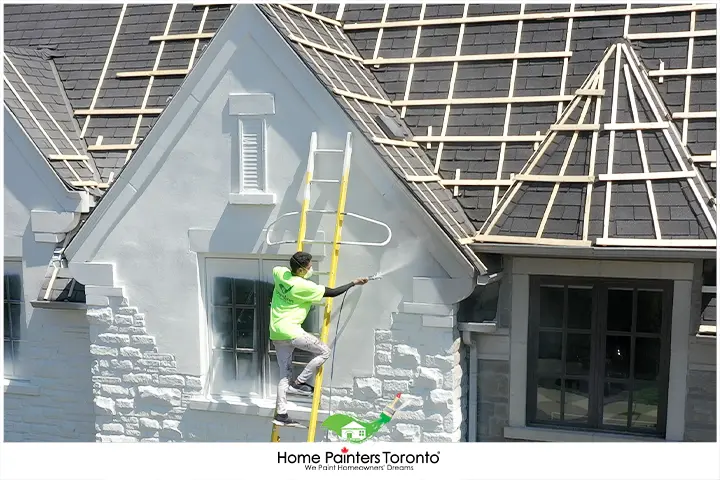
Brick and concrete behave differently under moisture — and require different product categories to perform reliably through Toronto's 100-plus freeze and thaw cycles per year.
Brick Wall and Concrete Wall Paint in Toronto: Why These Two Surfaces Are Not the Same Problem
Most Toronto homeowners treat brick and concrete as interchangeable masonry surfaces and reach for the same can of exterior latex for both. That choice produces adhesion failure on brick within three seasons and moisture driven cracking on concrete within two. The two surfaces require fundamentally different product categories because they behave differently under moisture, and moisture management is the central problem in every Toronto masonry coating project.
Brick is fired clay that remains porous throughout its life. It absorbs and releases moisture as part of normal seasonal cycling. A film forming coating, meaning any product that builds a continuous layer on the surface, blocks that vapour transfer and traps moisture inside the brick. When that trapped moisture freezes, it expands and breaks the paint film from behind, producing the bubbling and peeling visible on painted brick facades across older Toronto neighbourhoods.
Concrete behaves differently. Poured concrete foundations and block walls move moisture through capillary suction rather than vapour transfer, pulling water up from the soil and pushing it outward through micro cracks. The correct coating for concrete must bridge those cracks and resist hydrostatic pressure, not simply provide a breathable surface film.
Brick Wall Paint vs Concrete Wall Paint: The Key Technical Differences
| Property | Brick Wall | Concrete Wall |
|---|---|---|
| Moisture behaviour | Absorbs and releases vapour; needs breathable coating | Moves water through capillary suction; needs crack bridging and hydrostatic resistance |
| Surface alkalinity | Moderate to high; requires alkali resistant primer | High; efflorescence and lime bloom common; requires neutralization before coating |
| Correct coating category | Mineral silicate stain or breathable elastomeric masonry stain | Elastomeric masonry coating or penetrating concrete sealer depending on application |
| Worst product choice | Standard film forming exterior latex | Standard latex without elastomeric properties |
| Freeze and thaw failure mode | Paint film cracks as trapped moisture expands | Micro cracks propagate through rigid coating; water enters and accelerates deterioration |
| Primer requirement | Alkali resistant primer or no primer for penetrating stain | Masonry bonding primer rated for concrete substrate |
Why Toronto's Freeze and Thaw Cycling Changes Everything for Masonry Paint
Toronto experiences over 100 freeze and thaw cycles per year, more than most North American cities at a comparable latitude, because the city sits at the western end of Lake Ontario where temperature fluctuations through autumn and spring are compressed into short windows. According to Environment and Climate Change Canada's climate data for Toronto, the city regularly cycles through the freezing point in both November through February and again in early spring, with each crossing creating a freeze and thaw event that stresses any moisture holding surface finish.
Each freeze and thaw cycle exerts force on a paint film from beneath. Water that has entered the masonry substrate expands by approximately nine percent when it freezes. That expansion pushes outward against the coating. Film forming coatings, those that create a continuous sealed layer over the masonry surface, have no ability to absorb that movement. They crack, delaminate, and peel. Elastomeric coatings and penetrating stains are designed specifically to accommodate that movement without failing.
The practical implication for Toronto homeowners is this: any coating specified for a brick or concrete exterior surface must either be breathable enough to allow moisture to exit before it freezes, or flexible enough to move with the substrate during freeze and thaw cycling without cracking. Standard exterior latex fails both criteria on masonry. It is the correct product for wood siding and it is the wrong product for brick and concrete.
Painting Concrete Walls in Toronto: Substrate Assessment, Primer, and Product Selection
Concrete wall coating begins with a substrate moisture assessment, not with product selection. Applying any coating over concrete with a moisture content above 12 percent guarantees adhesion failure, because the outward pressure of escaping moisture vapour breaks the bond between the coating and the substrate from day one. Moisture content is confirmed using a concrete moisture meter before any surface preparation begins.
Efflorescence, the white powdery salt deposit visible on many Toronto concrete walls and basement floors, must be removed before coating. It signals active moisture movement through the concrete. Coating over efflorescence seals the salts under the paint film, which continues to push outward and lifts the coating within one or two seasons. Our efflorescence removal guide covers the full treatment process using trisodium phosphate solution before any masonry coating is applied.
Why Elastomeric Masonry Coatings Outlast Standard Latex on Toronto Concrete
Elastomeric masonry coatings build a thick, flexible film that bridges micro cracks up to 1.6 mm wide without cracking itself. That crack bridging capacity is critical on poured concrete and concrete block, where micro cracking from thermal movement and settling is normal. Standard latex builds a thin, rigid film that fractures at crack locations, allowing water to enter directly through the failed film.
The applied dry film thickness of an elastomeric coating runs approximately 10 to 15 mils per coat, compared to two to four mils for standard exterior latex. That additional thickness provides both the crack bridging capacity and the moisture resistance that concrete walls in Toronto require. Sherwin Williams Loxon Elastomeric Masonry Coating and Benjamin Moore Ultra Spec Masonry Elastomeric Waterproof Coating are the two product lines most commonly specified by our team on Toronto concrete wall projects.
For interior concrete surfaces such as basement floors and walls, penetrating concrete sealers address moisture from a different direction. Our guide on sealing interior concrete floors covers the interior masonry coating decision in depth.
Painting Brick Walls in Toronto: Why Standard Latex Is the Wrong Choice
Standard exterior latex paint should not be applied to unpainted brick in Toronto. The film forming nature of latex seals the brick surface and prevents the moisture vapour transfer that fired clay masonry requires to remain stable. When vapour cannot pass through the coating, it accumulates beneath the film and eventually forces the coating off the surface as it freezes and expands. This failure mode is visible on painted brick facades across Toronto neighbourhoods where the original natural brick was painted without a breathable product.
Brick that has already been painted over multiple times presents a different challenge. The existing paint cannot simply be replaced with a breathable product, because the substrate is no longer pure brick. The assessment determines whether the existing coating is sound enough to recoat with a compatible elastomeric product, or whether removal back to bare brick is the correct starting point.
Brick Stain vs Brick Paint: Which Lasts Longer in a Toronto Climate
Mineral silicate masonry stain outperforms film forming brick paint in Toronto's climate because the stain penetrates the brick substrate and chemically bonds with the silica in the masonry, becoming part of the brick surface. It produces no surface film to crack, peel, or trap moisture. Our exterior brick staining service specifies mineral silicate stains exclusively for unpainted brick because the 15 year warranty our team backs on these projects reflects the actual product longevity, not an optimistic estimate based on standard latex performance.
Elastomeric masonry paint is the correct choice when brick has already been painted and the existing coating is sound. The elastomeric formulation provides the flexibility to accommodate freeze and thaw movement without cracking, which standard latex cannot. It is not as breathable as a penetrating stain, but it performs significantly better than standard latex on previously painted brick because it accommodates the substrate movement that standard latex ignores.
For homeowners whose brick has never been painted, our full brick painting Toronto service covers both product options and the assessment process that determines which is appropriate for a specific property.
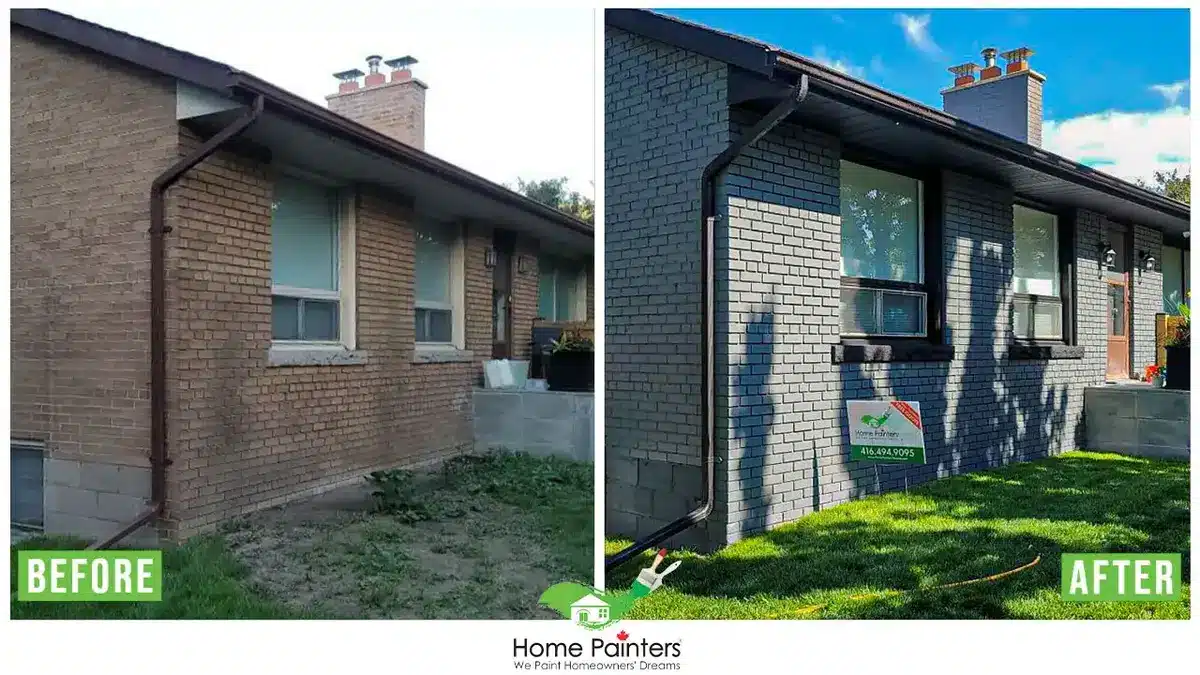
Elastomeric masonry coatings build 10 to 15 mils dry film thickness per coat — the additional thickness provides both crack bridging capacity and the moisture resistance Toronto masonry surfaces require.
Painting Concrete and Brick Walls: Application Sequence
The application sequence for both brick and concrete follows the same logical order, though the specific products at each stage differ. Preparation, primer, and topcoat selection are all surface specific.
Surface preparation begins with cleaning. Pressure washing removes loose paint, biological growth, and accumulated dirt from both surfaces. On brick, the pressure must be controlled to avoid eroding mortar joints. On concrete, higher pressure is acceptable since the surface is more resistant to mechanical damage from water.
Efflorescence treatment follows cleaning on any surface showing white salt deposits. A trisodium phosphate solution or muriatic acid solution diluted per product instructions removes the salt deposits and prepares the alkaline surface for primer. The surface is rinsed thoroughly and allowed to dry to below 12 percent moisture content before primer is applied.
Primer selection is surface specific. Concrete receives a masonry bonding primer rated for the specific topcoat being applied. Brick receiving elastomeric topcoat receives an alkali resistant primer. Brick receiving a penetrating mineral silicate stain requires no primer, since the stain bonds directly with the substrate.
Topcoat application on concrete uses a thick nap roller to achieve the film build required for crack bridging. Two coats at the correct wet film thickness per coat produce the dry film thickness specified by the manufacturer. On brick, the mineral silicate stain is applied in two coats with a roller or brush, working the product into the pores of the masonry.
The Best Paint Products for Brick and Concrete Walls in Toronto
Product selection for masonry coating is driven by the specific surface condition, substrate history, and performance requirement. All products referenced below are specified on residential exterior painting projects across the GTA by the Home Painters Toronto team.
| Product | Surface | Why It Works in Toronto | Notes |
|---|---|---|---|
| Sherwin Williams Loxon Elastomeric Masonry Coating | Concrete block and poured concrete | Bridges cracks up to 1.6 mm; 10 to 15 mil dry film thickness; resists hydrostatic pressure | Standard specification for exterior concrete foundation walls and retaining walls in Toronto |
| Benjamin Moore Ultra Spec Masonry Elastomeric Waterproof Coating | Concrete and previously painted brick | Breathable elastomeric film; accommodates freeze and thaw movement; low VOC | Available in flat and low lustre sheens for different aesthetic requirements |
| Mineral silicate masonry stain (Keim or equivalent) | Unpainted or never painted brick only | Penetrates and chemically bonds with brick silica; no surface film to crack or peel; 15 year performance | Most breathable option available; correct choice for heritage brick facing |
| Sherwin Williams Conflex Cricket | Textured stucco and rough masonry | Fills surface texture while providing crack bridging; hides minor surface irregularities | Used on textured concrete block where a smooth finish is desired |
| Alkali resistant masonry primer | All masonry surfaces before topcoat | Neutralizes surface alkalinity; improves topcoat adhesion by creating compatible bonding surface | Mandatory step on new or freshly cleaned concrete; skip this and topcoat adhesion fails within one season |
Cost of Painting Brick and Concrete Walls in Toronto in 2026
Masonry coating costs more than standard exterior painting because the product costs are higher, the preparation requirements are more intensive, and the dry film thickness required for elastomeric coatings means more material per square metre of coverage. Home Painters Toronto is WSIB compliant, fully insured to $5 million in general liability, and all exterior work is warranty backed. All prices below are in CAD and exclude HST. For the full exterior painting cost breakdown, see our exterior painting cost guide.
| Scope | Estimated Cost (CAD) | Notes |
|---|---|---|
| Exterior brick home (elastomeric masonry coat, small home) | $2,000 – $4,000 | Includes efflorescence treatment, alkali resistant prime, and two elastomeric coats |
| Exterior brick home (elastomeric masonry coat, medium home) | $4,000 – $8,000 | Two storey brick home; standard condition; includes prep and prime |
| Exterior brick home (mineral silicate stain, any size) | Quoted by scope; 15 year warranty | Penetrating stain; more labour intensive prep; longer product lifespan justifies the investment |
| Exterior concrete foundation wall coating | $800 – $2,500 per elevation | Elastomeric masonry coating; includes efflorescence treatment and masonry primer |
| Interior basement concrete wall coating | $600 – $1,800 per area | Penetrating sealer or elastomeric; substrate moisture assessment included |
| Efflorescence removal (standalone, prior to painting) | $300 – $700 | TSP or muriatic acid treatment; rinse and confirm dry before coating proceeds |
Real Project: Brick and Concrete Wall Painting on a Toronto Heritage Property
North York 1958 Detached: Peeling Brick Elevation, 14% Concrete Moisture, Downspout Redirection, and a Dual Masonry Specification
A homeowner in North York contacted Home Painters Toronto to address the exterior of their 1958 detached home, which had two distinct masonry challenges. The upper brick elevation had been painted three times over the decades and showed a consistent pattern of peeling along the mortar joint lines, indicating moisture was moving through the mortar and lifting the coating from behind. The poured concrete foundation wall, visible below the brick datum line, showed heavy efflorescence across the north and east faces and a network of micro cracks concentrated at the base of the wall.
Our team began with a substrate assessment on both surfaces. The concrete foundation registered a moisture content reading of 14 percent using a concrete moisture meter, well above the 12 percent threshold for coating. The source was traced to a downspout that was discharging within 30 cm of the foundation wall. Redirecting the downspout to discharge 1.8 metres from the foundation brought the moisture reading to nine percent over a two week drying period.
Efflorescence was treated with a diluted trisodium phosphate solution, brushed into the concrete surface, allowed to dwell, and rinsed with clean water. The concrete was primed with Sherwin Williams Loxon Block Filler rated for below grade masonry, then coated with two passes of Sherwin Williams Loxon Elastomeric Masonry Coating in a low sheen finish, achieving a dry film thickness of approximately 12 mils per coat. The peeling brick upper elevation was assessed for adhesion. Sound areas were cleaned and recoated with Benjamin Moore Ultra Spec Masonry Elastomeric Waterproof Coating in flat finish after spot prime on all peeling sections.
The completed project has been assessed through two full winter and spring cycles since application. No peeling, no cracking, and no efflorescence recurrence on either surface. The homeowner noted that the previous two paint jobs on the brick had both peeled within two winters, and attributed the difference in performance to the substrate moisture work done before the coating was applied.
Home Painters Toronto is WSIB compliant, fully insured to $5 million in general liability, and all exterior painting is warranty backed. For completed projects, visit our Toronto painting projects page. Same day free estimates are available seven days a week across the GTA.
Frequently Asked Questions About Brick and Concrete Wall Paint
No. Standard exterior latex forms a continuous film on the brick surface that blocks moisture vapour transfer. When moisture trapped in the brick freezes during a Toronto winter, it expands and breaks the paint film from behind. This produces peeling within two to three seasons on most Toronto brick facades. Breathable mineral silicate stain or elastomeric masonry coating is the correct product category for brick.
Efflorescence is a white powdery salt deposit that appears on brick and concrete walls when moisture moves through the masonry and carries dissolved salts to the surface. It signals active moisture movement and must be removed before any coating is applied. Painting over efflorescence seals the salts under the paint film, which continues to push outward and lifts the coating. Our efflorescence removal service covers the full treatment process before coating begins.
Brick staining uses a penetrating product, typically a mineral silicate formulation, that bonds chemically with the silica in the brick and becomes part of the masonry surface. It produces no surface film and allows the brick to breathe normally. Brick painting applies a film forming product over the brick surface, which carries the moisture and freeze and thaw risks described throughout this guide. Our exterior brick staining service carries a 15 year warranty because the product longevity supports it.
Elastomeric masonry coatings applied correctly on concrete typically last 7 to 10 years before a recoat is needed. Mineral silicate stains on brick typically last 15 or more years because the stain becomes part of the substrate. Standard latex on masonry typically fails within two to three winters in Toronto, regardless of product quality, because the film forming nature of latex is incompatible with masonry moisture dynamics.
Concrete below grade, meaning foundation walls and retaining walls, should be sealed or coated with an elastomeric masonry product before painting because soil moisture creates hydrostatic pressure that standard latex cannot resist. Above grade concrete that is dry and intact can receive standard masonry primer followed by elastomeric topcoat. In all cases, substrate moisture below 12 percent and no active efflorescence must be confirmed before any coating is applied.
Painting a brick home in Toronto costs $2,000 to $4,000 for a small home and $4,000 to $8,000 for a medium two storey home using elastomeric masonry coating. Mineral silicate brick staining is quoted by scope and typically runs higher in labour cost, offset by the longer product lifespan and the 15 year warranty that comes with the work. All quotes from Home Painters Toronto are free and provided the same day. See our exterior painting cost guide for the full breakdown.
More Helpful Blogs Related to Painting Brick and Concrete Walls
Ready to Paint Your Toronto Brick or Concrete Walls Correctly?
Home Painters Toronto is the HomeStars Best of Award 2026 winner with warranty backed exterior masonry coating and 37 years serving the GTA. Call 416-494-9095 or email [email protected] for a FREE same-day estimate.