

Efflorescence Removal From A Basement Floor
Efflorescence removal from a basement floor is one of the most common concerns Toronto homeowners raise after noticing chalky white deposits spreading across their concrete, and understanding what causes it changes how seriously the problem should be treated. Home Painters Toronto, the HomeStars Best of Award 2026 winner with over 1,200 positive reviews and 37 years serving the GTA, has assessed and treated efflorescence on basement floors across homes in North York, Etobicoke, Scarborough, and East York. Efflorescence itself does not damage the structure of the concrete. The salts simply travel to the surface as moisture evaporates. The real question is not how to wipe away the white residue, it is why moisture is moving through the slab in the first place. This guide covers both.
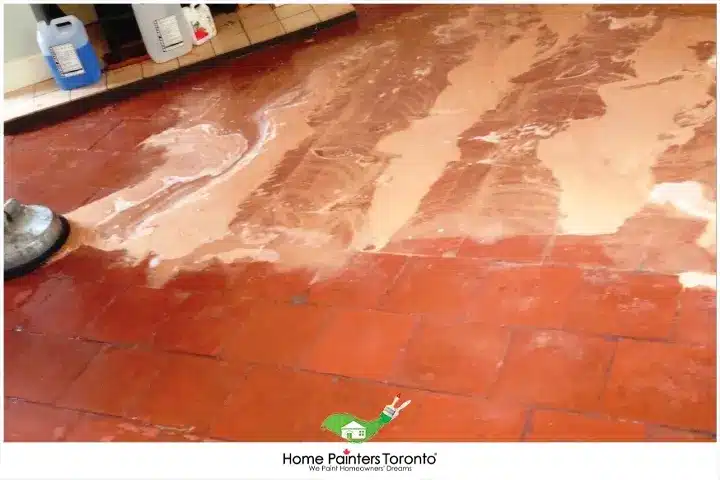
Efflorescence does not damage the concrete structurally — but recurring deposits after cleaning are a clear signal that an active moisture source behind the surface needs investigation, not just another scrub.
What Is Efflorescence on a Basement Floor?
Efflorescence is defined as the loss of water from the crystallisation of a hydrated salt into the atmosphere upon exposure to air. In simpler terms, it is what happens when evaporated salts and other minerals from curing concrete develop into a powder like substance due to moisture moving through the slab. The deposit looks worse than it actually is, because the structure of the concrete floor is not damaged by efflorescence itself. The streaky white stains tend to remain on the surface, and if left untreated for a long period, they become progressively harder to remove.
Three Factors That Cause Efflorescence to Occur
Three conditions must all be present for efflorescence to occur on a basement floor. Water soluble salts must be present within the concrete. Moisture of some kind must be present to dissolve those salts into a soluble solution. The salts must then be able to migrate through the material to the surface. As the moisture eventually evaporates, the salts crystallise and become visible as the chalky white deposit recognised as efflorescence.
Most cases of basement floor efflorescence in Toronto homes trace back to a seasonal weather issue, water that has entered the basement, condensation forming during winter months, or an underlying foundation issue. Whatever the specific cause, recurring or spreading efflorescence is a clear signal that the moisture source deserves investigation rather than repeated cosmetic cleaning.
Why Efflorescence Is So Common in Toronto Basements
Toronto's below grade concrete is in near constant contact with soil moisture, which is the primary mechanism behind most basement efflorescence in the city. According to CMHC guidance on home moisture and ventilation, below grade concrete is one of the most common pathways for moisture infiltration in Canadian housing stock, and that moisture movement is exactly what carries dissolved salts to the surface of a basement floor or wall.
Older Toronto homes built before the 1970s commonly have basement concrete poured from more porous formulations than modern mixes, which absorbs moisture more readily and produces efflorescence more frequently. Seasonal humidity swings compound the issue: indoor basement humidity in Toronto can climb above 60% in summer, while winter brings a higher likelihood of frozen ground moisture pushing through foundation cracks as conditions shift with thaw cycles.
Spring is the season our team sees the highest volume of efflorescence concerns across the GTA, as melting snow and spring rain saturate the soil around foundations more than any other time of year. A basement floor that shows no efflorescence in January but develops a visible bloom by April is showing a textbook seasonal moisture pattern rather than a sign of sudden new damage.
Efflorescence vs Other Basement Floor Problems: How to Tell the Difference
Not every white or discoloured deposit on a basement floor is efflorescence. Distinguishing efflorescence from other concrete surface issues determines whether simple cleaning is sufficient or whether a different repair approach is needed.
| Appearance | Likely Cause | Structural Concern? | Correct Response |
|---|---|---|---|
| Chalky white powder, brushes off easily | Efflorescence: salts carried to the surface by moisture | No; cosmetic only | Clean with TSP solution; investigate and address the moisture source |
| Hard, crusty white deposit, resistant to brushing | Advanced efflorescence with repeated cycles, or calcium carbonate buildup | No; cosmetic, but indicates long term moisture exposure | May require acidic cleaner in addition to TSP; address moisture source urgently |
| Dark staining, not white | Active water intrusion, possible mould risk | Potentially yes if prolonged | Investigate source immediately; consider professional moisture assessment |
| Flaking or spalling concrete surface | Freeze thaw damage or de icing salt deterioration | Yes; surface concrete is failing | Professional concrete repair required before any cosmetic treatment |
| Cracks with white deposits at the edges | Efflorescence migrating through an active crack | Possibly; depends on crack severity | Seal the crack with hydraulic cement; clean efflorescence; monitor for recurrence |
| Musty odour with or without visible deposits | Possible mould growth in addition to moisture | Yes, for indoor air quality | Address moisture source; assess for mould; ventilate the space |
How Efflorescence Is Professionally Removed From a Basement Floor
Professional efflorescence removal follows a consistent sequence regardless of the extent of the deposit. The process starts with appropriate protective equipment, since the cleaning solution and the dislodged mineral dust both warrant eye, hand, and respiratory protection during the work.
Loosening the Deposit
A wire brush is used to loosen the bulk of the efflorescence from the concrete surface before any cleaning solution is applied. This mechanical step breaks up the crystallised salt deposit and prepares the surface for the chemical cleaning stage that follows.
Applying the Cleaning Solution
A trisodium phosphate (TSP) solution, mixed at a standard ratio in warm water, is the most effective and widely used product for dissolving and lifting residual efflorescence from concrete. The solution is worked into the surface with a nylon scrub brush, which removes the deposit without the abrasive risk a wire brush would pose if used directly with the chemical solution.
Rinsing and Drying
Clean water rinses the TSP solution and loosened residue from the floor, and the surface is wiped with a towel before being left to dry completely. A floor that is not fully dried before any subsequent sealing or painting work risks trapping residual moisture beneath a new coating, which produces exactly the conditions efflorescence and coating failure both depend on.
Treating Concrete Basement Walls
The same cleaning approach used on basement floors applies equally to concrete basement walls affected by efflorescence. Walls and floors in a below grade space share the same moisture exposure, so a basement showing efflorescence on the floor often shows it on the walls as well. Our guide on the best paint for concrete walls in a basement covers how to treat and then protect basement walls once efflorescence has been addressed.
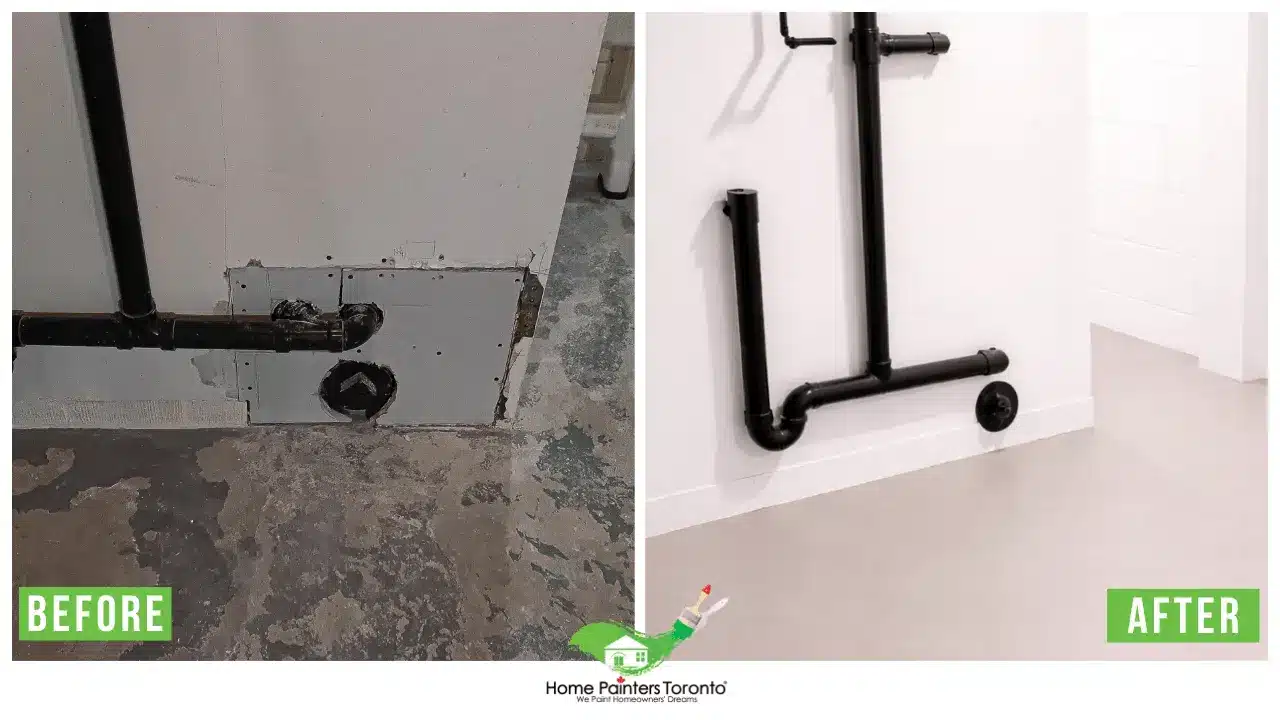
Rinsing thoroughly into a separate bucket prevents redepositing dissolved salts back onto the freshly cleaned surface — a step that's easy to skip and just as easy to undermine the whole cleaning process by skipping.
Materials Used for Professional Efflorescence Removal
| Material | Purpose | Notes |
|---|---|---|
| Wire brush | Mechanically loosens crystallised salt deposits | Use on bare concrete only; avoid on coated or painted surfaces |
| Nylon scrub brush | Works cleaning solution into the surface without scratching | Softer than wire; safe for repeated use on the same area |
| Trisodium phosphate (TSP) | Dissolves and lifts efflorescence deposits | Standard ratio approximately 1/2 cup TSP per bucket of warm water |
| Two plastic buckets | Separates cleaning solution from rinse water | Prevents redepositing dissolved salts back onto the cleaned surface |
| Rubber gloves and safety goggles | Protects skin and eyes from TSP exposure | TSP is alkaline and can irritate skin and eyes on contact |
| Towel and sponge | Final rinse and drying | Ensures the surface is fully dry before any coating is applied |
Preventing Future Efflorescence in a Toronto Basement
Preventing efflorescence is fundamentally about controlling the moisture that carries the salts to the surface in the first place. Cleaning the existing deposit addresses the symptom; preventing recurrence requires addressing the moisture pathway.
Waterproofing the Basement
Quality waterproofing products applied to basement walls and floors create a barrier against moisture migration through the concrete. An elastomeric masonry paint, the same product family covered in our guide on sealing interior concrete floors, is appropriate once the existing efflorescence has been removed and the moisture source has been addressed.
Improving Ventilation
Better basement ventilation and a dehumidifier both reduce the ambient humidity that drives moisture into and through concrete. A basement that consistently sits above 60% relative humidity creates ideal conditions for efflorescence to recur even after thorough cleaning and sealing.
Addressing Leaks Promptly
Any leak in a basement wall or floor should be repaired immediately rather than left for a future renovation. A small, ignored leak is the most common reason efflorescence returns within months of a thorough cleaning, because the moisture source driving the salt migration was never resolved.
Correcting Exterior Drainage
Grading around the foundation should direct water away from the home rather than allowing it to pool against basement walls. Soil that slopes toward the foundation, downspouts that discharge too close to the wall, and clogged weeping tile are all common Toronto specific drainage failures that drive recurring efflorescence regardless of how well the interior surface is cleaned and sealed.
When Efflorescence Signals a Bigger Moisture Problem
Most efflorescence cases are a manageable cosmetic issue resolved with cleaning and basic prevention. According to the American Cement Association's guidance on concrete surface issues, excessive moisture moving through concrete can also contribute to staining, surface deterioration, and reduced durability over time if the underlying moisture condition is never corrected. Persistent or worsening efflorescence, particularly when paired with any of the signs below, warrants a more thorough assessment.
| Warning Sign | What It May Indicate | Recommended Action |
|---|---|---|
| Efflorescence returns within weeks of cleaning | Active, ongoing moisture source rather than a one time event | Professional moisture assessment of foundation and drainage |
| Efflorescence spreading to new areas of the floor or walls | Moisture pathway widening or foundation movement | Inspect for new cracks; assess exterior grading and weeping tile |
| Musty odour accompanying the deposits | Possible mould growth in addition to surface salts | Ventilate; consider air quality testing; address moisture urgently |
| Visible standing water or dampness after rain | Active water infiltration, not just vapour migration | Exterior waterproofing or drainage correction likely required |
| Efflorescence appears alongside cracking or spalling concrete | Underlying concrete deterioration, not just surface salts | Professional concrete assessment before any cosmetic treatment |
Cost of Efflorescence Removal and Basement Floor Treatment in Toronto in 2026
Costs vary depending on the extent of the efflorescence, whether the moisture source requires correction, and whether sealing or painting follows the cleaning. All prices below are in CAD and exclude HST.
| Scope | Estimated Cost (CAD) | Notes |
|---|---|---|
| Efflorescence cleaning (standard basement floor) | $300 – $700 | TSP cleaning, rinse, and dry; assumes no active moisture source |
| Efflorescence cleaning plus crack sealing | $500 – $1,200 | Includes hydraulic cement crack repair where efflorescence is migrating through cracks |
| Efflorescence cleaning plus full concrete floor sealing | $1,800 – $3,500 | Cleaning followed by epoxy or acrylic sealer application; see our concrete sealing guide |
| Drainage or grading correction (exterior) | Quoted by scope | Addresses the root moisture source; often the most cost effective long term solution |
| Basement wall efflorescence treatment | $400 – $900 per wall section | Similar process to floor treatment; often combined with wall sealing |
For floor sealing details after efflorescence has been resolved, see our sealing interior concrete floors guide. Same day free estimates are available seven days a week across the GTA.
Real Project: Recurring Efflorescence Investigation in a Scarborough Basement
Scarborough 1968 Bungalow: Downspout Correction, TSP Cleaning, and Penetrating Sealer — No Recurrence After Two Seasons
A homeowner in Scarborough contacted Home Painters Toronto after cleaning visible efflorescence from their unfinished basement floor twice in one year, only to see it return within a few months each time. The basement was in a 1968 bungalow with a poured concrete floor that had never been sealed.
Our team's assessment found the efflorescence concentrated along the north wall, directly below a downspout that discharged within 30 cm of the foundation. Heavy rain or rapid snowmelt was saturating the soil at that specific corner and driving moisture through the slab edge, which explained why the deposit kept returning in the same location despite repeated cleaning.
The floor was cleaned thoroughly with a wire brush and TSP solution, rinsed, and allowed to dry fully. The downspout extension was corrected to discharge water at least 1.8 metres from the foundation, redirecting the saturation point well away from the basement wall. Once the moisture source was corrected, the cleaned floor area was sealed with a penetrating concrete sealer to provide additional protection against any residual vapour movement. The homeowner reported no recurrence through the following two seasons.
Home Painters Toronto is WSIB compliant, fully insured to $5 million general liability, and all interior work is backed by a lifetime warranty. For completed projects, visit our Toronto painting projects page. Same day free estimates are available seven days a week across the GTA.
Conclusion
Efflorescence on a basement floor might look unappealing, but with the right cleaning approach and appropriate preventative measures, it does not have to be a permanent feature of the home. Removing the existing deposit and addressing the moisture source behind it safeguards the basement from future outbreaks and maintains a clean, functional space for the household.
Frequently Asked Questions About Efflorescence Removal
Efflorescence itself is not dangerous and does not damage the structural integrity of the concrete. It is a cosmetic mineral deposit left behind as moisture evaporates from the surface. The concern is not the efflorescence itself but what it indicates: moisture is actively moving through the concrete, and that moisture, left unaddressed, can eventually contribute to other problems including mould growth, coating failure, and accelerated concrete deterioration over many years.
Trisodium phosphate (TSP) mixed with warm water is the most effective and widely used cleaning solution for removing efflorescence from concrete. It dissolves the crystallised salts and lifts them from the surface when worked in with a nylon scrub brush. For heavier or repeated deposits, a mild acidic cleaner formulated for concrete may be used in addition to TSP, though acidic products should be used cautiously and rinsed thoroughly.
Recurring efflorescence means the moisture source that carries salts to the surface has not been resolved. Cleaning removes the visible deposit but does nothing to stop new moisture from dissolving and transporting more salt to the surface. Common ongoing sources in Toronto basements include downspouts discharging too close to the foundation, grading that slopes toward the house, clogged weeping tile, foundation cracks, and high ambient basement humidity. Until the source is addressed, efflorescence will continue to return.
Efflorescence can be substantially reduced and often eliminated by controlling moisture at its source: correcting exterior drainage and grading, repairing foundation cracks, improving basement ventilation, using a dehumidifier to keep humidity below 60%, and applying a quality waterproofing or sealing product to the concrete once existing efflorescence has been removed. No single step guarantees permanent prevention if the underlying moisture condition is significant, which is why a combined approach works best.
Painting or sealing should only happen after the existing efflorescence has been fully cleaned and the floor has dried completely, and ideally after the moisture source has been investigated. Sealing over efflorescence without addressing the underlying moisture traps salts and moisture beneath the coating, which causes the sealer to bubble and fail. Our guide on sealing interior concrete floors covers the moisture testing step required before any concrete sealer is applied.
Standard efflorescence cleaning for a basement floor in Toronto costs between $300 and $700, depending on the size of the affected area. Adding crack sealing where efflorescence is migrating through a foundation crack brings the cost to $500 to $1,200. A full cleaning and sealing project, which provides longer term protection, runs $1,800 to $3,500. All quotes from Home Painters Toronto are free and provided the same day.
More Helpful Blogs Related to Efflorescence Removal
Need Help with Efflorescence or Basement Moisture in Toronto?
Home Painters Toronto is the HomeStars Best of Award 2026 winner with a lifetime warranty on all interior work. Call 416-494-9095 or email [email protected] for a FREE same-day estimate.