

Sealing Interior Concrete Floors
Sealing interior concrete floors is one of the most practical investments a Toronto homeowner can make in a basement, utility space, or open concept living area, because an unsealed concrete floor degrades, stains, and dusts with every year of use. Home Painters Toronto, the HomeStars Best of Award 2026 winner with over 1,200 positive reviews and 37 years serving the GTA, has sealed and painted concrete floors across homes in North York, Etobicoke, Scarborough, and Leaside. Toronto basements present specific sealing challenges beyond what warmer climates face: active moisture vapour pressure from below grade concrete, seasonal humidity swings, and old porous concrete mixes that require proper preparation before any sealer will hold. This guide covers every element of the process correctly.
Interior concrete floors are a growing choice for Toronto homeowners because a decorative concrete floor is long lasting, easy to maintain, and incredibly durable. Sealing is the essential first step in achieving the best results, whether the concrete is being painted, stained, or left in its natural state. More detail on painting concrete floors specifically is covered in our guide on can I just paint my concrete floor.
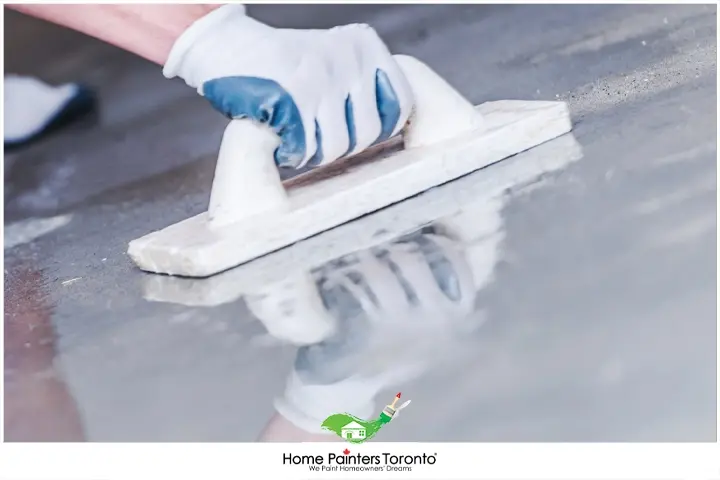
Toronto basement floor sealing starts with moisture testing — epoxy applied over a slab with active moisture vapour emission will delaminate regardless of product quality, so the test is not optional.
Sealing Interior Concrete Floors in Toronto: Why the Local Conditions Matter
Toronto basements are below grade, which means the concrete slab and walls are in constant contact with soil moisture. According to CMHC guidance on moisture in Canadian homes, below grade concrete is one of the primary pathways for moisture infiltration in Canadian residential buildings. That moisture moves upward through the slab as vapour pressure, and any sealer applied to a damp or actively moisture transmitting concrete floor will delaminate regardless of product quality.
Older homes in North York, Etobicoke, Scarborough, and East York commonly have concrete floors poured before the 1970s. These older concrete mixes are more porous than modern formulations and absorb moisture more readily, which accelerates deterioration of unsealed surfaces. The porous surface also creates significant concrete dusting: fine particles that transfer to feet, boxes, and stored items with every use of the space. Sealing eliminates the dusting and creates a cleanable surface that resists moisture, staining, and foot traffic wear.
Toronto's seasonal humidity swings affect the sealing process itself. Applying a solvent based sealer in summer when the basement humidity is above 85% produces a cloudy, milky finish that cannot be corrected without stripping and reapplying. Sealing is best done in late spring or early fall when the basement humidity is stable and the slab temperature is above 10 degrees Celsius. Always test the concrete for moisture vapour emission before specifying the sealer product.
Why Seal Interior Concrete Floors?
Four specific performance benefits make sealing interior concrete floors one of the most practical home improvement investments for Toronto homeowners.
Durability: Protecting the Sealing Interior Concrete Floor Surface
Sealing adds a protective layer on top of the concrete, reducing the risk of staining, scratching, and water damage. An unsealed concrete floor absorbs spills immediately and permanently. A sealed surface holds liquid on the surface long enough to be wiped clean without leaving a mark.
Visual Appeal
Sealers enhance the colour of stained or dyed concrete, producing a rich, vibrant surface that plain unsealed concrete cannot match. Tinted concrete sealers allow colour to be added without the opacity of paint, preserving the texture and visual character of the concrete substrate.
Easy Maintenance
A sealed concrete floor surface is significantly easier to clean and withstands heavy foot traffic and daily wear without showing accelerated aging. Concrete dust, the fine white particulate that transfers from unsealed floors, is eliminated once the surface is sealed. Regular sweeping and damp mopping maintain the sealed surface indefinitely without special products.
Longevity
Sealing the concrete reduces surface deterioration and extends the usable lifespan of the floor significantly. Toronto basement floors sealed with a quality epoxy or urethane product typically last 10 to 15 years before recoating is needed under normal residential use.
Selecting the Right Sealer for Interior Concrete Floors in Toronto
Choosing the correct concrete floor sealer is the most consequential decision in any interior concrete sealing project. The Portland Cement Association guidance on concrete sealer selection notes that sealer choice must account for the concrete substrate condition, the intended use of the space, and the moisture conditions present. A sealer that performs well in a dry utility room may fail completely on a Toronto basement floor with active moisture vapour transmission.
| Sealer Type | Best For | Finish | Lifespan in Toronto | Key Limitation | Toronto Suitability |
|---|---|---|---|---|---|
| Acrylic (water or solvent based) | Light traffic areas; decorative stained concrete; utility spaces | Gloss, semi gloss, or matte | 2 to 5 years with maintenance | Thinnest film; needs reapplication most frequently | Good for dry utility areas; not ideal for high moisture Toronto basements |
| Epoxy (two part) | High traffic areas; garage floors; workshops; wet environments | High gloss or satin | 7 to 10 years | Can yellow with UV exposure; not breathable; requires moisture testing before application | Excellent for Toronto basements with controlled moisture; avoid on actively wet slabs |
| Urethane (water or solvent based) | Living areas; high traffic concrete floors; areas with chemical exposure | Satin to gloss | 5 to 10 years | More expensive than acrylic; requires clean, well prepared surface | Very good for Toronto interiors; UV stable unlike epoxy; flexible film |
| Polyaspartic | Fastest drying applications; full basement floors; commercial use | High gloss or satin | 10 to 15 plus years | Highest material cost; short pot life requires professional application | Excellent Toronto performance; superior abrasion and chemical resistance; professional application recommended |
| Penetrating silane siloxane | Moisture vapour management; older porous Toronto concrete | Invisible (no surface film) | 10 to 20 years | No surface protection against abrasion; used as base layer, not topcoat | Ideal as moisture barrier under topcoat sealer on wet Toronto basement floors |
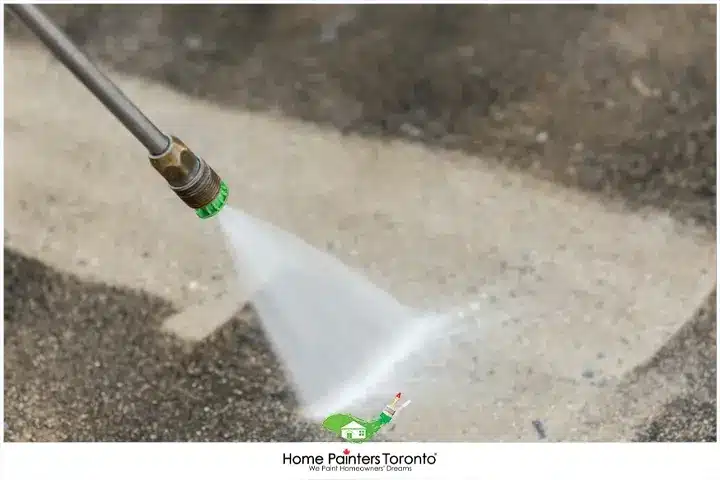
The four-stage professional sealing sequence — clean and fill, moisture test, base coat, topcoat — is what separates a sealed floor that lasts 15 years from one that delaminates in the first winter.
The Professional Sealing Process for Interior Concrete Floors
Professional concrete sealing follows a specific sequence that determines whether the finished surface lasts 2 years or 15 years. Each stage creates the conditions necessary for the next.
Surface cleaning removes all contaminants that would prevent the sealer from bonding to the concrete. New concrete requires a minimum 4 to 6 weeks of cure time before any sealer is applied. Existing concrete floors are cleaned with a concrete degreaser to remove oil, grease, and any residue from previous coatings. All dust, dirt, and debris are vacuumed and swept before the degreaser wash.
Stained concrete requires the staining to be completed before sealer is applied. The stain is the colour layer; the sealer is the protective film over it. Applying the sealer first locks the concrete surface and prevents stain penetration. On Toronto basement floors with heavy efflorescence (the white salt deposits common on older concrete), the deposits are removed with a diluted acid wash before cleaning.
Crack filling is addressed before sealing to prevent the sealer from bridging over unfilled cracks and cracking again as the concrete moves seasonally. Fast drying concrete filler appropriate for interior use is worked into all cracks with a putty knife. Drying time runs 5 to 7 hours depending on the product and ambient humidity. All filled areas are confirmed flush with the surrounding floor surface before sealing begins.
Moisture testing is the step most often skipped on Toronto basement floor sealing projects, and it is the most consequential. A calcium chloride moisture emission test or a plastic sheet test (taped flat to the concrete for 24 hours and checked for condensation underneath) confirms whether the slab is dry enough for the chosen sealer. Epoxy and urethane sealers applied over slabs with moisture emission rates above 5 pounds per 1,000 square feet per 24 hours will delaminate. Penetrating silane siloxane sealers are used as a base layer when moisture emission is present, creating a moisture barrier before the topcoat sealer is applied.
Sealer application uses a paint roller for the main floor area and a brush for edges and corners. The sealer is poured into a paint tray, and the first coat is applied evenly across the full floor without puddling or roller marks. A second coat is applied approximately 2 hours after the first coat, depending on product instructions. The sealed surface is safe for light foot traffic approximately 4 hours after the final coat, and requires overnight curing before furniture is returned to the space. Ventilation is essential during the application and drying period as the liquid carrier in the sealer evaporates.
Materials and Equipment Used in a Professional Concrete Floor Sealing Project
A professional concrete sealing scope uses the following materials and equipment, selected based on the condition of the floor and the type of sealer specified.
- Concrete floor cleaner or degreaser (suitable for the specific contamination present)
- Fast drying concrete filler and putty knife (for crack repair)
- Moisture test kit or plastic sheet for vapour emission testing
- Paint roller and extension pole (for main floor area)
- Angled brush (for edges and perimeter)
- Paint tray and liner
- Concrete sealer (product specified based on substrate condition and use)
- Ventilation fan (required during application of solvent based sealers)
- Chemical resistant footwear for use during application
Sealing Interior Concrete Floors: Which Sealer Type Is Right for Each Toronto Application?
Acrylic sealers are the most economical option and work well on light traffic decorative concrete surfaces in dry utility rooms and storage areas. Their thin film provides good colour enhancement on stained concrete but wears more quickly under foot traffic than epoxy or urethane. Reapplication every 2 to 3 years is typical on residential interior concrete in Toronto.
Epoxy systems are the professional standard for Toronto basement floors in spaces intended for regular use. The two part epoxy formulation cures to a hard, impermeable film that resists water, chemicals, and abrasion significantly better than acrylic. The key limitation is moisture: epoxy applied to a slab with active moisture vapour emission traps the vapour beneath the film, producing bubbles and delamination. Moisture testing before application is not optional on Toronto basement floors.
Urethane sealers offer a harder, more UV stable film than epoxy, making them the preferred choice for basement living areas and finished spaces where light exposure exists. Urethane is typically applied over an epoxy base coat on Toronto floors where maximum durability is required, with the epoxy providing moisture resistance and the urethane providing abrasion and UV resistance.
Polyaspartic coatings are the premium tier for interior concrete floors. Fast cure times (surface ready in as little as 1 hour), superior abrasion and chemical resistance, and lifespan exceeding 15 years under residential use make polyaspartic the most durable single coat option. The short pot life after mixing requires experienced application technique, which is why professional application is recommended.
Cost of Sealing Interior Concrete Floors in Toronto in 2026
Concrete floor sealing costs in Toronto depend on the floor area, the condition of the existing concrete (the extent of crack repair and cleaning required), and the sealer type specified. Home Painters Toronto is WSIB compliant, fully insured to $5 million general liability, and all interior painting and coating work is backed by a lifetime warranty. All prices below are in CAD and exclude HST.
| Scope | Estimated Cost (CAD) | Notes |
|---|---|---|
| Acrylic sealer application (standard condition floor) | $1.50 – $3.00 per sq ft | Two coats; includes cleaning and crack repair; reapplication needed every 2 to 3 years |
| Epoxy floor sealer (standard condition basement) | $3.00 – $6.00 per sq ft | Two part system; includes prep, moisture test, two coats; 7 to 10 year lifespan |
| Urethane topcoat over epoxy base (premium finish) | $4.00 – $8.00 per sq ft | Dual system; highest durability for living areas; 10 to 15 year lifespan |
| Polyaspartic floor coating (full scope) | $5.00 – $10.00 per sq ft | Professional application required; premium lifespan; best for high traffic or finished basement spaces |
| Crack repair before sealing | $150 – $400 per scope | Depends on number and severity of cracks; included in full sealing quote |
| Minimum project fee | $800 – $1,200 | Regardless of scope; covers mobilisation and small area projects |
For a full breakdown of interior painting and coating costs, see our interior painting cost guide.
Real Project: Epoxy Floor Sealing in a North York Basement
North York 1960s Bungalow: Silane Siloxane Vapour Barrier, Efflorescence Treatment, Two-Coat Epoxy — 65 sq m Basement Floor
A homeowner in North York contacted Home Painters Toronto to seal the concrete floor in their unfinished basement, which was being converted into a home office and storage area. The 1960s bungalow had original poured concrete throughout the basement with significant surface dusting, two hairline cracks running from the base of the foundation wall, and efflorescence deposits along the north and east walls indicating historical moisture migration.
Our team began with a full floor assessment and moisture vapour emission testing. The calcium chloride test results showed moisture emission at the threshold level for standard epoxy application. A coat of penetrating silane siloxane sealer was applied first to the full slab as a vapour management layer, allowed to cure for 48 hours. The efflorescence deposits were removed with a diluted muriatic acid wash, neutralised, rinsed, and allowed to dry for 24 hours before any coating was applied. Both hairline cracks were filled with fast drying concrete filler, sanded flush, and confirmed stable before the base coat was applied.
Two coats of Sherwin Williams ArmorSeal Tread Plex epoxy were applied in a light grey tone, with the first coat applied by roller at 18 degrees Celsius and 55% indoor humidity. The second coat followed 24 hours after the first. The total floor area was approximately 65 square metres. The surface was safe for light foot traffic at 48 hours and fully cured for furniture at 7 days. The homeowner reported zero concrete dusting, a surface that cleaned easily after the first month of use, and no sign of moisture related delamination after the first Toronto winter.
Home Painters Toronto is WSIB compliant, fully insured to $5 million general liability, and all interior work is backed by a lifetime warranty. For completed projects, visit our Toronto painting projects page. Same day free estimates are available seven days a week across the GTA.
Conclusion: Long-Lasting Interior Concrete Floors for Toronto Homes
Sealing interior concrete floors is a practical project that extends the lifespan and usability of concrete surfaces significantly. Proper moisture testing, crack repair, and sealer selection matched to the specific Toronto basement conditions determine whether the finished surface lasts 2 years or 15 years.
Frequently Asked Questions About Sealing Interior Concrete Floors
Epoxy is the most widely used professional sealer for Toronto basement floors because it provides excellent moisture resistance, chemical resistance, and abrasion durability in one system. For basement living areas where UV exposure exists, a urethane topcoat over the epoxy base coat is the premium choice. For dry utility areas with lower foot traffic, a quality acrylic sealer is cost effective. Polyaspartic coatings offer the longest lifespan but require professional application due to the short pot life after mixing.
Every Toronto basement floor should be tested for moisture vapour emission before an epoxy or urethane sealer is applied. The simplest field test is taping a 60 cm by 60 cm piece of plastic sheeting flat to the concrete for 24 hours, then checking for condensation on the underside. Condensation confirms active moisture vapour emission. A formal calcium chloride test provides a quantitative emission rate that matches the product manufacturer's threshold requirements. Silane siloxane penetrating sealers are applied as a base layer when moisture emission is confirmed.
Acrylic sealers are dry to foot traffic within 4 hours and fully cured for furniture within 24 hours. Epoxy sealers are safe for foot traffic at 24 to 48 hours and fully cured for normal use within 7 days at 18 to 24 degrees Celsius. Polyaspartic coatings can be surface ready in 1 to 4 hours but should still cure for 24 hours before furniture placement. Toronto winter conditions below 10 degrees Celsius during application or the cure window slow all these timelines significantly and can prevent proper curing.
An existing sealer in good condition can be recoated without full stripping if the adhesion of the existing coat is confirmed with a tape test (press tape firmly and pull: if sealer comes away, adhesion has failed). A compatible sealer applied over a sound existing coat extends the surface life without the cost of full stripping. If the existing coat is peeling, delaminating, or of an incompatible type, removal is required before resealing. Epoxy cannot be applied over an acrylic sealer without removing the acrylic first.
Sealed concrete floors are maintained with regular sweeping or vacuuming to prevent grit abrasion of the surface film, and damp mopping with a neutral pH cleaner. Harsh acidic or alkaline cleaners degrade epoxy and urethane sealers over time. Placing furniture pads under chair and table legs reduces point load abrasion at contact areas. Acrylic sealers benefit from a periodic re application of a thin maintenance coat every 2 to 3 years. Epoxy and urethane systems require a new topcoat when wear is visible through the film at high traffic zones.
Sealing penetrates the concrete surface or forms a thin protective film that preserves the appearance of the concrete while protecting it from moisture, staining, and wear. Painting a concrete floor applies a thicker pigmented film that changes the colour of the floor completely. Both approaches are valid depending on the desired result. More detail on the painting option is available in our guide on painting concrete floors. For basement wall sealing, our best paint for concrete walls in a basement guide covers the wall surface separately.
More Helpful Blogs Related to Sealing Interior Concrete Floors
Ready to Seal Your Interior Concrete Floor in Toronto?
Home Painters Toronto is the HomeStars Best of Award 2026 winner with a lifetime warranty on all interior coating work. Call 416-494-9095 or email [email protected] for a FREE same-day estimate.