

Toronto homeowners considering DIY soffit fascia repair usually start with one small problem, like a chipped paint edge or a loose vinyl panel. Some of these jobs really are safe to finish without hiring a crew. Others, especially anything above a single storey or involving wood that feels soft to the touch, carry real fall risk and can hide rot that keeps spreading if it's patched over instead of repaired properly. Home Painters Toronto has repaired rooflines across Toronto and the GTA for 38+ years and holds the HomeStars Best of Award 2026, and our crews see the same pattern on nearly every soffit and fascia call: small cosmetic touch-ups are fine to handle personally, while anything structural belongs to a professional. This guide sets out exactly where that line sits, from Etobicoke bungalows to two-storey homes in Markham.
DIY soffit fascia repair is safe for small, low-height jobs such as touch-up painting or reattaching one loose vinyl panel. Multi-storey ladder work, soft or rotted wood, sagging panels, and damage near rafter tails should go to a licensed contractor, because these jobs carry fall risk and often hide structural rot that isn't visible from the ground.
Is DIY Soffit and Fascia Repair Safe for Toronto Homeowners?
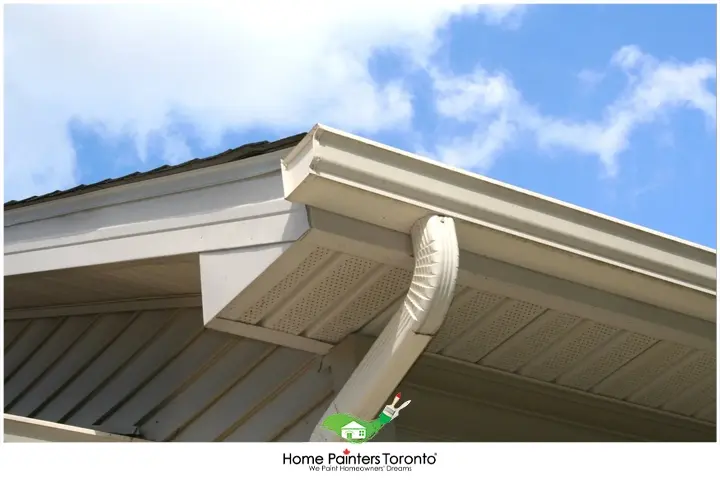
DIY soffit fascia repair is safe only for small, low-height tasks that skip structural wood, multi-storey ladders, and hidden moisture damage. A homeowner working from a stable stepladder on a single-storey bungalow faces a very different risk than one accessing a two-and-a-half-storey home in North York with a 24-foot extension ladder. Height changes the entire risk calculation, but so does the task itself. Touching up a small patch of peeling paint on aluminum fascia is low-consequence. Prying open a section of wood fascia to check for water damage behind it is not, since it can expose framing that needs immediate professional repair. The same logic holds across the GTA, whether it's a bungalow in Scarborough or a two-and-a-half-storey home in Vaughan: the roofline height and the wood condition decide the risk, not the size of the visible damage.
Home Painters Toronto is WSIB compliant and fully insured, and our crews train specifically for safe work at height on GTA rooflines, which is part of why homeowners choose Home Painters Toronto for roofline work. If you're not sure whether what you're looking at is cosmetic or structural, our guide to signs your soffit and fascia need repair walks through the difference in more detail, and our soffit and fascia repair services page covers the full scope of what we handle.
What's Genuinely DIY-Friendly on a Soffit or Fascia
A short list of soffit and fascia tasks are genuinely low-risk for a homeowner to handle. These are jobs that skip extension ladders, structural wood, and hidden moisture, and most take under an hour to finish properly.
- Touching up a small area of peeling or chipped paint on aluminum fascia from a stable step stool
- Reattaching a single vinyl soffit panel that has popped loose from its track, provided the panel itself isn't cracked
- Clearing leaves, nesting debris, or old caulking from an easily reachable soffit vent
- Wiping down soffit panels and checking for early staining during a routine gutter clean
- Refreshing a small bead of exterior caulking around a soffit-to-fascia joint that's still solid underneath
DIY-Friendly Fascia Touch-Up Painting
A small painted area on aluminum or well-sealed wood fascia is one of the few genuinely DIY-friendly fascia repairs. Clean the surface first, then spot-prime any bare metal or wood before applying a matching exterior finish. Skipping the primer step is the most common mistake homeowners make, since exterior paint applied directly over bare wood or metal typically fails within a single season regardless of the brand used. Match the sheen as well as the colour, because a low-lustre patch next to a satin finish shows clearly in daylight, especially on south-facing walls that get the most UV exposure.
A Single Unclipped Vinyl Soffit Panel
Reattaching one loose vinyl soffit panel is a reasonable task if the panel itself isn't cracked or warped. Vinyl panels are designed to float inside a track system, so forcing a warped or brittle panel back into place usually cracks it further. If more than one panel has popped loose, or if the panels feel brittle from age and years of sun exposure, that's a sign the whole run needs professional attention instead of a single fix.
What's Not Worth the Risk
Multi-storey ladder access, structural wood repair, and anything involving hidden rot are not worth the risk for a homeowner to take on personally. These situations combine a real chance of a fall with the possibility of making hidden damage worse.
- Working from an extension ladder above one storey, especially near a roofline with uneven grade below it
- Removing or replacing a rotted fascia board, since the damage almost always extends further into the framing than it appears from the ground
- Repairing soffit or fascia near an active pest entry point, which can disturb wildlife still inside the cavity
- Patching over a soft or spongy fascia section instead of cutting it back to solid wood
- Any repair near a rafter tail or window header, where rot can travel into the surrounding wood frame
Multi-Storey Ladder Work and Hidden Rot
Working above 3 metres, or about 10 feet, is where fall risk increases sharply enough that formal fall protection becomes standard practice, according to the Canadian Centre for Occupational Health and Safety's ladder safety guidelines. Most two-storey Toronto homes put the fascia line well above that height, which means a homeowner on an extension ladder is working in exactly the zone where professional crews start using harnesses and tie-off points. Rotted wood adds a second layer of risk, because a fascia board that looks solid at the surface can be soft two or three inches deeper, which means a foot or hand placed on it for balance can give way without warning. Damage near a window header or rafter tail sometimes extends into the frame itself, which is covered in more detail in our window wood frame repair guide.
Tools and Materials for a Minor Fascia or Soffit Repair
A minor fascia or soffit touch-up needs only a handful of tools, most of which a homeowner already owns. The table below covers what's needed for the low-risk tasks described above, not for structural repair.
| Task | Tools and Materials | Skill Level |
|---|---|---|
| Paint touch-up | Sandpaper, exterior primer, matching paint, angled brush | Beginner |
| Reattaching a vinyl panel | Flathead tool for the track, replacement clips if needed | Beginner |
| Clearing a soffit vent | Stable step stool, work gloves, shop vacuum or brush | Beginner |
| Small caulking refresh | Exterior-grade caulk, caulking gun, damp cloth | Beginner to intermediate |
Professional repairs use a different toolkit entirely. Our crews carry moisture meters to check wood condition before any patch goes on, stabilizer bars and tie-off points for extension ladder work, and matching primers rated for the specific substrate, whether that's aluminum, vinyl, or bare wood. That equipment gap is a big part of why a five-minute homeowner fix and a professional repair produce very different long-term results.
Step-by-Step: Patching a Small Section of Fascia
Patching a small section of painted fascia takes five steps, starting with confirming the area is cosmetic and not structural.
- Press the area firmly with a gloved hand or the flat end of a screwdriver handle. Solid wood feels firm; anything spongy or soft signals rot that needs a professional repair instead of a patch.
- Scrape away loose or peeling paint back to a clean edge, then sand the area smooth with 120-grit sandpaper.
- Spot-prime any bare wood or metal and let it dry fully before continuing, since painting over damp or unprimed material is the most common cause of early paint failure.
- Apply exterior filler to any small dents or nail holes, then sand it flush once fully cured.
- Apply two thin coats of exterior paint in a matching colour and sheen, allowing full dry time between coats before exposing the area to rain.
Ladder Safety and Permit Rules Toronto Homeowners Often Miss
Most Toronto homeowners don't realize that minor soffit and fascia repairs are usually permit-exempt, while replacing a larger section can cross into permit territory depending on scope. Ontario's building permit rules apply when work affects the structure, use, or safety systems of a building, not when it's limited to surface-level maintenance. Rules can also vary slightly between municipalities like Mississauga, Brampton, and Richmond Hill, so scope matters as much as the type of repair.
Permit Requirements for Minor Soffit and Fascia Repairs
A permit generally isn't required for cosmetic repairs like paint touch-ups or reattaching a single vinyl panel, since these don't alter the structure of the home. Ontario's official guidance on when a building permit is needed explains that permits apply to construction, renovation, or changes that affect a building's structure or use, which a small cosmetic fix does not. Larger-scope work, such as replacing an entire run of fascia board along one side of a house, can move into a grey area depending on your municipality. Toronto homeowners planning anything beyond a single-board patch should confirm the scope with their local building department, or ask a licensed contractor to review it first. If the underlying wood has rot that's spread into brick or masonry trim, that's usually a separate issue our brick and mortar repair team handles instead of a fascia-only fix.
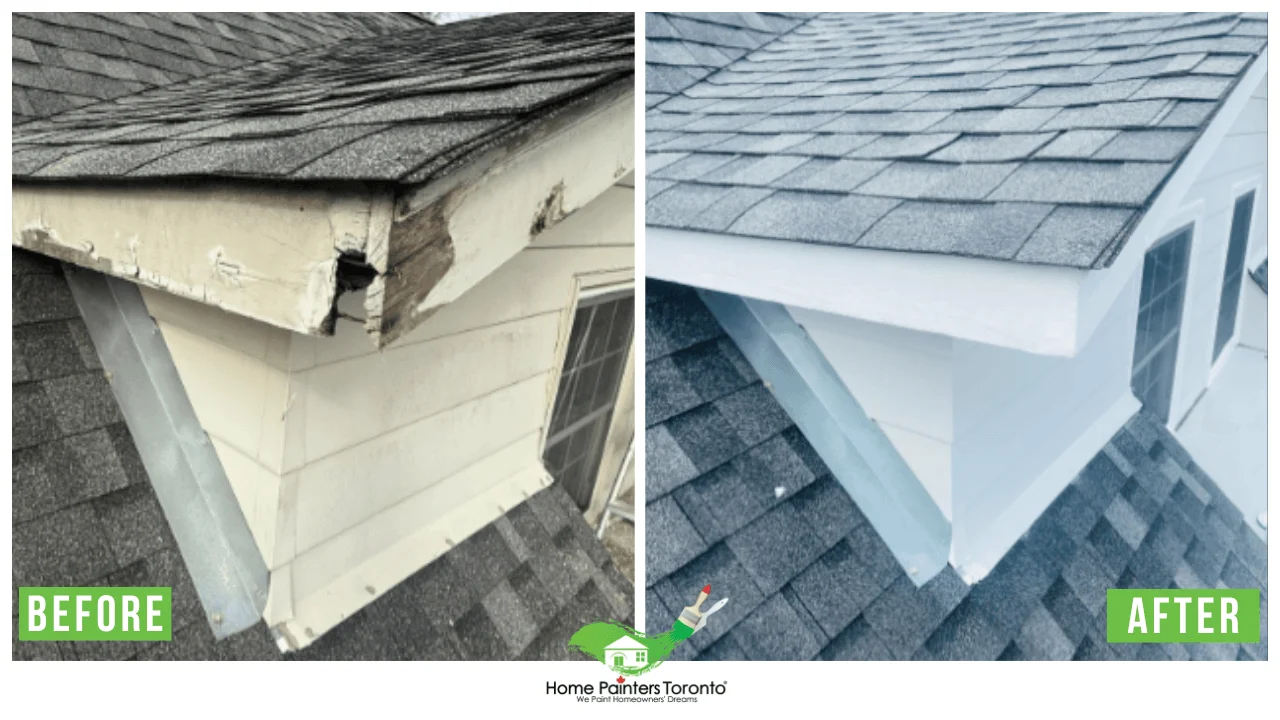
The original paint had been holding moisture against wet wood for months, which is why it kept failing at the same spot
When a Small Repair Signals a Bigger Structural Problem
Repeated paint failure in the same spot, a soft feel underfoot, or a fascia board that keeps sagging after a patch are signs the underlying wood is already compromised. Patching over a symptom instead of fixing the cause is one of the most common mistakes we see on service calls across the GTA. The same freeze-thaw cycle that damages fascia also affects wood deck repair, wood fence posts, and exterior wood siding, since all of these are exposed to the same seasonal moisture swings each winter.
- At a recent inspection in North York, a homeowner had repainted the same six-foot section of fascia twice in three years, assuming it was a cosmetic problem.
- A moisture meter reading came back at 34 percent, well above the roughly 15 to 19 percent moisture threshold Benjamin Moore's application guidelines recommend for reliable exterior paint adhesion.
- We cut the board back to solid wood, replaced the damaged section, and refinished the full run with Benjamin Moore Aura Exterior in Low Lustre at a 4-mil wet film thickness.
The original paint had been holding moisture against wet wood for months, which is why it kept failing at the same spot no matter how many times it was touched up.
If your fascia has already been capped with aluminum instead of repaired, our guide to aluminum fascia capping explains how to tell whether that cap is hiding rot underneath instead of fixing it.
Professional repair of a single fascia section like this typically falls within HPT's general exterior small-project range of $2,000 to $4,000, though larger or multi-storey jobs run higher. Our soffit and fascia replacement cost guide breaks down pricing by scope and material in more detail. Every repair we complete carries warranty-backed results, and it's part of why HPT has earned 1,200+ positive reviews across HomeStars, Google, and Houzz.
Frequently Asked Questions About DIY Soffit Fascia Repair
The questions below cover what Toronto homeowners ask most often about DIY soffit and fascia repair. For more, see our full FAQ page.
Yes, for small cosmetic tasks like paint touch-ups or reattaching a single loose vinyl panel. Anything involving rot, structural wood, or a ladder above one storey should go to a licensed contractor instead.
No, working alone above roughly 3 metres, or 10 feet, is when fall risk increases sharply enough that professional crews start using harnesses and tie-off points, based on Canadian workplace safety guidance. A second person should always be present, and for most two-storey Toronto homes, a professional crew is the safer option.
Usually not for a single-board patch, since cosmetic repairs don't change a building's structure or use. Replacing an entire run of fascia can move into permit territory depending on scope and municipality, so it's worth confirming with your local building department first.
Press the wood firmly with a gloved hand or a screwdriver handle. If it feels soft, spongy, or gives way at all, the damage almost always extends further into the board than what's visible from the ground.
A stable step stool, sandpaper, exterior primer, matching paint, and a flathead tool for vinyl panel tracks cover most low-risk repairs. Structural repairs need moisture meters, extension ladder stabilizers, and fall protection equipment that most homeowners don't own.
Call a professional as soon as a repair involves rotted wood, a ladder above one storey, or damage that keeps recurring in the same spot after a patch. Those are all signs the problem is structural instead of cosmetic.

Get an Honest Assessment Before Doing DIY Soffit Fascia Repair
Most soffit and fascia problems fall into one of two categories: a quick cosmetic fix or a structural repair that needs a trained crew. Knowing which one you're looking at before climbing a ladder is what keeps a small weekend project from turning into a bigger, more expensive repair. Home Painters Toronto offers fast free quotes and warranty-backed work on every soffit and fascia job across the GTA.
Contact Home Painters Toronto today to get an honest assessment of what your roofline actually needs.
Get a Free Estimate