

Exterior painting in fall is one of the best decisions a Toronto homeowner can make, and one of the most underused. Most homeowners think spring when they think exterior painting. But September through mid-October in Toronto consistently delivers the conditions that paint manufacturers design their products for: temperatures in the 12 to 22 degree Celsius range, lower humidity than mid-summer, longer dry stretches between rain events, and surfaces that have fully dried after a summer of heat and UV exposure.
Fall also means no waiting until spring to protect a home that has already shown damage. Paint that is peeling, caulk that has cracked, or wood trim that is soft from summer rain does not improve through a Toronto winter. It gets worse. Painting in fall protects those surfaces through freeze-thaw season rather than leaving them exposed for another six months.
This guide covers everything Toronto homeowners need to know about fall exterior painting: the ideal window, what to watch for as temperatures drop, surface-specific guidance, product recommendations, cost, and a real project example.
- Why fall is an ideal, often overlooked exterior painting season in Toronto
- The specific temperature and humidity conditions to target in September and October
- Week-by-week guidance on the fall exterior painting window
- What surfaces and projects are best suited to fall painting
- The specific risks of late fall painting and how to manage them
- Fall prep: what to check and repair before painting
- Product recommendations for fall exterior painting conditions
- What fall exterior painting costs in Toronto in 2026
- A real project case study
- FAQ answers to the most common homeowner questions
Ready to book your fall exterior painting project? Get a free estimate now!
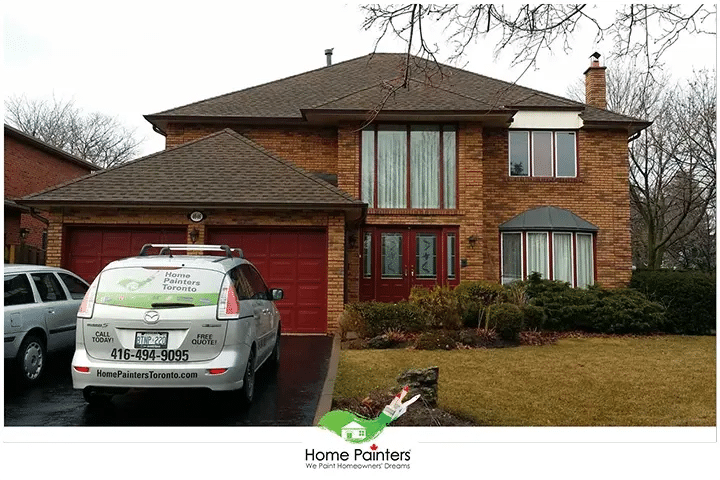
September through mid-October delivers the conditions paint manufacturers design their products for — lower humidity, stable temperatures, and surfaces at their driest after summer.
Why Fall Is a Great Time for Exterior Painting in Toronto
Fall is the season when you can freshen up your home with exterior painting without worrying about summer's heat. The summer heat makes it difficult to paint since the paint dries too quickly, which can cause lap marks on the paint. With the right temperature and humidity, fall is an ideal time for you to repaint the exterior of your home in Toronto. The mild temperatures and lower humidity help paint to adhere better to the surface, and it also helps the paint cure properly.
Why September Is the Single Best Month for Exterior Painting in Toronto
Most Toronto homeowners book exterior painting in May and June. Most professional painters consider September the best month of the year for the work. The gap between those two positions is real, and it comes down to conditions.
In September, the city's humidity drops from the 70 to 85 percent peak that July and August regularly produce. Average daytime temperatures run 18 to 24 degrees Celsius with overnight lows staying consistently above 10 degrees Celsius through most of the month. Surfaces that spent the summer absorbing UV and heat are dry, and the frenzied contractor schedule of peak season has eased enough that homeowners who book in August or early September often get better crew availability and scheduling flexibility than they would in June.
The other underappreciated advantage of fall is what it does for a home going into winter. Paint applied in September has weeks of good curing weather before the first hard freeze. That means the film has hardened, bonded, and reached full water-resistance before it faces its first freeze-thaw cycle. Paint applied in late spring and left to face a July humidity spike and a full summer of UV before winter has had significantly more stress before that first freeze arrives.
According to Benjamin Moore's temperature guide for exterior painting, the optimal temperature for applying exterior paint is around 25 degrees Celsius with humidity as low as possible. September in Toronto hits this target more reliably and more consistently than any other month in the exterior painting calendar.
What Surfaces Are Best for Fall Exterior Painting?
In this section, we will discuss what type of surfaces you should paint in the fall. The fall season is ideal for painting a wide range of exterior surfaces, including siding, trim, doors, decks, fences, and more. Each of these surfaces has its own unique characteristics that make it well-suited for fall painting.
Siding
Painting the exterior siding of your home in the fall is a great idea. The cooler temperatures and lower humidity levels make it easier for the paint to adhere and cure properly. Additionally, painting the siding in the fall means that your home will be protected from the harsh winter weather, which can cause damage to unprotected siding.
For siding specifically, fall is advantageous because the lower humidity means the paint film can form more uniformly. In July and August, humidity levels slow the evaporation of moisture from the paint film, which can result in surfactant leaching (the white or streaky deposits that appear on freshly painted surfaces after overnight dew). September's lower humidity eliminates most of this risk.
For wood siding, which has spent the summer absorbing UV radiation and drying out from summer rains, September provides surfaces that are at an ideal low moisture content for painting. Apply the tape test (press masking tape firmly, pull quickly) to assess whether existing paint is still adhering firmly before any prep begins. For a complete siding prep and paint guide, see our exterior residential painting service.
Trim and Doors
Exterior trim and doors are also great candidates for fall painting. The cooler temperatures help to slow the drying process, which can result in a more even and smooth finish. Moreover, painting the trim and doors in the fall allows them to be protected from the harsh winter weather.
For exterior doors, fall is particularly beneficial because doors can be painted while remaining fully functional. Unlike summer painting where high temperatures cause paint to remain tacky for hours and can cause a door to stick in its frame when closed, fall temperatures allow paint to cure to a non-tacky state faster in terms of workability while still curing properly at depth. The practical guidance for painting exterior doors in fall: apply coats in the morning, keep the door propped open or remove it from the hinges, and allow full overnight dry time between coats.
For wood trim, fall offers an additional advantage: the wood has contracted slightly from summer expansion, meaning caulk joints that may have opened slightly during the summer heat are now at a more representative gap size. Caulking in fall temperatures, when the wood is closer to its winter-contracted state, means the caulk seal will flex appropriately through winter contraction rather than being applied to an already-contracted joint and then facing summer expansion. For guidance on exterior caulking as part of a fall project, see our exterior caulking service.
Decks and Fences
Fall is also an excellent time to paint or stain decks and fences. The cooler temperatures and lower humidity levels make it easier for the stain or paint to penetrate the wood and cure properly. Additionally, painting or staining the deck and fence in the fall helps to protect them from the harsh winter weather and potential moisture damage.
For decks and fences specifically, fall is arguably the best possible window in the Toronto calendar. Here is why. Wood decks and fences that spent the summer in full sun and heat are at their lowest moisture content in September. Deck stain penetrates wood most effectively when the wood is dry and its grain is open rather than swollen from moisture. The combination of dried-out wood and September's lower ambient humidity creates ideal conditions for penetrating oil-based stains and solid-colour deck coatings to soak in fully and bond to the wood fibres.
Additionally, insects that land in wet deck stain during summer application are largely absent by September. This sounds minor but is a real practical advantage on large deck surfaces where a coat of stain applied in July becomes dotted with insects within an hour.
For deck staining timing, there is one critical caveat: the deck must have dried sufficiently after summer rains. Allow at least 48 hours of dry weather before applying any stain to a deck surface, and check the wood moisture content by pressing the surface. If it feels damp or if water beads and sits on the surface rather than absorbing, allow more drying time before proceeding. For our full deck and fence staining scope, see our deck and fence staining service.
Masonry
Fall is also a great time to paint masonry surfaces such as concrete, brick, and stucco. These surfaces can be difficult to paint in extreme temperatures, but the mild temperatures of fall make it easier for the paint to adhere and cure properly. Painting masonry surfaces in the fall also helps to protect them from the harsh winter weather.
For exterior brick painting specifically, September and early October are the most reliably favourable conditions in the Toronto annual calendar. Brick is a porous, moisture-absorbing material. After a full summer of heat and UV exposure, brick and mortar joints are at their annual lowest moisture content in September. This matters because elastomeric masonry primers and topcoats bond most effectively to dry, low-moisture brick. Paint applied to brick with elevated moisture content traps that moisture beneath the film, which then drives the paint off the brick from behind through freeze-thaw cycling.
The one fall-specific precaution for masonry painting is morning condensation. As September nights cool, brick surfaces can develop condensation in the early morning hours. Check the brick surface temperature before applying any primer or topcoat, and allow the surface to warm above the dew point before starting. Beginning masonry painting at 9 or 10 in the morning rather than at 7 avoids the condensation risk on most fall days. For a full breakdown of brick painting prep and products, see our exterior brick painting guide.
Fall Exterior Painting Tips in Toronto
In this section, we will discuss some tips for exterior painting in the fall.
Monitor the Temperature
One of the most important things to keep in mind when painting in the fall is the temperature. It is important to paint on days when the temperature is above 10 degrees Celsius for standard latex paints and to ensure the temperature remains above this threshold for at least 24 to 48 hours after the final coat has been applied. This will ensure that the paint cures properly.
Toronto Fall Temperature Window: Week by Week
Understanding how the temperature window narrows across fall helps homeowners and contractors plan projects correctly.
| Period | Avg. Daytime High | Avg. Overnight Low | Risk Level | Guidance |
|---|---|---|---|---|
| Early September (1st to 15th) | 22 to 26°C | 12 to 15°C | Low | Ideal conditions; prime fall window |
| Late September (16th to 30th) | 18 to 22°C | 8 to 12°C | Low to moderate | Still excellent; check 5-day forecast |
| Early October (1st to 15th) | 12 to 16°C | 5 to 9°C | Moderate | Workable; monitor overnight lows carefully |
| Late October (16th to 31st) | 8 to 12°C | 2 to 5°C | High | Risk of overnight temperatures below minimum; project deadline |
| November | 4 to 8°C | -1 to 3°C | Not suitable | Too cold for standard exterior latex paints |
The critical number to watch is the overnight low. As Sherwin-Williams guidance on late-season exterior painting notes, a common mistake is painting when daytime temperatures are within the acceptable range but overnight lows drop below the minimum curing threshold. Paint that cannot complete its curing cycle overnight because temperatures drop too low will show surfactant leaching, adhesion failure, and accelerated weathering from the first winter cycle.
Watch for Rain
Fall weather in Toronto can be unpredictable, and it is important to monitor the weather forecast closely before painting. It is best to paint on days when there is no rain in the forecast for at least 24 to 48 hours. Rain can cause the paint to wash off or not adhere properly, which can result in a poor finish.
In fall specifically, check both rain probability and dew point. As October nights get colder, dew can form on painted surfaces even when no rain falls. Dew forming on a paint coat that has not yet fully cured can cause whitening, streaking, and adhesion loss. The practical rule is that the surface temperature must be at least 3 degrees Celsius above the dew point before painting begins in the morning, and the paint must have at least four hours of curing time before expected temperatures drop to the dew point at night.
Environment Canada's hourly forecast at weather.gc.ca provides dew point readings alongside temperature and humidity for Toronto and GTA weather stations. Checking this the evening before each fall painting day is the most reliable way to confirm conditions are appropriate.
Prepare the Surface
Before painting in the fall, it is important to properly prepare the surface. This includes cleaning the surface to remove dirt, mould, and mildew, and repairing any cracks or damage. Proper surface preparation is key to achieving a long-lasting and professional-looking finish.
Fall-Specific Surface Prep Checklist
Fall exterior painting prep has some differences from spring prep that are worth noting.
Leaf and debris clearing: Fall means falling leaves. Clear leaves from around the foundation, off decks, and away from any surfaces being painted before work begins. Wet leaves sitting against siding or trim can stain fresh paint and introduce moisture into the substrate.
Mould and mildew treatment: North-facing surfaces and shaded areas that did not dry out fully through summer often carry mould or mildew by September. Treat with a diluted bleach solution (one part bleach to three parts water), allow to sit for 15 minutes, and rinse thoroughly before any other prep work. Painting over untreated mould, regardless of season, guarantees the mould grows through the new paint film.
Caulk inspection and replacement: Summer heat expansion and contraction can open caulk joints that look fine in spring. Walk the full perimeter of the home and press on all existing caulk. Hard, crumbling, or separated caulk needs replacement before painting. This is the fall season's most commonly skipped prep step.
Power washing drying time: Fall temperatures mean power-washed surfaces take longer to dry than in summer. After pressure washing, allow 48 to 72 hours minimum before priming or painting. If overnight temperatures are dropping toward 5 degrees Celsius, the drying time extends further because cooler air holds less moisture.
For a comprehensive exterior prep guide covering all these steps in detail, see our guide to preparing your home for exterior painting.
Use the Right Paint
When painting in the fall, it is important to use the right type of paint. It is best to use a high-quality, 100% acrylic latex paint that is designed for use in cooler temperatures. These paints are formulated to adhere and cure properly in lower temperatures, ensuring a long-lasting and professional-looking finish.
Best Paint Products for Fall Exterior Painting in Toronto
| Product | Type | Min. Application Temp | Key Benefit | Best For |
|---|---|---|---|---|
| Sherwin-Williams Duration Exterior | 100% acrylic latex | 2°C | Extended low-temp application, excellent flexibility | Full exterior repaints in September and October |
| Benjamin Moore Aura Exterior | 100% acrylic latex | 4.4°C | Colour retention, strong adhesion, flexible film | Siding and trim on homes with significant UV exposure |
| Sherwin-Williams Resilience Exterior | 100% acrylic latex | 2°C | Moisture-resistant within 2 hours of application | Ideal for fall when rain risk is higher |
| Benjamin Moore Elastomeric Masonry Waterproof Coating | Elastomeric masonry | 7°C | Fills hairline cracks, flexible, vapour-permeable | Brick and masonry painting in September |
| Sherwin-Williams Loxon Elastomeric | Elastomeric masonry | 10°C | Excellent adhesion on masonry, vapour-permeable | Brick and masonry in early to mid-September |
| Cabot Australian Timber Oil | Penetrating oil stain | 10°C | Deep penetration, excellent for fall deck conditions | Deck and fence staining in September and early October |
For October painting when temperatures are consistently in the 10 to 14 degree Celsius range, choosing products specifically rated for lower temperature application (Duration, Resilience, Aura Exterior) provides more margin against overnight temperature drops than standard exterior latex formulations.
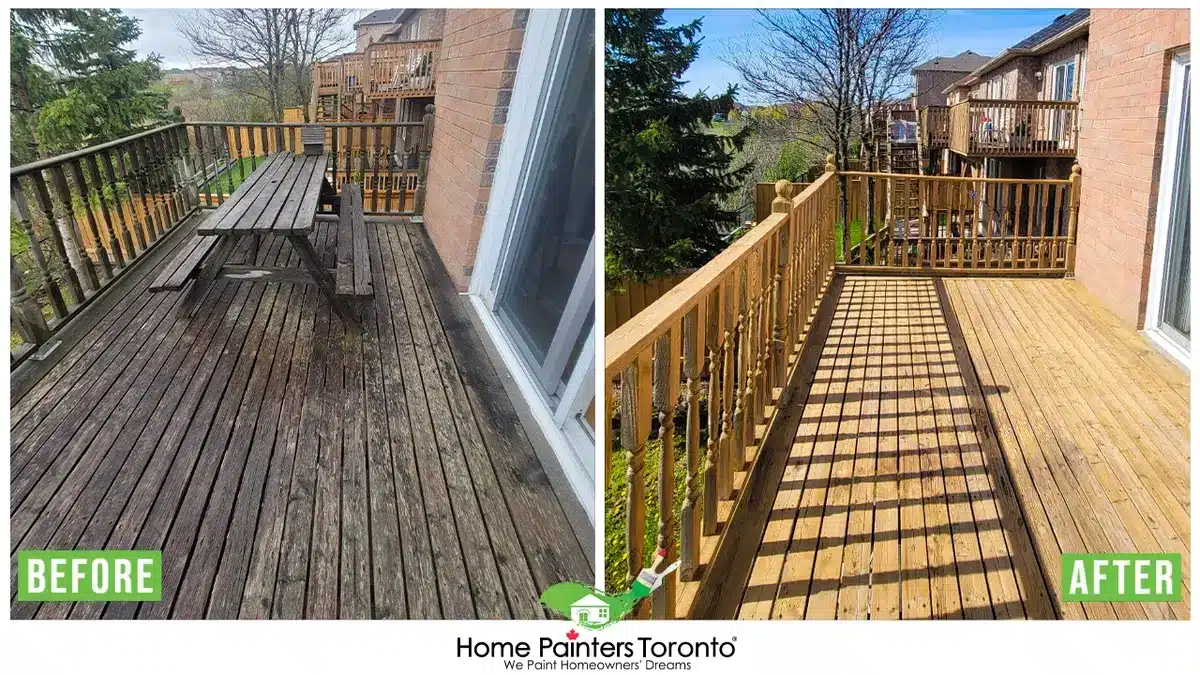
September decks at their driest after summer, morning condensation cleared, and 48 hours of dry weather after the last rain: fall deck staining conditions are ideal.
What Happens If You Paint Too Late in the Fall?
Understanding the consequences of painting outside the reliable fall window is as important as knowing when to paint. Here is what actually happens when exterior paint is applied in conditions that are too cold.
For standard latex exterior paint applied below 10 degrees Celsius, the latex particles in the paint cannot coalesce properly. The paint forms a film on the surface but the particles have not melted together into a continuous, durable layer. The result is a porous, chalky, poorly-adhered coating that looks acceptable initially but fails rapidly through the first freeze-thaw cycle. The film has no flexibility and cracks at joints and edges as the substrate moves.
The secondary problem is overnight dew and frost. In late October and November, surfaces cool rapidly after sunset and can drop below the dew point while paint is still curing. Moisture condensing on a partially-cured latex film drives surfactant to the surface, leaving permanent white streaking. In severe cases, a light frost on uncured exterior paint causes the film to blister and detach entirely.
If an exterior project genuinely cannot be completed before temperatures become too cold, the right answer is to defer it to spring rather than to paint in marginal conditions. One good fall application lasts seven to ten years. A rushed October paint job in below-minimum temperatures may need repainting before the second spring.
Fall Exterior Painting vs. Spring Exterior Painting: Which Is Better for Toronto Homes?
This is one of the most common questions our team receives, and the honest answer is that both seasons work well when conditions are right. The practical differences come down to specific advantages and risks on each side.
| Factor | Fall (September to mid-October) | Spring (mid-May to mid-June) |
|---|---|---|
| Humidity | Lower than summer; ideal for paint film formation | Moderate; can be wet from spring rains |
| Temperature stability | Very good in September; narrows in October | Very good in May; peaks in June |
| Surfaces | Driest after summer; ideal moisture content for wood and masonry | Wetter after winter; need more drying time post-snowmelt |
| Contractor availability | Better than peak spring season; more flexibility | Fills fastest; best teams booked weeks ahead |
| Time before winter | Limited; paint needs to cure before first freeze | Maximum; paint cures through full summer |
| Time before selling season | Home protected through winter for spring listing | Home ready for summer market |
| Deck and fence staining | Excellent; wood at lowest moisture content | Good; may need more drying time after spring rains |
| Pre-sale advantage | Protects home through winter before spring listing | Immediately improves spring listing appearance |
For homes going to market in spring: painting in fall is the smarter move. The exterior is protected through winter and looks fresh in March and April when agents are preparing listing photos. For homes where an urgent refresh is needed before summer: spring is the right time. For homes with decks that need staining: fall is almost always the better season.
How Much Does Fall Exterior Painting Cost in Toronto?
- Fall exterior painting costs in Toronto depend on the home's size, surface condition, prep work, access, paint system, and how much weather-sensitive scheduling is required. A standard detached home may need exterior paint, primer, caulking, sanding, scraping, repairs, pressure washing, and careful timing around cooler temperatures and rain.
- This matters because fall has a shorter painting window than summer. Surfaces need to be dry, daytime temperatures must stay within the paint manufacturer's recommended range, and coatings need enough cure time before overnight cold or early frost. A professional estimate helps Toronto homeowners understand the true scope of the job, avoid rushed application, and reduce the risk of peeling, bubbling, poor adhesion, or repainting too soon.
Professional Fall Exterior Painting Cost Estimate
Professional fall exterior painting in Toronto typically runs $2,500 to $8,000 CAD for a full residential exterior repaint. Several factors affect where a specific project falls in that range:
Home size and the total square footage of paintable surfaces, surfaces being painted (siding only versus full exterior with trim, doors, and masonry), condition of the existing paint and how much prep is required, whether carpentry repairs are needed before painting, and access (single-storey versus multi-storey work).
One practical advantage of booking in August for a September project is that contractor schedules are opening from the peak summer season. Some homeowners find better scheduling availability and more attention from their chosen team in September than they would have gotten in June. Home Painters Toronto backs all exterior painting with a 3-year warranty and all brick staining with a 15-year warranty. For a precise quote based on your specific home, request a free estimate from Home Painters Toronto. For a full cost breakdown by surface type and scope, see our exterior painting cost guide.
Real Project: Fall Exterior Painting in Toronto
Etobicoke Detached: September Repaint with Carpentry Repairs Before First Winter Freeze
Here is a summary of a recent fall exterior painting project our team completed on a detached home in Etobicoke that illustrates how a fall project is planned and executed.
The situation: The homeowner contacted Home Painters Toronto in August after realising the south and west elevations of their home had significant paint failure. A spring booking had been missed due to other renovation priorities, and the homeowner was concerned about the exterior going through another winter with peeling siding and failed caulk around multiple window frames.
The timing and scheduling: Our team scheduled the project for the second week of September. Power washing was completed on September 8th with a full 72-hour drying window before prep began. Temperatures through the scheduled work period were forecast at 19 to 23 degrees Celsius daytime with overnight lows above 12 degrees Celsius.
What the job involved: Full inspection of all exterior surfaces identified three areas of soft wood at window sills on the west elevation requiring repair before painting. Our carpentry team addressed those repairs the week before the painting crew arrived. Painting prep included scraping all loose paint, sanding all scraped areas smooth, removing and replacing all failed caulk, and spot-priming all bare wood with Sherwin-Williams Exterior Latex Primer. Two coats of Sherwin-Williams Duration Exterior were applied to all siding and trim surfaces in a warm off-white with a contrasting deep charcoal trim.
The result: A fully primed, painted, and cured exterior completed by the third week of September, with the paint film hardened and reaching full water-resistance before the first Toronto frost in late October. The homeowner noted that the home looked better from the street than it had in years and that knowing it was protected going into winter removed a significant concern heading into the pre-listing preparation for a spring market sale. For more completed projects, visit our Toronto painting projects page.
Frequently Asked Questions About Exterior Painting in Fall
Yes, fall is one of the two best seasons for exterior painting in Toronto, and September is arguably the single best month in the entire calendar year. Lower humidity than summer, stable temperatures in the ideal 15 to 22 degree Celsius range, and surfaces that are at their driest after summer create conditions that closely match what paint manufacturers design their products for. The one management requirement is monitoring the October overnight temperature as the season progresses.
Mid-October is the practical deadline for standard exterior latex paints in Toronto. As October progresses, overnight lows increasingly drop below the 10 degree Celsius minimum curing threshold. By late October, the risk of overnight temperatures disrupting paint curing is high enough that standard exterior painting should not proceed. Some premium low-temperature formulations (Sherwin-Williams Duration, Sherwin-Williams Resilience) can be applied down to approximately 2 degrees Celsius, which can extend the workable window by two to three weeks in a mild fall year, but requires careful attention to overnight forecast data.
Standard 100% acrylic exterior latex paints require a minimum application temperature of 10 degrees Celsius and the surface and air temperature must remain above 10 degrees Celsius for at least 24 to 48 hours after the final coat is applied. Below this threshold, the paint film cannot coalesce properly and will fail within the first freeze-thaw cycle. Specialty low-temperature formulations can be applied down to approximately 2 degrees Celsius but these are purpose-built products, not a substitute for standard paints in marginal conditions.
Both seasons work well when conditions are right. Fall offers lower humidity than spring, drier wood and masonry surfaces, and often better contractor availability than the peak spring season. Spring offers maximum time before winter for the paint to cure. For homeowners preparing for a spring real estate listing, fall painting is the smarter investment because it protects the home through winter and produces a fresh exterior that photographs well in March and April. For homeowners who want to refresh before a summer season, spring is the right choice.
Yes, and fall is arguably the best season for it. September brick is at its annual lowest moisture content after drying through summer, and the lower ambient humidity of September means masonry primers and elastomeric topcoats cure without the moisture interference common in July and August. The one fall-specific precaution for brick is morning condensation: confirm the brick surface temperature is above the dew point before beginning any coat, which typically means starting masonry work at 9 or 10 in the morning rather than 7. For the full scope of what brick painting involves, see our exterior brick painting service.
September is one of the best possible times to stain a deck in Toronto. Deck boards that have dried through the summer are at their lowest moisture content, which allows penetrating oil-based stains to soak in most effectively. The absence of summer insects is a practical advantage on large deck surfaces. The primary requirement is ensuring the deck has had at least 48 hours of dry weather before any stain is applied, and checking the wood moisture by confirming it is not damp to the touch and that water applied to the surface absorbs rather than beading.
Check five things before starting any exterior coat: that the current temperature is above 10 degrees Celsius; that humidity is below 70 percent; that the five-day overnight low forecast stays above 10 degrees Celsius through the curing period; that no rain is forecast within 24 to 48 hours; and that the surface temperature is at least 3 degrees Celsius above the current dew point. Environment Canada's hourly forecast at weather.gc.ca provides all of these readings. On fall days where all five conditions are met, proceed with confidence. On days where any one fails, delay.
Altogether, fall is a wonderful time for exterior painting in Toronto! With the right information and preparation, you can get a long-lasting, professional-looking finish that will keep your home looking great.
More Interesting Blogs Related to Exterior Painting in the Fall Season
Ready to Book Your Fall Exterior Painting Project?
Book in August for a September start and get the best contractor availability of the season. Call 416-494-9095 or email [email protected] for a FREE quote.