

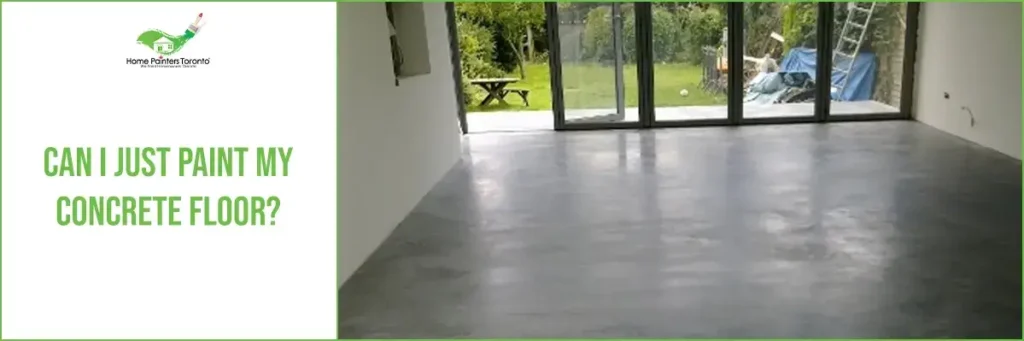
Can I Just Paint My Concrete Floor?
Painting a concrete floor is absolutely possible in Toronto homes and commercial spaces, but the word "just" in this question contains most of the risk: skipping a single step in the preparation sequence, or choosing the wrong product for the specific conditions of the floor, guarantees a result that peels within one to two seasons and costs more to strip and redo than a correctly executed first project would have. Home Painters Toronto, the HomeStars Best of Award 2026 winner with over 1,200 positive reviews and 37 years serving the GTA, coats and seals concrete floors across basements, garages, patios, and commercial spaces throughout North York, Etobicoke, Leaside, and Riverdale every season. This guide covers what is needed to paint a concrete floor correctly, which product is right for which situation, and when painting is and is not the right solution.
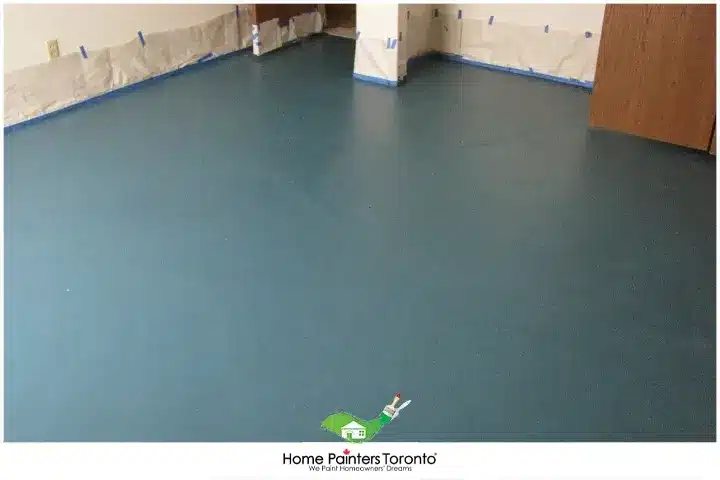
Can You Paint a Concrete Floor?
Concrete floors have become increasingly popular in residential and commercial settings due to their durability, low maintenance, and cost effectiveness. Many property owners wonder if painting concrete floors is a good approach to improve their appearance or add a touch of personal style. The answer is yes, with conditions. Sometimes a concrete floor in a garage or patio becomes an eyesore. The drab natural grey colour can make a basement or pool feel cold and dull. Maybe the slab has started to crack and crumble. Whatever the reason, concrete painting is a great way to liven up a space or create a more polished visual appeal. The challenge is in the preparation. Our guide on sealing interior concrete floors covers the sealing option as an alternative or complement to painting.
Advantages of Painting a Concrete Floor
Aesthetic Appeal
Painting a concrete floor can significantly enhance its appearance, transforming a dull, gray surface into a vibrant and attractive feature of a space.
Customization
With a wide variety of concrete paint colours and finishes available, painting allows customization to match any style or complement existing décor.
Protection
A high quality concrete floor paint provides a protective barrier against moisture, stains, and daily wear and tear, prolonging the life of the floor.
Ease of Maintenance
A painted concrete floor is easier to clean and maintain than a bare concrete surface, as it is less prone to dust accumulation and staining.
Disadvantages of Painting a Concrete Floor
Surface Preparation
Painting a concrete floor requires thorough surface preparation, including cleaning, repairing cracks, and applying a primer. This is time consuming and labour intensive.
Durability
While high quality paint can provide some protection, it may not be as durable as other concrete finishing options, such as staining or epoxy coatings.
Reapplication
Painted concrete floors may require periodic touch ups or repainting, especially in high traffic areas or when exposed to heavy wear and tear.
Why Concrete Floor Paint Fails in Toronto Basements: The Moisture Problem Most Homeowners Ignore
Below grade concrete floors in Toronto basements sit directly on the soil, and concrete is a porous material that transmits moisture vapour upward through its pores continuously. According to the American Cement Association's guidance on concrete properties, concrete continues to absorb and transmit moisture from its surrounding environment for its entire service life. A paint film applied to a concrete floor that is still transmitting moisture vapour will be pushed off the surface from below within one to two seasons, regardless of how carefully the surface was cleaned and primed beforehand.
According to CMHC guidance on indoor moisture management, below grade concrete in Canadian homes is one of the most common pathways for moisture infiltration, and the effectiveness of any treatment depends on addressing the moisture source rather than simply covering the symptom. This is the central issue with painting a concrete floor in a Toronto basement: the painting is not the hard part. Confirming the floor is dry enough to accept and hold the coating is the hard part.
Paint Concrete Floor: Why Substrate Moisture Must Be Confirmed Before Any Product Is Applied
The standard threshold for painting or coating a concrete floor is a moisture content reading below 12 percent, confirmed using a pin type concrete moisture meter. Surface touch is not a reliable indicator on a below grade concrete floor, because the top few millimetres can feel dry while the core of the slab is still transmitting significant moisture vapour. A floor that reads 15 to 18 percent on a meter will cause epoxy or latex paint to delaminate within months of application regardless of surface preparation quality.
The standard test for confirming a concrete floor is dry enough to coat is also a plastic sheet test: a 45 cm by 45 cm sheet of clear plastic is taped to the floor, sealed at all four edges, and left for 24 to 48 hours. Condensation visible on the underside of the sheet after this period indicates active moisture vapour transmission that makes the floor unsuitable for painting without addressing the moisture source first.
Efflorescence, the white powdery mineral deposit common on Toronto basement floors, is a clear visual indicator that moisture is transmitting through the slab. Painting over efflorescence without treatment seals the mineral deposits under the paint film, which continues to push outward with each moisture cycling event. Our efflorescence removal guide covers the TSP treatment sequence that must precede any concrete floor coating.
Concrete Floor Paint Options: Epoxy, Latex Masonry, and Penetrating Sealers Compared
Epoxy Floor Coating vs Latex Masonry Paint: Which Lasts Longer on a Toronto Basement Floor
Two part epoxy systems produce the most durable coating available for concrete floors because the epoxy resin and hardener react chemically to form a film that is harder, more resistant to impact, and more moisture resistant than any latex based product. The trade off is a longer preparation requirement, a more critical mixing and application sequence, and a higher material cost.
Latex masonry paint is significantly easier to apply and correct during the project, and costs less per square foot. It lasts 2 to 5 years on a properly prepared concrete floor, compared to 5 to 10 years for a properly applied two part epoxy. Both lifespans assume the substrate moisture condition was confirmed acceptable before application.
| Factor | Two Part Epoxy | Latex Masonry Paint | Penetrating Concrete Sealer |
|---|---|---|---|
| Lifespan on properly prepared floor | 5 to 10 years | 2 to 5 years | 3 to 7 years (invisible, not a coating) |
| Traffic resistance | Excellent; handles vehicle traffic | Moderate; suited for foot traffic only | Not a surface coating; no traffic resistance |
| Moisture resistance | High; resists hydrostatic pressure from below | Moderate; not suited for active moisture | Penetrates and reduces moisture vapour drive without sealing the surface |
| Application complexity | High; precise mixing ratio and pot life must be managed | Low; similar to standard interior paint | Low; applied like paint but functions differently |
| Cost professionally applied | $3 to $7 per sq ft | $1 to $2.50 per sq ft | $1 to $3 per sq ft |
| Best for | Garages, workshops, high traffic basement utility spaces | Basement playrooms, laundry areas, finished basement floors | Concrete that needs moisture reduction without colour change |
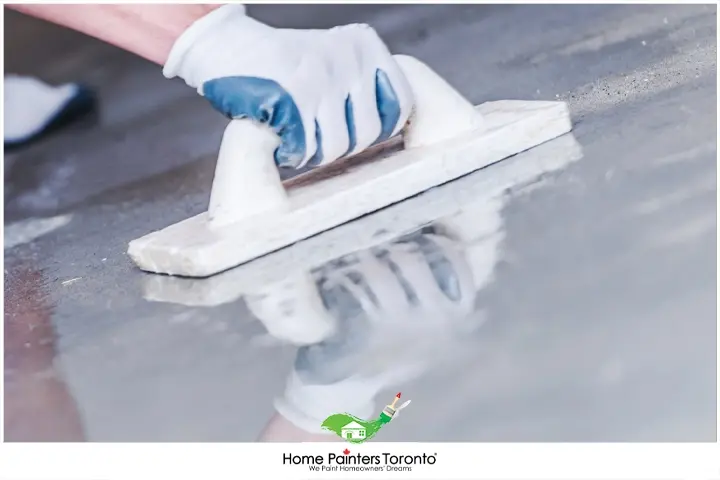
Two-part epoxy floor coating applied over a mechanically ground and primed Toronto basement slab — the harder film handles impact and abrasion that standard latex masonry paint wears through quickly under heavier use.
Interior vs Exterior Concrete Floor Painting: Why the Application Differs
Because concrete is so durable and adaptable, it is an excellent material for indoor and outdoor use. Interior concrete floors in Toronto basements are subject to foot traffic, furniture movement, and liquid splashes. Exterior concrete, including driveways, patios, and pool surrounds, must withstand very high and low temperatures, significant rain and snow, and exposure to ice melt chemicals that accelerate coating degradation.
The resin formulation reflects this difference. Interior paint resin is typically less flexible than exterior formulations, because interior temperature cycling is more moderate than the extreme ranges an exterior surface experiences. Epoxy is particularly appropriate for interior applications where its hardness and chemical resistance suit the conditions. Exterior concrete benefits from coatings with built in flexibility to accommodate freeze and thaw movement.
Materials and Equipment Used in Professional Concrete Floor Painting
A professional concrete floor painting project requires specific materials and equipment at each stage. Selection depends on the floor condition, the product system specified, and whether the floor is interior or exterior.
| Category | Materials and Equipment |
|---|---|
| Surface assessment | Pin type concrete moisture meter; plastic sheet test materials; magnifying glass for efflorescence assessment |
| Surface preparation | Stiff bristle broom; concrete scraper; concrete filler or patching compound; angle grinder or concrete floor grinder; acid etching solution or mechanical scarifier; industrial vacuum; degreaser |
| Masking and protection | Painters tape; plastic sheeting for wall protection |
| Priming | Concrete bonding primer or epoxy primer (matched to topcoat system) |
| Application | High nap roller; paint brush for edges and details; extension pole; mixing paddle for epoxy systems |
| Personal protection | Protective eyewear; N95 respirator or better; chemical resistant gloves; knee pads for floor work |
| Sealing | Concrete sealer in matte or glossy finish (applied after topcoat if specified) |
Surface Preparation for Painting a Concrete Floor in Toronto
Acid Etching vs Mechanical Grinding: Which Preparation Method Is Right for Your Concrete Floor
Surface preparation for concrete floor painting serves one purpose: creating a profile in the surface that allows the coating to mechanically bond. A smooth, dense concrete surface provides too little texture for any coating to grip. Both acid etching and mechanical grinding achieve this, but through different mechanisms and with different results.
Acid etching uses a diluted acid solution, typically muriatic or phosphoric acid, that reacts with the alkaline surface of the concrete and creates a fine textured profile. It is effective on smooth, lightly contaminated concrete and requires thorough neutralization and rinsing before any primer is applied. Mechanical grinding uses a floor grinder fitted with diamond segments to physically cut a consistent profile into the surface, and is more reliable on concrete with surface contamination, old coatings, or variability in density.
| Factor | Acid Etching | Mechanical Grinding |
|---|---|---|
| Best for | Smooth, clean concrete with no previous coating | Any condition; preferred on old coatings or contaminated surfaces |
| Consistency of profile | Variable; depends on concrete density and acid contact time | Highly consistent; operator controls the profile depth directly |
| Chemical handling required | Yes; acid requires neutralization, rinsing, and disposal | No chemicals; dust collection system required instead |
| Rental equipment needed | Acid application equipment; neutralizing agent | Floor grinder with diamond heads; industrial vacuum with HEPA filter |
| Suitability for basement floors | Acceptable on newer concrete in good condition | Preferred on older Toronto basement slabs with variable density |
Project Timeline for Painting a Concrete Floor
The full timeline for a concrete floor painting project, from preparation through curing, typically runs four to five days. The preparation and cleaning stage, including moisture assessment, efflorescence treatment, surface opening, and drying, typically takes one to two days. Primer application and drying takes approximately half a day. Topcoat application, including two coats with the required recoat window, takes approximately one day. Full cure before the floor is returned to normal use requires a further one to two days.
For outdoor projects such as driveways, patios, and pool surrounds, weather conditions can extend every stage. Application temperature should be above 10 degrees Celsius and relative humidity below 85 percent. Toronto's short optimal window from May through September makes timing important for exterior concrete floor projects.
Popular Concrete Floor Paint Colours
Concrete floor paint is available in many colours, from subtle neutrals to bold, vibrant hues.
Grays and Neutrals:
Gray is a classic choice for concrete floors, as it complements the natural colour of concrete and creates a sleek, modern look. Light gray, charcoal, and beige are popular neutral options that make a space feel more open and inviting.
Earth Tones:
Earthy colours like terracotta, sand, and olive green can create a warm and welcoming atmosphere. These colours work well in rustic or industrial settings and pair beautifully with natural materials like wood and stone.
Blues and Greens:
Cool colours like blue and green can help create a calming and serene environment. From pale, icy blues to deep, rich greens, these hues can add depth and character to a concrete floor.
Bold and Vibrant Colours:
For a statement floor, bold colours like red, yellow, or orange can add a pop of colour to a space and create a lively, energetic atmosphere.
Tips for Choosing the Right Concrete Floor Paint Colour
- Consider the Space: Consider the size, layout, and purpose of the space when choosing a paint colour. Lighter colours can make a small room feel more spacious, while darker hues can add depth and coziness to larger areas.
- Coordinate with Décor: Choose a paint colour that complements the existing décor and colour scheme of the space.
- Think About Lighting: The amount and type of lighting significantly impacts how a paint colour appears. Natural light makes colours appear brighter and more vibrant, while artificial light can alter hue and intensity. Testing the chosen colour in different lighting conditions before committing to the full project is important.
- Test Before Committing: Applying a small sample of the chosen colour to a discreet area of the floor before the full project gives a realistic indication of how the colour will read in the actual space.
When Painting a Concrete Floor Is Not the Right Solution
Active water intrusion, meaning visible water entering through the slab or walls rather than just moisture vapour transmission, disqualifies a concrete floor from painting until the source is resolved. No coating holds against active hydrostatic pressure from below. Sealing the floor before addressing the source of water infiltration traps the water, which finds another path out and typically causes damage in the process.
Structural cracking, specifically cracks that are moving or widening over time, also disqualifies a floor from standard painting. Any coating bridges static cracks acceptably, but a moving crack breaks through any film forming coating and requires an elastomeric joint treatment before any broader painting scope proceeds.
For Toronto homeowners dealing with water intrusion alongside the decision to paint or seal a basement floor, our guide on repairing walls after water damage covers the moisture assessment process that applies to walls and floors equally before any surface treatment begins. Our guide on painting concrete walls covers the wall side of the same basement moisture management scope.
Cost of Painting or Sealing a Concrete Floor in Toronto in 2026
Home Painters Toronto is WSIB compliant, fully insured to $5 million in general liability, and all interior work is backed by a written warranty. All prices below are in CAD and exclude HST.
| Scope | Estimated Cost (CAD) | Notes |
|---|---|---|
| Efflorescence removal and surface preparation (per 100 sq ft) | $150 – $400 | TSP treatment, neutralization, rinse, and dry confirmation; precedes all painting |
| Latex masonry paint (per 100 sq ft, professionally applied) | $100 – $250 | Includes primer and two topcoats; 2 to 5 year lifespan |
| Two part epoxy floor coating (per 100 sq ft, professionally applied) | $300 – $700 | Includes surface prep, primer, and two coat epoxy system; 5 to 10 year lifespan |
| Penetrating concrete sealer (per 100 sq ft) | $100 – $300 | Reduces moisture vapour drive; no colour change; not a traffic bearing coating |
| Full basement floor painting (typical Toronto basement, 800 sq ft) | $600 – $2,500 | Depends on product system; includes prep, prime, and two topcoats |
| Exterior concrete patio or driveway painting (per 100 sq ft) | $150 – $500 | Exterior rated product required; timing governed by temperature window |
For a full breakdown of all interior and exterior project costs, see our interior and exterior painting cost guide.
Maintenance and Additions for a Painted Concrete Floor
Depending on the room or area with the finished concrete surface, a stencil pattern can be added later or an area rug can define zones within the space. Painted concrete can continue to serve the décor goals or be intended purely for functionality. For the best maintenance, resealing every few years extends the life of the coating and keeps the surface looking fresh. Subject to how heavy the traffic or weather conditions are, painted concrete can last from 2 to 15 years depending on the product system applied.
Frequently Asked Questions About Painting Concrete Floors
No. Active moisture vapour transmission through a concrete slab causes any coating to delaminate within one to two seasons, regardless of product quality. The moisture source must be identified and addressed, the floor must dry to below 12 percent moisture content on a pin type meter, and the plastic sheet test must show no condensation before any coating is applied.
Latex masonry paint on a properly prepared concrete floor lasts 2 to 5 years before recoating is needed. Two part epoxy floor coating lasts 5 to 10 years under the same conditions. Both lifespans assume the substrate moisture was confirmed below 12 percent before application and the full surface preparation sequence was completed.
Yes. Two part epoxy outperforms latex masonry paint on garage floors because it handles vehicle traffic, chemical spills from oil and fuel, and the freeze and thaw cycling that affects a garage slab directly. The harder film of epoxy resists the impact and abrasion that garage traffic creates, while standard latex paint marks and wears through quickly under those conditions.
Yes. Efflorescence is the white powdery mineral deposit that appears on concrete when moisture transmits through the slab and carries dissolved salts to the surface. Applying any coating over efflorescence seals the deposits under the film, which continues to push outward through subsequent moisture cycling and lifts the coating from below. Our efflorescence removal guide covers the full treatment process.
Professionally applied latex masonry paint costs approximately $100 to $250 per 100 square feet. Two part epoxy floor coating costs $300 to $700 per 100 square feet. A typical Toronto basement floor of approximately 800 square feet runs $600 to $2,500 depending on the product system and the extent of surface preparation required. All quotes from Home Painters Toronto are free and provided the same day.
More Interesting Blogs Related to "Can I Just Paint My Concrete Floor?"
Ready to Paint Your Toronto Concrete Floor Correctly?
Home Painters Toronto is the HomeStars Best of Award 2026 winner with a written warranty on all concrete floor coating work. Call 416-494-9095 or email [email protected] for a FREE same-day estimate. We are open seven days a week.