

Kitchen Week: Painting Your Kitchen
Painting a kitchen is one of the highest impact updates a Toronto homeowner can make to the most heavily used room in the house, and getting the product and preparation right matters more in a kitchen than almost anywhere else, given the grease, steam, and daily contact this room sees. Home Painters Toronto, the HomeStars Best of Award 2026 winner with over 1,200 positive reviews and 37 years serving the GTA, repaints and refreshes kitchens across homes in North York, Etobicoke, Leaside, and Riverdale every season. A fresh coat of paint can add colour and personality to a kitchen, and recognising the signs that a kitchen is ready for a refresh is the first step toward a space that feels new again.
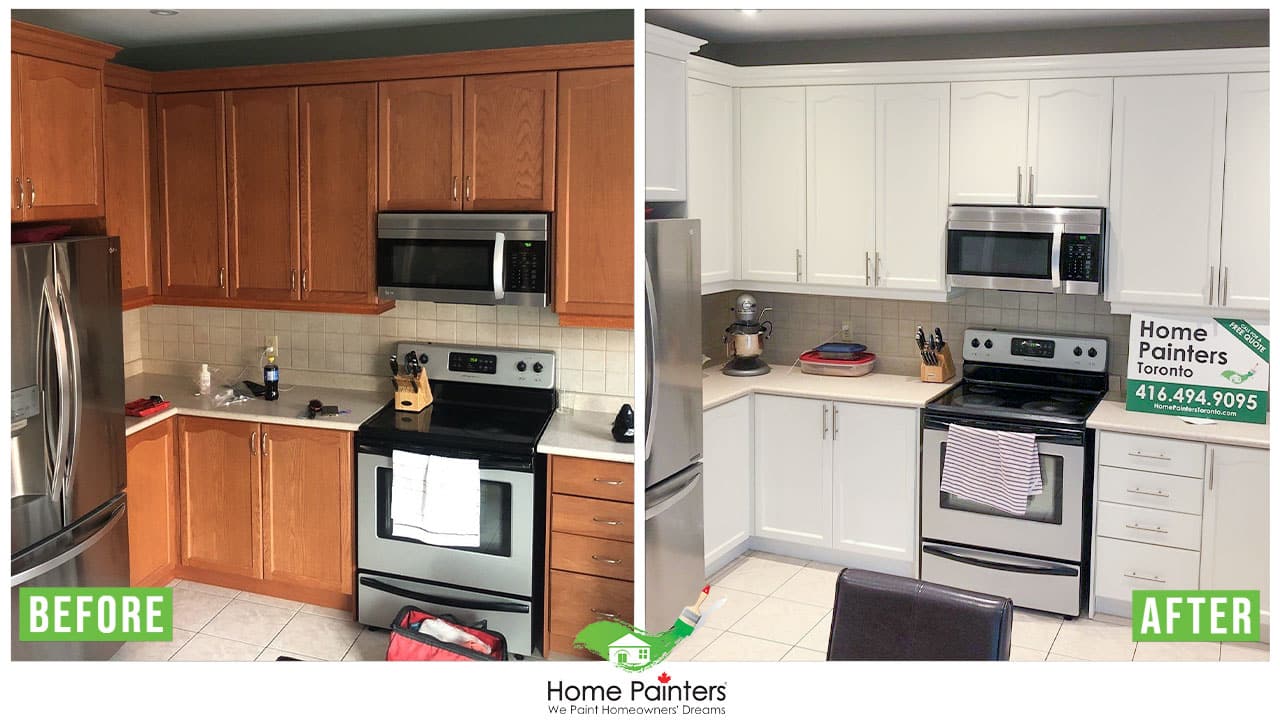
Kitchens see more grease, steam, and daily contact than any other room in the home — product selection and surface preparation matter more here than almost anywhere else.
Refreshing a Kitchen Can Improve the Value of a Toronto Property
Feeling bored or tired of a kitchen is more common than most homeowners realise. Many find after several years that their kitchen is no longer pleasing, and recognising the specific signs that it is time to refresh the most visible room in the home is the first useful step.
Sign 1: The Kitchen Has Not Been Painted or Remodelled in More Than 5 Years
After several years, walls noticeably lose the vibrancy they once had. Life takes its toll on kitchen paint specifically, and common signs include food stains, handprints, heat affected areas near the stove, and peeling or cracking at high contact points around cabinets and switches.
Sign 2: The Kitchen Paint Is All One Colour
Interior design has taken on a new trend in recent years, with colour, particularly a splash of bright colour, working its way into kitchens that were previously kept entirely neutral. Painting a kitchen to include one feature colour can add a modern touch to a Toronto home. Ideally, pairing that feature colour with a second, neutral colour highlights the best parts of the room and helps conceal minor flaws. For a distinctive look, mixing textures and patterns such as stripes is worth considering; our guide on painting stripes covers this technique in more depth.
Sign 3: The Kitchen No Longer Feels Enjoyable
A home should be enjoyed, and feeling unhappy or simply indifferent about a kitchen is a clear sign that something needs to change. A fresh coat of paint helps reinvigorate a space significantly, even when the new colour is not dramatically different from the original.
Sign 4: Hesitating to Invite People Over for Dinner
No home should feel embarrassing to its owner. Stains from dinners past, and old peeling or chipping paint, have no place in the most visible room of a house. When new appliances do not match dated wall paint, a paint update can make the entire kitchen look new again. Cabinet painting is often combined with wall painting for a comprehensive refresh.
Sign 5: The Kitchen No Longer Fits the Homeowner's Life
Tastes evolve over time. A kitchen that once felt exactly right can start to feel too colourful, too busy, or simply mismatched with how a homeowner's style has matured. When that happens, moving toward a more sophisticated palette that matches the current stage of life is a reasonable and common motivation for a repaint. A professional colour consultation helps homeowners navigate this transition with confidence.
Five Signs It Is Time to Repaint a Kitchen: At a Glance
| Sign | What to Look For |
|---|---|
| Age of last paint job | More than 5 years since the last refresh; food stains, handprints, heat damage near the stove visible |
| Monotone colour scheme | Walls entirely one colour with no feature accent or contrast |
| Emotional disconnect | General indifference or unhappiness with the space despite no obvious damage |
| Embarrassment when entertaining | Visible stains, peeling, or mismatch with newer appliances |
| Outgrown style | Current colour no longer reflects the homeowner's evolved taste or lifestyle |
What to Know Before Painting a Kitchen
Several factors determine whether a kitchen paint job holds up under daily use. High quality paint with a smooth finish and low VOC content provides the foundation. One colour for the walls paired with a second for trim, cabinets, and accessories produces a more deliberate, finished look than a single flat colour throughout.
Interior latex paint formulated specifically for kitchen surfaces is stain resistant, easy to clean, and durable enough for daily use in a way that standard wall paint is not. A high quality primer creates a solid, even base for the finish coat. Working in a logical sequence, beginning with the ceiling and walls before moving to trim, produces the most efficient and even result.
Choosing the Right Paint Products for a Kitchen
Product selection determines how well a kitchen paint job withstands grease, steam, and daily cleaning. For primer specifically, Benjamin Moore's INSL X primer line offers several specialty formulations suited to different kitchen surface conditions, including stain blocking and high adhesion options for cabinets and previously painted trim.
| Surface | Recommended Product Type | Finish | Why |
|---|---|---|---|
| Walls (general) | Stain resistant interior latex (e.g., Benjamin Moore Regal Select, Sherwin Williams Emerald) | Satin or semi gloss | Withstands grease and steam; wipes clean easily without showing scrub marks |
| Walls behind stove and sink | Premium scrubbable latex | Semi gloss | Highest contact area for grease and splatter; needs the most durable finish |
| Cabinets | Cabinet specific enamel or water based alkyd (e.g., Benjamin Moore Advance) | Semi gloss | Hard, durable finish resists daily handling and cleaning |
| Trim and baseboards | Water based alkyd trim enamel | Semi gloss | Matches cabinet hardness; consistent sheen throughout the room |
| Ceiling | Flat or matte interior latex | Flat | Standard ceiling approach; less exposure to grease than wall surfaces |
| Stain blocking on previously damaged areas | INSL X or similar alkyd based stain blocking primer | N/A (primer only) | Seals water stains, smoke residue, or tannin bleed before topcoat is applied |
How Kitchen Walls Are Properly Prepped Before Painting
Surface preparation begins with the removal of fixtures and hardware from the walls, followed by careful scraping of old paint from hard to-reach areas such as the corners and edges around cabinets. Rough patches are smoothed with 150 grit sandpaper, and a drywall knife addresses loose paint and any holes left by screws from previous renovations or repairs, such as relocated electrical outlets.
Once sanding is complete, walls are cleaned with a damp cloth and wiped down with a dry towel to remove all dust before any primer is applied. An interior primer creates the necessary adhesion base, particularly important in kitchens where grease residue and multiple previous paint layers are common.
Kitchen Wall Prep Checklist
| Step | What It Involves | Why It Matters in a Kitchen Specifically |
|---|---|---|
| Remove fixtures and hardware | Outlet covers, switch plates, any wall mounted hardware removed before painting begins | Prevents paint lines around fixtures and ensures full wall coverage |
| Scrape old or failing paint | Paint scraper used at corners, cabinet edges, and any peeling sections | Kitchens often have more paint generations than other rooms due to more frequent touch ups |
| Sand rough patches | 150 grit sandpaper on uneven areas and filled holes | Produces a smooth surface for even topcoat application |
| Fill holes and imperfections | Drywall knife and filler for screw holes, dents, or gouges from past renovations | Common in kitchens after appliance changes or outlet relocations |
| Clean thoroughly | Damp cloth followed by dry towel; degreaser solution for areas near the stove | Grease residue prevents paint adhesion if not fully removed before priming |
| Apply primer | Interior primer, stain blocking type where water or smoke staining is present | Seals the surface and ensures even colour and sheen in the topcoat |
Professional Techniques for an Efficient Kitchen Painting Project
Painting kitchen walls and ceilings is a methodical process, and professional techniques produce both a faster timeline and a more even finished result than ad hoc application.
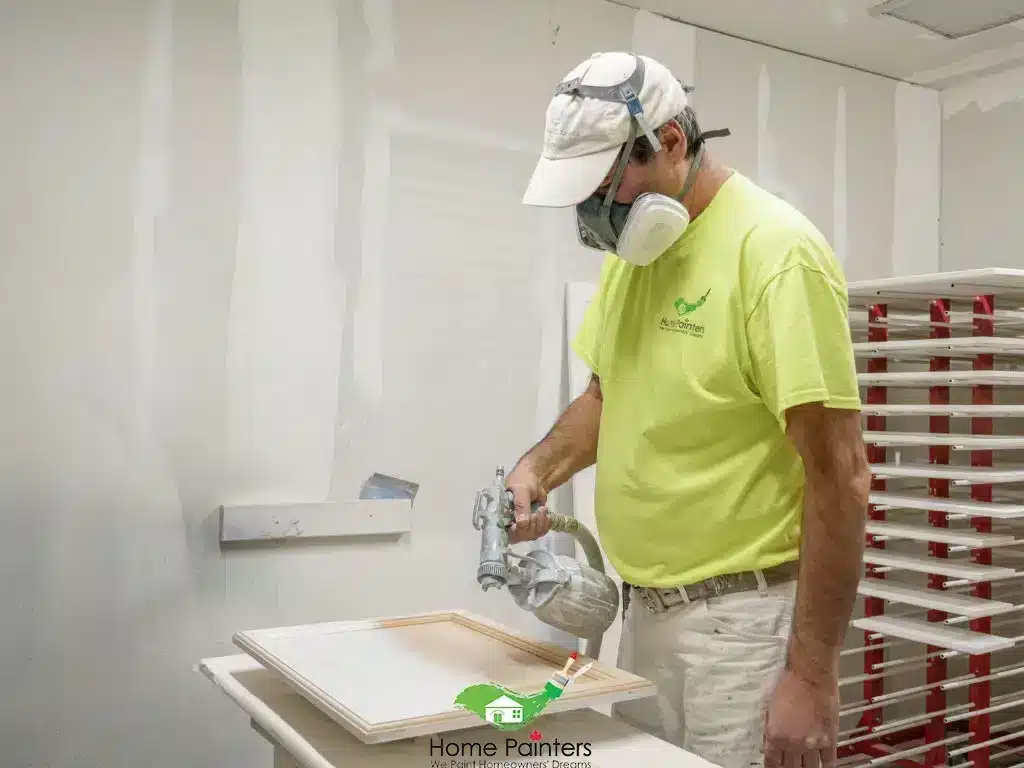
Spray application for cabinetry produces the even, smooth coat that brush and roller work cannot consistently match on flat door surfaces — two coats produce the professionally finished result.
Cost of Painting a Kitchen in Toronto in 2026
Home Painters Toronto is WSIB compliant, fully insured to $5 million general liability, and all interior painting is backed by a lifetime warranty. All prices below are in CAD and exclude HST.
| Scope | Estimated Cost (CAD) | Notes |
|---|---|---|
| Kitchen walls and ceiling | $400 – $700 | Includes prep, prime, and two topcoats |
| Kitchen cabinet painting or spraying | Quoted by scope | Cabinet specific enamel; includes door removal, prep, and spray application |
| Kitchen trim and baseboards | Quoted with wall scope | Water based alkyd enamel for durability matching cabinets |
| Full kitchen refresh (walls, ceiling, trim, cabinets) | $1,500 – $4,000 | Most comprehensive option; coordinated colour scheme throughout |
| Stain blocking primer treatment (water or smoke damage) | Additional $100 – $300 | Addressed before standard prep where staining is present |
For a full breakdown of interior painting costs, see our interior painting cost guide. For cabinet specific pricing, see our kitchen cabinet painting service.
Real Project: Kitchen Refresh in a North York Home
North York Decade-Old Beige Kitchen: Degreaser Prep, INSL X Spot Priming, Feature Wall in Sage Green, and Water Based Alkyd Trim
A homeowner in North York contacted Home Painters Toronto after living with the same kitchen colour for over a decade. The original beige walls showed visible grease buildup near the stove, faded patches near the window, and several scuff marks at counter height throughout the room. The homeowner wanted a feature wall behind the dining area paired with a neutral colour throughout the rest of the kitchen.
Our team's assessment found the existing paint sound enough to paint over after thorough cleaning, with two small areas near the stove requiring spot priming with an INSL X stain blocking primer to address grease staining that a standard wash could not fully remove.
All surfaces were cleaned with a degreaser solution, sanded lightly to dull the existing sheen, and primed where needed. The feature wall was finished in a deep sage green in semi gloss, while the remaining walls received a warm white in satin finish. All trim was painted in a matching water based alkyd enamel to tie the new colour scheme together. The project was completed in two days, and the homeowner reported the kitchen finally felt current again without the cost of a full renovation.
Home Painters Toronto is WSIB compliant, fully insured to $5 million general liability, and all interior painting is backed by a lifetime warranty. For completed projects, visit our Toronto painting projects page. Same day free estimates are available seven days a week across the GTA.
Conclusion: A Fresh Kitchen Without a Full Renovation
Painting a kitchen is one of the most effective ways to update a space without the cost and disruption of a full renovation. Recognising the signs that a refresh is overdue, choosing the right products for a high moisture, high traffic environment, and following a proper preparation sequence all contribute to a result that holds up over years of daily use. For Toronto homeowners ready to refresh their kitchen, Contact Home Painters Toronto for fast free quotes and warranty backed work. With over 37 years of experience as professional painters in Toronto and the GTA, our team is ready to bring fresh colour and personality to your kitchen. Call 416.494.9095 or email [email protected]. We are open seven days a week.
Frequently Asked Questions About Painting a Kitchen
Kitchens typically need repainting every 3 to 5 years, faster than most other rooms in the home, due to the combination of cooking grease, steam, and frequent cleaning that wears down paint film more quickly than in lower traffic spaces.
Satin or semi gloss finishes are the standard choice for kitchen walls because they wipe clean easily and resist the grease and moisture exposure common in this room. Flat or matte finishes mark too easily and are not recommended for kitchen wall surfaces.
Combining cabinet painting with a wall refresh is the most efficient and cost effective approach for a comprehensive kitchen update, since both scopes share preparation steps and produce a more cohesive finished result than addressing them separately. See our kitchen cabinet painting service for the full scope.
Kitchen walls benefit from a stain blocking primer in areas with grease residue, water staining, or smoke exposure near the stove, since these contaminants can bleed through a standard topcoat if not properly sealed first. A general interior primer is sufficient on walls without visible staining once thoroughly cleaned.
Painting kitchen walls and ceiling typically costs $400 to $700, including prep, primer, and two topcoats. A full kitchen refresh covering walls, ceiling, trim, and cabinets runs $1,500 to $4,000 depending on the scope and the condition of existing surfaces. All quotes from Home Painters Toronto are free and provided the same day.
More Helpful Blogs Related to Painting Your Kitchen
Ready to Refresh Your Toronto Kitchen?
Home Painters Toronto is the HomeStars Best of Award 2026 winner with a lifetime warranty on all interior painting. Call 416-494-9095 or email [email protected] for a FREE same-day estimate.