

Painting Interior Stairs
Painting interior stairs is one of the highest impact projects a Toronto homeowner can undertake, because the staircase is the first surface visitors encounter and the first to show wear. Home Painters Toronto, the HomeStars Best of Award 2026 winner with over 1,200 positive reviews and 37 years serving the GTA, completes staircase painting and staining projects across North York, Etobicoke, Leaside, and Riverdale every season. Stairs take more daily contact than any other painted surface in the home, which means product selection, surface prep, and sheen choice determine how long the finish lasts before it needs to be redone. This guide covers the full professional process.
Staircases are one of the most used parts of any home. Because of this, they are typically the first surface to show damage, creating not only a poor appearance but visible inconsistency throughout the interior. Staining compounds the problem further. The nosing, stringers, and pickets all accumulate wear. That is why painting interior stairs deserves proper professional attention. Stairs are among the most visible elements in a home, and maintaining them in clean, finished condition reflects directly on the overall condition of the property.
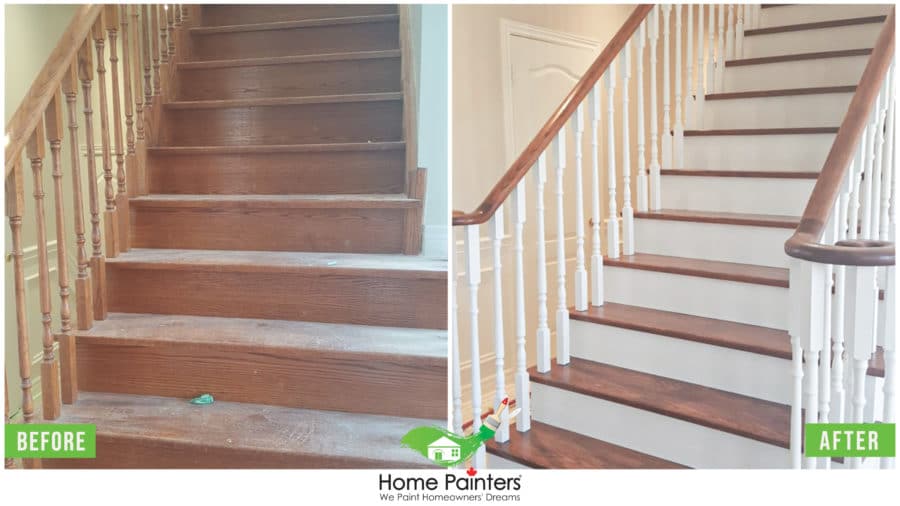
White painted risers with stained natural oak treads — the most requested staircase combination across Toronto homes, requiring floor grade enamel on treads and water based alkyd on all vertical surfaces.
Why Painting Interior Stairs in Toronto Matters More Than Most Surfaces
Toronto homes built between the 1940s and 1980s typically have original wood staircases with oak or pine treads that have accumulated decades of foot traffic, pet contact, and cleaning. The combination of daily abrasion and Toronto's seasonal humidity swings, from 20 to 30% in winter under forced air heating to 60% and above in summer, causes wood to expand and contract repeatedly. Paint films that cannot flex with that movement crack and peel at the nosing edges and tread corners faster than on any other interior surface.
Most stair painting failures in Toronto homes our team is called to correct share the same root cause: the wrong product was used on the treads. Standard interior wall paint applied to stair treads chips and wears through within months under foot traffic. Treads require a floor and porch enamel, a porch and floor oil based paint, or a water based alkyd with high abrasion resistance. Risers and stringers tolerate a standard semi gloss trim paint, but treads do not.
Stair painting is also one of the few interior projects where cure time directly affects safety. According to Benjamin Moore's technical guidance on floor and porch enamels, floor grade coatings on horizontal wood surfaces require a full 72 hour cure before normal foot traffic resumes. Allowing traffic too early on freshly painted treads marks the surface permanently and reduces the coating lifespan significantly.
Stairway Painting: Why It Matters for Toronto Homes
Stairway painting is not only important for the overall appeal of a home, it maintains the structural integrity and value of the staircase itself. Our staircase painting and staining service addresses every element of the staircase: treads, risers, stringers, nosing, and balustrades.
Addressing stair wear early, before the wood is fully exposed through the paint film, costs significantly less than waiting for the coating to fail completely. A staircase with flaking, chipping paint requires more prep work, more product, and more labour time than one being repainted while the existing coat is still mostly intact.
Quality stairs depend on more than surface appearance. Repainting the staircase creates an opportunity to inspect the underlying wood for rot, cracks, soft spots, or loose treads. These structural concerns must be addressed before any paint or stain is applied, because coating over damaged wood does not fix the problem and accelerates further deterioration.
- Rotted or cracked wood is identified and replaced before finishing begins.
- Loose treads or squeaking risers are secured as part of the prep scope.
- Structural repairs addressed at this stage prevent significantly larger costs later.
Advantages of Painting Interior Stairs in Toronto
Daily wear on stairs is unavoidable. High traffic surfaces require regular inspection to confirm they remain in good structural and cosmetic condition and are not producing unnecessary noise that signals a loose tread or failing joint.
For most Toronto homes, the staircase is the first element visible from the entrance. First impressions matter both to household members and to visitors. A freshly finished staircase signals a well maintained property.
Homeowners preparing to sell receive particular benefit from stair painting. Prospective buyers pay close attention to every detail, and a worn or chipped staircase raises questions about the broader maintenance history of the home. A professionally finished staircase addresses that concern before it arises.
Protection is the primary functional benefit beyond aesthetics. A properly applied coating on stair treads and risers reduces the rate of wood degradation from foot contact and moisture, extending the service life of the staircase before carpentry replacement becomes necessary.
What Paint to Use on Interior Stairs: A Toronto Product Guide
Paint selection is the most consequential decision in any staircase project. The wrong product on treads fails within months. The right product, applied correctly over proper prep, lasts 5 to 7 years under normal household foot traffic in Toronto.
| Surface | Correct Product Type | Recommended Products | Finish | Why |
|---|---|---|---|---|
| Stair treads (horizontal, high contact) | Floor and porch enamel or water based alkyd floor paint | Benjamin Moore Porch and Floor Enamel; Sherwin Williams Porch and Floor Latex | Semi gloss or gloss | Highest abrasion resistance; formulated for foot traffic; hardens fully over 72 hour cure |
| Risers (vertical faces) | Water based alkyd trim paint or semi gloss latex | Benjamin Moore Advance Waterborne Alkyd; Sherwin Williams Emerald Urethane Trim Enamel | Semi gloss | Hard enamel finish; resists scuff and cleaning; easy to touch up |
| Stringers (side boards) | Semi gloss latex or water based alkyd | Benjamin Moore Advance in Semi Gloss; SW Emerald Urethane | Semi gloss | Matches risers; durable on vertical surfaces with limited foot contact |
| Balustrades and spindles | Semi gloss latex or water based alkyd | Benjamin Moore Advance; Sherwin Williams Emerald Urethane | Semi gloss | Hard finish tolerates hand contact and cleaning |
| Handrail (wood) | Water based alkyd or oil based enamel | Benjamin Moore Advance; or traditional oil based enamel | Semi gloss or gloss | Highest possible hardness for the most touched surface on the staircase |
| Newel posts | Semi gloss latex or water based alkyd | Benjamin Moore Advance; SW Emerald Urethane | Semi gloss | Visible, touched frequently; hard enamel finish required |
Painting Interior Stairs vs Staining: Which Is Right for Your Toronto Home?
Paint and stain produce very different results on wood stairs, and the correct choice depends on the condition of the existing wood and the desired aesthetic. Paint completely covers the wood grain, allowing any wood species to be finished in a consistent colour. Stain penetrates the wood and enhances the natural grain, producing a richer, more natural appearance but only if the wood is in good enough condition to be worth revealing.
Toronto homes with original oak staircases from the 1940s through the 1960s are often excellent candidates for staining if the treads have not been painted over repeatedly. Homes where the existing wood is pine, has been painted multiple times, or shows filler repairs are usually better served by a painted finish, which conceals surface irregularities rather than highlighting them.
| Factor | Paint | Stain |
|---|---|---|
| Wood condition required | Any; paint covers imperfections | Good to excellent; stain highlights every imperfection |
| Colour options | Unlimited; any colour possible | Limited to natural wood tones and transparent colour washes |
| Prep requirement | Sand to 120 grit; prime; two coats | Sand to 150 grit; wood conditioner on pine; stain; topcoat required |
| Durability on treads | Excellent with floor enamel | Good with polyurethane topcoat; needs more frequent recoating |
| Touch up ease | Moderate; colour match required | Harder; grain matching difficult on spot repairs |
| Best Toronto home pairing | Painted or previously finished stairs; pine treads | Original hardwood oak or maple staircases in good condition |
| Cost comparison | Lower material cost; faster application | Similar or higher; more prep steps on raw wood |
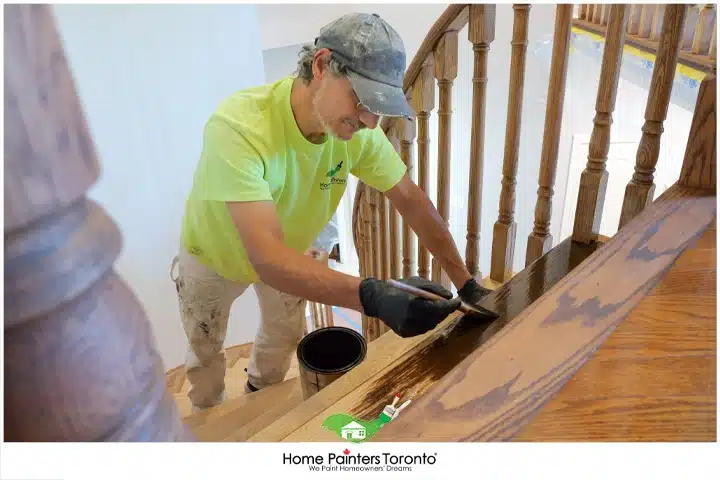
Alternating treads are painted first on working staircases — one pass covers every other tread, allowing a usable path while the first set cures, then the remaining treads are completed in the second pass.
The Painting Process for Interior Stairs: Steps and Risers
Professional staircase painting follows a methodical sequence. Risers are addressed first, with the horizontal surfaces covered to protect from drips during riser work. A high quality angled brush produces the crisp lines where the riser meets the tread nosing. More detail on the full approach is available on our staircase painting and staining service page.
Tread work follows once the risers are dry. Application begins at the top of the staircase and progresses downward. On staircases that must remain partially accessible during the project, alternating treads are painted in the first pass, allowing the paint to cure before the remaining treads are addressed. This staggered approach keeps one usable path through the staircase at all times during the project.
Interior Stairs Prep: What Happens Before the Paint Goes On
Surface preparation determines whether a stair painting project lasts 5 years or 5 months. The staircase surfaces that need painting are among the most demanding prep environments in the home, combining previous finish layers, wear damage, wood filler repairs, and tight corner geometry that requires hand sanding rather than machine sanding.
| Prep Step | What It Involves | Why It Matters for Stairs Specifically |
|---|---|---|
| Remove existing loose or flaking finish | Hand scraper and 80 grit sanding to remove all failing paint; focus on tread nosing edges and riser/tread junctions | Loose paint under the new coat causes the new coat to fail at the same rate as the old one |
| Sand all surfaces | 80 to 120 grit for paint removal; 120 grit for the final pass on treads; 150 grit on risers and stringers | Abrading the surface creates the mechanical tooth the new primer needs to bond to the substrate |
| Fill damaged areas | Wood filler applied to gouges, splits, and worn nosing edges; sanded flush when dry | Filled and sanded repairs produce a smooth tread surface; unfilled damage telegraphs through every finish coat |
| Tack cloth and clean | All sanding dust removed with a vacuum and tack cloth before priming | Sanding dust under primer creates grit in the finish film and reduces adhesion |
| Apply oil based primer or bonding primer | One coat to all surfaces; allow 24 hours minimum to dry | Oil based primer penetrates wood better than latex; produces the strongest adhesion base for the topcoat on high contact stair surfaces |
| Inspect under raking light | Work light held at shallow angle across each tread surface after primer dries | Primer reveals every remaining surface defect; sand and fill before topcoat, not after |
Longevity and Maintenance of Painted Interior Stairs
Cure time is the most overlooked factor in stair painting longevity. Rushing foot traffic onto freshly painted treads before the coating has fully cured leaves permanent marks in the surface film. Floor grade coatings on treads typically require 72 hours of full cure at 18 to 24 degrees Celsius before normal household foot traffic can resume. Oil based products may require up to 7 days for full hardness.
Regular maintenance after the project extends the service life of the finish significantly. Treads cleaned with a damp cloth rather than harsh cleaners preserve the coating integrity. Touch ups on isolated worn areas, applied while the damage is small, prevent the spread of wear that eventually requires a full recoat.
Painted staircases in Toronto homes, finished with a floor grade enamel on treads and a water based alkyd on risers and stringers, typically last 5 to 7 years under normal family household traffic before a full recoat is needed. Homes with pets or very high daily foot traffic may need more frequent attention.
Balancing Aesthetics and Functionality When Painting Interior Stairs
Interior stair painting sits at the intersection of aesthetics and structural function in a way that few other projects match. An impressive staircase serves as a centrepiece of the interior while simultaneously providing a safe, reliable pathway between floors. The decision to paint over carpeting, natural wood stain, or previous paint depends on traffic levels, the home's overall design, and the condition of the existing substrate.
Colour choice on stairs produces a stronger visual impact than almost any other interior surface because stairs are seen from multiple angles simultaneously. White or off white risers with stained or contrasting treads is the most requested combination across Toronto homes our team works in. Dark treads with white risers create a classic, high contrast result that photographs well and photographs the contemporary style of the home effectively.
A Fresh Colour on Interior Stairs Transforms the Whole Space
Adding a new colour to interior stairs produces a visual change that extends well beyond the staircase itself. Many Toronto homeowners choose to coordinate the stair colour with the adjacent wall trim and baseboard and trim painting for a unified result throughout the main floor and upper hallway.
Paint and stain choices range from classic white painted risers with natural wood treads, to fully painted staircases in bold colours, to full natural wood stain treatments on quality hardwood. Each approach changes the character of the entire entrance area. The staircase sets the tone for every room visible from it.
Styles and aesthetics for stair colours vary widely across GTA home types. Sherwin Williams publishes a stairway inspiration gallery that Toronto homeowners find useful for visualising how different colour combinations read in real installations before committing to a choice.
Cost of Painting Interior Stairs in Toronto in 2026
Staircase painting cost varies based on the number of treads, the scope of prep required, whether staining is included, and whether balustrades and handrails are part of the project. Home Painters Toronto is WSIB compliant, fully insured to $5 million general liability, and all interior painting is backed by a lifetime warranty. All prices below are in CAD and exclude HST.
| Scope | Estimated Cost (CAD) | Notes |
|---|---|---|
| Full staircase painting (standard Toronto home) | $3,500 – $8,000 | Includes prep, prime, treads, risers, stringers, and balustrades |
| Treads and risers only (no balustrades) | $1,800 – $3,500 | Faster scope; balustrades addressed separately or left as is |
| Staining (treads and risers) | $2,500 – $6,000 | Higher prep requirement on raw or previously painted wood; polyurethane topcoat included |
| Balustrade and spindle painting only | $800 – $2,000 | Spindle count drives cost; more spindles = more masking and application time |
| Handrail refinishing or painting | $400 – $900 | Depends on length, profile complexity, and whether stripping is required |
| Carpentry repairs before painting | Quoted separately per scope | Rotted nosing, cracked treads, loose risers all require repair before painting begins |
For a full breakdown of interior painting costs across all surfaces, see our interior painting cost guide. If the staircase also needs carpentry work, our staircase painting and carpentry service covers both scopes in one project.
Stair Painting and Interior Painting: Addressing Both at Once
Combining stair painting with a broader interior house painting project is the most cost effective approach for most Toronto homeowners. Mobilisation, masking, and cleanup happen once rather than twice. The staircase walls and ceiling also benefit from fresh paint at the same time, producing a fully refreshed entry and circulation path in a single project visit.
Calculating paint volume for wall areas adjacent to the staircase is straightforward with the Benjamin Moore paint calculator. Accurate measurements of wall height and width, accounting for the angled stairwell ceiling, produce a precise litre estimate before materials are purchased.
Real Project: Staircase Painting and Staining in a North York Heritage Home
North York 1958 Detached: White Painted Risers and Stringers, Natural Stained Oak Treads, Four-Day Completion
A homeowner in North York contacted Home Painters Toronto to address the staircase in their 1958 detached home. The original oak staircase had been painted over completely in white latex in the early 1990s, and the paint had begun peeling at every tread nosing edge from decades of foot traffic. The homeowner wanted a fresh look with white painted risers and stringers but natural stained treads to reveal the oak grain that had been covered for thirty years.
Our team began with a full assessment of the tread condition. Three of the twelve treads had sufficient paint buildup to require mechanical stripping before the wood could be stained. The remaining nine treads were sanded to bare wood with 80 grit followed by 120 grit, removing the old paint coat and revealing clean oak grain throughout. A wood conditioner was applied before staining to ensure even absorption across the varying grain patterns of the different oak treads.
Minwax Provincial 211 oil based stain was applied to all treads and allowed to dry for 24 hours, followed by two coats of Minwax Fast Drying Polyurethane in Satin finish for abrasion resistance. Risers, stringers, and all balustrades were primed with Benjamin Moore Fresh Start oil based primer and finished with two coats of Benjamin Moore Advance in Semi Gloss finish. The project required four days in total, with alternating treads stained and coated on days one and three to keep one path through the staircase accessible throughout.
Home Painters Toronto is WSIB compliant, fully insured to $5 million general liability, and all interior work is backed by a lifetime warranty. For completed projects, visit our Toronto painting projects page. Same day free estimates are available seven days a week across the GTA.
In Conclusion
Painting interior stairs is both a practical maintenance task and a design opportunity that shapes the character of the entire home. Proper surface preparation, correct product selection, detailed application by surface type, and adequate cure time all contribute to a result that lasts.
Frequently Asked Questions About Painting Interior Stairs
Stair treads require a floor and porch enamel or a water based alkyd floor paint, not standard interior wall or trim paint. The most commonly specified products across Toronto staircase projects are Benjamin Moore Porch and Floor Enamel and Sherwin Williams Porch and Floor Latex, both applied in a semi gloss or gloss finish. These products are formulated specifically for horizontal foot traffic surfaces and cure to a hardness that standard trim paint cannot match.
Drying and curing are two different stages for stair paint. Most floor grade coatings are dry to the touch within 2 to 4 hours at 18 to 24 degrees Celsius. Full cure, when the coating reaches its maximum hardness and abrasion resistance, takes a minimum of 72 hours and up to 7 days for oil based products. Foot traffic before full cure permanently marks the surface and shortens the coating lifespan. Toronto homes should maintain the painted area at 18 to 24 degrees Celsius throughout the full cure window.
Professional staircase painting in Toronto typically costs between $3,500 and $8,000 for a full staircase including treads, risers, stringers, and balustrades. Treads and risers only, without balustrades, run from $1,800 to $3,500. Staining projects carry similar or slightly higher costs due to additional prep steps. Any carpentry repairs, such as rotted nosing or loose treads, are quoted separately. All quotes from Home Painters Toronto are free and provided the same day.
Painting over existing stair paint is viable if the existing coat is well bonded, sanded to a 120 grit finish to create adhesion tooth, and primed before the new topcoat. Existing paint that is flaking, peeling at the nosing, or has poor adhesion must be removed before repainting. Applying new topcoat over failing existing paint results in the new coat peeling at the same rate as the old coat within months of application.
Paint covers the wood grain completely, allowing any colour and concealing surface imperfections in the wood. Stain penetrates the wood and enhances the natural grain, producing a more natural appearance but only on wood that is in good enough condition to be worth revealing. Toronto homes with quality original hardwood oak treads benefit most from staining. Homes with pine treads, heavily repaired wood, or decades of paint buildup are better served by a painted finish.
Properly finished staircases in Toronto homes, using a floor grade enamel on treads and a water based alkyd on risers and stringers, typically last 5 to 7 years before a full recoat is required under normal family household traffic. Homes with large families, pets, or high daily foot traffic may need touch ups after 3 to 4 years. Keeping up with minor touch ups on worn tread edges extends the full recoat interval significantly.
Combining both scopes in one project visit is the most cost effective approach. Mobilisation, masking, drop cloths, and cleanup happen once. The stairwell walls, ceiling, and adjacent hallway surfaces are freshened at the same time as the staircase itself, producing a complete result throughout the entry and circulation areas of the home. See our interior painting services page for full scope and pricing details.
More Helpful Blogs Related to Painting Interior Stairs
Ready to Paint or Stain Your Interior Stairs in Toronto?
Home Painters Toronto is the HomeStars Best of Award 2026 winner with a lifetime warranty on all interior work. Call 416-494-9095 or email [email protected] for a FREE same-day estimate.