

Toronto homeowners planning a roof replacement and a siding repair in the same season often ask whether siding repair should come before or after a new roof. Getting the sequence wrong can mean paying twice for the same wall repair, once when the roofing crew disturbs the top course of siding, and again when it needs to be fixed properly. In nearly every GTA project, roofing goes first because roof-edge work touches fascia, drip edge, and the siding nearest the roofline. This guide, a companion to our complete guide to siding repair, covers the correct order, the exceptions, and how eavestrough replacement fits into a multi-trade schedule. It also looks at what happens when a hard winter forces the decision instead of a planned renovation.
Roof replacement should happen before siding repair in almost every Toronto project. Roofing work sets flashing, drip edge, and fascia repairs that siding closes over. Repairing siding first risks a roofer damaging the fresh patch. The main exceptions are active water entry, storm damage, or structural sheathing that needs immediate attention.
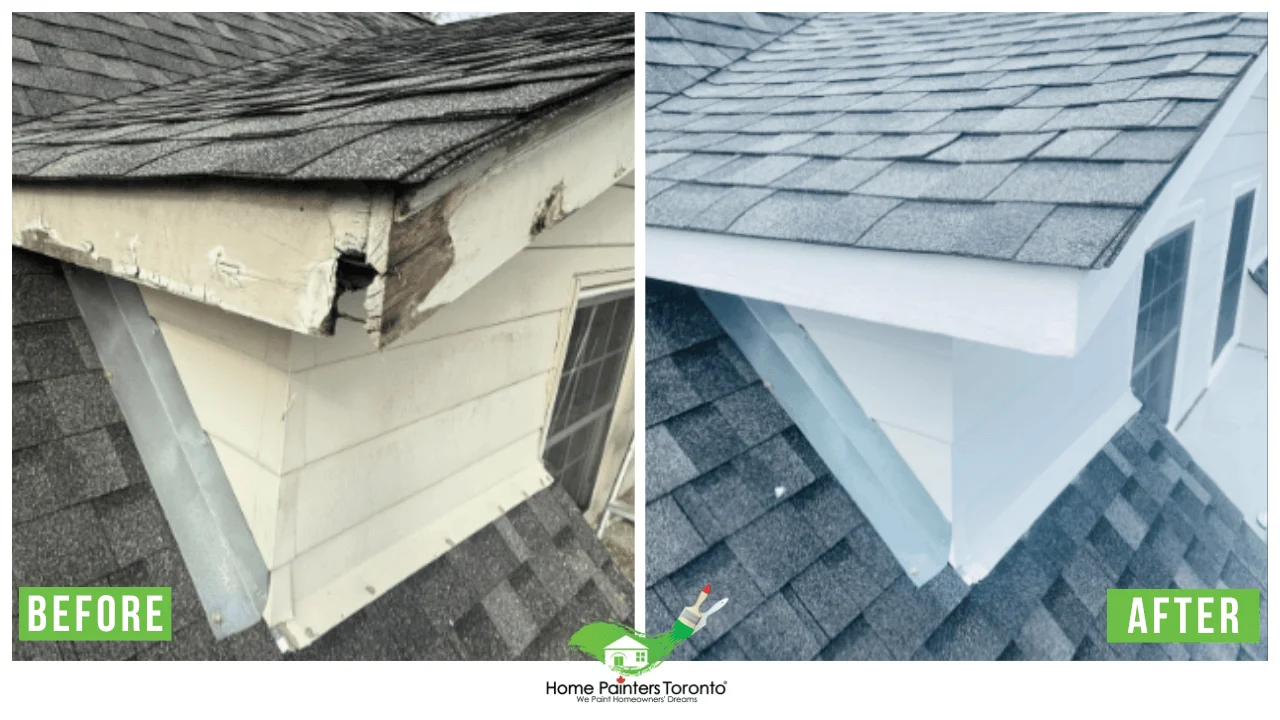
Roof-edge work touches fascia, drip edge, and the siding nearest the roofline
Roof First, Then Siding
Roof replacement goes first in almost every Toronto exterior project. Roof-edge work disturbs fascia, drip edge, and the top course of siding, and flashing at the roof-wall junction has to be set before the cladding closes over it.
When a roofing crew removes old shingles and installs new drip edge, they often pull back or trim the top row of siding to tuck step flashing and kick-out flashing underneath the cladding. If siding repair happens first, the roofer frequently cuts into a section that was just patched or repainted. That voids the fresh warranty work and forces a second repair. Setting the roof, fascia, and flashing first means the siding crew closes the wall over work that is already correct, instead of guessing at what the roofer will need to access later. Timing also interacts with the calendar. A siding repair that lands in the best time of year for siding repair in Toronto can still be delayed a few weeks to line up with a roofing project, and that short delay is usually worth the avoided rework.
Why the Order Affects Siding Repair Cost and Outcome
Sequencing siding repair after roofing keeps the job's cost lower, because the crew is not opening the same section of wall twice. Siding repair completed before roofing often needs a return visit once the roofer cuts into the top course. That return trip adds labour and material to a job that should have finished the first time. Homes with brick veneer, stucco, or vinyl siding near the roofline face the most exposure to this rework, since flashing sits directly behind the first course of cladding on all three materials. A homeowner comparing quotes should ask each contractor how they price a return visit, since that detail rarely appears on the first estimate but shows up quickly once the roofer starts cutting.
The Exceptions
Roofing does not always come first. Three situations move siding repair ahead of the roof: active water entry through a wall, storm damage that leaves part of the home open to weather, and structural sheathing repair that has to happen before either trade can proceed safely.
- Active water entry through a wall. A stain spreading indoors or a soaked interior wall cannot wait for the roofing schedule.
- Storm damage requiring an immediate weather-tight repair. A torn section of siding or exposed sheathing needs a temporary or full repair right away, regardless of the roof plan.
- Structural sheathing repair. Rotted or compromised sheathing has to be corrected before either trade closes the wall or roof deck over it.
Where Eavestroughs Fit
Eavestrough replacement fits between fascia repair and the final siding work in a properly sequenced exterior project.
Fascia has to be sound and correctly repaired before new eavestroughs go up, since the hangers fasten directly into the fascia board. Once the eavestroughs are set, the siding crew finishes the top course and any trim that meets the fascia line. Installing eavestroughs before fascia repair means pulling the new gutter system down again to fix rot underneath it. That extra step is avoidable on almost every job we see across the GTA. Homes that already show siding damage from a gutter leak usually need the fascia and eavestrough sequence corrected first, or the same leak pattern returns within a season or two, even after the visible siding damage is repaired. On a corner lot or a home with a complex roofline, the eavestrough crew also needs the fascia line finished consistently on every elevation, not just the section that failed first.
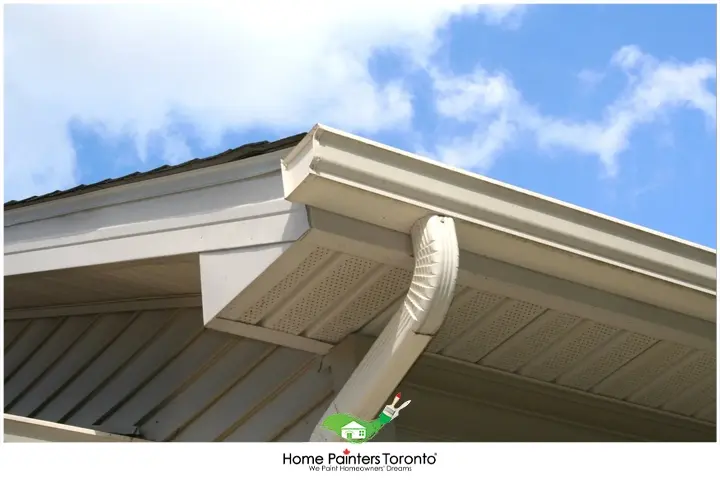
Fascia has to be sound and correctly repaired before new eavestroughs go up, since the hangers fasten directly into the fascia board
What Each Trade Disturbs on the Other's Work
Roofing, siding repair, eavestrough replacement, and window installation each disturb a piece of the other trades' finished work, and that overlap is exactly why the order matters.
| Trade | What It Disturbs | Why It Matters |
|---|---|---|
| Roofing | Fascia, drip edge, top course of siding | New flashing has to tuck under the siding, so the top row often needs to come off |
| Siding repair | Roof-wall flashing, house wrap laps near the roofline | A siding crew working before the roofer may leave flashing that has to be redone |
| Eavestrough replacement | Fascia board and the mounting line | Hangers need sound fascia, so eavestroughs installed too early can loosen once fascia is repaired |
| Window or door replacement | Cladding and trim around the opening | Cutting into siding changes the wall's drainage path, which affects how roof-wall flashing ties in |
Roof-Wall Flashing and Top-Course Siding
Flashing at a roof-wall junction is the detail most often missed when trades are booked out of order. Step flashing along a sloped roof edge and kick-out flashing where a roofline meets a wall both need to sit under the first course of siding, not behind or beside it. A siding crew that closes this course before the roofer sets flashing leaves a gap that channels water straight into the wall assembly. Caulking alone cannot substitute for formed flashing at a roof-wall intersection, and a project that skips this step often ends up as a siding flashing repair call within a year or two once the gap starts letting water through.
The Access Argument: Why Sequencing Saves Money
Booking roofing and siding repair together, in the correct order, saves money because both trades can share scaffolding, ladders, and staging instead of setting up access twice.
Access and height are already a separate line item on most exterior quotes, since a two-storey home needs ladders, scaffolding, or a lift no matter which trade is doing the work. When a roofing crew and a siding crew coordinate their schedules, the second trade can often use staging that is already in place, and that coordination cuts setup time. Homeowners who book the two projects months apart usually pay for access twice, once for each crew, even though the equipment does the same job both times.
Planning guidance from Canada Mortgage and Housing Corporation on maintaining a home's exterior and protecting the investment over time supports the same principle: grouping related exterior work reduces both cost and the risk of damage to work that was just finished. On a typical GTA two-storey home, staging alone can represent a meaningful share of a small or medium exterior invoice, which is why we ask about roofing plans before quoting a siding repair. This is also where homeowners weighing a larger scope should look at siding replacement cost in the GTA, since a full re-clad shares the same access logic as a repair, only across more of the wall.
- At a recent post-storm repair in Scarborough's Cliffside neighbourhood, we held off on finishing the siding until the roofer corrected step flashing at a dormer intersection.
- Once the flashing was set, we applied Benjamin Moore Aura Exterior in Low Lustre to the repaired vinyl and trim sections at roughly 4 mils wet film thickness, matching the surrounding wall.
Finishing the siding first would have meant repainting the same section after the roofer's flashing work disturbed it. That project, and others like it, are documented in our completed exterior projects.

Finishing the siding first would have meant repainting the same section after the roofer's flashing work disturbed it
After a Bad Winter: Ice Dams and Combined Damage
Ice dams after a hard GTA winter often damage the roof edge, soffit, fascia, and top-course siding at the same time, which is why so many sequencing questions come in during early spring.
Meltwater backs up behind an ice dam and works under the shingles, then follows the roof deck down to the fascia and the top row of siding. By the time a homeowner notices staining indoors or peeling paint outside, the damage usually spans more than one trade's scope, and it often matches what we describe in what causes soffit rot and water damage on Toronto homes.
Data from the Climate Atlas of Canada on the annual frequency of freeze-thaw cycles across Ontario helps explain why: the GTA's winters swing repeatedly across the freezing point, and that repeated swing is exactly the condition that drives ice dam formation and freeze-thaw stress on exterior materials. A single hard winter can produce dozens of these freeze-thaw cycles, and each one pushes a little more meltwater under the shingles and behind the top course of siding.
How Ice Dam Damage Spreads Across Roofline, Soffit, and Siding
Ice dam damage typically starts at the shingles nearest the eave, then moves to the fascia and soffit underneath, and finally reaches the top course of siding where meltwater runs down the wall. A repair that only addresses the visible shingle damage often misses softened fascia or a soaked soffit and fascia panel behind it. Opening the roofline for a proper repair is the point where sequencing with siding work matters most, since the same access and the same opened section serve both repairs. Skipping the soffit and fascia check to save a site visit is a common shortcut, and it is the single most common reason a homeowner calls back the following winter with the same stain in the same spot.
How to Sequence a Multi-Trade Exterior Project
A multi-trade exterior project sequences correctly when the assessment happens first, roofing and flashing come next, eavestroughs follow fascia repair, and siding closes out the job.
- Book a full exterior assessment before any trade starts, so the roofer, the eavestrough installer, and the siding crew are all working from the same scope.
- Schedule roofing first, including drip edge and any flashing repair at roof-wall junctions.
- Coordinate eavestrough replacement once fascia repair is confirmed sound.
- Complete siding repair and top-course finishing after the roofer and eavestrough crew have finished their work.
- Finish with caulking, sealing, and colour-matched touch-ups along every trade boundary.
- Walk through the finished work with the homeowner and document the warranty terms for each trade involved.
Home Painters Toronto is fully insured and WSIB compliant on every multi-trade exterior project we coordinate, and siding repairs carry warranty-backed results regardless of which trade books first. Homeowners weighing a first-time hire can read more about why Toronto homeowners choose Home Painters Toronto before booking an assessment. That assessment is also where we flag any roofing or eavestrough sequencing the siding work depends on, before a single panel comes off the wall.
Exterior Project Sequencing FAQ
Siding and roofing can overlap on the same job, but the roofer's edge work should finish before the siding crew closes the top course. Running both crews on site in the same week is common on larger GTA projects, as long as the roofer completes drip edge and flashing before the siding trade tucks the top row underneath it. Scheduling them back to back, roof first, is usually more practical than running them in parallel on a smaller home, since two crews working the same wall section at once can slow both trades down. On larger projects with more than one elevation to cover, the roofer can often finish one side of the house while the siding crew starts prep work on a side the roofer has already completed.
A new roof can disturb the top course of siding near the roofline, since drip edge and step flashing installation often require pulling back or trimming that section. A careful roofing crew reinstalls or protects that course during the work. Homeowners who plan a siding repair around the same time should expect the roofer to touch that top row and budget for a small amount of siding finishing once the roof is done, instead of assuming the siding will come through untouched.
Fascia repair should happen before new eavestroughs go up, because the hangers that hold the gutter system fasten directly into the fascia board. Installing eavestroughs over rotted or soft fascia means the hangers eventually loosen, and the eavestrough has to come down again for the fascia to be fixed properly. Confirming fascia condition before the eavestrough installer arrives avoids that repeat visit and the added labour that comes with it.
Booking a roof and a siding repair together usually saves money on access and staging, since both trades can share the same scaffolding or ladder setup. The savings come from setup time, not from a discount on materials or labour rates. Homeowners planning both projects within the same season should ask each contractor whether they can coordinate scheduling around shared access, since that question alone often surfaces savings neither quote mentioned upfront. It is worth asking both contractors for a written note on how they plan to handle the shared boundary between their two scopes of work.
Urgent siding damage should be addressed right away, even if the roof is not scheduled yet, when the damage is letting water into the wall. A temporary or full repair now, followed by a coordinated roofing project later, is the right call when waiting risks further water damage. The siding contractor should flag any roofline connection that the eventual roofing work will need to revisit, so the two projects still line up correctly when the roof is finally booked.

Get a Free Siding Repair Estimate for Your Exterior Project
Home Painters Toronto coordinates the sequence on every multi-trade exterior project, so nothing gets repaired twice. Whether your project starts with the roof, the eavestroughs, or our siding repair services in Toronto, we assess the full scope before any trade begins, and every repair comes with fast free quotes and warranty-backed work.
Contact Home Painters Toronto for your free, itemized quote.
Get a Free Estimate