

Oil Based Paint Or Latex Paint – Which to Use for Your Home?
The choice between oil based paint and latex paint for a Toronto home depends entirely on the surface being painted, not on a general preference for one product type over the other, and getting that match wrong is one of the most common causes of early paint failure in the GTA. Home Painters Toronto, the HomeStars Best of Award 2026 winner with over 1,200 positive reviews and 37 years serving the GTA, has specified and applied both product types across thousands of residential projects in North York, Etobicoke, Leaside, and Riverdale. The question of oil based paint or latex paint has been around in the painting world for as long as the chicken and the egg conundrum. Okay, it is a question that is complicated for both homeowners and painters alike. Not all paint types are created equal. Along with a variety of brands to choose from, you have to choose between oil based or latex paint. Each paint type has its perks and benefits, depending on the job that you're doing.
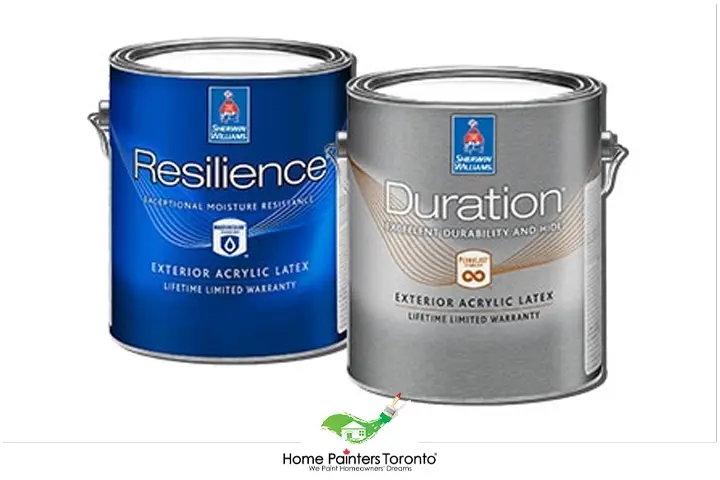
Latex acrylic for walls and ceilings, water based alkyd for trim and doors: the correct product match for each surface, not a general preference for one paint type, is what determines a lasting Toronto paint job.
The Difference Between Oil and Latex Paint?
Latex paint, also known as acrylic paint, is a water based paint with glycols or glycol ethers as a solvent. The term latex refers to the resin in the paint and does not contain any latex rubber. For a detailed guide on all latex paint types and their applications, see our overview of latex based paints.
Oil based paint has natural oils like linseed oil or a synthetic alkyd. Oil based paints consist of pigment, resin and a solvent. These types of paints are extremely durable and are great for high traffic areas or the exterior of your home. For a deeper look at why oil based paint is still specified on certain projects, see our guide on why use oil based paint.
Selection begins with choosing between oil based vs latex paints when it comes to picking paint base. For hundreds of years, people have been using oil based paints for their impermeability and toughness.
Where Oil Based Paint Still Wins in a Toronto Home in 2026
Oil based paint retains two genuine advantages over latex in 2026: adhesion to existing oil based surfaces without primer, and a hard, self levelling enamel finish on trim and doors that standard latex cannot match. A door frame or baseboard painted with traditional oil based enamel in the 1970s produces a finish that resists fingerprints, scuffs, and routine cleaning contact for decades. No standard latex product replicates that hardness.
The practical problem for Toronto homeowners in 2026 is availability. Ontario's provincial VOC regulations have led most major paint manufacturers to discontinue traditional alkyd oil based paints for residential retail sale. What remains is largely industrial grade rust preventative enamel, which is technically the same chemistry but marketed for industrial and commercial use.
Oil Based Paint vs Latex Paint: The Water Based Alkyd Option That Most Toronto Homeowners Have Never Heard Of
Water based alkyd paint, also called waterborne alkyd, is the professional solution that resolves the oil vs latex debate for trim, doors, and cabinets in Toronto homes. Products like Benjamin Moore Advance and Sherwin Williams Emerald Urethane Trim Enamel use water as the carrier but cure to the same hard, self levelling enamel finish that traditional oil based paint produces. They clean up with soap and water, dry to the touch in 2 to 4 hours, meet Ontario's VOC regulations, and produce no strong solvent odour during application.
Home Painters Toronto specifies Benjamin Moore Advance as the standard product for interior trim, doors, and cabinets throughout the GTA. For projects involving kitchen cabinets specifically, see our kitchen cabinet painting service, where water based alkyd produces the factory smooth finish that kitchen environments demand. For the full picture of when and why oil based paint is appropriate, see our guide on why use oil based paint.
Pros and Cons of Oil Based Paint
Achieving a high gloss, durable finish is straightforward with oil based paint. It is an ideal paint type for surfaces where a hard, self levelling finish is the priority, including interior trim, doors, and cabinets.
Unlike water, oil does not dry by evaporation. It dries through a process of oxidation that converts the oil into a polymer chain. This means that the layer formed will be resilient and long lasting, and will withstand the degenerative effects of water and air longer than water or latex based paints.
However, there are some major disadvantages of choosing oil based paints.
Disadvantages of Oil Based Paint
- Paints that are oil based also have a strong odour that lingers long after the paint has been applied.
- Oil paint is more susceptible to chipping and cracking on surfaces exposed to seasonal movement.
- There are more potentially hazardous chemicals in oil paint that require careful handling during application.
- Paints that are oil based do contain volatile organic compounds (VOCs). VOCs are found in this solvent and are released as the paint is drying or being cured. According to Health Canada's guidance on VOCs in indoor environments, VOC concentrations from oil based paints in poorly ventilated spaces can negatively affect indoor air quality. Indoor air pollution has now been identified as being significantly more concentrated than outdoor pollution in sealed spaces.
- Traditional oil based paint formulations are increasingly restricted by Ontario VOC regulations and difficult to source at residential retail.
Disadvantages of Latex Paints
- Latex paint can cause the wood grain to raise on bare wood surfaces, meaning the surface must be sanded between the first and second coats.
- Latex paint is more susceptible to rust on metal surfaces without a rust inhibiting primer.
- Latex paint cannot be stored in areas that will freeze, as freezing permanently damages the emulsion.
- Latex paint is harder to adhere to glossy surfaces without sanding or a bonding primer.
- Latex paint requires longer wait periods before washing and cleaning a freshly painted surface, typically 30 days for full cure.
Interior and Exterior Paints in Canada – Low VOC Paint
For high traffic and exterior surfaces, oil based paint has historically been a strong choice. With the advancement of quality latex paints, there are now excellent latex options that can be used in the same applications with similar durability. Government regulations regarding VOCs are becoming stricter, and many traditional oil based paint formulations have been discontinued in Ontario as a result. When paint is labelled as low VOC, it should contain fewer than 50 grams per litre of volatile compounds to meet the Green Seal standard. For a full breakdown of the differences between low VOC and zero VOC products, see our guide on low VOC vs zero VOC paint.
Low VOC paint brands
The most reliable low and zero VOC interior paint options available in Canada include Benjamin Moore Aura (near zero VOC, premium colour consistency throughout the can), Benjamin Moore Ben (zero VOC base, budget conscious option), and Sherwin Williams Harmony Zero VOC Interior Acrylic Latex. These products are widely available at Benjamin Moore and Sherwin Williams retailers throughout the GTA and are the standard specification for Home Painters Toronto on projects where indoor air quality is a priority, including nurseries, children's bedrooms, and projects scheduled during winter when ventilation is limited.
Advantages of using Latex Paints
- The drying time is significantly shorter than that of oil based paint, which requires up to 48 hours to dry between coats.
- Latex paint has minimal odour and releases significantly fewer VOCs during the drying process.
- Latex paint does not yellow over time, which can sometimes happen with oil based paints left in low light interior areas.
- Latex paint cleans up easily with soap and water. Mineral spirits or varsol are required to clean oil based paint from brushes and rollers.
- Premium latex paint formulations are widely available throughout the GTA at Benjamin Moore and Sherwin Williams retailers.
Because fewer or no VOCs are released, latex paint is significantly less harmful to building occupants during and after application. It also requires less hazardous handling than oil based paint and solvent, both of which are flammable and classified as household hazardous waste when disposed of.

Latex acrylic paint flexes with the substrate through each of Toronto's 100 plus annual freeze and thaw cycles, which is why it has become the clear professional preference for exterior surfaces.
Where Latex Paint Is the Correct Choice for Toronto Homes
Why Latex Paint Outperforms Oil Based Paint on Toronto Exterior Surfaces
Toronto's 100 plus freeze and thaw cycles per year make paint flexibility the primary exterior performance requirement. Latex acrylic paint flexes with the substrate through each cycle. Traditional oil based alkyd paint forms a harder, more brittle film that cracks as the substrate moves, producing paint film failure within 3 to 5 years on Toronto exteriors. Modern premium exterior latex formulations from Benjamin Moore and Sherwin Williams have closed the durability gap with oil based products significantly, and the flexibility advantage of latex now makes it the clear professional preference for all Toronto exterior surfaces. For our full exterior painting service, see our exterior residential painting service.
Oil based Paint vs Water based Paint: Which to Use for Your Home?
The correct choice between oil based and latex paint depends on the specific project surface and performance requirements:
- For walls and ceilings: Latex paint is the correct choice for walls and ceilings in residential settings due to its fast drying nature, low VOC content, and easy clean up.
- For trim and furniture: Water based alkyd paint is now the professional standard for trim, furniture, and doors where toughness and a smooth, hard finish are required. Traditional oil based paint where still available remains an option for existing oil based surfaces.
- For kitchens and bathrooms: Latex paint, especially semi gloss or gloss, is the correct choice in kitchens and bathrooms as it handles high moisture environments and cleans easily.
Oil Based vs Latex Paint: The Full Side-by-Side Comparison for Toronto Conditions
How to Tell If Your Existing Trim or Doors Have Oil Based Paint
Testing existing paint type before repainting is a critical professional step that most homeowners skip. Applying latex directly over intact oil based paint without primer produces adhesion failure within one to two seasons as the different binder chemistries resist bonding. The test is simple: dampen a cotton ball or cloth with denatured alcohol and rub it firmly over a small area of the surface. If paint transfers to the cotton, the surface is latex. If no paint transfers, the surface is oil based and requires an oil based or shellac based bonding primer before any latex or water based alkyd topcoat is applied.
| Feature | Oil Based Paint | Latex (Water Based) Paint | Water Based Alkyd |
|---|---|---|---|
| Dry time per coat | 24 to 48 hours | 2 to 4 hours | 2 to 4 hours |
| Full cure time | 7 to 30 days | 14 to 30 days | 14 to 21 days |
| Finish hardness | Very hard, excellent enamel | Good with 100% acrylic | Matches oil based on trim and doors |
| Flexibility in freeze and thaw cycles | Low; can crack on exterior | High; best for Toronto exterior | Good; suitable for interior trim |
| Yellowing over time | Yes, especially in low light rooms | No | No |
| VOC content | High; restricted in Ontario | Low to zero | Low; meets Ontario regulations |
| Cleanup | Mineral spirits or varsol | Soap and water | Soap and water |
| Odour during application | Strong; ventilation essential | Low to minimal | Low to minimal |
| Available in Ontario (residential) | Severely limited; many formulas discontinued | Widely available | Widely available |
| Best for | Existing oil based surfaces where oil primer used; industrial applications | Walls, ceilings, exterior siding, masonry | Interior trim, doors, cabinets, high wear surfaces |
Factors to Consider: Matching the Paint to the Surface
Assessing the Surface and Material
Before specifying any paint, examining the surface type is essential. Different materials require different paint types. Oil based paints are effective for wood trim and doors as they penetrate the wood grain and provide a durable, hard finish. Latex paint is more suitable for drywall and masonry as it allows the material to breathe and prevents moisture caused damage. Evaluating the surface's current condition also matters. If walls have imperfections, oil based paints, being glossier, tend to highlight those flaws under raking light. Latex paint in flat or eggshell finish masks these imperfections more effectively.
Evaluating Room Function and Environmental Factors
The room's function and environmental conditions determine the correct product specification. Areas with high traffic benefit from water based alkyd or oil based paint due to hardness and scuff resistance. Rooms such as bathrooms and kitchens that endure high humidity levels are better served by latex paint in a semi gloss finish, which is more resistant to moisture and easier to clean.
Managing Time Constraints and Budget
Latex paint dries considerably faster than oil paint, which is beneficial on projects where space needs to be returned to use quickly. Water based alkyd products combine the fast drying of latex with the finish quality of oil, and are now the professional standard for all trim and door painting in Toronto. As for budget, latex paint tends to be more budget friendly per litre than oil based paint, but the correct product for the surface always matters more than the price differential. For a full guide on what professional painting costs in Toronto, see our interior and exterior painting cost guide.
Application Techniques for Different Surfaces
Priming and Prepping for Better Results
Before applying any paint type, preparing the surfaces correctly ensures a proper finish. Good preparation involves cleaning the surface thoroughly to remove dust, dirt, and any loose or chipping paint. A good quality primer on bare surfaces or surfaces with stains promotes paint adhesion and ensures uniform coverage. For oil based paints specifically, sanding the surface before applying primer improves adhesion. For latex paints, ensuring the surface is dry and free of excessive moisture before application avoids paint failure.
Selecting Brushes and Rollers
Choosing the right brushes and rollers for the paint type achieves the best results. For oil based paints, natural bristle brushes help spread the paint more evenly, providing a smoother finish. Synthetic bristle brushes like nylon or polyester work well with latex paints. They hold their shape and do not absorb water, ensuring proper distribution. For roller selection, woven or knitted covers suit latex paint, while a lambswool or mohair roller suits oil based paint. The nap length of the roller also matters; a longer nap for textured surfaces and a shorter nap for smoother surfaces produces the most even result.
Achieving a Consistent and Even Finish
To achieve a consistent and even finish, professional painters follow a systematic application sequence:
Ontario's VOC Regulations and What They Mean for Oil Based Paint Availability in Toronto in 2026
Ontario has progressively tightened VOC limits for architectural coatings since the early 2000s, aligning with the Canadian Environmental Protection Act and product stewardship frameworks. Traditional alkyd oil based paints for residential interior use exceed the VOC limits now in force in Ontario, which is why most major manufacturers have discontinued these formulations for residential retail sale. As a result, a Toronto homeowner looking for oil based paint at a paint retailer in 2026 will typically find only industrial grade rust preventative enamel or industrial maintenance coating products, not the traditional residential alkyd that was standard a generation ago. Used oil based paint and mineral spirits from cleaning oil based rollers and brushes are classified as household hazardous waste and must be disposed of through the City of Toronto Household Hazardous Waste program, which accepts these materials at designated depot locations at no cost.
The practical guidance for a Toronto homeowner in 2026 is straightforward: specify water based alkyd for all interior trim, doors, and cabinets where a hard enamel finish is required, and specify 100% acrylic latex for all walls, ceilings, and exterior surfaces. Traditional oil based paint is reserved for recoating existing oil based surfaces where a bonding primer is impractical, and for specific industrial or commercial applications.
Real Project: Converting from Oil Based to Water Based Alkyd on Trim and Doors in East Toronto
1930s East Toronto Semi: Failed Latex Repaint, Denatured Alcohol Testing, and Benjamin Moore Advance Throughout
A homeowner in a 1930s semidetached home in East Toronto contacted Home Painters Toronto to repaint all interior trim, door frames, and doors throughout the three storey home. The existing paint was original oil based enamel applied over multiple generations since the home was built. A previous attempt to repaint with standard latex had produced adhesion failure and peeling throughout within one year because no bonding primer had been applied.
Our team tested each surface with denatured alcohol to confirm oil based paint throughout. All surfaces received a light sanding to break the existing sheen, followed by a thorough wipe down. An oil based bonding primer was applied to all trim and door surfaces and left to cure for 24 hours. Two coats of Benjamin Moore Advance water based alkyd in Semi Gloss were then applied throughout. The water based alkyd produced a hard, smooth enamel finish that matched the look of the original oil based paint. The homeowner noted near zero odour during the application days compared to the strong solvent smell they remembered from the original oil based enamel applied decades earlier.
Home Painters Toronto is WSIB compliant, fully insured to $5 million in general liability, and all interior painting is backed by a lifetime warranty. For completed projects, visit our Toronto painting projects page. Same day free estimates are available seven days a week.
Cost of Professional Interior and Exterior Painting in Toronto in 2026
Home Painters Toronto is WSIB compliant, fully insured to $5 million in general liability. All prices are in CAD and exclude HST. For a full cost breakdown, see our interior and exterior painting cost guide.
| Scope | Estimated Cost (CAD) | Product Specification |
|---|---|---|
| Interior room (living or dining) | $400 – $900 | 100% acrylic latex (Benjamin Moore Regal Select or Aura); eggshell or satin finish |
| Interior room (bedroom) | $400 – $800 | Low or zero VOC latex; eggshell finish standard |
| Interior trim, doors, and baseboards (full home) | $700 – $1,200 | Benjamin Moore Advance water based alkyd; semi gloss finish |
| Kitchen cabinet painting | Quoted by scope | Water based alkyd or oil based enamel; factory smooth finish via spray application |
| Exterior small home | $2,000 – $4,000 | 100% acrylic exterior latex; elastomeric on masonry |
| Exterior medium home | $4,000 – $8,000 | Premium exterior latex; all prep, prime, and two topcoats included |
Frequently Asked Homeowner Questions
Oil based paint products where still available tend to cost more per litre than standard latex paint. Water based alkyd products like Benjamin Moore Advance sit at a similar price point to premium latex. Across a full project, the correct product for the surface matters more than the price differential per litre. Latex paint applied to trim that requires oil based adhesion requires repainting within a season, which costs more than using the correct product from the start.
Professional interior painting in Toronto runs $400 to $900 per room for living and dining rooms and $400 to $800 for bedrooms. Full interior repaints of a home run $3,000 to $7,000 depending on the number of rooms and surface conditions. Exterior painting runs $2,000 to $4,000 for a small home and $4,000 to $8,000 for a medium two storey home. For the full cost breakdown by scope, see our interior and exterior painting cost guide.
Beyond oil and water based categorization, paints can also be classified based on their function (primers, sealers, binders, finishing paints, etc.) and according to the type of pigment used. Now that the right product type has been identified, the next decision is colour.
More Interesting Blogs Related to "Oil Based Paint Or Latex Paint – Which to Use for Your Home?"
Ready to Choose the Right Paint for Your Project?
Home Painters Toronto is the HomeStars Best of Award 2026 winner with a lifetime warranty on interior painting and 37 years serving the GTA. Call 416-494-9095 or email [email protected] for a FREE same-day estimate.