

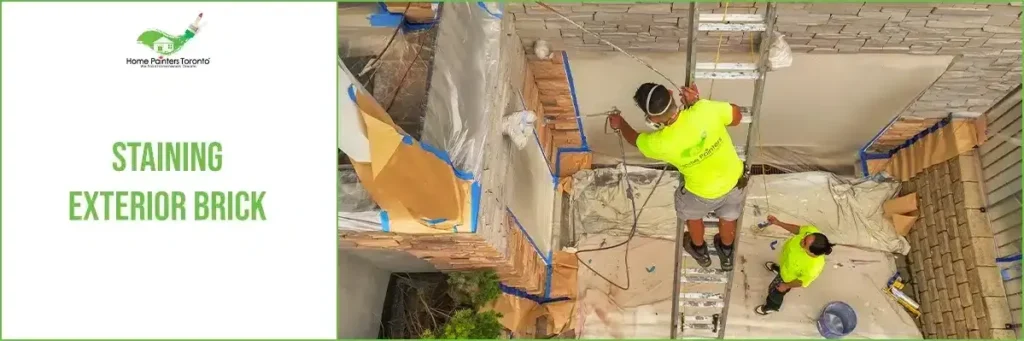
Exterior brick can last for decades, but over time many homeowners begin looking for ways to refresh its appearance.
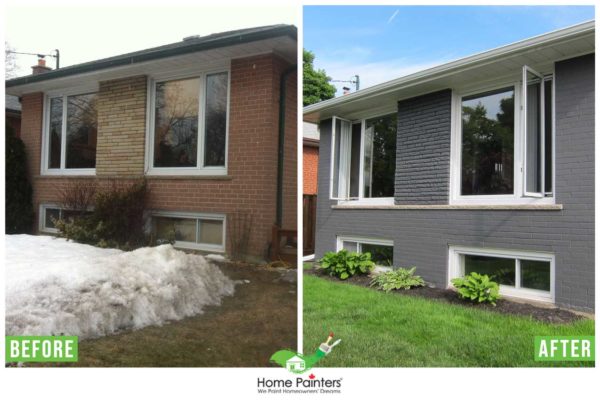
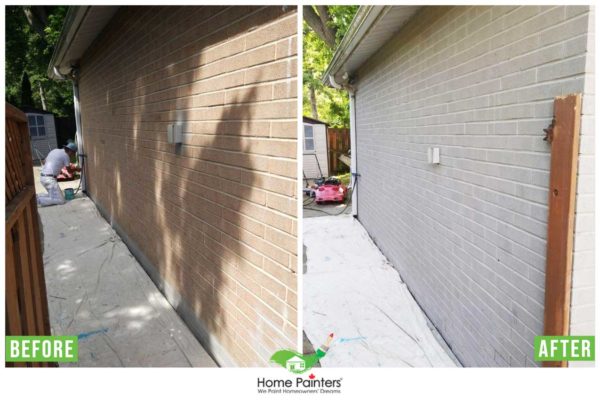
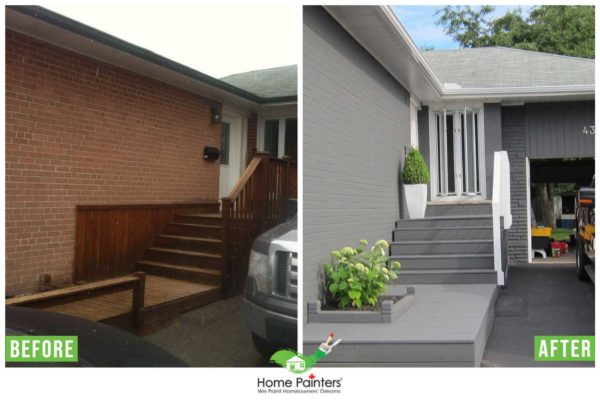
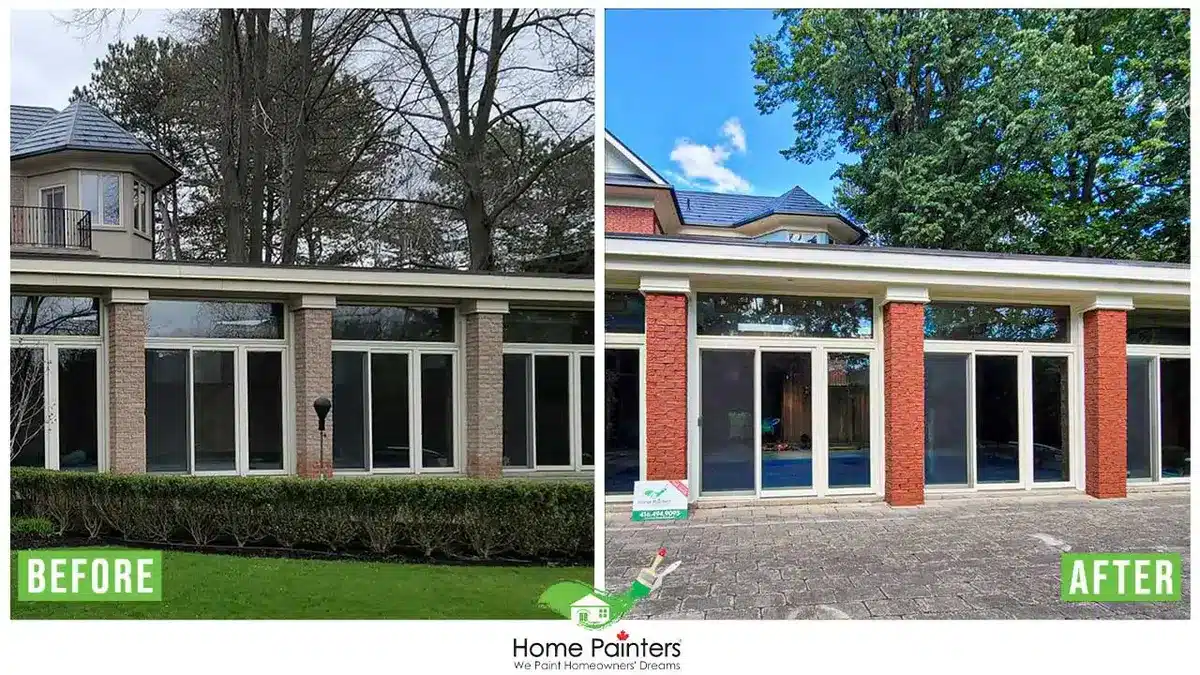
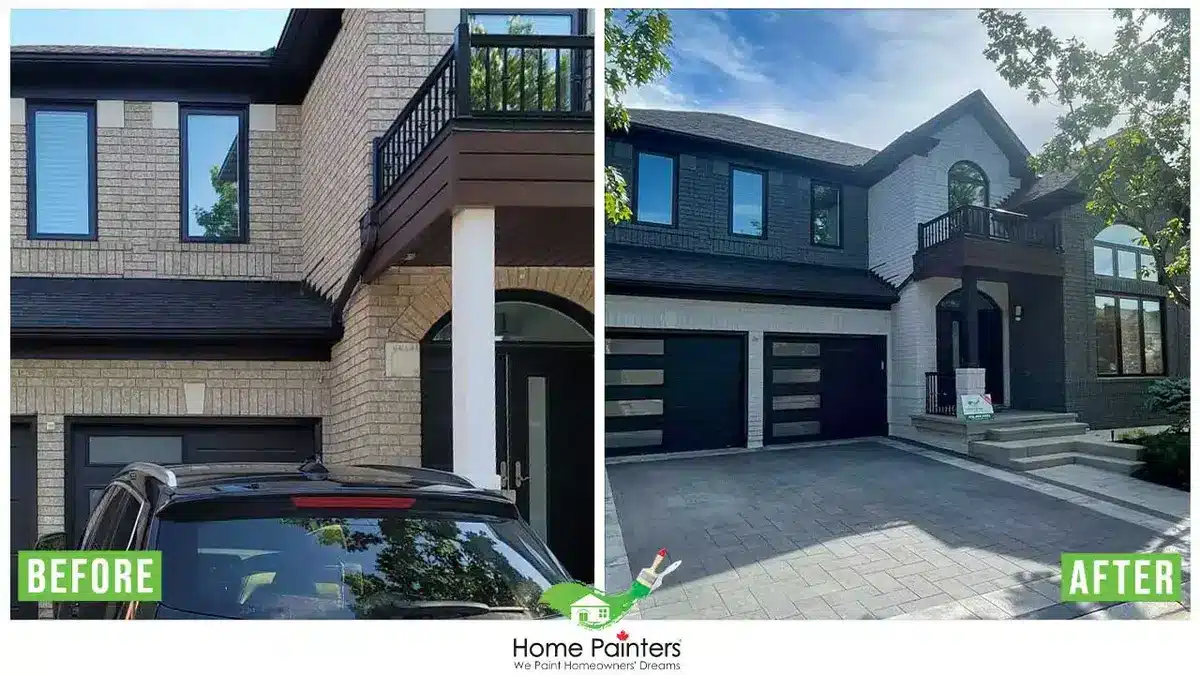
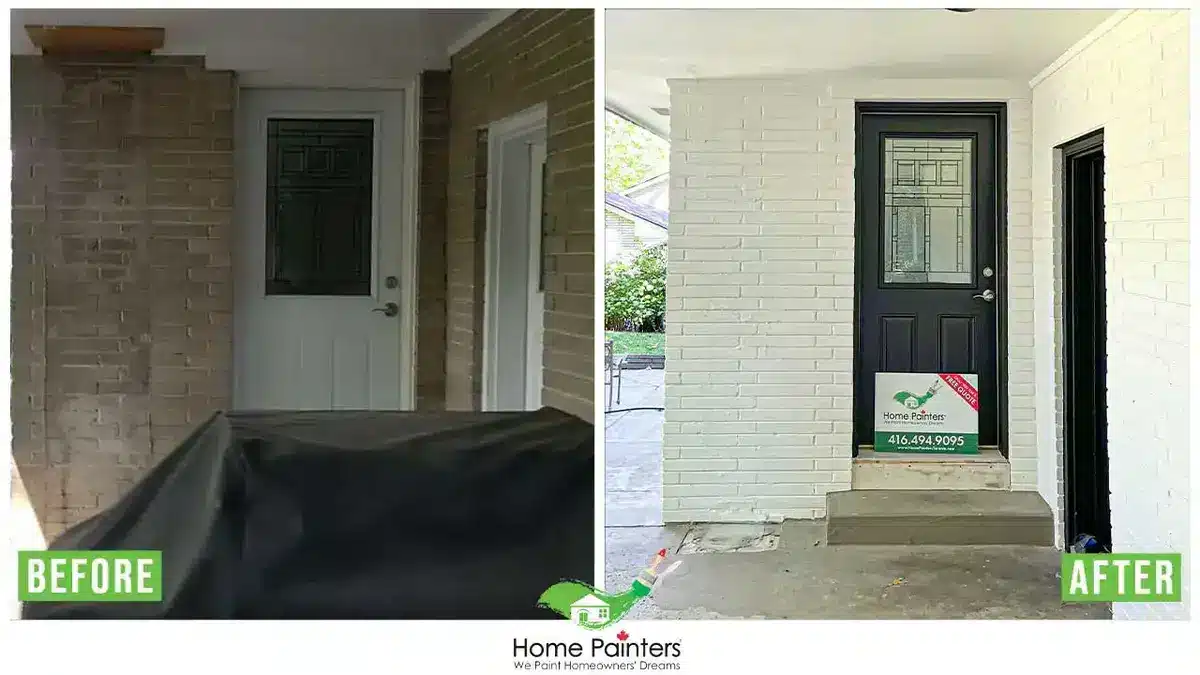
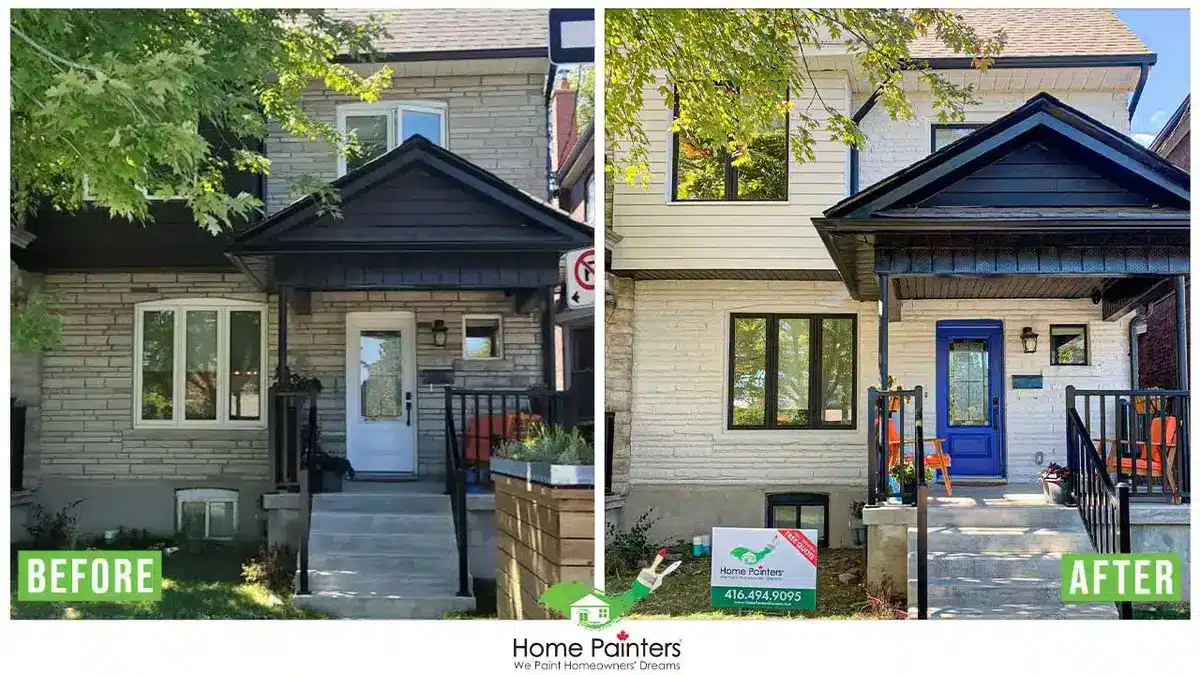
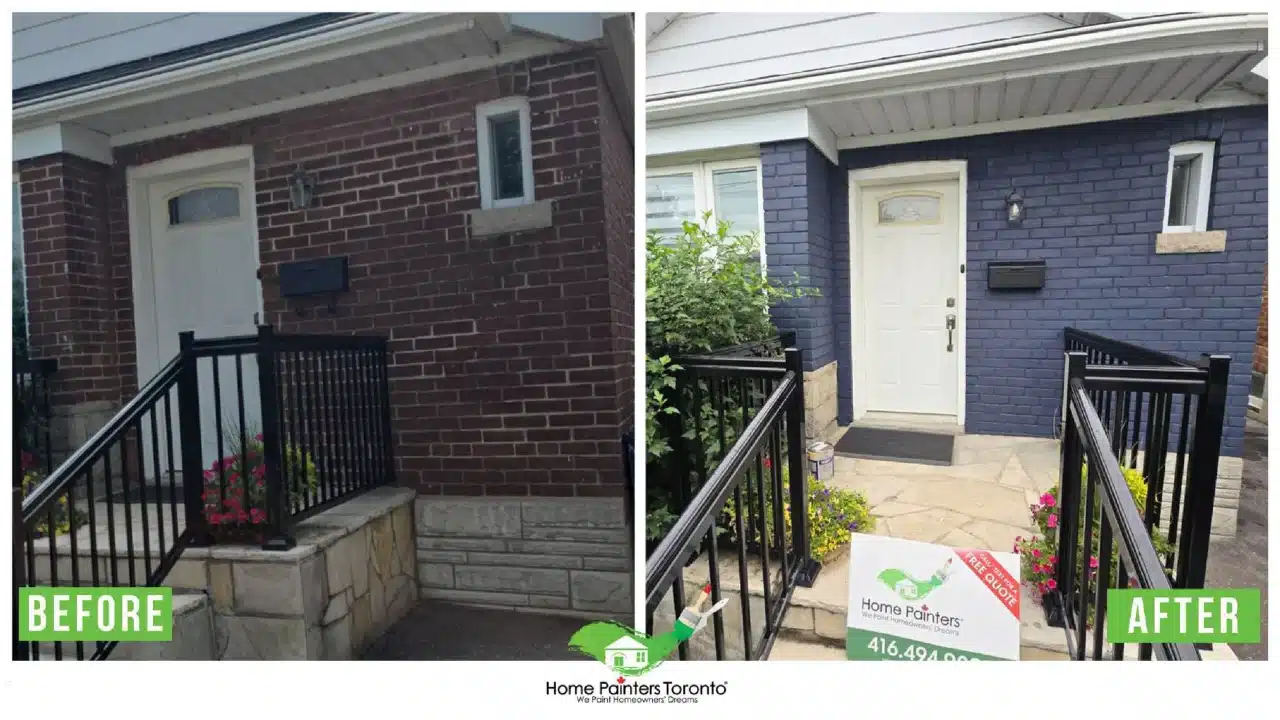
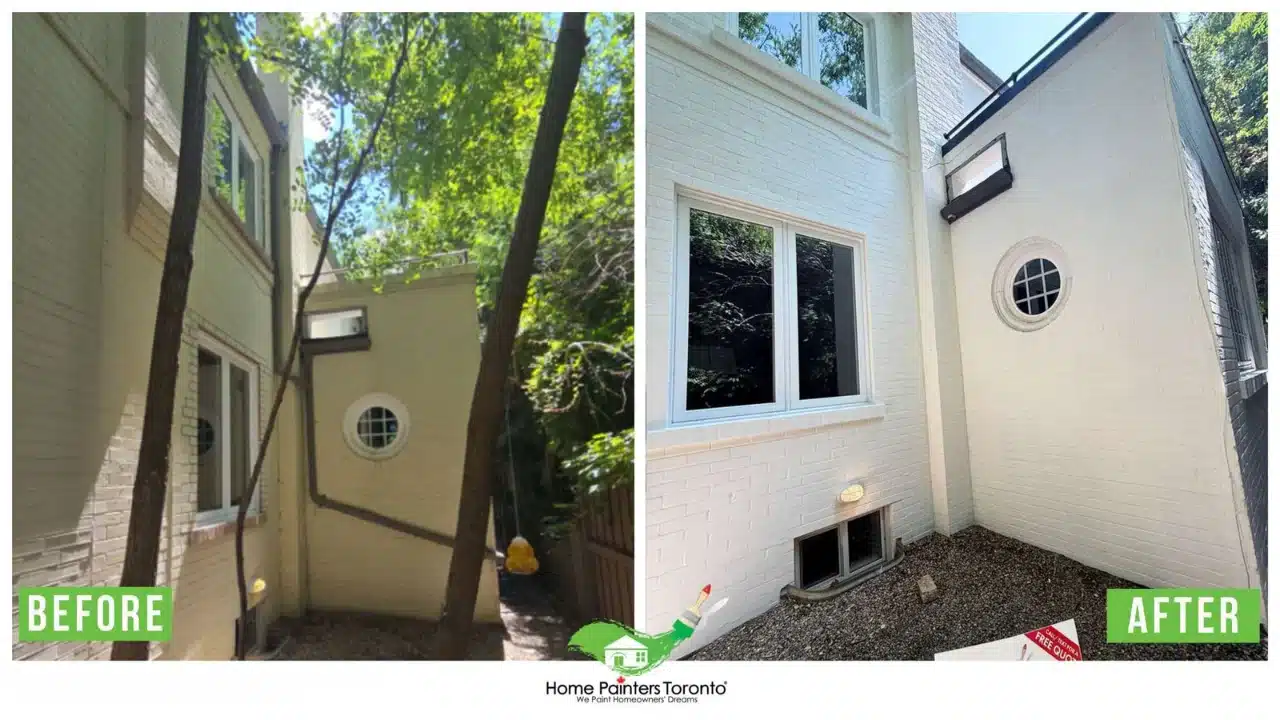
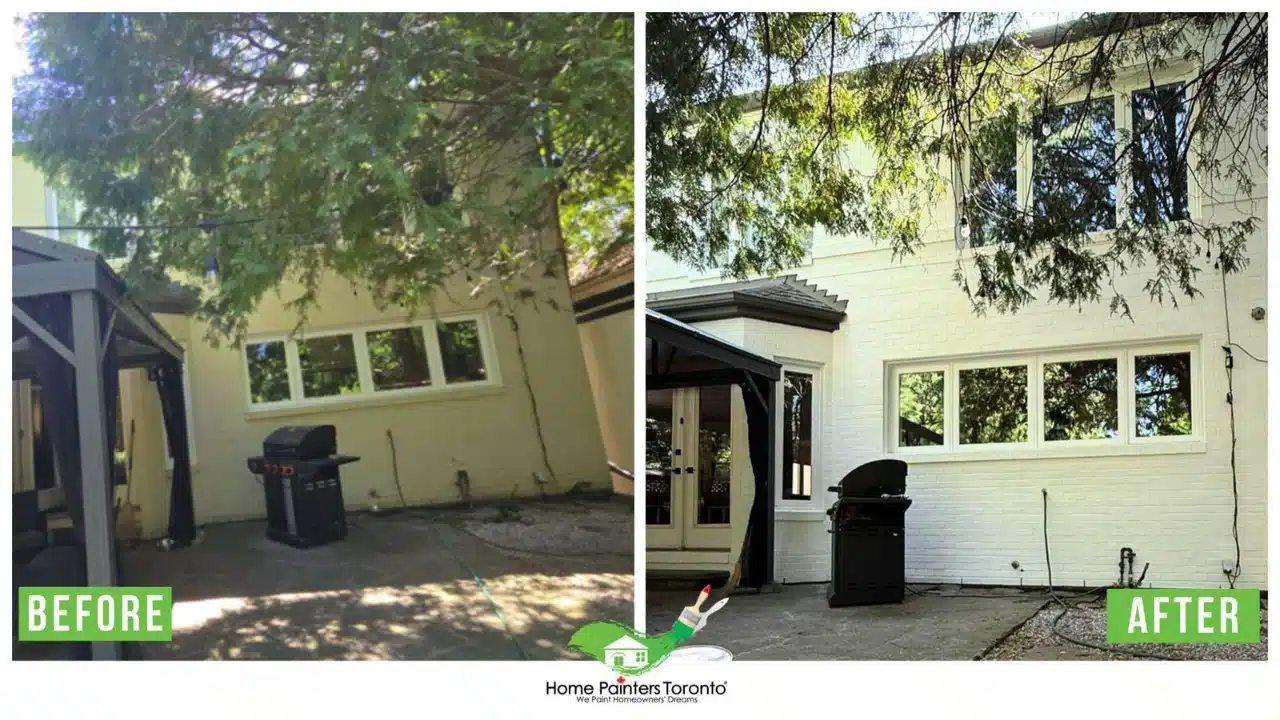
Staining exterior brick has become an increasingly popular option because it allows homeowners to change or enhance brick colour while preserving the natural texture and character of the masonry.
Unlike paint, brick stain penetrates the surface rather than sitting on top of it, which can provide a more natural-looking finish when done correctly.
If your brick exterior looks faded or outdated, our team provides professional exterior painting Toronto services and masonry surface solutions designed for long-lasting curb appeal.
What Does It Mean to Stain Exterior Brick?
Brick staining involves applying a penetrating colour treatment to masonry surfaces.
Instead of forming a thick exterior coating, stain absorbs into the brick itself.
This approach allows the brick to maintain much of its:
- natural texture
- variation
- breathable surface characteristics
Many homeowners prefer staining because it changes the appearance without fully covering the masonry.
Why Homeowners Choose Brick Staining
Homeowners often consider brick staining when they want to:
- modernize outdated brick colour
- reduce uneven colour variation
- improve curb appeal
- preserve the natural look of masonry
In Toronto neighborhoods with older brick homes, staining is sometimes preferred over painting because it maintains more of the original architectural character.
Brick Staining vs Brick Painting
Breathability
Brick is naturally porous and designed to release moisture.
Staining helps preserve this breathability because the product penetrates the masonry instead of creating a heavy surface layer.
This can be important in climates with frequent freeze-thaw cycles.
Appearance and Texture
One of the biggest differences between staining and painting is the final appearance.
Staining allows the natural brick texture to remain visible, while paint creates a more uniform coated appearance.
Many homeowners choose staining when they want a more subtle and natural finish.
Long-Term Maintenance
Because stain penetrates the surface, it is generally less prone to peeling compared to traditional paint coatings.
However, preparation and product selection still play a major role in long-term performance.
How Exterior Brick Is Properly Prepared for Staining
Cleaning the Brick Surface
Brick must be cleaned thoroughly before staining.
This helps remove:
- dirt and debris
- mildew
- surface contaminants
A clean surface allows the stain to absorb more evenly.
Repairing Masonry Damage
Before staining, brick and mortar should be inspected for:
- cracks
- deteriorated joints
- moisture-related damage
Surface issues should be repaired before applying stain.
If nearby exterior wood components are also deteriorating, services like exterior wood repair and carpentry may also be necessary as part of the overall exterior restoration process.
Testing the Brick Surface
Not all brick absorbs stain the same way.
Testing small areas first helps determine how the masonry reacts and whether the finish will appear consistent across the surface.
Common Mistakes When Staining Exterior Brick
Many brick staining problems come from improper preparation or unrealistic expectations.
Common mistakes include:
- staining dirty brick
- ignoring moisture issues
- skipping repairs
- choosing the wrong product type
Brick staining should also be completed under proper weather conditions to ensure even absorption and curing.
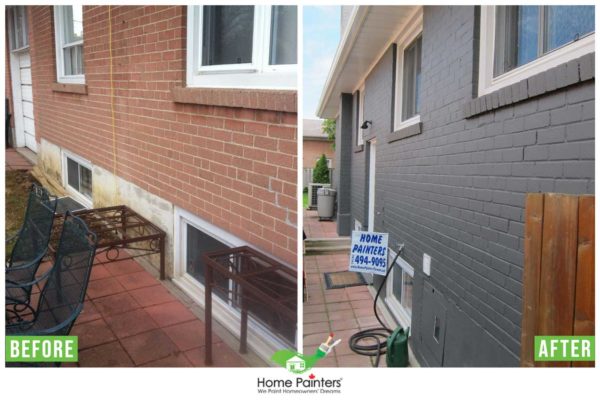
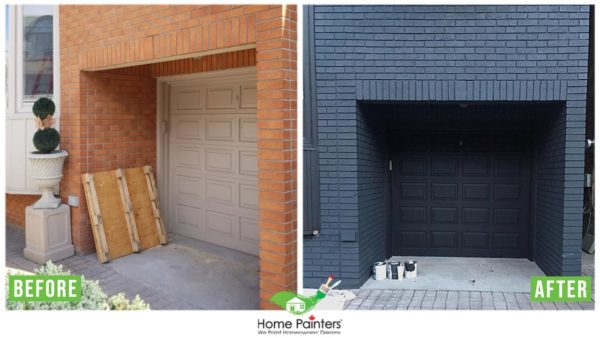
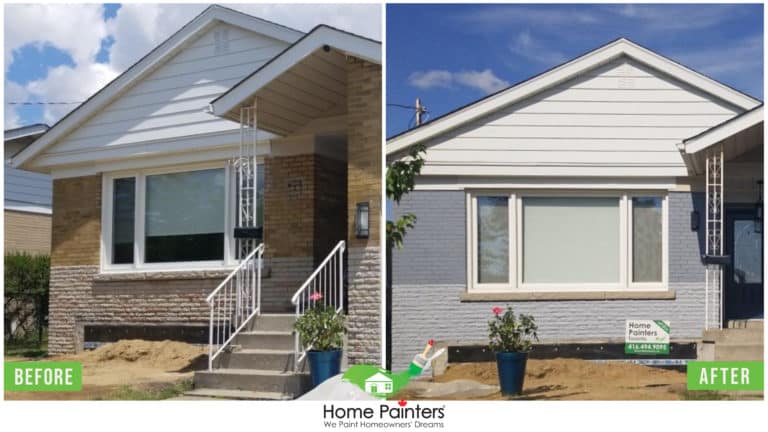
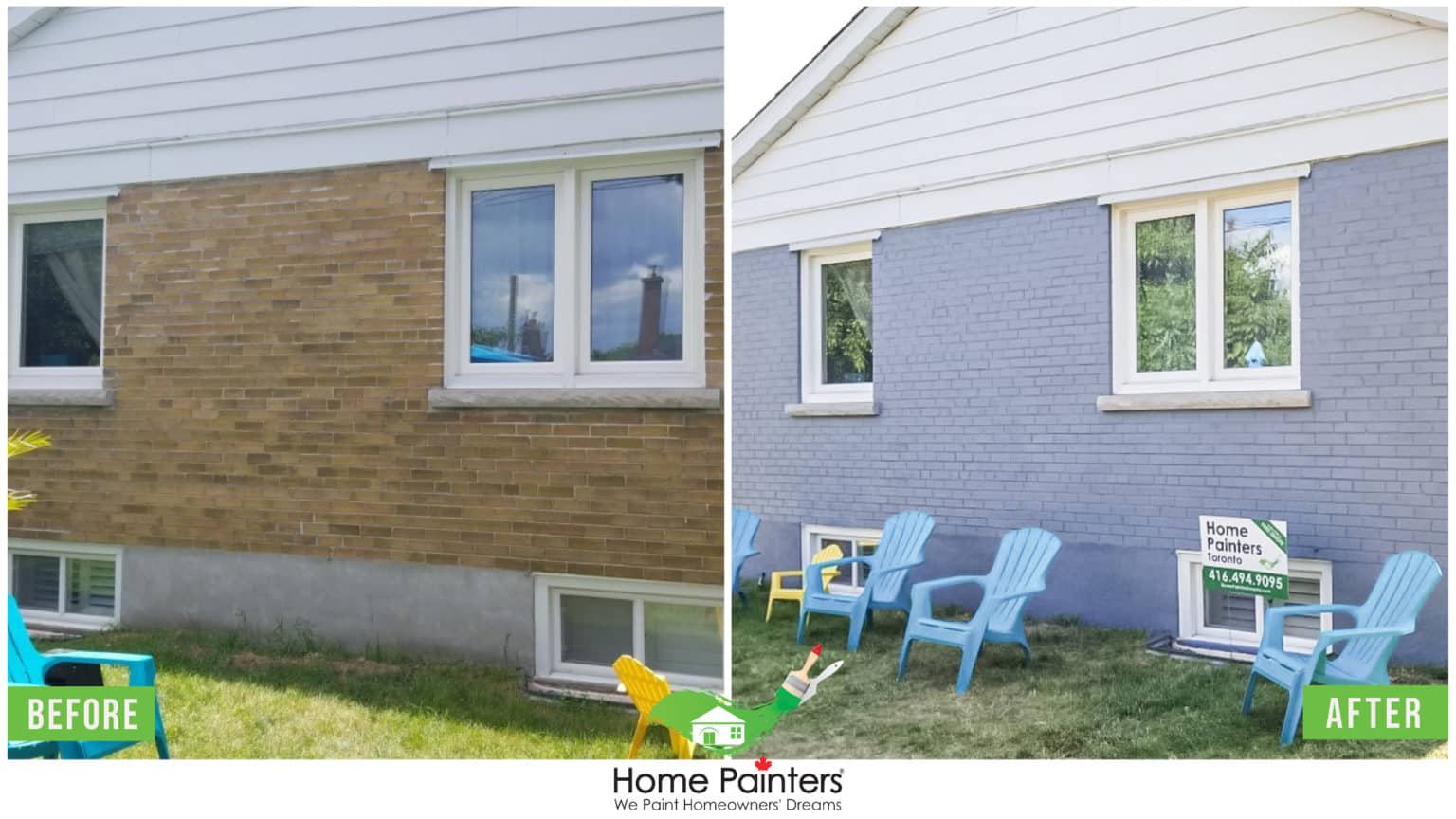
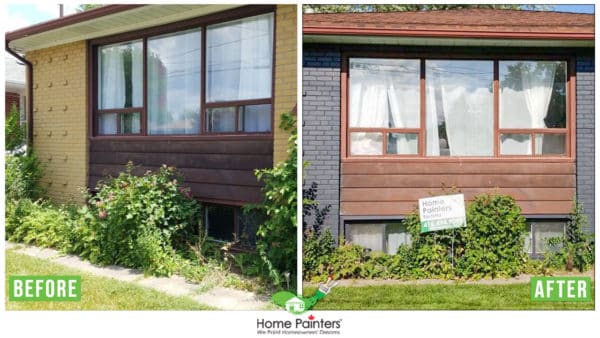
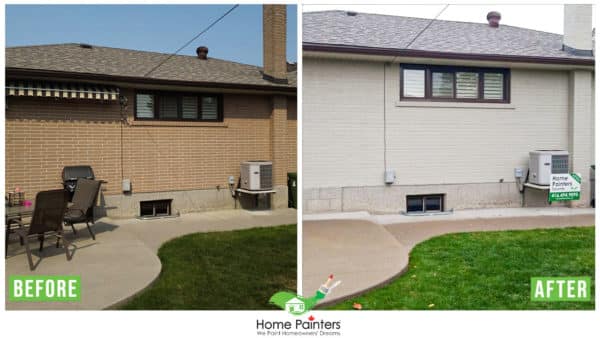
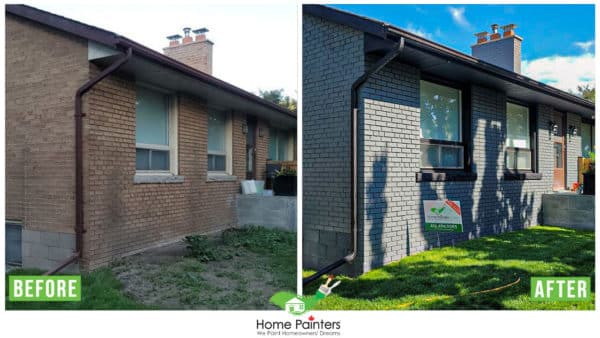
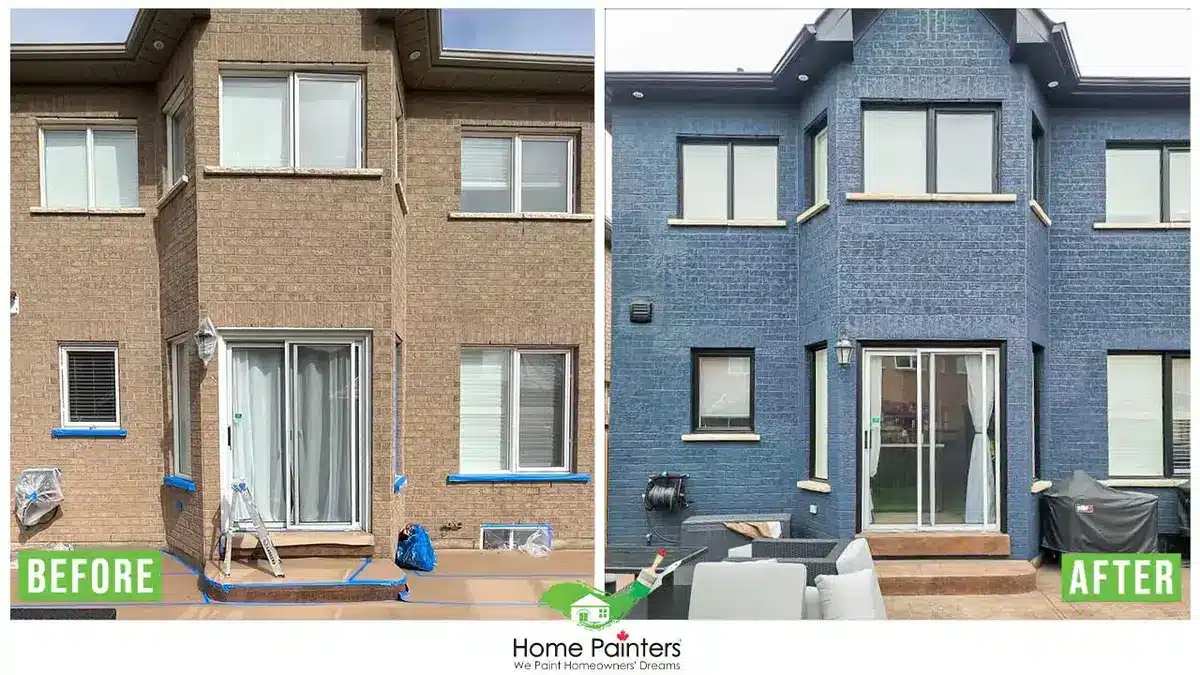
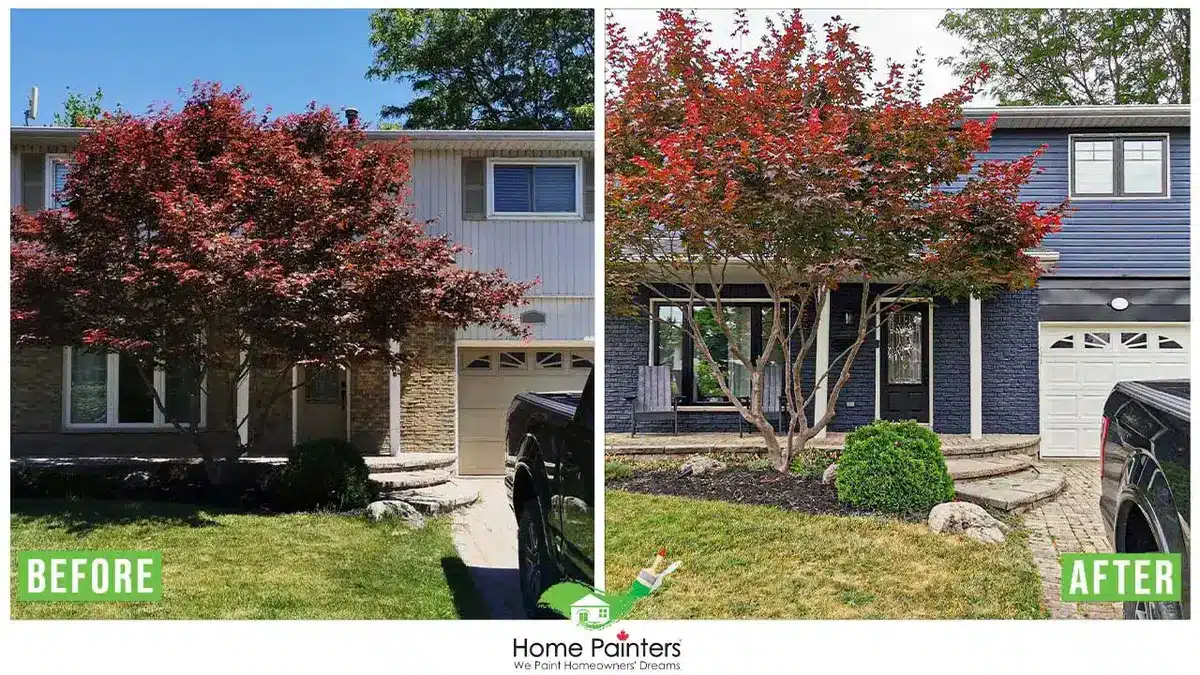
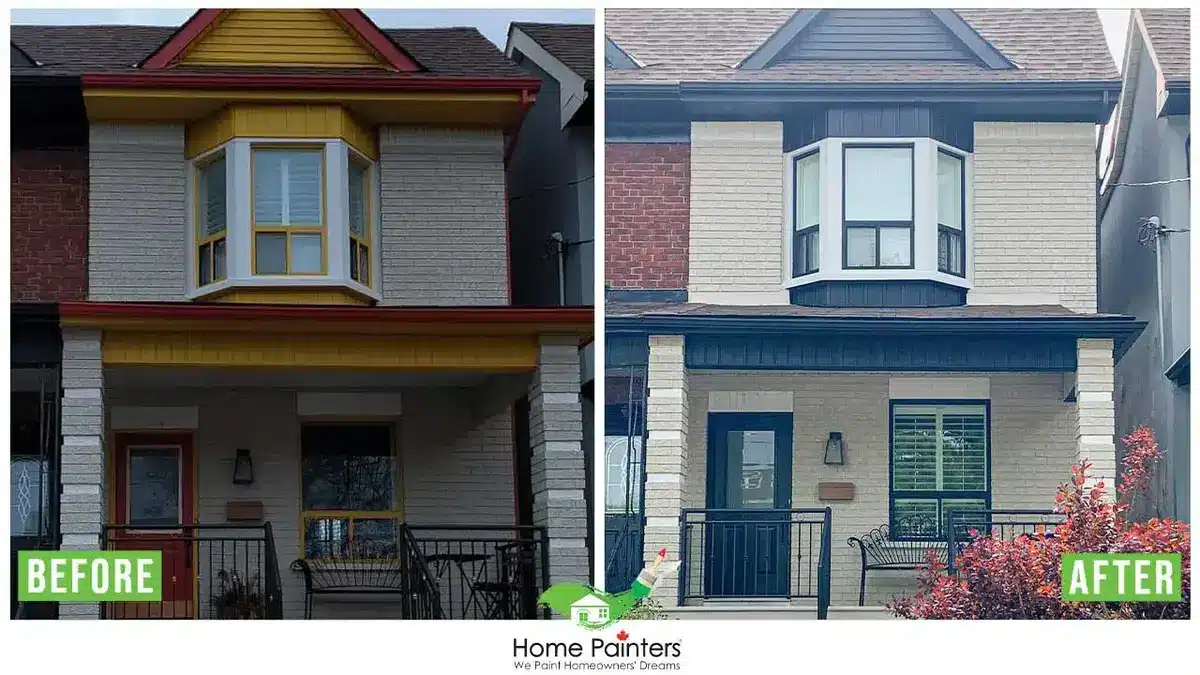
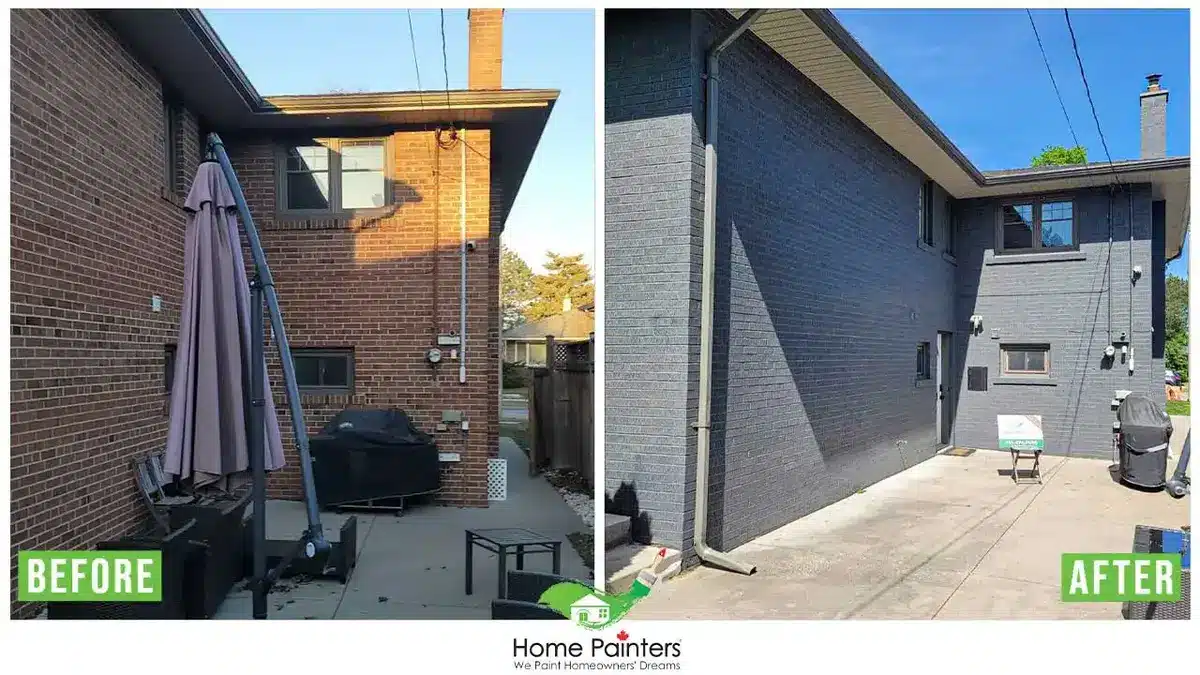
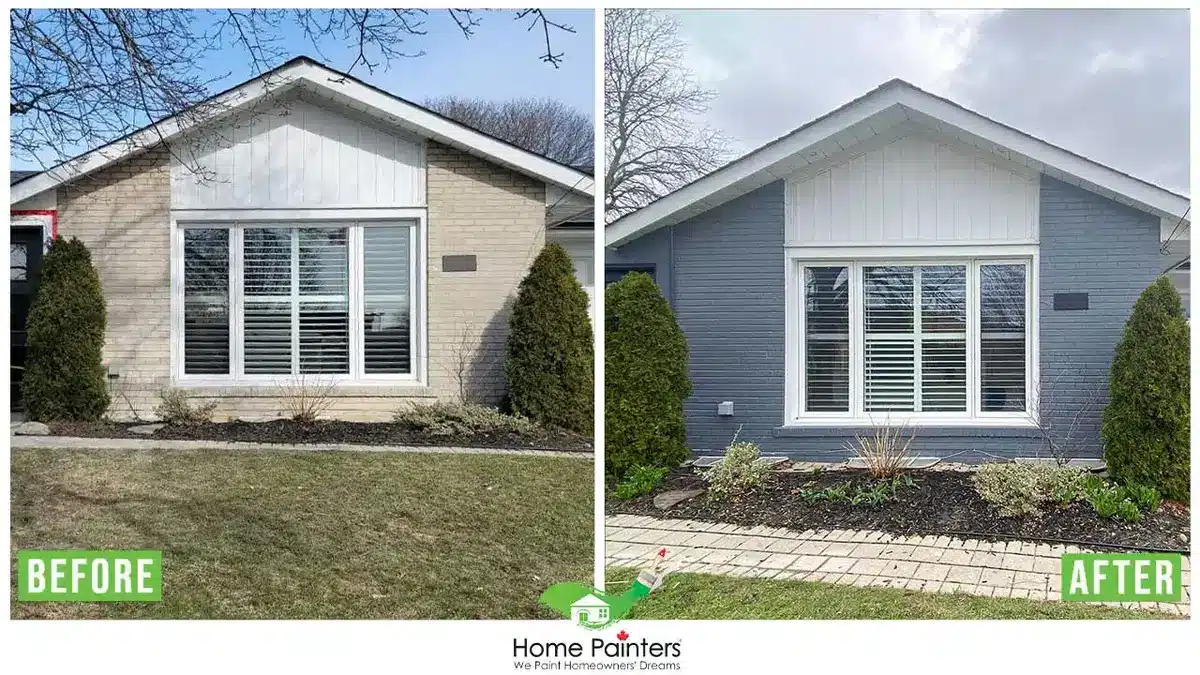
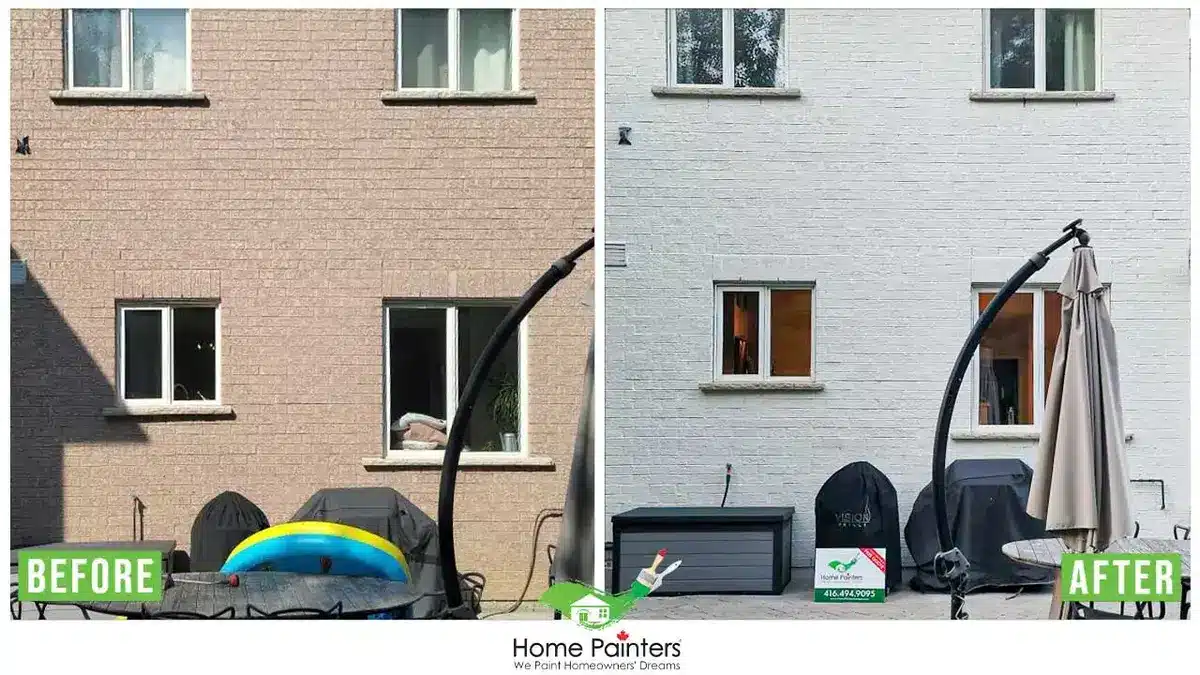
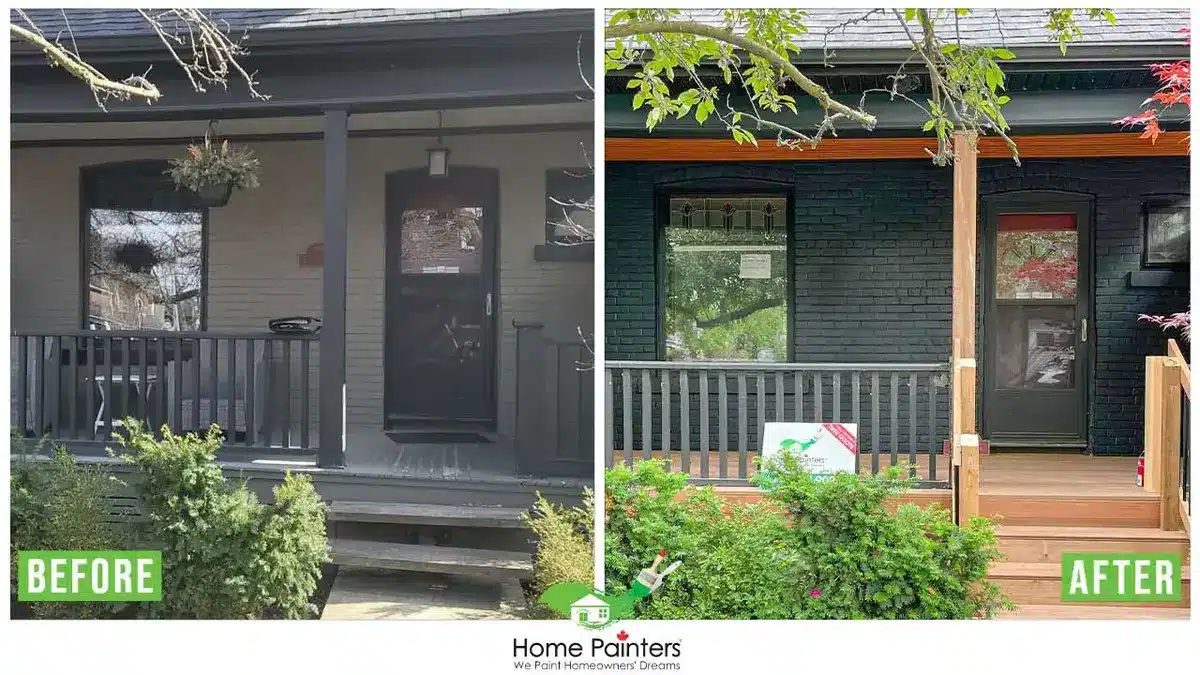
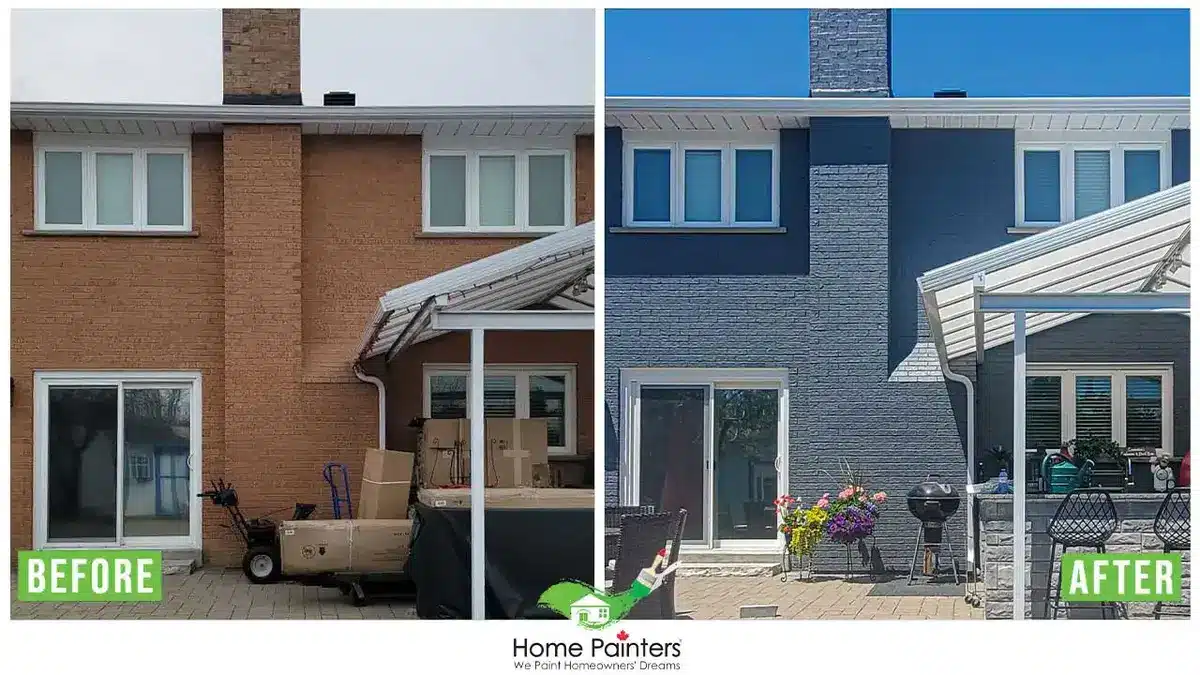
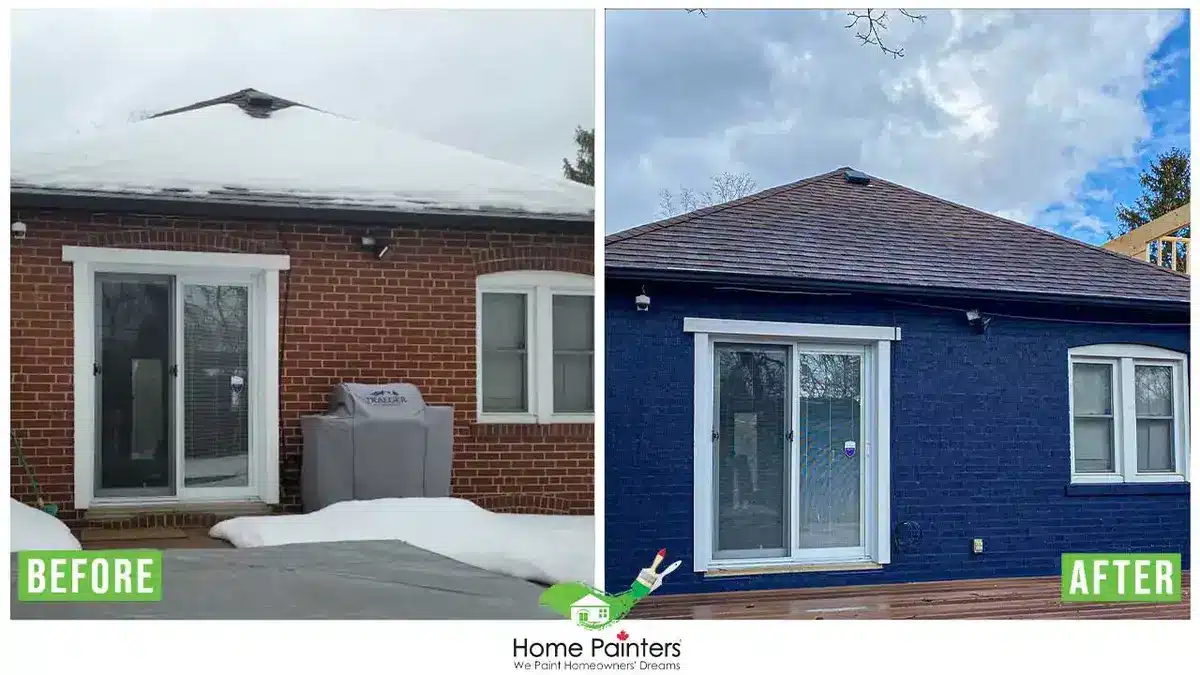
When Brick Staining Is a Better Option Than Painting
Brick staining is often the better choice when:
- the brick is unpainted
- homeowners want a natural appearance
- preserving masonry texture is important
- breathability is a concern
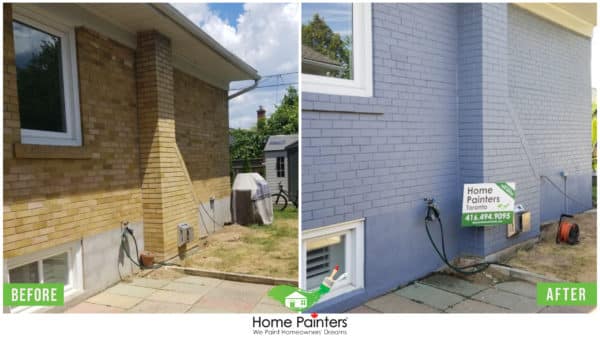
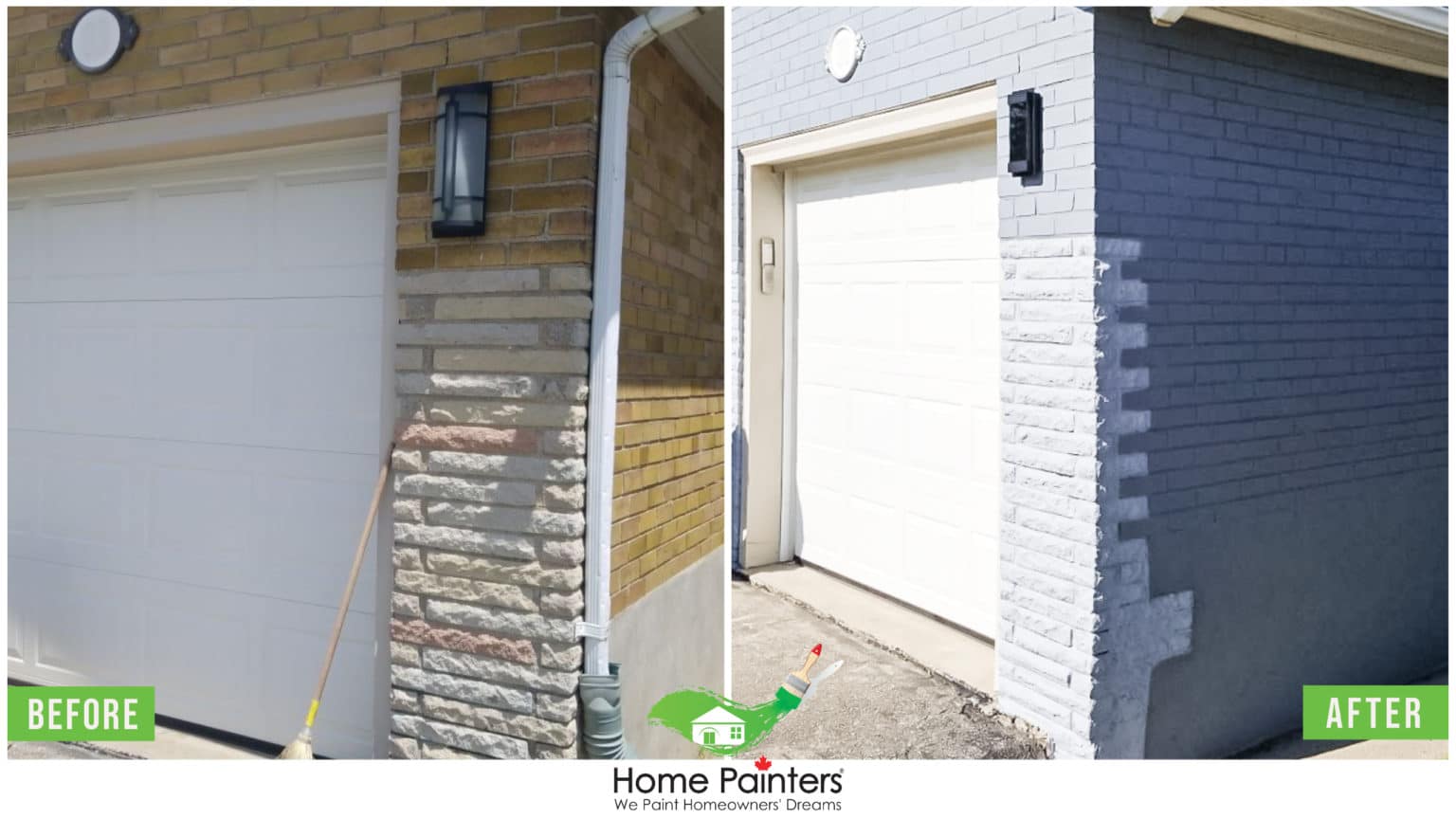
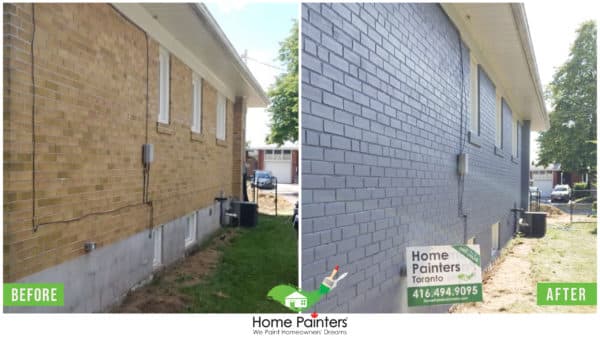
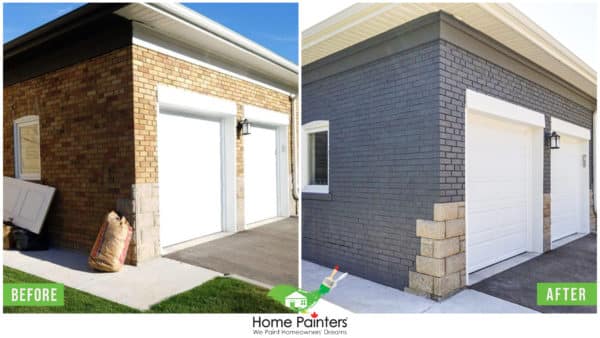
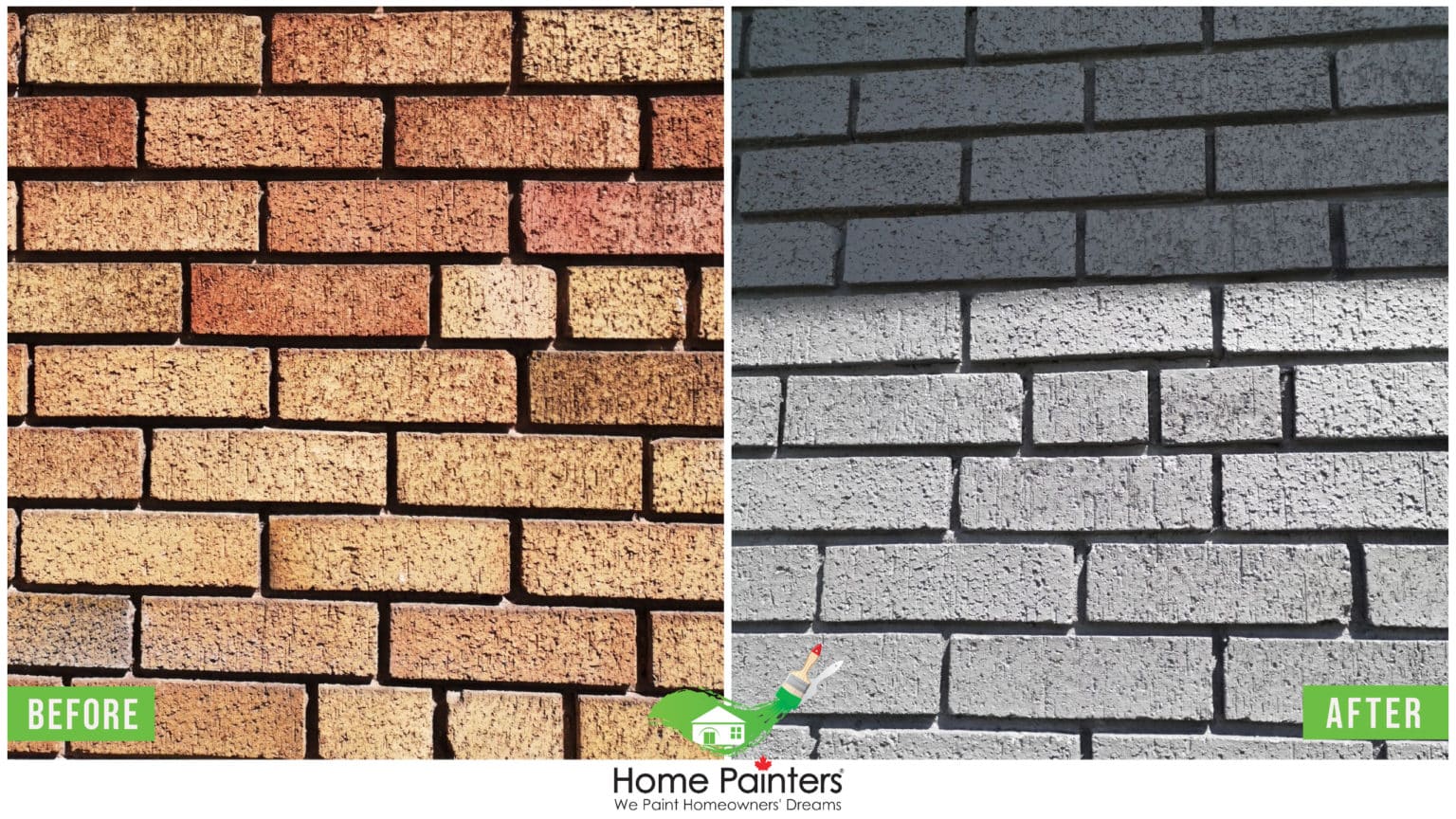
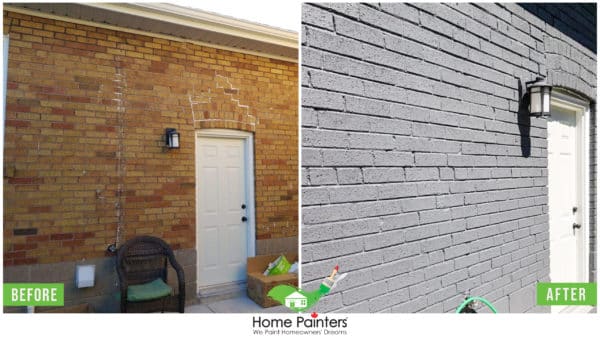
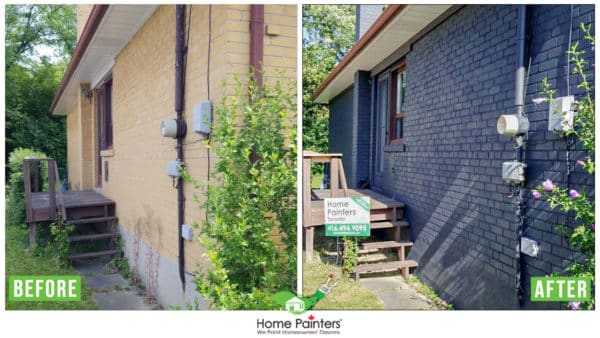
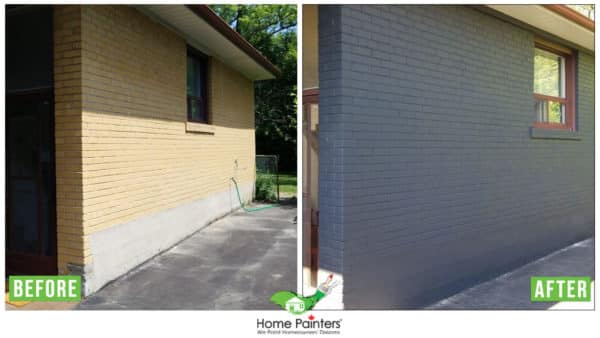
Painting may still be appropriate in some situations, but staining is often preferred for maintaining the original look of brick surfaces.






When to Hire a Professional Brick Staining Contractor
Brick staining requires more than simply applying colour to the surface.
Professional contractors understand:
- masonry preparation
- moisture management
- stain compatibility
- application consistency
Improper staining can result in uneven colour absorption or premature failure.
Professionals also understand how brick interacts with surrounding exterior materials like siding, trim, soffits, and fascia.
Conclusion: Protecting and Refreshing Brick Properly
Staining exterior brick can be an effective way to modernize and refresh your home’s appearance while preserving the natural look of the masonry.
The success of the project depends on:
- proper preparation
- masonry condition
- compatible products
- correct application methods
When done properly, brick staining can provide a durable and natural-looking finish for years.
If you’re considering updating your brick exterior, contact Home Painters Toronto for professional exterior painting Toronto and masonry surface services tailored to your home.