

The best time to paint your house exterior is during mild, dry weather, specifically late spring or early fall, when temperatures stay consistently between 10 and 29 degrees Celsius and rain is not in the forecast. Miss that window in Toronto and you are rolling the dice on peeling, bubbling, or poor adhesion within the first season. A fresh coat of paint can effortlessly boost your home's curb appeal, but there is more to painting your house's exterior than choosing the perfect shade. The weather and time of year play a significant role in the outcome of your painting project. You want to ensure the paint adheres correctly, lasts long, and gives the sleek finish you desire.
Here is what determines a successful exterior paint job in Toronto: temperature, humidity, rain-free days, and whether your surfaces are fully dry before painting begins.
- Paint when temperatures are consistently between 10 and 29 degrees Celsius
- Avoid rain for at least 48 hours before and after painting
- Late May through June and September through mid-October are Toronto's prime windows
- Never paint when overnight temperatures will drop below 5 degrees Celsius
- High humidity above 85 percent slows drying and weakens paint adhesion
- Direct hot sun above 32 degrees Celsius can cause latex paint to dry too fast and blister
Ready to schedule your exterior painting at the right time? Get a free quote for exterior painting in Toronto here.
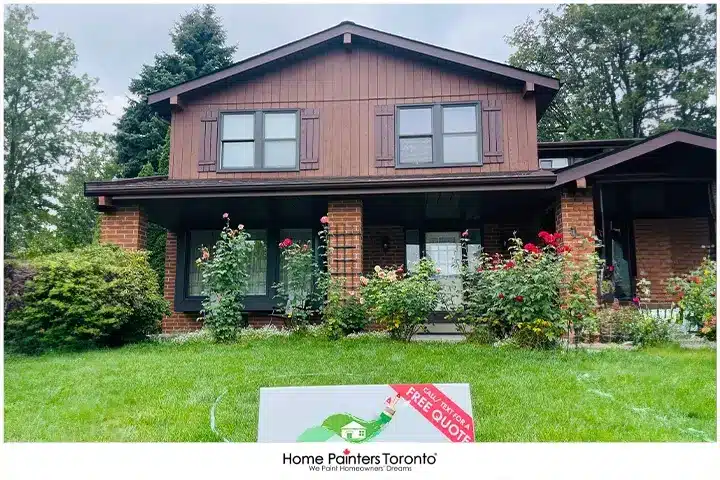
Late spring and early fall offer Toronto's most reliable windows for exterior painting — stable temperatures, lower humidity, and fewer rain disruptions.
Why Toronto's Climate Makes Exterior Painting Timing Critical
Toronto is not a forgiving city for exterior paint. The city experiences over 100 freeze-thaw cycles per year, with summers pushing above 30 degrees Celsius and winters regularly dropping to minus 15 degrees Celsius or colder. That kind of thermal swing places constant stress on every painted surface, and choosing the wrong time to paint makes it far worse.
Homes in older Toronto neighbourhoods like Leslieville, The Junction, Roncesvalles, and Scarborough tend to have wood siding, brick, or stucco exteriors that are far more moisture-sensitive than newer construction materials. These surfaces absorb and release humidity with the seasons, which means the timing of your paint application directly determines how well the product bonds and how long it lasts.
According to Canada Mortgage and Housing Corporation guidance on moisture and building envelopes, moisture-related paint failure is one of the most common problems on older Canadian homes, and most of it is preventable with proper timing and prep. When you paint in the right conditions, a quality 100% acrylic exterior paint on a Toronto home should last 8 to 12 years. Paint in the wrong conditions and you may be looking at peeling within 12 months.
Toronto Exterior Painting Season Quick Reference
Use this table to understand what each season means for exterior painting in the Toronto area.
| Season | Typical Temp Range | Best For Painting? | Watch Out For |
|---|---|---|---|
| Spring (Apr to early Jun) | 5 to 22 degrees C | Good, especially May | High pollen, late cold snaps, wet ground |
| Summer (Jun to Aug) | 22 to 35 degrees C | Good in early morning / overcast days | Direct sun above 32 C, high humidity in August |
| Fall (Sep to mid-Oct) | 8 to 20 degrees C | Excellent | Shorter daylight, early frost after mid-October |
| Winter (Nov to Mar) | Below 5 degrees C most days | Not recommended | Freezing temps, frost on surfaces, paint will not cure |
The Primetime Painting Seasons
1. Spring
Spring could be considered the start of the house painting season. The temperatures are typically within the perfect range and there's less chance of sudden and extreme weather changes. However, pollen in the air can stick to the wet exterior paint, so if you live in a place with high pollination, you might want to delay your painting project until later.
2. Summer
A common favourite among professionals, summer provides extended daylight hours and warm weather that's ideal for exterior paint to dry and adhere optimally. However, be mindful of extremely high temperatures and direct sunlight, which can cause the paint to dry too quickly and unevenly.
3. Fall
Considered by many to be the best season for painting exteriors, fall typically has lower humidity levels and less precipitation. The moderate daytime temperatures and cooler nights make the paint application process smooth. However, keep in mind that the days are shorter, so planning and daylight utilization are key.
4. Winter
Generally, winter is not a popular choice for exterior painting due to freezing temperatures and potential precipitation. Today, though, you can find paints formulated specifically for colder temperatures that can be applied in temperatures as low as 35 degrees Fahrenheit.
How Surface Type Affects the Best Time to Paint Your House Exterior
Not all surfaces behave the same way in Toronto's climate, and the best painting window shifts depending on what material you are working with. Here is how to think about timing by surface type.
| Surface Type | Best Painting Season | Minimum Temp | Key Condition Notes |
|---|---|---|---|
| Wood siding | Late spring or early fall | 10 degrees C | Wood must be dry; avoid painting after rain |
| Brick | Fall (lower humidity) | 5 degrees C | Allow 24 to 48 hrs after rain; check for efflorescence |
| Stucco | Spring or fall | 10 degrees C | Very porous; needs fully dry surface and low humidity |
| Vinyl siding | Spring or fall | 10 to 29 degrees C | Avoid peak summer heat; vinyl expands, causing lap marks |
| Aluminum siding | Spring or fall | 10 degrees C | Needs bonding primer; avoid direct sun during application |
| Concrete/foundation | Late spring or early fall | 10 degrees C | Must be fully cured and dry; masonry-specific products only |
For more on what our team uses on each surface type, see our exterior residential painting services page.
Considering the Climate
If you want to paint the exterior of your house you need to check the weather. Painting the exterior of your house at the right time can ensure quality application and longevity. Temperature, humidity, and the chance of rain are all important factors. You should also opt for days without immediate rain in the forecast, which could potentially wash away your hard work or prevent the paint from drying properly.
In fact, you should plan to do exterior painting in the spring or fall when temperatures are ideal for painting.
Once the snow melts, you probably notice a lot more painting crews around. That's because the temperature in the spring is ideal for painting. It's not because the crew gets too hot under the sun, it's because painting in too hot or too cold conditions can be bad for the paint.
Check the forecast and look for a string of days with nice weather and without rain in the forecast.
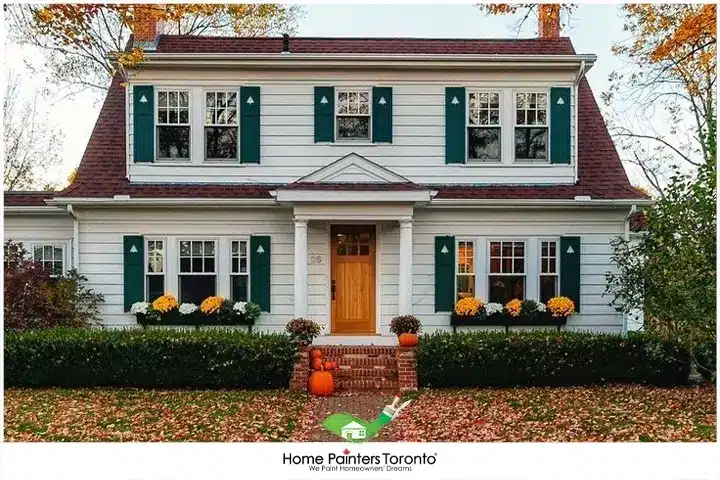
Spring and fall in Toronto offer the stable temperature windows that give exterior paint its best chance to bond, cure, and last.
How Temperature Can Affect Paint When You Paint the Exterior of Your Home
Temperature and humidity can affect paint. Generally, paint manufacturers have a minimum suggested temperature for exterior paint. You'll want to paint when it's at least 5 degrees Celsius when you paint the exterior of your home. This is the best temperature to paint the exterior of the house. So that's why you shouldn't paint when it's too cold.
You also shouldn't paint when it's too hot. First, paint will not set properly in overly hot weather. But, it also isn't good to be outside in the direct sun for long periods.
Fluctuating temperatures can be bad for paint, too. If the temperatures fluctuate too much between day and night or throughout the week, you might want to reschedule your work. If the forecast is showing a couple of warm days and a couple of cool days, or if it is going to drop by more than a few degrees overnight, you will want to find another time to paint. Consistent temperatures will provide the best opportunity for your paint to go on properly.
If you paint when it is too hot, too cold, or at inconsistent temperatures, your paint job might peel, bubble or crack before it's time. Professionals can watch the weather and temperatures and likely work faster to ensure that if there are only small windows of perfect temperatures when it's time to paint your exterior, it gets done properly.
Why You Shouldn't Paint The Exterior of Your House When There is Rain in The Forecast
Moisture and paint do not go well together. The paint needs to be applied to a dry surface to adhere properly. Rain, snow and humidity in the air can make for a more difficult painting job. Even after it rains, you should wait a couple of days before you paint to give the surface of your home enough time to dry.
Paint The Exterior of Your Home in Spring or Fall
Spring and fall in Toronto are ideal for exterior home painting. In spring, the hot temperatures and high humidity have not set in yet. Also, the temperature fluctuations throughout the season and between day and night are minimal.
If you'd rather paint in the fall, you will find similar ideal temperatures.
Toronto Exterior Painting Checklist: Is Today a Good Day to Paint?
Before your crew picks up a brush or roller, run through this checklist. Every item here has a direct impact on whether your paint job lasts 2 years or 12.
- Temperature is between 10 and 29 degrees Celsius and has been stable for 24 hours
- No rain in the forecast for the next 48 to 72 hours
- The surface has been dry for at least 48 hours after any rain or morning dew
- Humidity is below 85 percent
- No direct strong sun on the surface being painted (early morning or overcast is ideal)
- Overnight temperature will not drop below 5 degrees Celsius for at least 48 hours
- Wind is calm, not gusty (wind carries debris into wet paint and speeds surface drying unevenly)
- Surface has been properly cleaned, scraped, sanded, caulked, and primed
How Much Does Exterior Painting Cost in Toronto in 2026?
Cost is one of the most searched questions around exterior house painting in Toronto, and it is closely tied to timing. Scheduling your project during peak season (June through August) typically means longer wait times and potentially higher rates due to demand. Spring and fall bookings often offer more scheduling flexibility and sometimes better pricing from professional painters.
DIY Cost Estimate
- Premium 100% acrylic exterior paint: $70 to $120 CAD per 3.78L pail (covers approximately 35 to 45 sq ft per coat)
- Masonry or wood primer: $50 to $90 CAD per pail
- Caulking and prep materials: $40 to $80 CAD
- Brushes, rollers, extension poles, drop cloths: $60 to $120 CAD if purchasing new
- Total DIY materials for an average Toronto semi-detached (approx. 1,000 to 1,400 sq ft of exterior surface): $600 to $1,200 CAD
Professional Cost Estimate
Professional exterior painting jobs on typical Toronto homes range from $2,500 to $6,500 CAD depending on the size of the home, number of storeys, surface condition, and whether carpentry repairs are needed alongside painting. Heritage or Victorian homes with detailed trim, multiple colours, or significant prep work can run higher.
The professional premium is not just labour. It includes commercial-grade products, pressure washing equipment, scaffolding or staging where required, and the guarantee that prep work is done correctly. Poor prep is the single most common reason DIY exterior paint jobs fail before their time. For a precise quote based on your home, request a free estimate from Home Painters Toronto. We have been painting Toronto exteriors since 1987.
Real Project: Exterior Painting and Handyman Repairs on the Danforth
Danforth Project: Rot Repairs, Full Exterior Repaint, and a Modernised Finish
The situation: A homeowner on the Danforth contacted Home Painters Toronto after noticing rot in multiple areas on his home's exterior. He had a real concern about water damage continuing to worsen. With numerous surfaces peeling and deteriorating, he wanted both the repairs completed and a fresh paint finish that would modernize the appearance of the home. He chose Home Painters Toronto for their reputation, responsiveness, and ability to handle both carpentry and painting in one visit.
The challenge: The project came with time pressure. The wood rot was more widespread than initially expected, impacting the back windowsill and the garage door frame. Peeling paint and wear on multiple wood surfaces added to the complexity. The team also had to carefully match new paint colours and ensure a clean, updated finish despite the existing damage.
What the job involved: The team removed and replaced a rotted wood sill on the back window and replaced the top trim piece on the rotted garage door frame. All exterior wood surfaces, including windows, trim, and doors, were scraped, sanded, caulked, and primed before painting began. Two coats of high-quality exterior paint were applied throughout, with a modern colour scheme applied to all wood windows, trims, front door, and garage door.
The result: The entire project was completed efficiently within a few days. The homeowner was especially pleased with the speed and quality, and with the fact that his home was both protected and refreshed in a single visit, without the need for multiple contractors.
For more completed exterior projects like this one, see our Toronto exterior painting and handyman repairs project page.
Final Thoughts
A fresh coat of paint can bring new life to the outside of your home. Paint is a great way to add curb appeal to your home. Whether you want to update the trim on your home, the siding or stucco, or simply paint the front door, you need to watch the weather.
When you want to paint the exterior of your home, you need to plan. It's a big job that needs to be done in the right weather. It will also take more than a few hours. It could take a few days.
If you don't want to have to worry about when to paint the exterior of your home, or how to fit in a paint job on weekends, give Home Painters Toronto a call. We have over 36 years of experience and enough professional painting crews on hand that we can schedule your job when the temperature is right for painting. Discover the difference. Call us today.
Frequently Asked Questions About the Best Time to Paint Your House Exterior
The ideal temperature range for exterior painting in Toronto is between 10 and 29 degrees Celsius. Most quality 100% acrylic exterior paints require a minimum of 5 degrees Celsius to apply, but staying above 10 degrees gives you a reliable safety margin and better adhesion. Above 32 degrees Celsius in direct sun, latex paint can flash-dry on the surface before it bonds properly, leading to blistering and lap marks. Consistent temperatures, day and night, matter as much as the daytime high.
Yes, early to mid-October is often an excellent window for exterior painting in Toronto. Temperatures are typically moderate, humidity is lower than summer, and rain is less frequent. The key risk is that overnight temperatures can drop below 5 degrees Celsius after mid-October, and any paint applied within 48 hours of freezing temperatures will not cure correctly. Watch the forecast carefully and aim to complete exterior work by the second week of October to give paint adequate cure time before the first hard frost.
You should wait at least 48 hours after rain before painting the exterior of a house in Toronto. On porous surfaces like brick, wood, or stucco, longer is better. The surface must be completely dry to the touch, with no moisture visible in cracks, joints, or grain. Painting over a damp surface is one of the most common causes of paint failure, as trapped moisture pushes the paint film off the substrate within months.
With quality 100% acrylic exterior paint and proper prep, most Toronto homes need repainting every 7 to 12 years on siding, and every 5 to 8 years on high-contact trim and doors. Homes with wood siding in exposed or south-facing locations may need attention sooner. The biggest driver of repainting frequency is not just paint quality, it is surface prep and application conditions. A well-prepped exterior painted in ideal weather will outlast a rushed job by years.
Both are excellent, but for most Toronto homeowners, early fall (September through mid-October) has a slight edge. Humidity is generally lower than spring, pollen is not an issue, and temperatures are stable. Spring painting (mid-May through June) is also very reliable, but late spring rains and the risk of a late cold snap in early May can compress the usable window. Professional painters book up quickly in both seasons, so planning and booking early is important regardless of which season you choose.
Painting exterior surfaces when temperatures drop below 5 degrees Celsius causes latex paint to thicken and apply unevenly. More critically, the film-forming process in water-based paints requires adequate temperature to complete properly. Paint applied in near-freezing conditions may appear to dry, but the film has not coalesced correctly and will crack, peel, and fail within one to two freeze-thaw cycles. Oil-based paints are somewhat more tolerant of lower temperatures, but still perform poorly below 10 degrees Celsius.
Yes, in almost every case. Pressure washing removes accumulated dirt, mildew, chalking from old paint, and loose surface material that would prevent new paint from bonding. For Toronto homes with older paint, it also reveals any areas where paint has already started to fail, so you know what needs to be scraped or primed before the topcoat goes on. After pressure washing, the surface must be allowed to dry fully, which takes at least 48 hours in good weather before painting can begin. For a full overview of our prep process, see our exterior painting services page.
Most Interesting Blogs Related to The Best Time of Year to Paint the Exterior of Your House
Ready to Paint the Exterior of Your Home at the Right Time?
If you're ready to paint the exterior of your home at the right time and with the right team, call 416.494.9095 or email [email protected]. Home Painters Toronto has been painting Toronto exteriors since 1987.