

Poor attic ventilation is one of the most common causes of attic ventilation soffit damage in Toronto and across the GTA, and it rarely gets diagnosed until the soffit panels are already rotting. Most homeowners researching soffit and fascia repair start with a damaged panel, not a blocked vent, even though the two problems are closely connected. When intake vents built into the soffit can't pull in fresh outside air, heat and moisture build up inside the attic all year, not just in winter. That trapped moisture condenses against the roof deck and the underside of the soffit panels, softening wood fibres and corroding aluminum fasteners over time. Homeowners in North York, Etobicoke, and Scarborough often notice peeling soffit paint or sagging panels long before they connect the problem to blocked vents. Our crews at Home Painters Toronto see this pattern on nearly every rot-related soffit call where the house is more than 15 years old.
Poor attic ventilation damages soffits by trapping heat and moisture inside the attic, which condenses against the roof deck and soffit panels. Over months and years, that moisture softens wood fibres, corrodes fasteners, and feeds mould growth, causing the same rot and paint failure homeowners often mistake for a roof leak or old age.
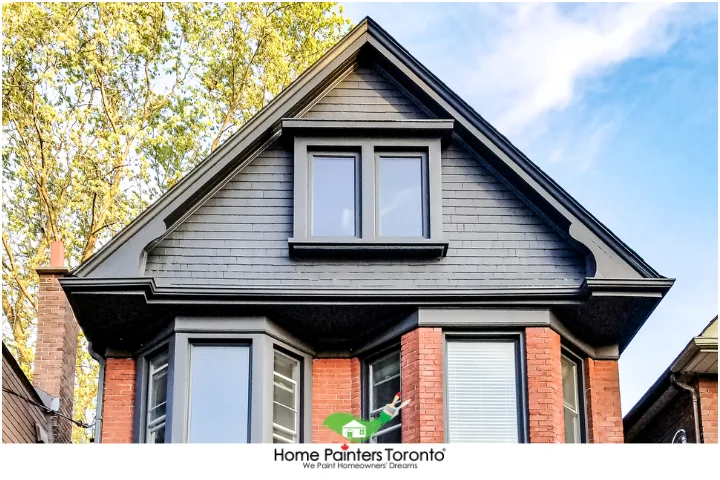
How Poor Attic Ventilation Damages Soffits
Poor attic ventilation damages soffits because trapped heat and humidity condense against the underside of the roof deck and soffit boards, keeping the wood damp for extended stretches of the year. Wood that holds moisture content above roughly 20 percent becomes a target for wood-decay fungi, a threshold documented in Canada Mortgage and Housing Corporation moisture research. In a poorly vented attic, that damp air settles on the coolest surfaces it can find, which are usually the soffit panels and the roof sheathing directly above them. Aluminum soffit fasteners corrode under sustained moisture exposure, and wood soffit panels swell, crack, and eventually rot from the inside out, the same underlying decay mechanism our crews address during window and wood frame repair calls across Toronto homes. This damage often starts on the underside of the panel, out of sight, so it can be well advanced before paint failure or sagging becomes visible from the ground.
Toronto's freeze-thaw climate makes the damage worse. Damp wood that repeatedly freezes and thaws through the winter expands and contracts, driving cracks deeper into soffit boards and around fastener holes, the same stress pattern we see when inspecting exterior wood siding on older GTA homes. By spring, panels that looked stable in the fall can be soft enough to flex under light hand pressure, even though nothing changed on the visible, painted surface.
How Soffit Vents Are Supposed to Work
Soffit vents are designed to pull fresh outside air into the attic so it can push warm, moist air out through vents higher up on the roof. This intake-and-exhaust system runs on a simple principle: cooler air enters low, through perforated soffit panels or vent strips, and warmer air exits high, through a ridge vent, roof vents, or gable vents. Baffles, sometimes called wind or insulation baffles, hold a channel open between the top of the exterior wall and the roof deck so insulation doesn't block the incoming airflow. When this system works as intended, air moves continuously through the attic, carrying moisture out before it can condense on cold surfaces. A balanced system keeps the attic close to outdoor temperature, which reduces both ice damming in winter and shingle overheating in summer.
What Happens When Vents Are Blocked
Blocked soffit vents stop the intake side of the airflow system, so moist attic air has nowhere to escape and heat builds up under the roof deck. Several things commonly block these vents on Toronto homes, and homeowners rarely notice any of them until damage shows up.
- Loose-fill or batt insulation pushed too far into the eaves during a top-up
- Paint overspray or caulking sealing the vent perforations shut during an exterior repaint
- Bird nests, wasp nests, or squirrel debris packed into the vent openings
- Leaves and roofing grit collecting in soffit vent slots after a windstorm
- Undersized or missing baffles that let insulation collapse into the vent channel
Any one of these blockages is enough to choke off airflow across an entire section of roofline, and most older Toronto attics have more than one blocked vent by the time damage becomes visible.
| Common Blocker | How to Spot It |
|---|---|
| Insulation pushed into eaves | Attic feels noticeably warm right at the roofline instead of cool |
| Paint or caulking over vent slots | Vent perforations look sealed or painted solid from outside |
| Nesting debris | Scratching sounds, visible debris in vent openings |
| Leaves and roofing grit | Vent slots partially or fully clogged after storms |
Continuous soffit vent strips generally outperform individual vent discs on Toronto homes because they distribute intake air evenly along the entire eave instead of concentrating it at a few points. Homes with only a handful of small vent discs often show rot concentrated directly between those discs, where airflow is weakest, instead of an even pattern across the whole roofline.
The Condensation-to-Rot Cycle
The condensation-to-rot cycle in a poorly ventilated attic follows a predictable sequence, and it repeats every time temperatures swing between day and night.
- Warm, moisture-laden air from the living space rises into the attic through light fixtures, bathroom fans, and attic hatches.
- With intake vents blocked, that air stays trapped instead of exiting through the ridge or roof vents.
- Overnight, attic surfaces cool faster than the air loses its moisture, so water vapour condenses on the coldest surfaces, usually the roof sheathing and soffit panels.
- Repeated wetting and drying cycles push wood moisture content past the threshold where decay fungi take hold.
- Fungal decay softens the wood fibres, fasteners loosen, and paint or caulking on the soffit begins failing from underneath, well before it shows on the surface.
This cycle runs year-round, though it speeds up during Ontario's shoulder seasons, when large day-to-night temperature swings drive the most condensation. Because the damage builds slowly and out of sight, homeowners often mistake the early symptoms for a roof leak instead of soffit failure, which can delay the right repair by a full season.
Signs Your Attic Isn't Ventilating Properly
Signs your attic isn't ventilating properly usually show up inside the attic before they reach the soffit, so a quick inspection can catch the problem early.
- Visible frost or condensation on the underside of the roof deck in winter
- A musty or damp smell when you open the attic hatch
- Dark staining or mould spotting on the roof sheathing near the eaves
- Ice damming or icicles concentrated at specific sections of the roofline
- Soffit paint that bubbles or peels from the underside instead of the exposed face
- Noticeably hotter upstairs rooms in summer despite normal air conditioning
Any single sign on this list is worth a closer look, but two or more together usually mean the ventilation problem has been building for a while and the soffit is already absorbing the effects. For the full exterior checklist, see our guide to signs your soffit and fascia need repair.
Intake vs. Exhaust: Why Balance Matters
Intake vs. exhaust balance matters because attic airflow only works when roughly equal amounts of air enter low and exit high. Too much exhaust without matching intake pulls conditioned air out of the living space instead of fresh air from outside, which wastes energy and can worsen moisture problems instead of solving them.
| Component | Location | Function | Common Type |
|---|---|---|---|
| Intake | Soffit, low roof edge | Draws fresh outside air into the attic | Continuous soffit vent, individual vent discs |
| Exhaust | Ridge, upper roof, gables | Lets warm, moist air escape | Ridge vent, roof-mounted vents, gable vents |
| Baffle | Eave, between insulation and roof deck | Keeps the intake channel open | Rigid foam or cardboard chute |
An imbalanced system causes its own problems even when total vent area looks adequate on paper. An attic with strong exhaust but weak intake can end up depressurized, drawing air (and moisture) up from the living space through pot lights, bathroom fan housings, and attic hatch gaps instead of pulling clean air in from the soffit. That reversed airflow pattern delivers even more moisture to the underside of the roof deck and soffit than a simply under-vented attic would, which is why balance matters as much as total vent area.
What NBC-Compliant Attic Ventilation Ratios Require in Ontario
Ontario's building code follows the National Building Code framework, which sets a minimum unobstructed ventilation area, typically referenced as 1 square foot for every 300 square feet of attic floor area when a vapour barrier is properly installed, split roughly evenly between intake and exhaust. This ratio is confirmed in the Ontario Building Code's ventilation requirements. A typical 1,500-square-foot Toronto attic needs about 5 square feet of net free ventilation area under that ratio, split between soffit intake and roof or ridge exhaust. Older homes built before current code updates often fall well short of this ratio, especially where soffit vents have been painted over or partially blocked.
Why Insulation Contractors Are the Hidden Cause of Soffit Rot
Insulation contractors are a common but overlooked cause of soffit rot because attic top-up jobs frequently bury the vent baffles that keep the intake channel open. Most insulation crews focus on R-value coverage across the attic floor, not on preserving airflow at the eaves, so baffles get compressed or skipped entirely during a blow-in job.
How Blown-In Insulation Buries Soffit Baffles
Loose-fill insulation is blown from the centre of the attic outward, and without a rigid baffle already installed at each rafter bay, the material settles directly against the underside of the roof deck at the eaves. This blocks the exact spot where soffit intake air is supposed to enter the attic, even though the soffit vents themselves remain completely clear from the outside. A homeowner can have unobstructed, freshly painted soffit vents and still have a ventilation-starved attic, because the blockage is invisible from the ground. We recommend confirming baffles are installed at every rafter bay before or during any attic insulation upgrade, not after soffit or fascia repairs are already scheduled.
Fixing Ventilation Before Repainting or Repairing Soffit
Fixing ventilation before repainting or repairing soffit prevents the same rot from returning within a few seasons, since new paint or new panels installed over a still-blocked vent system face the identical moisture load that damaged the originals.
- At a recent soffit inspection in North York, our crew found aluminum soffit panels with paint failure concentrated along one entire side of the roofline.
- A moisture meter reading on the fascia board behind the affected panels came back at 28 percent, well above the decay threshold, and the attic hatch released a noticeably musty smell before we even opened it fully.
- Insulation from a previous attic top-up had buried the baffles along that side of the attic, cutting off intake almost completely.
- Once we cleared the baffles and confirmed balanced airflow, we replaced the damaged fascia boards and refinished the soffit and trim with Benjamin Moore Aura Exterior in Low Lustre, applied at roughly 5 mils wet film thickness per coat to meet the manufacturer's coverage specification.
All work on that project was WSIB compliant and fully insured, and it carries Home Painters Toronto's warranty-backed results on both the carpentry and the paint finish. It's one of the reasons homeowners choose Home Painters Toronto for combined ventilation-and-repair work instead of hiring separate insulation and painting contractors who don't communicate with each other.
Skipping the ventilation fix and going straight to a repaint is the single most common reason soffit paint failures repeat within two to three years on Toronto homes we're called back to. Project scope varies with the extent of hidden rot, so it's worth reviewing our soffit and fascia replacement cost guide and our soffit and fascia repair timeline guide before booking an assessment, since a ventilation fix can add a day or two to a straightforward repaint.
Reading a Hygrometer Reading Inside the Attic Space
A hygrometer placed inside a properly ventilated attic should read close to outdoor relative humidity, generally within 5 to 10 percentage points, consistent with attic moisture control guidance published by Natural Resources Canada. A reading that runs consistently 20 points or more above outdoor humidity points to trapped moisture and blocked airflow instead of a one-off weather event. We take this reading as a standard part of any soffit or fascia assessment where rot is suspected, since it confirms whether ventilation, not just surface wear, is driving the damage.
Restore Proper Ventilation and Protect Your Soffit
Restoring proper ventilation protects your soffit by stopping the condensation cycle that causes rot, corrosion, and repeated paint failure at the source. Left unaddressed, blocked attic ventilation will keep damaging new soffit material just as it damaged the original panels, no matter how good the replacement paint or boards are.
Home Painters Toronto inspects attic airflow as part of every soffit and fascia assessment across Toronto and the GTA, and our crews are WSIB compliant and fully insured on every job. If your soffit shows peeling paint, sagging panels, or a musty attic smell, get fast free quotes and warranty-backed work. See what other GTA homeowners say about the process in our client reviews.
FAQ About Attic Ventilation and Soffits
Most Ontario attics need about 1 square foot of net free ventilation area for every 300 square feet of attic floor space, split between soffit intake and roof or ridge exhaust, under the ratio referenced in the Ontario Building Code. A licensed contractor can measure your specific attic and confirm whether your current vents meet that ratio.
Yes, additional vent discs or continuous vent strips can often be added to existing soffit panels without full replacement, as long as the panel material and the baffles behind it can support the extra airflow. This works best as part of a broader soffit inspection, since adding intake without confirming the baffles are clear won't solve a buried-vent problem.
It depends on the warranty terms from the insulation contractor and the soffit installer, so homeowners should check both agreements instead of assuming coverage. Warranty-backed soffit and fascia work from Home Painters Toronto covers material and workmanship defects, but ongoing damage caused by an unrelated ventilation blockage needs to be addressed at its source first.
Not always, but it's one of the most common causes, especially when combined with visible condensation or staining on the roof deck. A musty smell can also point to a roof leak or plumbing vent issue, which is why a proper inspection checks both ventilation and the roof itself before assuming one cause. If moisture has already reached the ceiling below, that's usually a job for drywall repair once the source is fixed.
Fixing ventilation stops new moisture from feeding the rot, but any wood that has already softened or lost structural integrity still needs to be repaired or replaced. Ventilation repairs address the cause, not the existing damage, which is why our assessments cover both the airflow problem and the condition of the soffit and fascia material itself. Chronic attic moisture can also show up indoors as bubbling or staining, which sometimes calls for popcorn ceiling removal if the affected ceiling was textured.

Get a Free Soffit and Fascia Ventilation Assessment
Fast free quotes and warranty-backed work are a phone call away.
Contact Home Painters Toronto to book an attic ventilation and soffit assessment across Toronto and the GTA.
Get a Free Estimate