

Toronto homeowners often spot ice dams as a thick ridge of ice along the roof edge, but the real damage happens where nobody looks: behind the soffit and fascia. Ice dams and soffit damage starts when trapped meltwater backs up under the shingles, seeps behind the fascia board, and soaks into the soffit panels and roof sheathing. By the time paint peels or panels sag, the wood underneath may already be wet. Home Painters Toronto, backed by 1,200+ verified reviews across HomeStars, Google, and Houzz, sees this pattern every winter across North York, Etobicoke, and the rest of the GTA, wherever attic insulation and ventilation fall short of what a Toronto roof needs. Understanding how ice dams form, and where they attack first, helps homeowners catch the damage before a small repair turns into a full roofline replacement.
Ice dams damage soffits by forcing trapped meltwater up and under the shingles, where it drains behind the fascia and soaks into the soffit panels and roof sheathing. In the GTA's freeze-thaw winters, this hidden moisture rots wood, blisters paint, and can trigger interior ceiling stains within a single season.
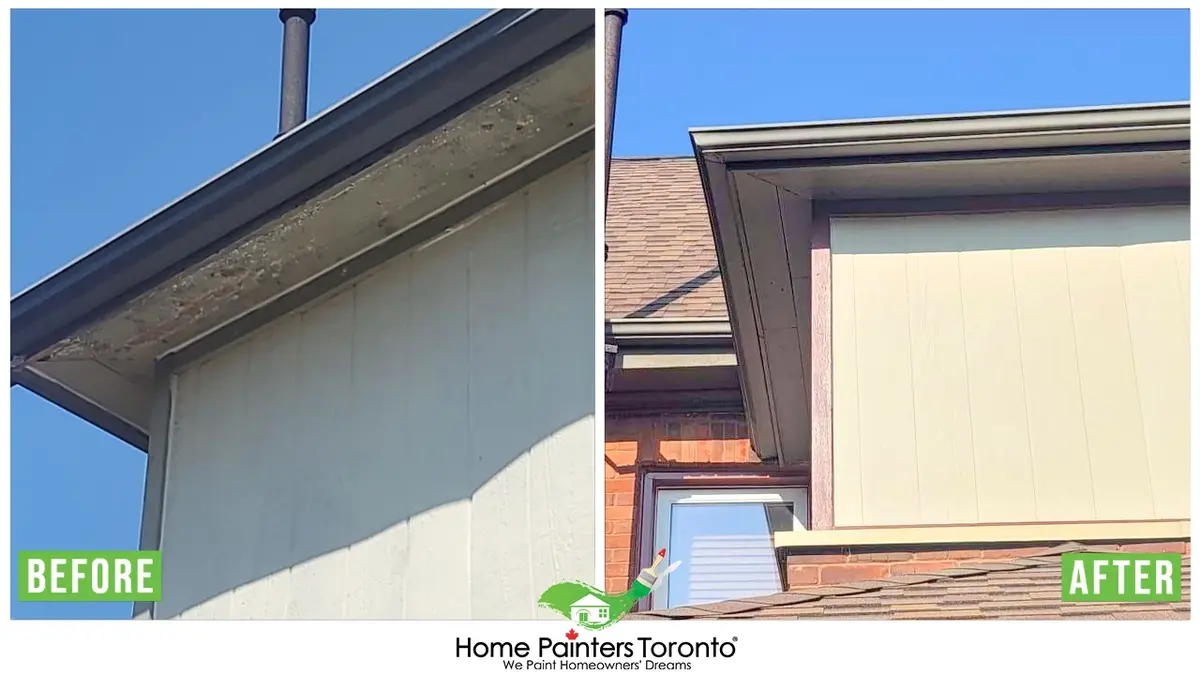
By the time paint peels or panels sag, the wood underneath may already be wet
What Are Ice Dams and How Do They Damage Soffits?
An ice dam is a ridge of ice that forms at a roof's edge and blocks melting snow from draining into the gutter. Heat escaping from the attic warms the upper roof deck, melts the snow sitting on it, and sends water running down toward the colder eaves. At the eaves, where there is no heat from below, that water refreezes and builds into a dam. Fresh meltwater keeps arriving from above, but it now has nowhere to go except backward, under the shingles and into the roof assembly. That backward flow is what turns a roof problem into a soffit and fascia problem, since the water travels along the sheathing until it finds a gap, a nail hole, or a seam at the fascia line and drips down behind the panels.
Home Painters Toronto sees this pattern most often on older aluminum and wood soffit systems where the original vent baffles have been covered or crushed by insulation. Once water gets behind a soffit panel, it has almost nowhere to evaporate, since the space stays enclosed and cold for most of the winter. That trapped moisture, not the ice dam itself, is what causes rot. Any coating or moisture barrier on the substrate matters here too, since a properly sealed panel sheds standing water far longer than bare or under-primed wood exposed to the same freeze-thaw cycle.
How Ice Dams Form on Toronto Roofs
Ice dams form on Toronto roofs whenever attic heat escapes into the roof deck faster than the eaves can stay cold, a mismatch that Insurance Bureau of Canada identifies as the core trigger behind seasonal ice damming claims across Ontario. Snow melts on the warmer upper roof, runs down toward the unheated overhang, and refreezes right where the roofline meets the soffit and fascia. Every added inch of snow gives the process more material to work with, and every freeze-thaw swing adds another layer of ice to the dam.
Ice Dam Formation Temperature Range on Toronto Roofs
Ice dams build fastest when daytime temperatures climb just above freezing and then drop back below freezing overnight, the exact swing Toronto sees repeatedly between December and March. Each cycle adds another thin layer of ice to the dam. Each layer also forces meltwater slightly further up and under the shingles than the layer before it.
Freeze-Thaw Cycle Frequency and Roofline Fatigue
Climate Atlas of Canada tracks the annual count of freeze-thaw cycles for the Toronto region, and the data shows this swing repeating dozens of times across a typical winter. Every cycle expands and contracts the ice sitting against the fascia board. Over several winters, that repeated movement works nail heads loose, opens seams in aluminum capping, and widens the path water takes into the soffit assembly.
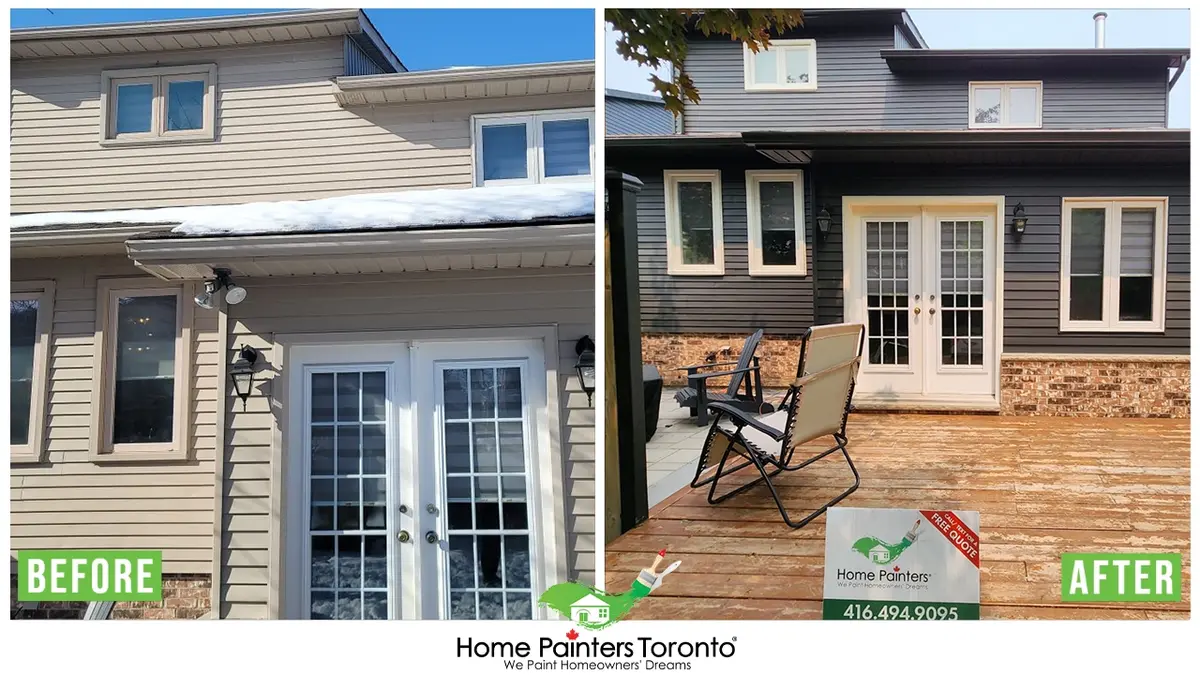
Every cycle expands and contracts the ice sitting against the fascia board, widening the path water takes into the soffit assembly
Why Ice Dams Target the Soffit and Fascia First
Ice dams target the soffit and fascia first because that is where the roof's slope ends and water has nowhere left to drain but sideways and down. The fascia board sits directly behind the ice dam, so it absorbs the first pressure from standing water. Soffit panels sit just below and behind the fascia, which puts insulation, vent baffles, and untreated wood directly in the path of anything that gets past the fascia joint. On a typical GTA home, this is also the lowest point on the roof assembly, so a small construction gap, a missed bead of caulking, or a worn drip edge becomes a permanent entry point once an ice dam starts pressing water against it every winter.
Older wood soffit and fascia systems tend to fail faster under this pressure than newer aluminum installations, since bare or thinly painted wood absorbs moisture directly instead of shedding it. The wear pattern is similar to what our crews see on aging exterior wood siding repair calls, where repeated freeze-thaw cycling, not one single storm, is usually what finally causes a failure. Painting and Decorating Contractors Association application standards call for a properly primed, dry substrate before any exterior coating goes on, which is exactly the step that gets skipped when a soffit is repainted over hidden ice dam damage instead of being repaired first.
The Hidden Path: How Trapped Water Reaches Your Soffit Before You See a Stain
Most homeowners assume soffit damage from ice dams shows up right away, but the sheathing and soffit substrate typically absorb water for two to six weeks before any surface sign appears. Wood framing holds moisture in its cell structure well before paint blisters or panels visibly sag, so a soffit can already be structurally compromised while it still looks fine from the ground. This lag is the main reason ice dam damage often gets misdiagnosed as ordinary paint failure and simply repainted instead of properly repaired.
In more severe cases, the same trapped water tracks sideways along the sheathing and reaches window trim at the roofline, which is when window wood replacement and repairs becomes part of the same repair scope instead of a separate call later in the season.
How Ice Dam Soffit Damage Progresses Over a Toronto Winter
Ice dam soffit damage typically moves through three stages over a single Toronto winter, starting with hidden saturation and ending with visible panel failure.
| Timeframe | What's Happening Behind the Soffit | What's Visible From Outside |
|---|---|---|
| Weeks 1-2 | Meltwater tracks behind the fascia and begins soaking the soffit substrate | Little to nothing; paint still looks intact |
| Weeks 3-6 | Moisture spreads along the sheathing and softens exposed wood fibres | Faint staining or a slightly darker panel seam |
| Weeks 6+ | Repeated freeze-thaw cycling breaks down fastener grip and wood strength | Sagging panels, peeling paint, or a soft spot under light pressure |
Warning Signs of Ice Dam Damage
The clearest warning signs of ice dam damage are icicles hanging directly off the fascia, dark staining on the soffit panels, and a spongy feel when the fascia board is pressed near a corner or seam.
| Sign | What It Means |
|---|---|
| Icicles forming along the fascia edge | Water is backing up behind the ice dam and draining down the face of the fascia |
| Dark streaking or staining on soffit panels | Water has already tracked behind the panel and is bleeding through the seams |
| Peeling or bubbling paint near the roofline | Moisture is trapped behind the paint film, a symptom distinct from ordinary sun weathering |
| Soft or spongy fascia when pressed | The wood substrate has absorbed enough moisture to begin softening |
| Interior ceiling stains near exterior walls | Water has moved past the soffit and into the attic or wall cavity |
| Sagging or separated soffit panels | Fasteners or channel track have loosened from repeated freeze-thaw movement |
The Screwdriver Probe Test for Hidden Soffit Rot
A screwdriver probe test checks for hidden rot by pressing a flathead screwdriver firmly into the fascia or soffit edge near a suspected damage zone. Sound wood resists the pressure, and the tip barely marks the surface. Wood weakened by trapped moisture gives way with little resistance, and the tip sinks in without much force. Home Painters Toronto crews run this test during every ice dam-related roofline assessment before recommending a repair scope, since rot that extends further than expected will not hold up under a warranty.
Preventing Ice Dams Before Winter
Preventing ice dams before winter comes down to four factors: attic insulation, attic ventilation, gutter clearing, and roof raking after heavy snowfall. Each one addresses a different part of the melt-refreeze cycle, so skipping one usually leaves the underlying risk in place even if the others are handled well.
- Upgrade attic insulation. Reducing heat loss into the roof deck keeps the upper roof closer to outdoor temperature, which slows the melt-refreeze cycle that starts most ice dams.
- Balance attic ventilation. Blocked or crushed soffit vents trap warm air against the roof deck, which compounds ice dam risk independently of snow load. Left unaddressed, poor attic ventilation damages soffits from the inside even in winters with lighter snowfall.
- Keep gutters clear before the first snowfall. Clogged gutters give the first meltwater nowhere to drain, which speeds up ice dam formation right at the eaves.
- Arrange roof raking after heavy snow. Removing snow load from the lower roof slope limits how much meltwater is available to refreeze into a dam.
What to Do If You Already Have Ice Dam Damage
If ice dam damage has already reached the soffit, the priority is stopping active water intrusion and getting a proper moisture assessment before any cosmetic repair begins. Painting over a stained panel without checking what's behind it usually just delays a bigger repair by a season or two. Homeowners dealing with storm-level damage may also want to review how soffit and fascia insurance claims typically work in Ontario before booking repairs, since documentation matters for coverage. Photographing the icicle line, the staining pattern, and any interior ceiling marks before repairs start gives both the contractor and the insurer a clear record of the damage as it was found.
- At a recent roofline repair in the Beaches, our crew found a section of fascia holding 22 percent moisture content on a pin-type moisture meter, above the range CMHC considers safe for framing lumber before decay risk increases.
- The soffit panels above it had already separated from the channel track after two winters of freeze-thaw movement.
- We removed the affected fascia section, resealed the joint where the ice dam had been forcing water in, and finished the new boards with Benjamin Moore Aura Exterior in Low Lustre applied at roughly 2 mils dry film thickness, matching the manufacturer's technical data sheet for exterior trim coatings.
The crew that completed the repair is WSIB compliant and fully insured, standard on every roofline job we run across the GTA, and also handles our full range of exterior painting services when a roofline repair overlaps with a larger repaint.
Repair Timing: Why Spring Assessment Matters
Spring is the ideal time for a full ice dam damage assessment because the wood has finished absorbing a winter's worth of moisture, and any hidden rot has had time to show up as soft spots or discoloration. Booking an assessment too early in the season, while freeze-thaw cycling is still active, can miss damage that hasn't fully revealed itself yet. Homeowners planning a repair can also review a realistic soffit and fascia repair timeline to understand how scheduling around GTA weather affects the project, and compare their symptoms against the broader list of signs your soffit and fascia need repair before booking a visit.
Frequently Asked Questions About Ice Dams and Soffit Damage Repair
Yes, ice dam water travels behind the soffit panel long before any surface staining shows up, so a soffit can already be compromised while it still looks intact from below. The two- to six-week absorption lag described earlier is exactly why an annual check matters, not just a look from the driveway.
Not necessarily. Ice dams push water backward under the shingles, which often shows up as soffit or ceiling staining instead of a typical roof leak pattern, so the two problems need different diagnosis. A closer look at roof leak vs soffit failure symptoms usually clears up which one is actually happening.
Trapped water can begin softening exposed wood within two to six weeks of consistent freeze-thaw cycling, though visible signs like staining or sagging often take longer to appear. Colder, longer winters generally shorten that window.
No, removing icicles only clears a visible symptom, since the ice dam itself, and the water pressure building behind it, is what keeps damaging the soffit and fascia. The dam needs to be addressed at the source, along with whatever attic condition allowed it to form.
Coverage depends on the specific policy and the cause of the damage, since insurers can deny claims traced to inadequate attic insulation or deferred maintenance instead of a sudden event. It's worth checking your policy's ice damming clause directly with your provider before assuming coverage either way. Home Painters Toronto can supply a written assessment for your insurer but is not a substitute for insurance or legal advice.
Repair is usually enough when rot is confined to one or two sections, but full replacement makes more sense once damage runs continuously along a stretch of roofline or the channel track itself has failed. A proper assessment, not a guess from the ground, is what determines which option applies.

Protect Your Roofline from Ice Dam Damage This Winter
Protecting your roofline from ice dam damage starts with catching the warning signs early and having a qualified crew check what's happening behind the soffit, not just what's visible from the driveway. Toronto's freeze-thaw winters make this an annual risk for every home across Toronto and GTA service areas, from older wood soffit systems to newer aluminum installations. Home Painters Toronto has spent decades diagnosing and repairing this exact kind of seasonal damage, and our full frequently asked questions library and the reasons why Toronto homeowners trust HPT are both worth a look before you book. Our crews assess the full roofline, not just the section that's staining, so a repair addresses the ice dam's actual entry point instead of just the panel where it happened to show up first.
Contact Home Painters Toronto for fast, free quotes and warranty-backed work on your soffit, fascia, and full roofline repair.
Get a Free Estimate