

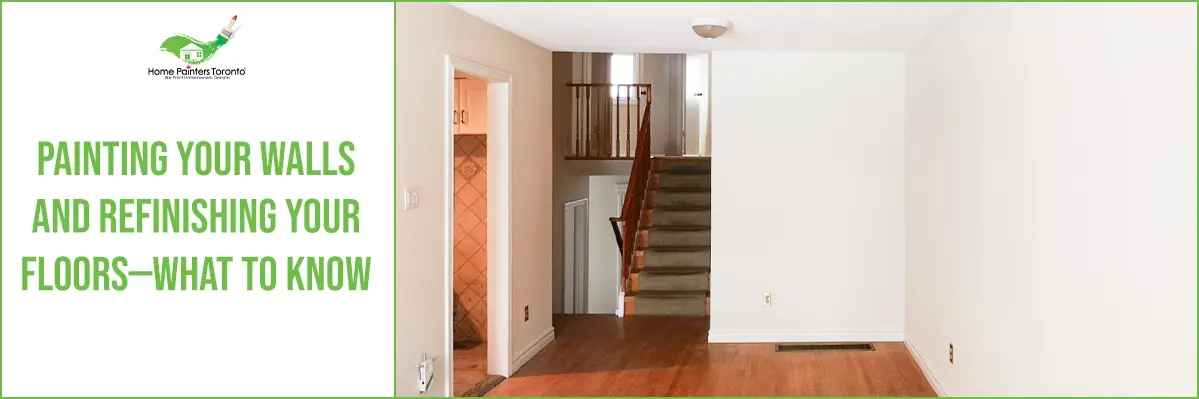
Painting Your Walls and Refinishing Your Floors—What to Know?
Painting walls and refinishing floors in Toronto is one of the most rewarding home renovation combinations a homeowner can undertake, and one of the most commonly sequenced incorrectly, producing damage to one trade's work that requires the other trade to return and redo it. Home Painters Toronto, the HomeStars Best of Award 2026 winner with over 1,200 positive reviews and 37 years serving the GTA, coordinates interior painting projects throughout Leaside, North York, Etobicoke, and Riverdale every season, many of them alongside or immediately following hardwood floor refinishing. There's a reason designers and homemakers always take into account the colour and finish of walls and floors when planning interior spaces. They're an inseparable duo: both elements interact with light, influence the perception of space, and greatly contribute to the overall aesthetic. The right combination can make any space in a house brighter, warmer, larger, or even cozier.
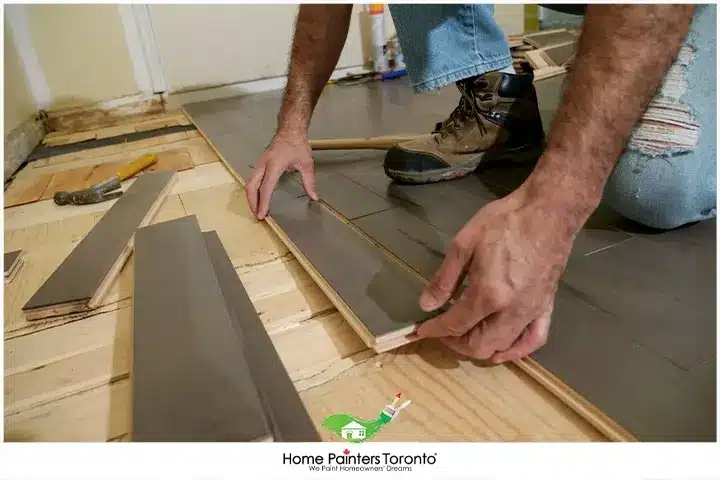
Floor refinishing first and wall painting second, separated by a 48 to 72 hour cure window, is the sequence that lets both trades produce their best result without damaging the other's work.
Painting Walls and Refinishing Floors in Toronto: Why the Sequence You Choose Determines the Quality of Both Results
Floor sanding generates more airborne particulate than any other common interior renovation trade. A drum sander on hardwood flooring produces fine wood dust that becomes suspended in the air throughout the space and settles on every horizontal and vertical surface in the room within hours. According to Health Canada's guidance on volatile organic compounds and indoor air quality, both floor coatings and interior paints contribute VOC loads to the indoor air of an occupied space, and the combined VOC load from two freshly applied coating systems in the same confined space without adequate ventilation creates indoor air quality conditions that require the space to be unoccupied for longer than either trade alone.
The practical consequence of this is that doing both trades in the wrong order either compromises the floor finish (when floor sanding dust settles on damp paint and transfers to the floor sander's equipment) or compromises the paint finish (when floor coating vapours interact with drying wall paint in an inadequately ventilated space). Getting the sequence right, and allowing the correct inter trade waiting period, produces both a floor and a wall finish that look exactly as intended with no remediation required.
If you're thinking about renovating a part of your home soon, it's vital to develop a carefully constructed plan to guarantee everything will work out the way you want it to. You must know the essentials, such as what materials to use, professionals to hire, and more. One essential home remodelling project is repainting your interior walls. However, you have to choose your decisions well because other factors are involved, such as your flooring.
Often, interior painting and refinishing floors go together. When homeowners initiate the building project and start hiring painters, they must decide whether to repaint the walls or refinish the floors. If you're facing the same situation, keep reading below to find out what you should do first to achieve the best results.
Why Toronto's Seasonal Conditions Affect Both Painting and Floor Refinishing Timelines
Toronto's humidity range, from 20 percent indoors under forced air heating in winter to 65 percent or higher in summer without dehumidification, creates different drying conditions for both floor coatings and interior wall paint across the year. Water based floor polyurethane and interior latex wall paint both release moisture as they cure, and that moisture needs to leave the building through ventilation. In winter, the lower ambient humidity speeds drying and curing of both products, but also reduces the open time available for the trades to work. In summer, high humidity extends dry times and can produce coating defects if a second coat is applied before the first has fully released its moisture.
The correct scheduling approach for a combined painting and floor refinishing project in Toronto is to plan the work for late spring or fall, when moderate indoor humidity between 40 and 60 percent provides the most consistent drying conditions for both trades. According to CMHC's guidance on home maintenance and protecting investment value, both flooring and interior paint surfaces are among the most high impact maintenance investments homeowners make, and planning them together within the same renovation window is more cost effective than scheduling them independently across different seasons.
Painting Your Walls Before Refinishing Floors
If you wish to refinish your floors after painting your walls, the good thing about it is that you can easily take care of accidental paint splatters by sanding them off. The same goes for other accidents involving residential painting, which you can easily take care of through sanding. After interior painting, if the paint stains raw wood, it will be harder to remove than if the paint spilled over finished surfaces. Meanwhile, you will have to cover your painted walls if an expert sands the floors because the dust produced could affect your freshly painted walls. A common reason why people wish to have their walls painted before going over their flooring is that when paint drips or stains newly refinished floors, it will be more challenging to address.
Meanwhile, doing the opposite is much easier to solve.
Painting Your Walls After Refinishing Floors
Which comes first—refinishing floors or painting walls? There are numerous advantages to refinishing your floors before painting your walls. Many homeowners can agree that once their floors are finished, it's easier for them to match the colour of their walls to their flooring compared to doing the opposite. Moreover, when damage occurs on the walls due to floor sanding, it takes less time and is faster to repair and paint over the walls instead of fixing the floors. After refinishing the floors, the dust from the sanding will not impact your newly painted walls. However, the disadvantages of refinishing your floors before painting your walls include the possibility of the wall paint dripping onto your recently finished flooring. You can prevent that from happening by placing drop cloths over your entire floor section to avoid accidents.
Should You Paint First or Refinish Floors First? The Professional Answer for Toronto Homes
Painting Walls and Refinishing Floors: Why Getting the Sequence Wrong Costs You Both Jobs
Floor refinishing first is the professional standard for combined renovation projects in Toronto homes. The reasoning is straightforward: floor sanding dust that settles on a freshly painted wall damages the surface texture and is difficult to remove without repainting. Floor sanding dust that settles on bare unfinished walls is simply vacuumed away before the painting contractor begins work. The floor trade creates the condition that damages the painting trade if the sequence is reversed. Going floor first eliminates that risk entirely.
| Sequence | Advantage | Risk | Professional Verdict |
|---|---|---|---|
| Floors first, then walls | Colour matching walls to finished floor is easier; floor dust settles on bare walls, not fresh paint; wall paint drips can be removed easily from finished floor with care | Wall paint can drip onto freshly coated floor if drop cloths are not properly placed | Recommended in almost every scenario |
| Walls first, then floors | Floor sanding removes any accidental wall paint overspray on raw wood easily | Floor sanding dust settles on freshly painted walls and damages surface texture; floor coating vapours interact with drying wall paint | Not recommended; only appropriate if floor refinishing timeline is significantly delayed |
| Both simultaneously | Fastest project completion time | Serious risk of inter trade contamination; VOC loads from both coatings compound in a single space; adhesion of both surfaces can be compromised | Never recommended; both trades must be fully independent of each other |
What to Do for Your Home Remodeling Project
Whether you wish to paint your walls or refinish your floors first, your decision lies in your situation, including your preferences. Initiating floor refinishing is semi permanent, so if paint stains your flooring, it will likely stay on it and will be hard to sand it out. Besides, when you refinish your floors first, after deciding if you want them glossy, semi glossy, or have a particular colour, you can paint your walls accordingly to match your flooring.
You can always choose to refinish your floors before painting your walls, but you must remember to use a canvas drop cloth or anything else to cover and secure your flooring to avoid unwanted paint drips. Performing a home remodelling project is always exciting because you witness the space change before your eyes. Whether you wish to repaint your walls or refinish your floors first, it is crucial to do it right to avoid accidents. For more on how we prepare walls for interior projects, see our guide on common painting mistakes to avoid.
What to Expect from a Professional Floor Refinishing Scope in Toronto
Hardwood floor refinishing is a three day minimum scope on a standard sized Toronto home main floor. Day one involves stripping all furniture from the space, sanding the full floor with a drum sander and edge sander to remove the existing finish and bring the wood back to bare, and vacuuming all dust from the room surfaces. Day two involves filling any gaps or damaged areas in the wood and applying the first coat of polyurethane or oil modified finish. Day three applies the final coat and begins the cure period.
Dust Containment During Floor Sanding: The Step That Protects the Paint Job
Professional dust containment during floor sanding uses plastic sheeting sealed at all door openings and air duct vents, combined with a commercial dust extraction attachment on the drum sander, to reduce the volume of airborne particulate that escapes into the rest of the home. Even with containment, some fine dust migrates through the plastic barriers. The amount of dust that migrates is manageable if walls are bare: it vacuums off cleanly. The same amount of dust that migrates onto a freshly painted wall creates a textured surface that cannot be corrected without repainting.
This is the fundamental argument for floors before-walls in any Toronto renovation project where both trades are in scope. It is not about which trade is more important. It is about which trade creates the condition that can damage the other, and eliminating that risk by controlling the sequence.
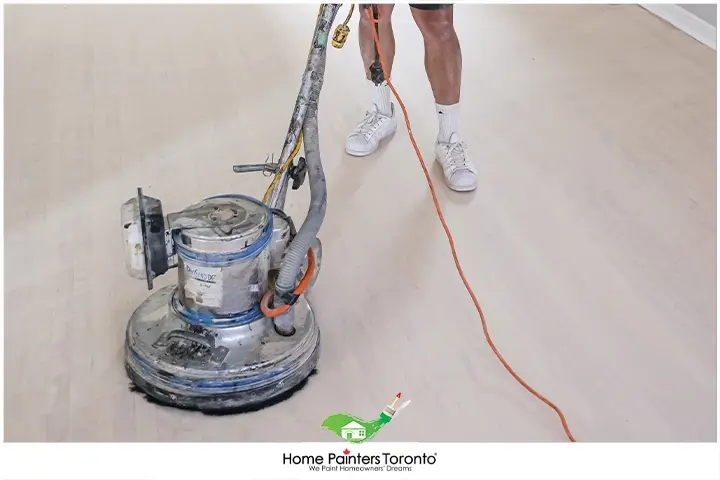
Commercial dust extraction and sealed plastic sheeting at doorways and HVAC vents contain airborne particulate during floor sanding — dust that vacuums cleanly off bare walls but permanently textures a freshly painted surface.
What to Expect from a Professional Interior Painting Scope in Toronto
Interior painting that follows floor refinishing in a Toronto home begins with a minimum 48 to 72 hour waiting period after the final floor coat. This waiting period allows the floor finish to cure past the tacky stage and reduces the VOC concentration in the room air to a level where wall paint can cure correctly without interaction from floor coating off gassing.
Choosing Interior Paint After Floor Refinishing: Sheen, Colour, and Compatibility
Matching wall paint to a finished floor is one of the most satisfying aspects of planning a combined renovation project. A warm toned hardwood floor, whether natural oak, red maple, or a warmer stain, pairs most naturally with warm white walls, warm grey neutrals, or warm colour families like terracotta, ochre, and sage. A cool toned floor, like grey washed oak or ebonized wood, pairs most naturally with cool neutrals, cool whites like Benjamin Moore Chantilly Lace OC 65, and cooler colour families. For full guidance on selecting the right product for the right room, see our guide on picking the right type of interior paint and our guide to the best white paint for interior walls.
Sheen selection for walls adjacent to refined hardwood is also relevant. Eggshell and satin wall finishes reflect just enough light to create a dialogue with a glossy floor surface without competing with it. Flat or matte wall finishes create a quiet backdrop that lets the floor surface dominate visually. Semi gloss on walls adjacent to a high gloss floor finish can create an over reflective environment that reads as busy.
Cost of Combined Wall Painting and Floor Refinishing in Toronto in 2026
Home Painters Toronto is WSIB compliant, fully insured to $5 million in general liability, and all interior painting is backed by a lifetime warranty. For a full breakdown of painting costs alone, see our interior painting cost guide. Floor refinishing costs below are industry standard ranges. All prices are in CAD and exclude HST.
| Scope | Estimated Cost (CAD) | Notes |
|---|---|---|
| Hardwood floor refinishing (main floor, approx 800 sq ft) | $2,400 – $4,800 | Three day scope; sanding, staining if desired, and three polyurethane coats |
| Interior painting (living or dining room) | $400 – $900 | Includes prep, prime, and two topcoats; follows floors by 48 to 72 hours |
| Interior painting (bedroom) | $400 – $800 | Includes prep and two topcoats |
| Interior painting (full main floor, all rooms) | $1,200 – $3,500 | Coordinated with floor refinishing for most efficient project completion |
| Drywall repair before painting (if needed after floor sanding dust or renovation) | Quoted by scope | Common when renovation activity has damaged drywall surfaces |
| Combined floor refinishing and full interior painting (main floor) | $4,000 – $9,000 | Total project cost for most Toronto main floor renovation scopes |
Real Project: Combined Painting and Floor Refinishing in a Leaside Home
Leaside Main Floor: Red Maple Refinishing, 72 Hour Cure Window, and a Warm Greige Repaint With Zero Dust Transfer
A homeowner in Leaside contacted Home Painters Toronto to coordinate a combined main floor renovation involving hardwood floor refinishing and full interior painting. The 900 square foot main floor had original red maple hardwood that had not been refinished since the 1980s, and the walls throughout were a dated off white that the homeowner wanted to replace with a warm greige palette.
The floor refinishing contractor completed the three day sanding and coating scope first. Commercial dust containment was used throughout, with plastic sheeting sealed at all interior doorways and all HVAC vents taped closed during sanding. The final polyurethane coat was applied on day three. Our team was scheduled to begin painting 72 hours after the final floor coat, confirmed to be past the tacky stage by a surface cure test.
Canvas drop cloths were placed over the entire refinished floor surface before any masking or painting began. Benjamin Moore Regal Select in Eggshell finish was applied to all walls throughout the main floor. All trim was painted in Benjamin Moore Advance Water Based Alkyd in Semi Gloss. The completed project showed no floor surface transfer to any painting equipment, no dust texture in the wall finish, and no sheen variation from the inter trade waiting period. The homeowner noted the warm greige wall colour read significantly richer against the freshly refinished natural maple floor than the original off white had.
Home Painters Toronto is WSIB compliant, fully insured to $5 million in general liability, and all interior painting is backed by a lifetime warranty. For completed projects, visit our Toronto painting projects page. Same day free estimates are available seven days a week across the GTA.
Final Thoughts
Redecorating can be a large job, but the satisfaction of looking around a room you've renovated is well worth the effort. Remember that painting walls isn't just about slapping on a coat of colour: it's about careful preparation, having the right tools, and using the proper techniques. Combine that with a fresh, refinished floor, and you'll have a space that feels not only new but truly yours.
The best way to go about it is to hire the right professionals to take over the job so that you can rest assured that your floors and walls will look perfect, just the way you want them to. You could reach out to companies and ask for painting quotes to better understand how much money you're prepared to shell out to achieve a newly improved interior for your home.
Frequently Asked Questions About Painting Walls and Refinishing Floors
Floor refinishing first is the professional standard. Floor sanding generates fine dust that settles on all room surfaces. That dust vacuums cleanly off bare walls but creates a textured surface defect on freshly painted walls that requires repainting to correct. Refinishing floors first and painting walls afterward, with a 48 to 72 hour inter trade waiting period after the final floor coat, eliminates this risk entirely.
A minimum of 48 to 72 hours after the final floor coat is the professional standard before bringing painting equipment into the space. This waiting period allows the floor finish to cure past the tacky stage and reduces the VOC concentration in the room air to a level where wall paint can cure correctly. In high humidity Toronto summers, extending the waiting period to 96 hours produces the most reliable result on both surfaces.
No. Both trades produce VOC bearing coating products that off gas into the room air simultaneously, creating indoor air quality conditions that require the space to remain unoccupied for longer than either trade alone. The floor sanding dust also creates airborne particulate that settles on wet wall paint. The two trades must be completed sequentially with an adequate inter trade waiting period between them.
Canvas drop cloths placed over the full floor surface before any masking or painting begins are the standard protection. Canvas is preferable to plastic sheeting because it absorbs paint drips without allowing them to bleed through to the floor surface below. Plastic sheeting allows paint drips to pool and can transfer to the floor surface or to shoes that then track across the refinished area.
A combined main floor refinishing and full interior painting project in a typical Toronto home costs $4,000 to $9,000 depending on the floor square footage and the number of rooms being painted. Floor refinishing alone runs $2,400 to $4,800 for an 800 square foot main floor. Interior painting runs $400 to $900 per room. For a full interior painting cost breakdown, see our interior painting cost guide. And for inspiration on which signs indicate a full interior repaint is overdue, see our guide on signs it is time to repaint.
More Interesting Blogs Related to "Painting Your Walls and Refinishing Your Floors"
Ready to Coordinate Your Painting and Floor Refinishing Project?
Home Painters Toronto is the HomeStars Best of Award 2026 winner with a lifetime warranty on interior painting and 37 years serving the GTA. Call 416-494-9095 or email [email protected] for a FREE same-day estimate. We are open seven days a week.