

Interior Painting: Best Paint For Walls
The best paint for interior walls in a Toronto home involves more decisions than most homeowners expect, because the right choice for a bedroom wall is the wrong choice for a kitchen wall, and the right brand for a new drywall surface is different from the right brand for a plaster wall that has been repainted a dozen times. Home Painters Toronto, the HomeStars Best of Award 2026 winner with over 1,200 positive reviews and 37 years serving the GTA, helps Toronto homeowners make these decisions across North York, Etobicoke, Leaside, and Riverdale every season. There is so much to think about when it comes to interior painting needs. This guide covers every relevant variable, from paint type and sheen to brand recommendation and primer requirements.
So, you're looking to do some interior painting but can't quite decide what the optimal choice is in terms of the best paint for walls. We are here to help! There is so much to think about when it comes to interior painting needs. First off, have you thought about hiring professional interior painting services? Because they usually use only the best interior paint and can get the job done quickly and pain free.
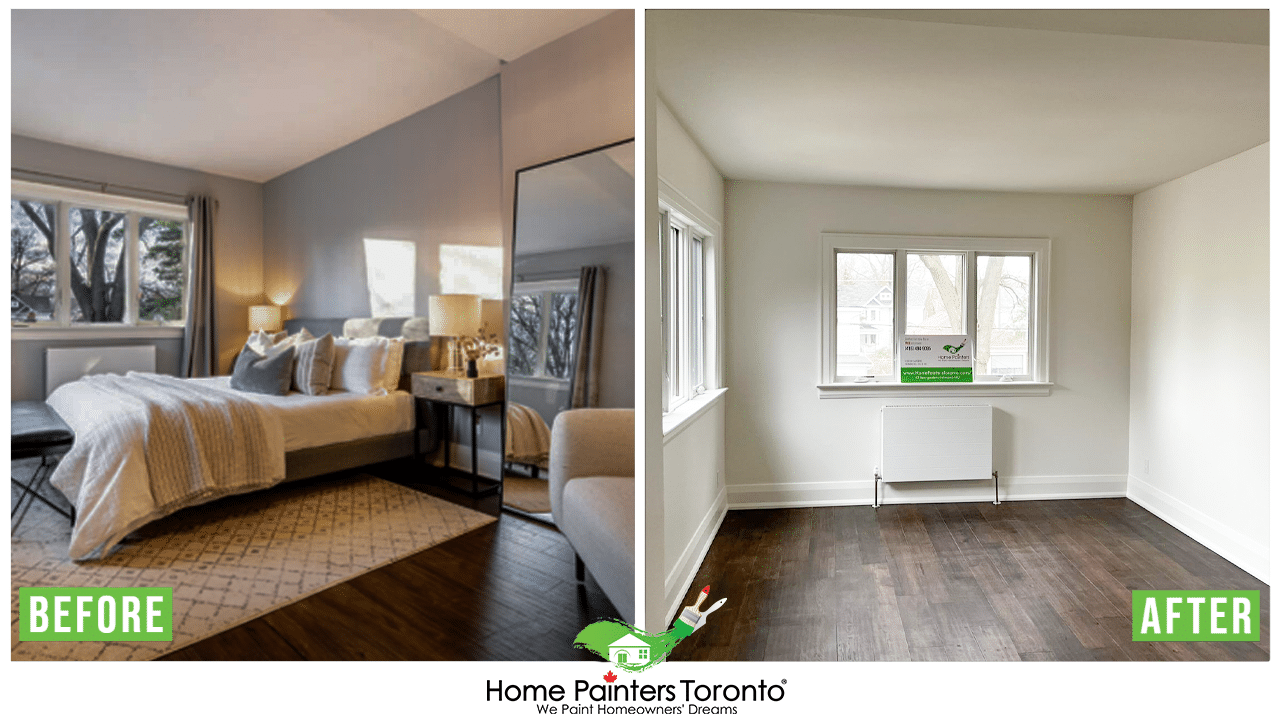
100% acrylic latex in an eggshell finish, applied over the correct primer, is the professional standard for most Toronto living room and bedroom walls.
Types of Interior Paints
There are two main types of interior paints: water based and oil based paints. So, which paint is best for interior walls? Each has its unique characteristics, and the choice between the two depends on the surface being painted and the specific performance requirements.
1. Latex or Water Based Paints
Also known as latex paint, water based paint is a popular choice for interior walls due to its ease of use and eco friendliness. These paints dry quickly, have low VOC content, and are easy to clean with water. They are less likely to crack or yellow over time, making them perfect for most interior surfaces.
2. Oil Based Paints
Oil based paints, or alkyd paints, are highly durable and give a smooth, glossy finish. They take longer to dry and have a stronger odour, but they are better suited for high moisture areas such as kitchens and bathrooms. They are also an excellent choice for wooden trim and wood mouldings to provide long lasting protection.
Latex vs Oil Based Paint
Here's the question that a lot of people start out with in terms of the best paint for walls: latex vs oil based paint. Let's go over a few criteria when it comes to both of these paint finishes for interior painting. Latex (or water based) paints dominate the residential market today. First of all, they're better for the environment, as low VOC or even zero VOC paint options are readily available in latex paint. Latex paint also dries fast, which is good for spaces where two coats of paint are needed in a small amount of time.
In terms of latex vs oil based paint, oil based paint can be a good option for doors and trims. Since they're a high wear and tear area, oil based paint is super durable and scratch resistant. However, for interior painting and the best paint for walls, latex paint is the preferred choice. It doesn't yellow over time, it dries quickly and has lower VOCs which results in a low odour. Plus, latex paints are easier to clean with just soap and water. Latex paints are also widely available and easily sourced at paint stores throughout the GTA. For a deeper comparison of the two product types, see our guide on picking the right type of interior paint.
Picking the Right Sheen
Now that the choice between latex and oil based paint has been narrowed down, the next decision is sheen. Sheen refers to the glossiness of a paint finish. Here are some of the different paint finishes to consider:
- Flat or Eggshell Paint: These types of interior paints have the least amount of sheen or glossiness. For that reason, they are a good choice if there are some interior wall imperfections to hide. Flat or eggshell interior paint is commonly used for wall painting as well as ceiling paint. Flat or eggshell paint is not suggested for kitchens or bathrooms.
- Semi Gloss Paint: Semi gloss paint is suggested for interior painting when a slicker, highly durable and stain resistant finish is needed. Basically, it's the paint finish suggested for kitchen and bathroom walls. It might also be a good choice for children's play areas, front entrance ways and hallways.
- Satin Finish Paint: Satin finish paint is often described as possessing a velvety finish for wall painting. The satin finish is a little less lustrous than semi gloss paint, so it can appear both flat and glossy. It all depends on the lighting in the room. Satin finish paint can also be used in bathrooms or kitchens due to its durability.
- Glossy Paint: In terms of the best paint for walls, glossy paint is not suggested as it tends to showcase imperfections. Instead, it's a great paint to use for cabinets, trim work, doors or moulding.
Interior Wall Paint Finish Guide: Which Sheen Level Belongs in Which Room
Choosing the wrong sheen for a room is one of the most common interior painting mistakes in Toronto homes. A sheen that is too glossy in a poorly patched room highlights every imperfection under raking light from windows. A sheen that is too flat in a high traffic area cannot be wiped clean and requires repainting within one to two seasons.
| Finish | Sheen Level | Best Rooms | Key Trade Off |
|---|---|---|---|
| Flat / Matte | None | Adult bedrooms, low traffic rooms, ceilings | Best at hiding imperfections; not cleanable in high traffic areas |
| Eggshell | Very low | Living rooms, dining rooms, main floor walls | Good cleanability; slight lustre; the most versatile all purpose wall finish |
| Satin | Medium | Hallways, family rooms, children's bedrooms | More durable and cleanable than eggshell; can show application marks on large flat walls |
| Semi Gloss | High | Kitchens, bathrooms, trim, doors, high contact surfaces | Maximum moisture and scrub resistance; highlights surface imperfections under light |
| Gloss | Very high | Cabinets, trim, and furniture only | Most durable; requires near perfect surface prep to look smooth; not for walls |
For a full room by-room breakdown of which paint type and finish works best in each space, see our guide on picking the right type of interior paint and our guide to the best white paint for interior walls.
The Best Paint For Walls
In terms of interior painting needs and choosing the best paint for walls, here are some top professional choices:
First, a really good primer prior to interior painting is always the right starting point. Benjamin Moore's Fresh Start Premium Interior Primers are at the top of the list. They are low VOC, fast drying and allow easy and smooth application of the topcoat above them.
In terms of the best paint for walls, Benjamin Moore Regal Select Interior Paint never lets the Home Painters Toronto team down. It's a consistent performer across a wide range of surface conditions. It applies smoothly, dries to an even finish, and holds up well to the cleaning and contact that residential walls experience over time.
If looking for an interior latex paint that works well for both painting walls and woodwork, Benjamin Moore Ultra Spec Scuff X is another strong option. Its scuff resistance makes it particularly suited to hallways, entry areas, and any surface where contact and abrasion are regular occurrences.
For kitchen or bathroom walls, Benjamin Moore Kitchen and Bath Paint is formulated specifically for high moisture and high humidity environments. Its mould inhibiting additives and moisture resistant finish make it a reliable choice for the two rooms in any Toronto home where standard latex performs least well.
The Best Interior Paint Brands for Toronto Walls: Benjamin Moore vs Sherwin-Williams
Best Paint for Interior Walls: What 37 Years of Toronto Projects Has Taught Our Team
Home Painters Toronto specifies Benjamin Moore products for the overwhelming majority of residential interior painting projects across the GTA. The Regal Select, Aura, and Ben product lines each address a different combination of surface condition and budget: Regal Select for most residential walls, Aura Interior for demanding conditions where colour consistency across multiple coats is critical, and Benjamin Moore Ben for budget conscious projects where standard 100% acrylic performance is the requirement.
Sherwin Williams Emerald Interior is a comparable product in the premium tier and is specified on projects where the client has a specific existing Sherwin Williams colour in the home that cannot be practically matched in Benjamin Moore. Both brands produce consistent, professional results in the hands of a professional applicator with the correct primer underneath.
The brand that consistently underperforms on Toronto residential projects is the budget and trade program store brand latex products available at big box retailers. These products use lower grade binders and colorant systems that produce acceptable results initially but show adhesion failure, colour shift, and burnishing much faster than premium products under normal residential cleaning and contact.
Quality of preparation, specifically the primer step, matters more to the final result than brand choice within the premium tier. See our guide on common painting mistakes to avoid for the specific preparation errors that undermine even premium paint in a Toronto home.
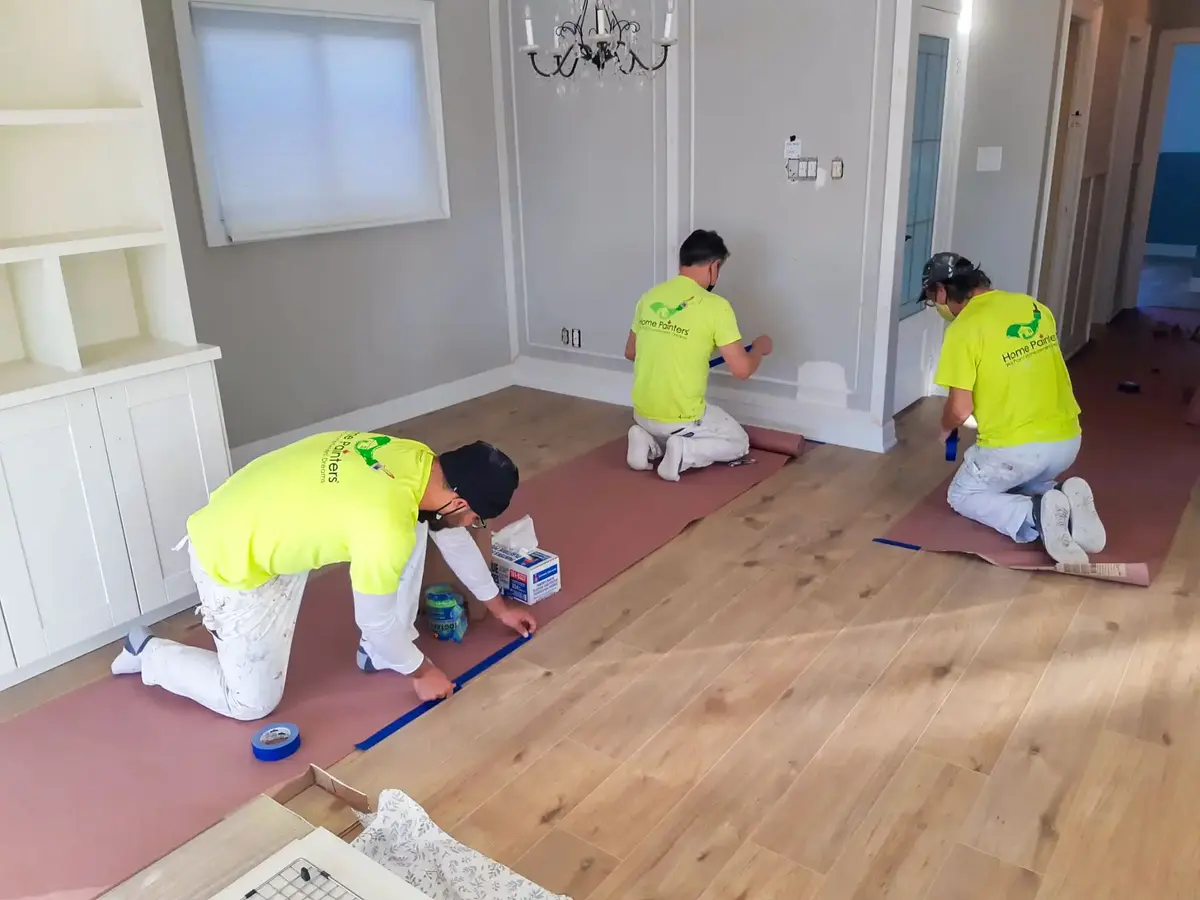
Quality of preparation, especially the primer step, matters more to the final result than brand choice within the premium tier — Benjamin Moore Fresh Start Primer sets up the topcoat for even coverage and long term adhesion.
Why Toronto's Seasonal Humidity Makes Paint Selection More Critical Than in Milder Climates
Toronto's indoor relative humidity swings from below 20 percent under forced air heating in January to above 60 percent in summer without dehumidification. According to Health Canada's guidance on VOCs and indoor air quality, VOC content in interior paint products directly affects indoor air quality during and after application, and Toronto's winter conditions, which seal homes tightly and reduce air exchange, amplify those VOC concentrations in occupied spaces. This is why low and zero VOC paint products are particularly important in Toronto homes where wintertime ventilation is limited.
Low VOC and Zero VOC Interior Paint: When It Matters Most in a Toronto Home
Low VOC paint matters most in three Toronto specific situations: painting a nursery or children's bedroom where occupants are most sensitive to off gassing; painting in winter when windows cannot be opened for extended ventilation; and painting in a basement or enclosed space where air exchange is structurally limited. Benjamin Moore's Aura Interior and Ben product lines both offer near zero VOC formulations that significantly reduce off gassing in these situations. For a deeper comparison of low VOC vs zero VOC options, see our guide on low VOC vs zero VOC paint.
Top Tips for Choosing the Best Paint Finish for Interior Walls
Primer First: Why Skipping It Is the Most Expensive Interior Painting Mistake in Toronto
Primer is the most skipped step in residential interior painting, and it is the single most common reason a paint job fails within the first year. Primer creates the chemical adhesion between the substrate and the topcoat, seals porous surfaces so paint absorbs consistently, and prevents stains and tannins from bleeding through the finished colour.
The cost of primer on a typical Toronto interior room adds $30 to $60 in material to the project. The cost of stripping a paint job that failed because primer was skipped and repainting correctly runs $400 to $900 for the same room. The mathematics of primer are straightforward.
The Right Primer for Each Surface Type in a Toronto Home
| Surface Condition | Correct Primer | Notes |
|---|---|---|
| New drywall | Benjamin Moore Fresh Start High Hiding All Purpose Primer | Standard starting point for any new drywall surface |
| Previously painted wall in good condition, same or similar colour | Spot prime only on any damaged sections; full prime optional | If the existing surface is clean and sound, a quality topcoat can go directly over it in some cases |
| Previously painted wall, significant colour change (dark to light or light to dark) | Benjamin Moore Fresh Start High Hiding All Purpose Primer throughout | Full prime required to prevent colour interference through the topcoat |
| Old plaster walls (Victorian or Edwardian homes) | Alkali resistant primer | Lime content in old plaster can cause adhesion issues with standard acrylic primer |
| Water stained surfaces | Zinsser BIN Shellac Based Primer or Zinsser Bulls Eye 1-2-3 | Water stains bleed through standard primer regardless of topcoat layers; only shellac or oil based stain blocker prevents migration |
| New concrete or masonry interior surfaces | Alkali resistant masonry primer | Prevents adhesion failure from alkalinity off gassing in new concrete |
Cost of Professional Interior Wall Painting in Toronto in 2026
Home Painters Toronto is WSIB compliant, fully insured to $5 million in general liability, and all interior painting is backed by a lifetime warranty. For a full cost breakdown, see our interior painting cost guide. All prices below are in CAD and exclude HST.
| Scope | Estimated Cost (CAD) | Notes |
|---|---|---|
| Interior room (living or dining) | $400 – $900 | Includes prep, prime if needed, and two topcoats of Benjamin Moore Regal Select or equivalent |
| Interior room (bedroom) | $400 – $800 | Includes prep and two topcoats; low or zero VOC products standard for sleeping rooms |
| Interior room (bathroom or kitchen) | $250 – $500 | Semi gloss with mould inhibitor; moisture resistant products standard |
| Interior trim, doors, and baseboards (full home) | $700 – $1,200 | Water based alkyd enamel (Benjamin Moore Advance) in semi gloss; hard finish on contact surfaces |
| Full home interior repaint (all rooms, all surfaces) | $3,000 – $7,000 | Most cost effective when coordinated as a single project |
In Conclusion
Finding the best paint for interior walls involves considering several factors, such as paint type, finish, room usage, and lighting conditions. By taking these factors into account and investing in high quality products, the result is a beautiful and long lasting finish for any home.
Frequently Asked Questions About the Best Paint for Interior Walls
100% acrylic latex in an eggshell finish is the professional standard for most Toronto interior walls. Benjamin Moore Regal Select is the most commonly specified product by professional painters because it covers consistently, resists scrubbing, and holds colour without yellowing. Semi gloss is specified in kitchens and bathrooms for its moisture resistance and cleanability.
Primer is needed in most interior painting situations except a maintenance recoat of an identical or very similar colour over a sound, clean existing latex coat. New drywall, significant colour changes, plaster walls, water stained surfaces, and any surface where oil based paint was previously applied all require a specific primer before topcoat. Skipping primer is the most common cause of interior paint adhesion failure within the first year.
Eggshell has a lower sheen than satin and hides minor surface imperfections more effectively under most lighting conditions. Satin has a slightly higher sheen, is more durable, and wipes clean more easily, making it the better choice for higher traffic areas or rooms with children. Both are significantly more durable than flat or matte finishes.
Low VOC paint is worth it in most Toronto residential situations and essential in three specific ones: nurseries and children's bedrooms, wintertime painting when limited ventilation traps VOC off gassing indoors, and enclosed spaces like basements where air exchange is structurally limited. See our full guide on low VOC vs zero VOC paint for the specific VOC threshold differences between product tiers.
Professional interior painting for a standard living or dining room costs $400 to $900 in Toronto. A bedroom runs $400 to $800. A bathroom runs $250 to $500. A full home interior repaint across all rooms runs $3,000 to $7,000 depending on the number of rooms and surface conditions. All quotes from Home Painters Toronto are free and provided the same day.
More Interesting Blogs Related to "Interior Painting: Best Paint For Walls"
Ready to Choose the Best Paint for Your Walls?
Home Painters Toronto is the HomeStars Best of Award 2026 winner with a lifetime warranty on interior painting and 37 years serving the GTA. Call 416-494-9095 or email [email protected] for a FREE same-day estimate.