

The best paint for concrete walls in a basement is a moisture-resistant masonry or concrete paint designed to bond to porous surfaces and handle light basement dampness. Basement concrete walls are different from drywall or wood trim because they can hold moisture, develop powdery residue, and cause regular wall paint to peel if the surface is not properly assessed and prepared first.
For Toronto homeowners, choosing the right basement concrete wall paint matters because basements are more exposed to humidity, foundation moisture, and seasonal temperature changes.
- Best paint for concrete walls in a basement: masonry paint, concrete paint, or elastomeric coating when appropriate
- Best for damp basements: breathable, moisture-resistant coatings made for masonry surfaces
- Avoid: standard interior wall paint applied directly to bare concrete
- Watch for: efflorescence, peeling, bubbling, chalky residue, and past water stains
- Why it matters: the wrong paint can trap moisture, lose adhesion, and fail early
- Best outcome: a clean, durable finish that bonds properly to the concrete surface
Need this done professionally in Toronto? Get a free quote for basement painting here: Basement painting in Toronto
The right basement paint system — alkali-resistant primer followed by elastomeric masonry topcoat — handles Toronto's freeze-thaw cycling and moisture vapour movement that standard interior paint cannot.
Why Toronto Basement Walls Are Harder to Paint Than Most
Toronto's climate is one of the more demanding in North America for basement surfaces. The city experiences over 100 freeze-thaw cycles per year, and that repeated expansion and contraction puts real stress on concrete walls. Moisture migrates through the concrete as temperatures shift, which is why standard interior paints fail so quickly in basements here, even when the walls look dry before you start.
Homes in older Toronto neighbourhoods like Riverdale, The Annex, Etobicoke, and North York often have poured concrete or block foundations from the 1950s through the 1980s. These older concrete mixes are more porous than modern formulations, which means they absorb moisture more readily and give paint less to bond to. This is why the product selection and prep work for a Toronto basement is different from what you would do in a warmer, drier climate.
According to CMHC guidance on moisture in Canadian homes, below-grade concrete is one of the most common pathways for moisture infiltration in older housing stock, and that moisture movement is precisely what causes paint to fail when the wrong products are used.
The products recommended in this guide, particularly elastomeric masonry paints and alkali-resistant primers, are chosen specifically because they handle this climate. They flex with the concrete rather than cracking, and they allow some moisture vapour to pass through rather than trapping it behind a sealed surface.
The Best Paint System for Basement Concrete Walls
If you want the most reliable finish, use a simple three-step system:
- Clean and de-dust the wall so paint can bond
- Use a masonry bonding primer or sealer designed for concrete
- Finish with elastomeric masonry paint for durability and flexibility
If the wall has visible moisture issues, deal with the source first. Painting over active moisture is the fastest way to end up with bubbling, peeling, or staining.
If you prefer a pro finish, see our process and pricing here: Basement Painting Services in Toronto
Process to Paint Concrete Walls in a Basement
Before you get to the job to paint concrete walls in a basement, there are several things you must examine with the concrete walls. Just painting with no prep will lead to peeling, chipping and ultimately a lacklustre paint job.
- Check for any water damage before you start. This is paramount because if you paint with water damage, the paint job will be lacklustre and can cause further damage.
- Clean the walls with a cloth to get rid of any dust formed.
- Strip the outdated paint with a paint scraper.
- Prime the concrete walls in your basement. This is necessary for the paint to stick better on the surface. Ultra Spec Masonry Int/Ext 100% Acrylic Sealer by Benjamin Moore is an ideal option.
The prep required for the concrete walls in a basement is the same as any other paint job. But it can have much more severe consequences if not done correctly. For a full walkthrough of how we prepare walls for an interior painting job, see our detailed guide.
Walls in a basement are the foundation of your interior home. They need proper care to ensure a healthy and sustainable place for living in the future.
Best Paint For Basement Walls
When it comes to choosing paint for your basement, there are a few things you should keep in mind: colour, texture, and durability.
You'll want to pick something that's going to last so that your basement walls are not only functional but also attractive.
So what are some of the best paints for concrete basement walls? Believe it or not, there really aren't many options out there that will work well on these surfaces.
Here's a list of the best paints for concrete walls in a basement:
- Painting concrete is best done with masonry paint, also known as elastomeric paint or elastomeric wall coating, due to its binders that expand and contract with the concrete. This makes it ideal for concrete basement walls as it will not crack or peel.
- Epoxy paint is another good choice for concrete basement walls, as it is waterproof and can be applied over regular latex paint. However, epoxy paint tends to be more expensive than masonry paint and takes longer to dry. Also, they do not breathe, so if you live in an area that gets humid summers and cold winters, then this may not be the best option for you.
- Latex paint is the least expensive option, although it is not waterproof and will likely need to be repainted every three years or so.
Masonry Paint vs. Epoxy vs. Latex — Side-by-Side Comparison
Choosing the wrong paint type for a concrete basement is one of the most common mistakes homeowners make. Here's how the three main options compare on the factors that matter most:
| Feature | Elastomeric Masonry Paint | Epoxy Paint | Latex Paint |
|---|---|---|---|
| Waterproof | Yes (breathable) | Yes (non-breathable) | No |
| Flexibility | High, expands/contracts with concrete | Low, can crack | Low |
| Alkali resistance | High (AR rating) | Medium | Low |
| Adhesion to raw concrete | Excellent | Good (needs etching) | Fair |
| Breathability | Yes, allows vapour transfer | No, traps moisture | Yes |
| Mould resistance | Good | Good | Poor |
| Cost (approx. per L) | $40 to $70 CAD | $60 to $110 CAD | $20 to $40 CAD |
| Recoat frequency | 7 to 10 years | 5 to 7 years | 2 to 4 years |
| Best for | All basement concrete walls | High-traffic utility areas, dry basements | Budget touch-ups only |
How Many Coats of Paint Do Concrete Basement Walls Need?
For raw or previously unpainted concrete, the standard approach is:
- One coat of masonry bonding primer or 100% acrylic sealer (Benjamin Moore Ultra Spec Masonry is a reliable choice for Toronto's conditions)
- Two coats of elastomeric masonry topcoat, allowing full cure time between coats
If the wall has been painted before with a compatible product and is in good condition, one topcoat is sometimes sufficient after a thorough clean and spot-prime. However, for the most durable result on Toronto basement walls, always plan for two coats.
How Long Does Paint Last on Concrete Basement Walls?
With proper prep and the right product, a quality elastomeric masonry paint should last 7 to 10 years on a Toronto basement wall, provided there are no active moisture issues. Latex paint typically needs repainting every 2 to 3 years. Epoxy can last 5 to 7 years but may peel in areas with moisture movement behind the wall. The single biggest factor in paint longevity is surface prep, not brand name.
Concrete Basement Wall Paints You Should Use
Sherwin-Williams and Benjamin Moore offer top-of-the-line paint and primers for homeowners. Whichever you choose is ultimately up to you, but you want to stick with recognized brands, even if it does end up costing more. Remember, anything that is high quality will end up costing more due to its durability. Paint for concrete walls is a specialized item that will cost more than regular paint.
- H&C COLORTOP Water-Based Solid Color Concrete Stain by Sherwin-Williams offers a long-lasting and beautiful finish for concrete walls in basements.
- Ultra Spec Masonry Elastomeric Waterproof Coating Low Lustre
- Ultra Spec Masonry Elastomeric Waterproof Coating Flat
- UltraCrete Textured Masonry Topcoat
These are all brands used here at Home Painters Toronto. If you are hiring a company, you want to ensure they are using the best quality paint. Paint concrete walls in a basement requires waterproof coating since leakage is more prominent in a basement than in other sections of a house.

Efflorescence must be treated — not painted over — before any primer goes on. Painting over salt deposits guarantees the paint film will lift within months.
How to Identify and Treat Efflorescence Before You Paint
Efflorescence is one of the most common problems on Toronto basement walls, and one of the most misunderstood. It appears as a white or grey powdery residue on the surface of concrete, sometimes chalky, sometimes crusty. Many homeowners mistake it for mould or paint failure.
What it actually is: Efflorescence is the result of water moving through concrete and carrying dissolved salts to the surface. As the water evaporates, the salts are left behind. It's not structurally dangerous on its own, but it's a clear indicator that water is moving through your walls, and painting over it without treatment guarantees the paint will peel.
Can You Paint Over Efflorescence?
No, not without treating it first. Painting directly over efflorescence creates a weak bond between the paint film and the concrete surface. The salts continue to push outward, lifting the paint from behind within months.
How to Treat Efflorescence on Basement Walls
- Dry brush the surface with a stiff masonry brush to remove loose deposits
- Apply a diluted masonry cleaner or muriatic acid solution (follow product instructions carefully and ensure proper ventilation, as this is a step where professional handling is often preferable)
- Rinse thoroughly with clean water and allow the wall to dry completely, 24 to 48 hours minimum depending on humidity
- Apply an alkali-resistant (AR) primer rated for masonry, as this creates a barrier against future salt migration
- Finish with an elastomeric masonry topcoat with a high AR rating
If efflorescence keeps returning after treatment, the root cause is active water infiltration from outside the wall. In that case, painting is a cosmetic fix only. The source of the moisture needs to be addressed first, which may involve exterior waterproofing or drainage improvements. Our team can assess this as part of a basement painting consultation. Contact Home Painters Toronto for a free quote
Can You Paint Basement Walls Yourself?
Of course, if you are confident enough, you can attempt to paint concrete walls in a basement. These walls are different from your upstairs interior, so it is crucial that you take all the necessary steps to do a professional and lasting job.
- Fill cracks with hydraulic cement.
- If water is evident throughout the walls, find the source immediately.
- Remove debris from concrete.
- Be sure to apply waterproof masonry products on concrete walls in the basement.
Tools Required for Painting Your Basement Walls
The tools you need to paint concrete walls in a basement can add to the cost, but it is worth it for your safety. Sherwin-Williams has all the equipment necessary for tackling this project. It is paramount that you use all these tools to not only be safe but to have your concrete walls secured for years to come.
- Concrete Broom
- Spiked Shoes
- Rake frame with threaded handle adapter
- Adjustable Trowel
The best paint for concrete walls in a basement has to be waterproof. I have said this several times throughout this piece because of how important it is. If you choose paint that is not explicitly meant for concrete, you are looking at a steeper price to redo the walls.
How Much Does It Cost to Paint Concrete Basement Walls in Toronto?
Cost is one of the most-searched questions about basement painting, and one most guides skip. Here's an honest breakdown for Toronto homeowners in 2026.
DIY Cost Estimate
- Masonry bonding primer: $60 to $90 per pail
- Elastomeric masonry topcoat: $80 to $120 per pail (covers approximately 30 to 40 sq ft per coat on porous concrete)
- Concrete broom, roller frames, extension poles: $40 to $80 if you don't own them
- Masonry cleaner / efflorescence treatment: $25 to $50
- Total DIY materials for an average Toronto basement (approx. 600 to 800 sq ft of wall): $350 to $600 CAD
Professional Cost Estimate
Most professional basement concrete wall painting jobs in Toronto range from $800 to $2,500 CAD, depending on the size of the basement, the condition of the walls, and whether prep work like efflorescence treatment or crack repair is required.
The premium for professional work isn't just labour. It's access to commercial-grade products, proper ventilation equipment, and the guarantee that the prep work (the step that determines whether paint lasts 2 years or 10) is done correctly. Many homeowners who attempt basement wall painting as a DIY project end up hiring professionals anyway after the first peeling.
For a precise quote based on your specific basement, request a free estimate from Home Painters Toronto. We've been painting Toronto basements since 1987.
For reference, our interior painting cost guide covers pricing across all interior surfaces if you're planning a broader project.
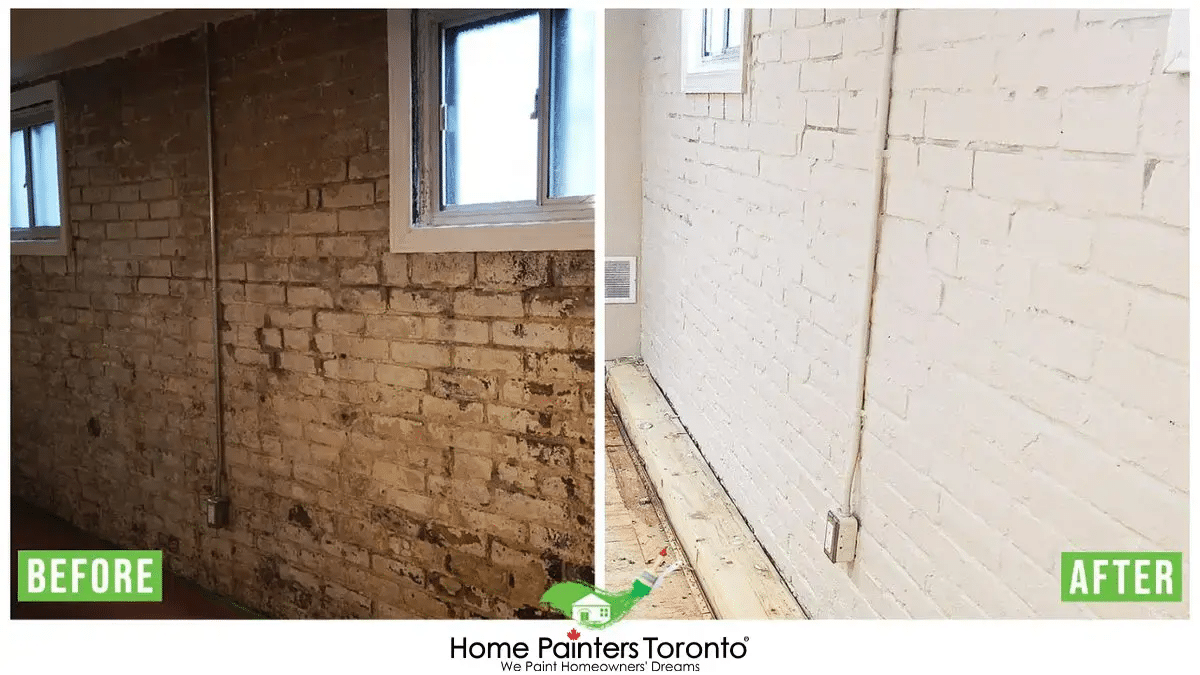
Real Project: Basement Painting and Repairs in Toronto
Toronto Basement: Concrete Wall Repaint with Efflorescence Treatment and Carpentry Repairs
One of the best ways to understand what a professional basement job actually involves is to look at a real project. Here's a summary of a recent basement job our team completed in Toronto.
The situation: A homeowner contacted Home Painters Toronto after a previous contractor was unable to complete the job. Her basement needed a full paint refresh on concrete walls, along with carpentry and handyman repairs. This combination is more common than most homeowners expect, since concrete walls often reveal related issues such as cracks, damaged trim, and moisture staining once work begins.
What the job involved:
- Full inspection of the concrete walls for moisture, efflorescence, and existing paint condition
- Surface preparation including cleaning, crack filling with hydraulic cement, and application of a masonry bonding primer
- Two coats of elastomeric masonry paint throughout the basement
- Carpentry and handyman repairs completed in the same visit
The result: A clean, durable finish that addressed both the aesthetic and the underlying prep issues the previous contractor had left incomplete.
This is the kind of job we handle regularly across Toronto and the GTA. See more of our completed projects
Home Painters Toronto is a proven company with over 35 years of experience in Toronto and the GTA. We tackle all sorts of painting jobs, including concrete walls in a basement. If you do not want to do the job yourself, you must hire a company with a positive track record.
Frequently Asked Questions About Painting Concrete Basement Walls
Yes, in almost every case. Raw concrete is alkaline and porous. Paint applied directly without a sealer or primer will have poor adhesion and may peel within a season. A 100% acrylic masonry sealer or bonding primer such as Benjamin Moore's Ultra Spec Masonry line creates the chemical bridge between the concrete and the topcoat. This step is especially important in Toronto basements where seasonal moisture movement is common. For more on how we prepare surfaces, see our interior painting services page.
Yes, if the old paint is adhering well and is compatible with your new product. The test is simple: press a piece of tape firmly against the wall, then pull it away. If paint comes off with the tape, the existing coat needs to be removed before repainting. If the existing paint is an oil-based or epoxy product, you'll need to test compatibility or strip entirely before applying a water-based masonry topcoat.
Elastomeric masonry paint is typically dry to the touch within 4 to 6 hours but should be considered fully cured after 30 days. You can safely move light furniture and boxes back in after 24 to 48 hours in normal Toronto indoor conditions (15 to 25 degrees Celsius, 40 to 60% humidity). Avoid excessive moisture exposure, including running a humidifier, during the cure period.
It depends on your timeline. If basement finishing is planned within 1 to 2 years, painting the concrete walls is generally not worth the effort, as the walls will be covered by framing and drywall. However, if finishing is 3 or more years away, a coat of waterproofing masonry paint helps protect the concrete, prevents efflorescence buildup, and keeps the space cleaner and brighter in the interim. Our team can help you think through the right sequence. See our drywall installation and repair service for what comes after.
No. Regular interior latex or acrylic wall paint is not formulated to handle the alkalinity of concrete, the moisture vapour pressure from below-grade walls, or the flexibility required as concrete expands and contracts. It will fail, typically within one to two seasons in a Toronto basement. Only masonry-specific products with alkali-resistant formulations should be used on concrete basement surfaces.
A masonry sealer (or bonding primer) is a preparatory coat. Its job is to penetrate the concrete, stabilize the surface, and create adhesion for the topcoat. It is not a finished surface on its own. Waterproof masonry paint such as Benjamin Moore Ultra Spec Masonry Elastomeric Waterproof Coating is the topcoat that provides the actual waterproofing, colour, and durability. You need both, sealer first and waterproof paint second, for a reliable, long-lasting result.
Top Related Blogs to Best Paint for Concrete Walls in a Basement
If you're thinking of doing some home interior painting but don't want to do the work yourself, let our interior painters help! Even if you are undecided, professional house painters can help you with any problems or questions you may have.
Need Your Basement Concrete Walls Painted in Toronto?
Home Painters Toronto has been painting Toronto basements since 1987. Call 416-494-9095 or email [email protected] for a FREE quote.