

Transform Your Home with Popular Types of Crown Moulding
Types of crown moulding span a wider range of profiles, materials, and sizing options than most Toronto homeowners expect when they begin planning a trim upgrade, and choosing the wrong combination for a specific room, ceiling height, or home style produces a result that looks off without being obviously wrong. Home Painters Toronto, the HomeStars Best of Award 2026 winner with over 1,200 positive reviews and 37 years serving the GTA, installs and paints crown moulding throughout North York, Leaside, Etobicoke, and Riverdale every season. Crown moulding can turn an ordinary room into an extraordinary one. This trim, placed where the wall meets the ceiling, offers a touch of elegance and can enhance the overall aesthetic of any space. By the end of this guide, there will be a clear understanding of crown moulding and the ability to choose the perfect type for any Toronto home.
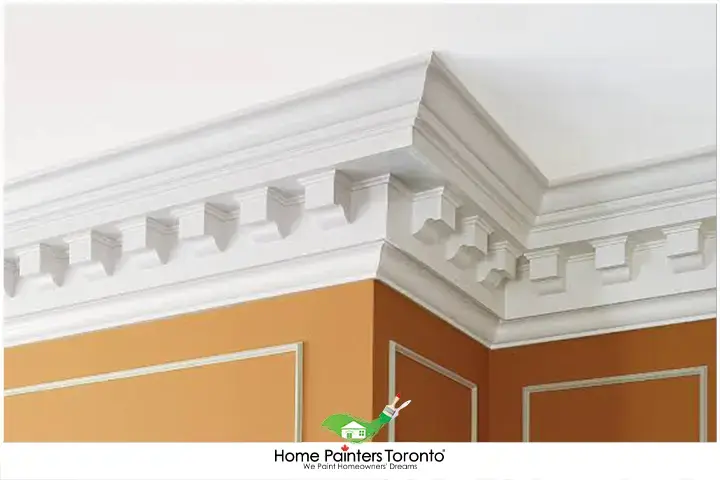
An ogee profile crown moulding, sized at roughly one inch of height per foot of ceiling, creates the layered transition between wall and ceiling that defines Toronto's Victorian and Edwardian formal rooms.
What is Crown Moulding?
Crown moulding, also known as cornice moulding, is a decorative trim that runs along the top edge where the walls and ceiling meet. It adds a finishing touch to a room by creating an elegant transition between two surfaces. Crown moulding is typically used in traditional or formal spaces, but can also add character to modern or contemporary rooms when chosen carefully. For a detailed guide on installation, see our crown moulding installation guide.
Why Use Crown Moulding?
Crown moulding has several benefits that make it a popular choice among homeowners and interior designers. Some of these benefits include:
- Adds architectural interest: The crown moulding adds visual interest to an otherwise plain space, making it feel more upscale and sophisticated.
- Hides imperfections: If walls or ceilings have slight imperfections, crown moulding can help cover them up, giving the illusion of a smoother surface.
- Defines a room: By separating the wall from the ceiling, crown moulding helps define the dimensions of a room and creates a sense of depth.
- Increases home value: Installing crown moulding is an affordable way to add value and appeal to a home, making it a wise investment for future resale.
Types of Crown Moulding for Toronto Homes: Why Profile, Material, and Room Scale All Determine Which Option Works
Crown moulding selection mistakes in Toronto homes fall into three categories. The first is choosing a profile that is historically incorrect for the home's architecture. A simple clamshell profile on a Victorian home with 10 foot ceilings reads as inadequate. An elaborate three piece built up cornice assembly in a 1980s bungalow with 8 foot ceilings reads as visually heavy and out of place. The second mistake is selecting MDF for a bathroom or kitchen where humidity causes the wood fibre to swell at the mitre joints over time. The third is installing a profile that is sized incorrectly for the ceiling height, either too narrow to register visually or too wide to look proportional.
Correct crown moulding specification requires matching the profile to the architectural style of the home, the material to the room's humidity conditions, and the width to the ceiling height. All three decisions need to be made before a single metre of moulding is purchased.
Types of Crown Moulding: Which Profiles Work Best in Toronto Victorian and Edwardian Homes
Toronto's Victorian and Edwardian semidetached homes, which make up a large portion of the housing stock in Leslieville, Riverdale, Roncesvalles, and The Annex, were originally finished with plaster cornice profiles that combined an ogee curve, a flat fascia, and a cove return at the ceiling. Reproducing this layered look in modern materials means either a wide single piece crown with an ogee profile (typically 3.5 to 5 inches wide) or a built up three piece assembly with separate bed moulding, flat frieze board, and crown capping piece. Both approaches are covered by our crown moulding installation service, and both pair with our wood trim installation service for complete period accurate trim packages.
| Profile Name | Visual Character | Best Suited For | Width Range |
|---|---|---|---|
| Clamshell (Spring Cove) | Simple curved S shape; subtle transition | Modern and contemporary homes; low ceilings; condos | 1.5 to 2.5 inches |
| Ogee (Cyma Recta) | S curve with flat sections; traditional depth | Victorian and Edwardian homes; formal living and dining rooms | 2.5 to 5 inches |
| Cove (Concave) | Single concave curve; quiet and understated | Mid century modern homes; rooms with artwork collections | 2 to 3.5 inches |
| Built up cornice assembly | Multiple pieces layered for maximum visual depth | High ceiling heritage homes; grand dining rooms; formal entries | 5 to 9 inches total |
| Dentil crown | Ogee profile with rectangular tooth blocks along the lower edge | Colonial revival and Georgian architecture; formal libraries | 3 to 5 inches |
| Rope or egg and-dart | Decorative relief patterns in the flat section | Period restoration projects; formal dining rooms in heritage homes | 3 to 6 inches |
Popular Types of Crown Moulding
Wood Crown Moulding
Wood is a classic crown moulding choice that brings warmth and a natural touch to any room. It is available in various types of wood, including oak, maple, and cherry. The beauty of wood moulding lies in its versatility; it can be stained, painted, or left unfinished to match any décor style. Here are some advantages of wood crown moulding:
- Customizable: Can be easily painted or stained to fit specific design needs.
- Durable: With proper care, wood crown moulding can last for many years.
- Timeless Appeal: Wood moulding never goes out of style and can enhance the classic beauty of a home.
Plaster Crown Moulding
Plaster crown moulding is a traditional choice that offers intricate designs and a luxurious finish. Although it can be more expensive and labour intensive to install, the results are often stunning and unique. Benefits of plaster crown moulding include:
- Highly Customizable: Can be crafted into detailed and intricate designs.
- Fire Resistant: Offers an added layer of safety due to its fire resistant properties.
- Seamless Finish: Provides a smooth, cohesive look as it can be directly sculpted onto the ceiling and walls.
MDF Crown Moulding
Medium density fiberboard (MDF) crown moulding is a budget friendly alternative to wood. It is composed of wood fibres and resin, creating a smooth, uniform appearance. Though it cannot be stained like wood, it can be painted to achieve a similar look. Advantages of MDF crown moulding include:
- Cost Effective: Generally cheaper than wood or plaster moulding.
- Smooth Finish: Offers a sleek and even appearance when painted.
- Professional installation recommended: MDF is heavier than polystyrene and requires proper mitre cuts, fastening, and caulking to produce a clean, gap free result.
Polyurethane Crown Moulding
Polyurethane crown moulding is a synthetic material that offers a moisture resistant and lightweight alternative to traditional materials. It is especially popular in humid environments like bathrooms and kitchens. Key benefits include:
- Moisture Resistant: Ideal for bathrooms, kitchens, and other areas prone to moisture.
- Lightweight: Easier to handle and install compared to wood or plaster moulding.
- Durable: Resistant to cracking, rotting, and insect damage.
Polystyrene Crown Moulding
Polystyrene crown moulding, also known as foam crown moulding, is the most budget friendly option. Made from lightweight foam, it is easy to handle and popular for spaces where budget is the primary constraint. Benefits of polystyrene crown moulding include:
- Affordable: Often the least expensive option available.
- Flexible: Easy to handle and can conform to slightly curved surfaces.
- Limitations: Polystyrene is the least durable option and shows impacts and dents more readily than wood or MDF. It is best suited to low traffic spaces where aesthetics are secondary to budget.
With these options in mind, the type of crown moulding that best suits a home's style, budget, and specific needs can be selected. Whether wood or polyurethane, crown moulding can transform a space into a more refined and elegant environment.
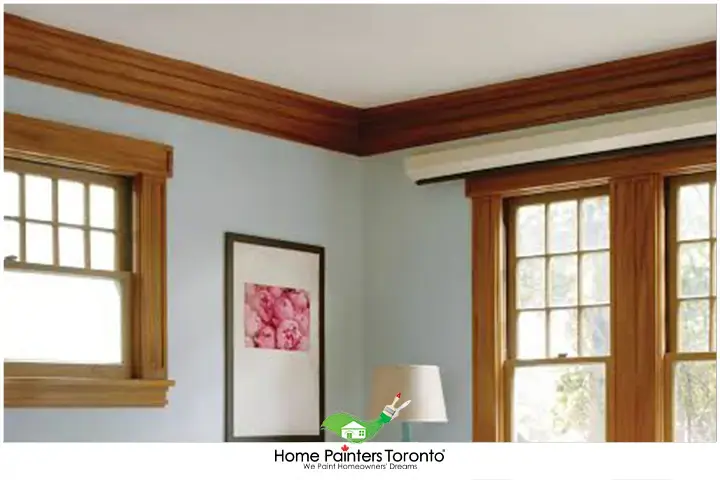
Solid wood, MDF, and polyurethane each perform differently as Toronto's indoor humidity swings from below 20 percent in winter to above 60 percent in summer, which is why material choice depends on the room, not just the look.
Crown Moulding Materials: Wood, MDF, Polyurethane, and Plaster Compared for Toronto Conditions
MDF vs Wood Crown Moulding in Toronto: The Humidity Consideration Most Installers Ignore
Toronto's indoor humidity swings from below 20 percent in winter under forced air heating to above 60 percent in summer without dehumidification. According to CMHC's guidance on home moisture and ventilation, these humidity fluctuations cause dimensional movement in all wood based building materials, and MDF is more susceptible than solid wood because the wood fibre and resin composite swells at the mitre joints when humidity rises and then contracts as it drops. Over two to three seasonal cycles, MDF mitre joints can open enough to show a visible gap that cannot be repaired without removing and replacing the affected lengths.
Solid wood crown moulding also moves seasonally, but the cellular structure of solid wood distributes that movement more evenly across the length of the piece, producing smaller joint gaps that can be caulked and painted successfully. In rooms with controlled humidity and good HVAC coverage, MDF performs reliably. In rooms with significant humidity variation, solid wood or polyurethane is the more durable long term choice.
| Material | Cost | Humidity Performance | Paintable | Stainable | Best For |
|---|---|---|---|---|---|
| Solid wood | $$$ | Excellent; minor seasonal movement manageable | Yes | Yes | All rooms; Victorian and Edwardian profiles; formal spaces |
| MDF | $$ | Good in controlled humidity; joint gaps in variable humidity rooms | Yes (excellent smooth finish) | No | Bedrooms; living rooms; any room with stable humidity |
| Polyurethane | $$ | Excellent; fully moisture resistant; no seasonal movement | Yes | No | Bathrooms; kitchens; high humidity rooms; basement spaces |
| Plaster (cast) | $$$$ | Excellent once set; no seasonal movement | Yes | No | Heritage restoration; grand entries; rooms requiring intricate custom profiles |
| Polystyrene (foam) | $ | Poor; dents easily; low impact resistance | Yes (but shows imperfections) | No | Budget projects; low traffic spaces; temporary installations |
How to Size Crown Moulding Correctly for a Toronto Room
The Sizing Rule for Crown Moulding That Makes Any Room Look Correct
The widely used professional sizing rule for crown moulding is one inch of moulding height for every foot of ceiling height. A room with an 8 foot ceiling takes a 3 to 4 inch moulding. A room with a 9 foot ceiling takes a 4 to 5 inch moulding. A room with a 10 foot ceiling, common in Victorian homes in Riverdale and Rosedale, takes a 5 to 6 inch moulding or a built up assembly to fill the transition zone appropriately.
This rule is a starting point, not an absolute. The visual weight of the profile also matters. A clamshell profile at 4 inches reads more quietly than an ogee profile at 4 inches, because the ogee has more surface variation catching light and shadow. In a room where the ceiling height meets the lower end of the sizing range, a quieter profile at the upper end of the size range often produces a better result than an elaborate profile at the minimum size.
Crown moulding also pairs most effectively when it is coordinated with matching baseboard height. A room with 4 inch crown moulding looks most cohesive with a 4 to 5 inch baseboard, creating visual bookends at the ceiling and floor. Our baseboard installation service and wainscoting installation service both coordinate with crown moulding selection as part of a complete interior trim package.
Choosing the Right Crown Moulding for Your Home
Consider Ceiling Height
When choosing crown moulding, consider the height of the ceilings. Taller ceilings can accommodate wider and more intricate moulding, while lower ceilings may look better with simpler and narrower options.
Match to Existing Trim
If existing trim is already in the home, such as baseboards or door frames, choosing crown moulding that complements them produces a cohesive look. For example, if baseboards are a specific wood type or painted a certain colour, selecting crown moulding that matches creates visual consistency.
Think About Home Style
The home's overall style should play a role in crown moulding choice. For a more traditional look, wood or plaster moulding with intricate designs is appropriate. For a modern or minimalist home, simple and sleek options like MDF or polyurethane may be a better fit.
Take Measurements
Before purchasing crown moulding, accurate measurements of the areas where installation is planned should be taken. This ensures enough material is purchased and prevents costly mistakes.
Consult with an Expert
If unsure about which type of crown moulding is best for a specific home, consulting with a professional crown moulding installer provides valuable insight and advice on the best options for the specific space.
Crown Moulding Installation in Toronto: What the Process Actually Involves
Professional crown moulding installation begins with measuring the room perimeter, calculating the number of linear metres of moulding required including a 10 to 15 percent waste allowance for corner cuts, and planning the installation sequence so that the most visible corners in the room receive inside corner coped joints while less visible corners receive mitre joints.
Coping is the technique of cutting the mating piece of moulding to the exact profile of the first piece, which produces a joint that closes tightly and remains closed through seasonal movement. A mitred inside corner, in contrast, opens as the moulding expands and contracts, revealing a gap that requires annual caulking to maintain. Professional installation on all inside corners uses coped joints. This is the single most important quality distinction between a professional crown moulding installation and an amateur one.
After installation, all outside corners are secured and all joints are caulked with a paintable acrylic caulk before priming and painting. The painting sequence is crown moulding first, then walls and ceiling in the same project. For the painting scope that follows installation, our interior residential painting service handles the complete painting finish. Our drywall repair and installation service addresses any ceiling and wall repair needed before crown moulding installation begins.
Cost of Crown Moulding Installation in Toronto in 2026
Home Painters Toronto is WSIB compliant, fully insured to $5 million in general liability. All prices below are in CAD and exclude HST.
| Scope | Estimated Cost (CAD) | Notes |
|---|---|---|
| Single room crown moulding installation (standard, 3 to 4 inch profile) | $400 – $700 | Includes material, installation, caulking, and first coat of paint ready prime |
| Full main floor crown moulding (4 to 6 rooms) | $1,500 – $3,000 | Coordinated installation for consistent profile and sizing throughout |
| Built up cornice assembly (three piece, heritage profile) | $800 – $1,500 per room | More installation time for layered assembly and precise alignment |
| Crown moulding painting only (after client installation) | Quoted within interior painting scope | Included in interior painting cost: $700 to $1,200 for trim, doors, and baseboards combined |
| Crown moulding repair (gaps, separation, damaged sections) | $200 – $600 | Depends on extent of damage and whether replacement sections are needed |
For a full interior painting and trim cost breakdown, see our interior painting cost guide. Same day free estimates are available seven days a week.
Frequently Asked Questions About Types of Crown Moulding
The best type of crown moulding depends on the specific room, home style, and budget. Solid wood is classic and durable, accepts both paint and stain finishes, and is the correct choice for Victorian and Edwardian homes. MDF is budget friendly and paints to a perfect smooth finish but should be avoided in high humidity rooms. Polyurethane is moisture resistant and the correct choice for bathrooms and kitchens. Plaster is the most luxurious option and appropriate for heritage restoration projects where custom profiles are required.
Polystyrene foam crown moulding is the lightest and most forgiving to handle, but it is also the least durable and least authentic looking option. For a professional looking result, MDF or solid wood installed with proper coped inside corners and paintable caulk at all joints produces a significantly better finished appearance than polystyrene.
Cove moulding has a simple concave curved shape and is less detailed. It sits at approximately 45 degrees between wall and ceiling. Crown moulding is more elaborate, typically featuring a combination of curved and flat sections with a spring angle that creates a more substantial transition. Crown moulding is installed at an angle that projects further from both the wall and the ceiling than cove moulding.
Crown moulding is the specific trim installed where the wall meets the ceiling. Trim is a broader category that includes all decorative millwork around windows, doors, and at the base of walls. Coordinating crown moulding with baseboard trim and window and door casings as a matched package produces the most cohesive interior finish.
A 3 to 4 inch crown moulding profile is appropriate for a standard 8 foot ceiling. A narrower profile looks inadequate and appears to float rather than anchor the transition between wall and ceiling. A wider profile on an 8 foot ceiling looks disproportionate and makes the ceiling feel lower.
Crown moulding is most commonly painted in the same colour as the ceiling, which is typically a crisp white or off white. This visually extends the ceiling downward and makes the ceiling feel higher. Painting crown moulding in the same colour as the walls is the alternative approach for a more enveloping, cosy feel. Painting it in a contrasting accent colour is a bold design choice that works well in formal rooms with elaborate profiles.
TOP Blogs Related to "TRANSFORM YOUR HOME WITH POPULAR TYPES OF CROWN MOULDING"
Ready to Transform Your Home with Crown Moulding?
Home Painters Toronto is the HomeStars Best of Award 2026 winner with a lifetime warranty on interior painting and 37 years serving the GTA. Call 416-494-9095 or email [email protected] for a FREE same-day estimate.