

You picked the chip, the crew finished, and now you hate the paint colour after it's painted across your Toronto living room. It is one of the most common calls we get after an interior job in Toronto, North York and Etobicoke. This part of our house painting guide explains why colour shifts between sample and wall, who pays when the mix is wrong, and which repaint options make sense for your room. The advice comes from Home Painters Toronto, a family-run company serving Toronto and the GTA since 1991, with 1,200+ positive reviews. After more than 20,000 homes painted, we find the cheapest fix is often a bulb change or a single wall, not a full repaint of every wall.
If you hate the paint colour after it's painted, let it dry fully and judge it in morning, afternoon and evening light first. Then compare the can label to the colour code in your contract. A wrong code is the painter's to fix at their cost. A correct code means any repaint is new, paid work.
Hate the Paint Colour After It's Painted? Start Here
Start by confirming whether the colour is actually wrong or only different from what you pictured, because each answer leads to a different fix. A calm, five-step check takes less than a day. It also gives you the evidence a painter needs to act quickly.
- Let the paint dry fully. Benjamin Moore's data sheet for Regal Select Eggshell lists 1 hour to touch and 1 to 2 hours to recoat. Those times assume 25°C and 50% relative humidity. Cool or damp rooms take longer, and wet latex often reads darker than the dry film.
- Read the can label. Match the brand, product line, colour name, colour code and sheen against your written quote or colour schedule.
- Look at the wall three times. Check it in the morning, mid-afternoon and evening under your usual lamps. Write down when you dislike it most.
- Hold the original swatch on the wall. A chip held in your hand catches different light than the wall does, so press it flat against the paint.
- Take dated photos. Photograph the wall, the can labels and the swatch beside the wall in the same light.
Raise the problem before the final sign-off whenever possible. Our guide to the punch list and final walkthrough shows how crews handle concerns before the job closes. A short written note with photos gets a faster answer than a heated phone call.
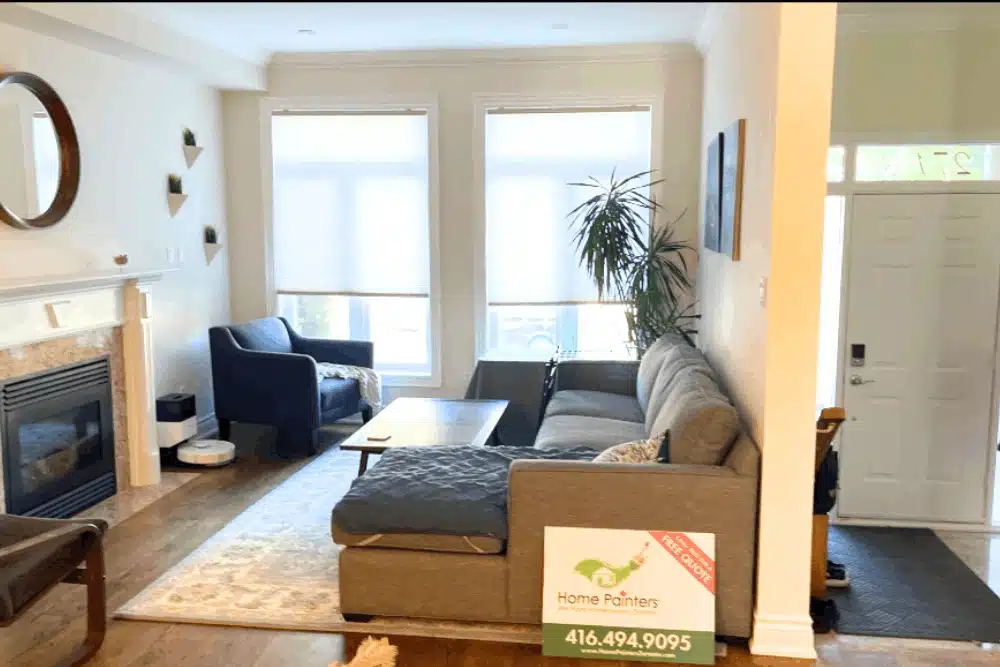
Why Paint Looks Different on the Wall Than on the Sample
Paint looks different on the wall because four walls multiply light, reflection and nearby colours far beyond what a small swatch can show. Benjamin Moore's paper swatches measure 10 by 20 cm, while a typical bedroom wall is many times larger. Colour intensifies as the painted area grows, so a soft chip can look loud across a whole room. The table below covers the causes we see most on Toronto jobs.
| Cause | What Happens on the Wall | How to Check |
|---|---|---|
| Room size | Colour looks deeper and stronger across four walls than on a chip | Compare a large sample board to the chip |
| Light direction | North light cools colours and south light warms them | Check the wall at noon and late afternoon |
| Bulb colour temperature | Warm bulbs push colour toward yellow and cool bulbs push it toward blue | Read the kelvin (K) rating on each bulb |
| Undertones | Greys and whites reveal hidden green, blue, violet or yellow | Hold the chip against plain white paper |
| Sheen | Higher sheen adds glare and makes colour read richer | Compare a matte and an eggshell sample side by side |
| Nearby surfaces | Floors, trim, cabinets and furniture bounce their colour onto walls | View the wall with furniture in place |
| Wet vs dry | Wet paint usually looks darker than dry paint | Judge only after the paint is fully dry |
Undertones cause the most surprises. A grey that looked neutral at the store can turn green beside oak floors or blue beside white trim. Sheen matters too, because an eggshell finish reflects more light than a matte one. Benjamin Moore lists Regal Select Eggshell at a sheen of 15 to 22 at an 85° meter angle. That small gloss is enough to change how deep a mid-tone colour reads.
North-Facing and South-Facing Rooms in Toronto
North-facing rooms in Toronto get cool, indirect light all day, so greys and whites often read bluer or flatter than the chip. South-facing rooms get strong, warm light that can wash out pale colours at midday. East-facing rooms are bright in the morning and dim by evening, and west-facing rooms are the reverse. In a Toronto winter, many rooms spend more hours under lamps than in daylight. That makes artificial light a bigger factor than most homeowners expect.
Wrong Colour or the Colour You Chose: Who Pays
The painter pays when the wall colour does not match your signed colour code, and you pay when the code matches but you want a change. Most disputes come down to that one comparison. Workmanship problems, such as patchy coverage or uneven sheen, are a separate issue that falls under the painter's warranty. The table shows how each situation usually plays out.
| Situation | Who Usually Pays | Next Step |
|---|---|---|
| Wrong colour code mixed or applied | The painter, under the contract | Send written notice with photos of the can label |
| Store tinted it wrong and the painter supplied the paint | The painter, who settles it with the store | Ask the painter to take the can back to the store |
| Correct code, but you supplied the paint | You, with the store | Bring the can and receipt to the paint store |
| Correct code and correct product, but you changed your mind | You, as new work | Ask for a written change order and price |
| Patchy colour, flashing or uneven sheen | The painter, as workmanship | Add it to the punch list or a warranty claim |
| Colour shifts only under certain lights | No one, because it is not a defect | Test lighting changes before you repaint |
This is why the written contract matters. Ontario says most consumer agreements over $50 must be in writing, and a written colour schedule turns an argument into a simple label check. Our guide to how Ontario's Consumer Protection Act applies to a painting contract covers change orders in more detail. Painter refusing to fix a clear mix error? See what to do when a painter did a bad job. This section is general information, not legal advice.
Your Repaint Options and What Each Costs
Your repaint options range from a free lighting change to a full room repaint at $400 to $900 plus HST for a living or dining room at HPT. The right choice depends on whether the whole room feels wrong or only one wall. Start with the cheapest test and work up. The table lists HPT's published per-room ranges.
| Option | When It Fits | Typical Price (CAD + HST) |
|---|---|---|
| Change bulbs or lamps | Code matches and the colour feels too cool or too warm at night | No painting cost |
| Repaint one accent wall | One wall catches harsh light or clashes with a fireplace | Quoted per wall, often within a larger visit |
| Repaint a bedroom | Wrong colour or strong dislike in one bedroom | $400–$800 |
| Repaint a living or dining room | The main living space feels wrong all day | $400–$900 |
| Repaint a bathroom | Small room with poor light | $250–$500 |
| Repaint trim, doors and baseboards | The new wall colour clashes with old trim | $700–$1,200 |
| Repaint ceilings | The ceiling tint fights the new wall colour | $1,000–$1,300 |
These per-room ranges apply within a larger project, and interior projects at Home Painters Toronto start at $1,495 plus HST. Dark-to-light changes, extra coats and wall repairs push a room toward the top of its range. For a ballpark on several rooms, try our interior painting calculator. Our page on partial house painting explains how crews quote a single wall or a few rooms.
One rule holds for every option. A new colour must run from corner to corner on a full wall, because spot touch-ups in a different shade always show. Crews cut in at the ceiling line and inside corners so the edge sits where your eye expects a break.
Why Most Colour Regret Is a Lighting Problem, Not a Paint Problem
Most colour regret is a lighting problem because paint can only reflect the light a room gives it. Many Toronto rooms run on cool bulbs and weak northern daylight. Benjamin Moore defines Light Reflectance Value (LRV) as the percentage of light a surface reflects. The scale runs from 0 for black to 100 for white. A colour with an LRV near 60 bounces back roughly 60% of the light that reaches it.
That number explains a common complaint. In a bright paint store, a mid-tone colour gets plenty of light to bounce back. In a dim hallway, the same colour has little light to work with, so it reads darker and muddier than the chip. Nothing is wrong with the paint. A repaint in the same colour family will often disappoint in the same way.
Few colour guides mention the next step: change the light and check the LRV before you pay for new paint. A colour that feels gloomy may only need brighter or warmer bulbs. A colour that feels stark may need a shade a few LRV points lower in the same family, not a whole new colour. Benjamin Moore and Sherwin-Williams both publish LRV values for their colours, so you can compare options in minutes.
Light Bulb Colour Temperature: The Kelvin Rating Most Homeowners Miss
The kelvin (K) rating on a bulb box tells you how warm or cool its light is. That rating can shift a wall colour more than the paint itself. Natural Resources Canada's ENERGY STAR lighting guide says a lower kelvin number means a warmer light. It classes bulbs at 3000K or lower as warm, with a yellowish glow. Higher numbers look whiter and cooler. That is why the same grey can read cozy in one room and icy in the next.
Mixed bulbs make it worse. Many Toronto homes have warm lamps in the living room and cool pot lights in the kitchen. One open-concept colour then looks like two. Match the kelvin rating across a space before you judge the paint. Then give the room two or three evenings before you decide.
Dark to Light and Other Hard Colour Changes
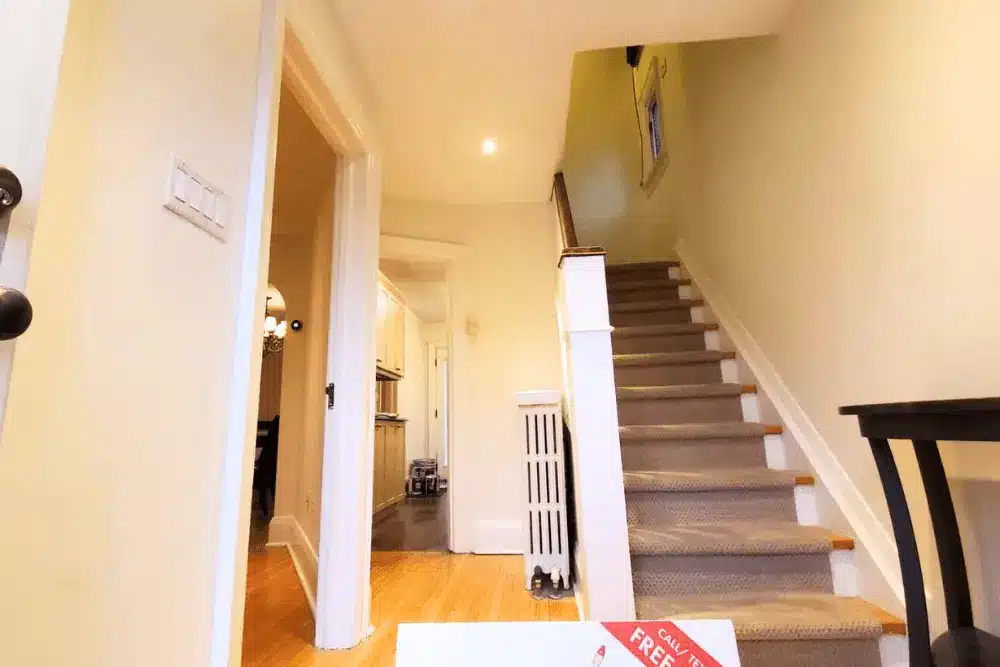
Going from dark to light usually needs a primer coat and extra finish coats, which adds labour and paint to the quote. Benjamin Moore labels Regal Select as a one- or two-coat product, but that assumes the old and new colours are close. A deep navy or brick red under a pale cream can ghost through two coats. As our guide to how many coats of paint a house needs explains, the quote should state the coat count in writing.
The extra coat is easy to estimate. A 12-by-14-foot bedroom with 8-foot ceilings has about 416 square feet of wall before you subtract doors and windows. At Benjamin Moore's stated coverage of 400 to 450 square feet per gallon for Regal Select, each added coat needs roughly one more gallon. It also needs another full pass of cutting in and rolling.
Light-to-dark changes carry their own risk. Deep colours use more tint and often show lap marks if a crew rushes. A tinted primer helps a deep colour reach full depth in fewer coats. Ask your painter which primer they plan to use and why.
How to Avoid Colour Regret on Your Next Paint Project
You avoid colour regret by testing large real-paint samples on two walls in morning, afternoon and evening light before you approve a colour. A chip is a starting point, not a decision. Use this checklist before you approve any colour.
- Use real paint samples. Benjamin Moore sells 236 mL sample cans in Canada, which hold real paint, not printed colour.
- Brush two coats onto a white foam board so you can move it from wall to wall.
- Follow the manufacturer's timing. Benjamin Moore recommends testing samples from morning to evening under both natural and artificial light.
- Place samples beside trim, flooring, counters and large furniture.
- Test the sheen as well as the colour, because eggshell and matte read differently.
- Narrow the list to two finalists, then live with them for a few days.
- Check the LRV of each finalist against the light the room actually gets.
Home Painters Toronto offers a colour consultation as part of its process. An expert can visit to help you choose. Browse our interior colour inspiration page to build a shortlist first. If brick, stone or wood trim is staying, our guide to matching paint to brick, trim and stone helps you avoid undertone clashes.
Colour Mix-Ups and the Paper Trail That Protects You
A paper trail of colour codes, can labels and written approvals settles a mix-up fast because it proves what was ordered and applied. Without it, both sides rely on memory. With it, the answer takes minutes.
- Keep a signed colour schedule listing each room, brand, product, colour name, colour code and sheen.
- Photograph every can label, including the tint sticker and date.
- Save the email or text where you approved each colour.
- Keep one leftover can per room, marked with the room name.
- Ask for a final colour list when the job closes.
Our guide on how to verify your painter used the right paint covers label checks in more depth. A painting warranty covers workmanship problems such as peeling or poor adhesion. A change of mind about colour is not a defect, so no warranty treats it as one. You can read how our home painting warranty works, including the lifetime warranty on interior painting.
Home Painters Toronto is WSIB compliant and fully insured, with $5 million in general liability coverage. Every interior residential painting project comes with warranty-backed work. All specifications, colours included, are confirmed on paper before work starts. That record protects you if a colour ever comes back wrong.
Paint Colour Regret FAQs
The painter pays if the colour on the wall does not match the colour code in your signed contract. Send written notice with photos of the can label and the wall. A professional company will repaint at its own cost. If the code matches, a change is new work that you pay for.
Paint looks different on the wall because a full room multiplies light, undertones and sheen. Bulb colour temperature, window direction and nearby floors also change how colour reads. A small chip under store lighting cannot show any of that. Large samples on your own walls are the only reliable test.
Wait until the paint is fully dry, then judge it over a few days. Regal Select dries to the touch in about 1 hour, according to Benjamin Moore. Colour can keep settling as the film dries. Check it in morning, afternoon and evening light. Many homeowners who hate a colour on day one feel differently by day three.
Repainting a bedroom at Home Painters Toronto typically costs $400 to $800 plus HST. A living or dining room typically runs $400 to $900 plus HST. These ranges apply within a larger project, and interior projects start at $1,495 plus HST. Dark-to-light changes and extra coats push the price higher. A free estimate gives you an exact quote.
Most stores will not take back tinted paint because it was custom-mixed for your order. Untinted, unopened cans are sometimes returnable, so check the store's policy. If the store mixed the wrong code, bring the can and receipt back right away. Keep leftover paint for touch-ups if the colour stays.
Yes, you can often fix a disliked colour without a full repaint. Swap bulbs to a different kelvin rating first, then consider repainting one accent wall. Changing trim or ceiling colour can also rebalance a room. If the whole room still feels wrong, a full repaint is the cleaner fix.
If You Hate the Paint Colour After It's Painted, Here's Your Plan
Your plan is to let the paint dry, check the label, test the lighting, and then pick a fix at the painter's cost or a paid repaint. Most colour problems in Toronto homes come from light and undertone, not from bad paint. A written colour schedule, large samples and the right bulbs prevent most regrets. When a repaint is the answer, start with the smallest change that solves the problem.

If you want a second opinion or a repaint quote, our team offers fast, free quotes and warranty-backed work across Toronto and the GTA.
Contact Home Painters Toronto