

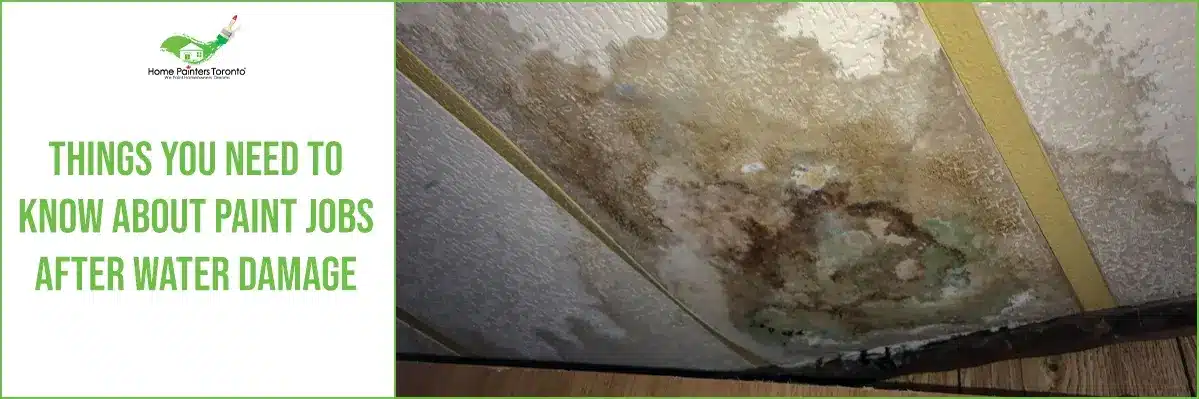
Things You Need to Know About Paint Jobs After Water Damage
Paint jobs after water damage in Toronto fail when homeowners repaint too soon, and the damage that follows is always more expensive to correct than the original repair would have been. Home Painters Toronto, the HomeStars Best of Award 2026 winner with over 1,200 positive reviews and 37 years serving the GTA, has repaired and repainted water damaged walls and ceilings across Etobicoke, Leaside, Scarborough, and North York every season. Working with a professional painting contractor after water damage is the smartest first call, because the sequence of steps that produces a lasting result is specific, and skipping even one of them guarantees a second failure.
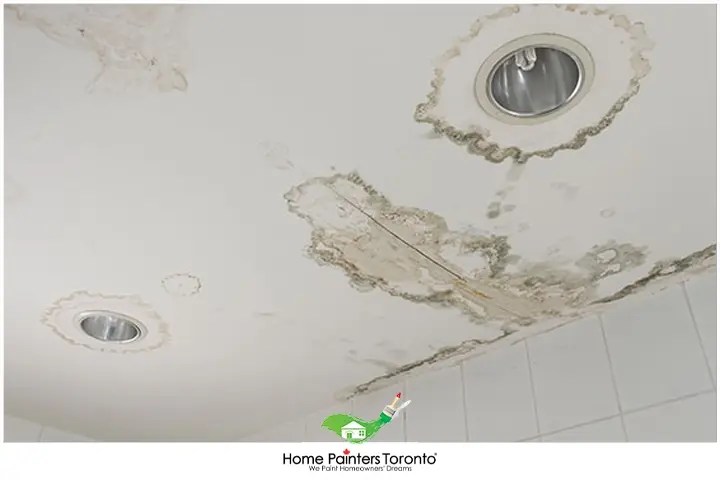
Surface touch is unreliable for confirming dryness after water damage — a pin type moisture meter confirming below 12 percent throughout is the only safe clearance for repainting.
Paint Jobs After Water Damage in Toronto: Why Skipping Steps Guarantees a Second Failure
The most common mistake after water damage is repainting before the substrate is fully dry. Paint applied over damp drywall traps moisture beneath the film. That trapped moisture causes bubbling within days, peeling within weeks, and mould growth behind the wall within months. The visible paint failure is the least serious consequence of this shortcut.
The second most common mistake is skipping stain blocking primer. Water stains contain dissolved minerals and organic compounds that bleed through standard latex paint regardless of how many coats are applied. A homeowner who applies three coats of wall paint over a water stain without stain blocking primer watches the stain reappear through every coat, sometimes within 48 hours of the final application.
Both mistakes produce repainting costs on top of the original repair cost, and neither is recoverable without stripping the failed finish and starting the preparation sequence again. Our guide on repairing walls after water damage covers the full assessment process before any painting begins.
Paint Jobs After Water Damage: Why Latex Over a Wet Surface Always Fails
Latex paint requires the substrate to be dry before application. The manufacturer recommended moisture content for painting drywall is below 12 percent, measured using a pin type moisture meter pressed against the surface. Anything above this threshold produces adhesion failure, because the residual moisture continues migrating outward and breaks the paint film bond from underneath.
At a recent project in Etobicoke, a bathroom ceiling that had been affected by an upstairs pipe leak showed a moisture reading of 22 percent seven days after the water event, which is well above the safe threshold. The homeowner had assumed the surface was dry because it felt dry to the touch. Surface touch is unreliable. Moisture meters are mandatory. According to Health Canada's guidance on addressing moisture and mould indoors, mould can begin to grow on damp materials within 24 to 48 hours, which means the window between water exposure and safe painting is much shorter than most homeowners expect.
Why Toronto's Seasonal Moisture Conditions Make Water Damage Worse Than in Milder Climates
Toronto experiences indoor humidity swings that compound water damage in ways that milder climates do not. According to CMHC guidance on home moisture and ventilation, indoor relative humidity in Canadian homes during winter under forced air heating regularly drops below 20 percent, while summer indoor humidity without dehumidification can exceed 65 percent. That range of 45 percentage points is one of the widest seasonal swings of any major Canadian city.
This swing matters for water damage painting because a wall that appears fully dry in January under forced air heat may still contain structural moisture. Forced air heating drives surface moisture off quickly but does not reliably dry the core of a wall assembly, particularly in plaster or older drywall. A moisture meter reading confirms core dryness. Surface appearance does not.
Toronto's freeze and thaw cycling also accelerates moisture related paint failure on exterior walls that have experienced water damage. A wall with residual moisture that freezes in winter expands within the drywall, cracking the paint film from the inside. This is the mechanism behind the distinctive ring staining and circular cracking pattern visible on many older Toronto home ceilings after an ice dam or roof leak.
1. Understand the Difference between Wet Walls and Dry Walls
After a water damage incident, it is often possible for water to get through to your walls. Depending on how much water gets through and how long the water damage event lasts, you may have wet or dry walls. Wet walls are walls that have been immersed in water. These walls will be saturated and will not have the standard drywall finish. In contrast, Dry walls are walls that have not been fully immersed in water. The drywall finish on the wall will still be present in its normal state, and it may still be intact after the water damage event. The length of time it has been immersed in the flood. How much water gets through them will determine which type of wall you have, wet or dry. Since water and paint do not mix well, you should either avoid painting wet walls or hire a water damage restoration company to tape off these walls. And let them dry before beginning the painting process.
2. Know Your Paint and Their Drying Timespan
After a water damage incident, you may have plaster walls and ceilings that are cracked. The plaster will not be as strong as it was before the water damage, and you will have to keep that in mind when you are painting. If you paint over dry plaster, you may encounter some problems with the paint not sticking very well to the wall. If you paint wet plaster, you may have issues with the paint not sticking at all. The type of paint you choose will also affect how well the paint sticks to the walls. If you are unsure which paint will work best for the job, ask a professional about it and which paint you should use. Mould growth may be possible, depending on how long the wall has been wet and how much water damage there has been. Before you paint over any mould, hire a mould removal expert to get rid of it.
If you paint over mould, you will be spreading the spores throughout your home, making the problem even worse.
3. Do It Right the First Time
After the water damage is dealt with, there may be a temptation to start painting the walls as soon as possible. While this may initially sound like a great idea, it results in a lot of extra work in the end. The drywall treated for water damage may be weak and require more than one coat of paint. If the first coat is not done right, the paint may need to be removed and the process started again. Water damage is a serious situation. Walls should never be painted before the water damage has been taken care of professionally. Our detailed guide on how water damage impacts your walls explains the structural implications that make professional assessment before repainting so important.
Assessing Water Damage Before Any Paint Is Applied
Professional assessment of water damaged walls covers three areas: the extent of moisture saturation, the presence of mould, and whether the drywall or plaster is structurally sound enough to repaint. All three must pass assessment before any paint is applied. A surface that passes the moisture test but shows mould still requires mould remediation before painting. A surface that shows no mould but has structural soft spots requires drywall replacement, not painting.
When Water Damage Requires Drywall Replacement Not Just Repainting
Drywall that has been saturated for more than 48 hours almost always requires replacement because the gypsum core dissolves and the paper face delaminates when wet for extended periods. Painting over dissolved drywall core produces a surface that looks correct until the first significant humidity swing, then buckles. Our drywall repair and installation service handles both partial section replacement and full wall replacement before any repainting begins.
| Condition | Correct Response | Wrong Response |
|---|---|---|
| Surface dampness, drywall structurally intact, no mould | Dry to below 12 percent moisture, stain blocking prime, repaint | Repaint immediately without moisture confirmation |
| Drywall soft or crumbling in any area | Replace affected sections, skim coat, prime, repaint | Skim coat over soft drywall and repaint |
| Mould visible on surface | Mould remediation first, then assess drywall, then prime and repaint | Paint over mould with stain blocking primer only |
| Water staining without mould | Dry fully, apply stain blocking primer, repaint | Apply standard primer and two topcoats hoping stain does not bleed through |
| Old plaster cracked from water exposure | Fill cracks with joint compound, sand, prime, repaint | Paint directly over cracked plaster without filling |

Zinsser BIN Shellac Based Primer applied 30 cm beyond the visible stain perimeter prevents bleed through that standard latex primer cannot stop regardless of how many topcoats follow.
The Step-by-step Roadmap to a Successful Paint Job Post Water Damage
So, how do you fix paint after water damage? Here is a step by-step roadmap to help get started on a water damage wall.
Product Selection for Painting Over Water Damaged Surfaces
Stain Blocking Primer: The Product Most Homeowners Skip and Why It Matters
Stain blocking primer is mandatory on any surface that has shown water staining, tannin bleed, or mould remediation treatment. Standard acrylic primer does not block water stains. The stain compounds dissolve into standard primer and migrate to the surface of the topcoat within hours to days, producing the distinctive yellowish or brownish ring that reappears through fresh paint.
Zinsser BIN Shellac Based Primer dries in 15 to 30 minutes and provides the most reliable stain blocking performance of any readily available primer in Canada. It is the product our team specifies on every water damage repaint where staining is present, regardless of the topcoat that follows. Shellac based primers require denatured alcohol for cleanup, which is a minor inconvenience compared to the alternative of a second failed paint job.
Oil based stain blocking primers such as Zinsser Bulls Eye 1-2-3 provide comparable performance with a longer dry time of two to four hours and cleanup with mineral spirits. Both are available through local paint suppliers and home improvement stores across the GTA.
| Product | Type | Dry Time | Best For |
|---|---|---|---|
| Zinsser BIN Shellac Based Primer | Shellac | 15 to 30 minutes to recoat | Severe water stains, smoke, tannin bleed, any surface where standard primer has already failed |
| Zinsser Bulls Eye 1-2-3 | Oil based stain blocker | 2 to 4 hours | Moderate water stains, mould remediated surfaces, drywall with mineral deposit staining |
| Benjamin Moore Fresh Start All Purpose Primer | Water based acrylic | 1 hour | Clean, undamaged drywall with no staining history; not appropriate where staining is present |
| Benjamin Moore Fresh Start High Hiding Primer | Water based acrylic | 1 hour | New drywall replacement sections where no staining history exists |
Cost of Professional Water Damage Painting and Repair in Toronto in 2026
Home Painters Toronto is WSIB compliant, fully insured to $5 million in general liability, and all interior painting is backed by a lifetime warranty. All prices below are in CAD and exclude HST.
| Scope | Estimated Cost (CAD) | Notes |
|---|---|---|
| Minor water damage repair and repaint (surface staining only, no structural damage) | $400 – $700 | Stain blocking prime and two topcoats on the affected area |
| Moderate water damage repair (partial drywall replacement and repaint, single room) | $700 – $1,800 | Includes section replacement, skim coat, stain blocking prime, and two topcoats |
| Severe water damage repair (full wall or ceiling replacement and repaint) | $1,800 – $4,500 | Full scope: removal, replacement, skim coat, prime, and repaint throughout the affected room |
| Mould remediation (prior to painting, if required) | Quoted by scope | Mandatory before any painting; scope depends on extent of growth found |
| Interior room repaint only (post restoration, single room) | $400 – $900 | Standard room; assumes structural repairs already complete |
For a full breakdown of interior painting costs, see our interior painting cost guide. For basement specific moisture and concrete concerns, see our efflorescence removal guide and our sealing interior concrete floors guide.
Real Project: Water Damage Repair and Repaint in a Leaside Home
Leaside Burst Pipe: 45 cm Stain Ring, 17% Ceiling Moisture, Zinsser BIN Prime, and Two Seasons of Zero Bleed Through
A homeowner in Leaside contacted Home Painters Toronto after a burst pipe in the upstairs bathroom caused water to travel through the subfloor and into the drywall ceiling of the main floor living room. The ceiling showed a 45 cm diameter staining ring at the point of maximum water concentration, with a faint smaller ring approximately 70 cm out from the centre where the water had spread more diffusely.
Our team confirmed the affected ceiling area registered a moisture content reading of 17 percent seven days after the incident. The visible staining was present, but no mould was detected at that point. The dehumidifier ran for an additional five days before a second moisture reading confirmed the affected area had dropped to 9 percent throughout.
Zinsser BIN Shellac Based Primer was applied to the full stained ceiling area plus a 30 cm margin beyond the visible stain perimeter, cured for 25 minutes, and the area was inspected under raking light before topcoat proceeded. Two coats of Benjamin Moore Regal Select in Eggshell finish were applied to the ceiling and adjacent walls, matching the existing finish throughout the room. No stain bleed through has appeared through two subsequent seasons. The homeowner noted that two previous attempts to paint over the stain with standard latex had both produced bleed through within days.
Home Painters Toronto is WSIB compliant, fully insured to $5 million in general liability, and all interior painting is backed by a lifetime warranty. For completed projects, visit our Toronto painting projects page. Same day free estimates are available seven days a week across the GTA.
Frequently Asked Questions About Paint Jobs After Water Damage
Walls should dry until a pin type moisture meter registers below 12 percent throughout the affected area, not just at the surface. This can take anywhere from five days to several weeks depending on the severity of the water event, the wall assembly materials, and the ventilation and dehumidification applied during drying. Surface touch is not a reliable indicator. Only moisture meter confirmation should be used to clear a wall for painting.
Yes. A stain blocking primer, specifically a shellac based or oil based formulation such as Zinsser BIN or Zinsser Bulls Eye 1-2-3, is mandatory on any surface showing water staining. Standard water based acrylic primer does not block the dissolved mineral compounds in water stains, which migrate through standard primer and appear as yellow or brown rings in the topcoat within days of application.
Only if the drywall is structurally sound throughout the affected area. Drywall with a soft, crumbly, or delaminated gypsum core cannot be painted over and must be replaced. Drywall that has dried fully to below 12 percent moisture and is physically intact can be painted after stain blocking priming. Any soft sections found during moisture assessment indicate replacement is needed before painting.
Mould must be remediated before any painting begins. Painting over mould with stain blocking primer does not kill the mould or stop its growth. The mould continues growing behind the paint film and produces the same health risks as unaddressed mould. A qualified mould remediation professional should assess and treat any mould found during water damage assessment. See our guide on repairing walls after water damage for the full scope of what professional assessment covers.
Water stains contain dissolved minerals, organic compounds from pipe material or building materials, and sometimes tannins from wood substrates that dissolved into the water. These compounds are water soluble and mobile within wet or damp paint films. Standard latex or acrylic primer does not create a barrier against these compounds. Only shellac based or oil based stain blocking primer creates the sealed film that prevents migration to the topcoat surface.
Professional repair and repaint for minor water damage with surface staining only runs $400 to $700. Moderate damage requiring partial drywall replacement runs $700 to $1,800. Severe damage requiring full wall or ceiling replacement and repaint runs $1,800 to $4,500. Mould remediation is quoted separately if required. All quotes from Home Painters Toronto are free and provided the same day.
More Interesting Blogs Related to Paint Jobs After Water Damage
Water Damage on Your Toronto Walls? Let's Fix It Right.
Home Painters Toronto is the HomeStars Best of Award 2026 winner with a lifetime warranty on all interior painting. Call 416-494-9095 or email [email protected] for a FREE same-day estimate.